REVIEW · SAN GIMIGNANO
Golden Grains & Gourmet Pasta Cooking Class
Book on Viator →Operated by Podere La Marronaia- Sosta Alle Colonne · Bookable on Viator
The best meals start with your hands, and this class does just that in San Gimignano’s countryside. You’ll learn traditional Tuscan pasta from the ground up, including milling organic grains on a table mill, then shaping and cooking your own meal.
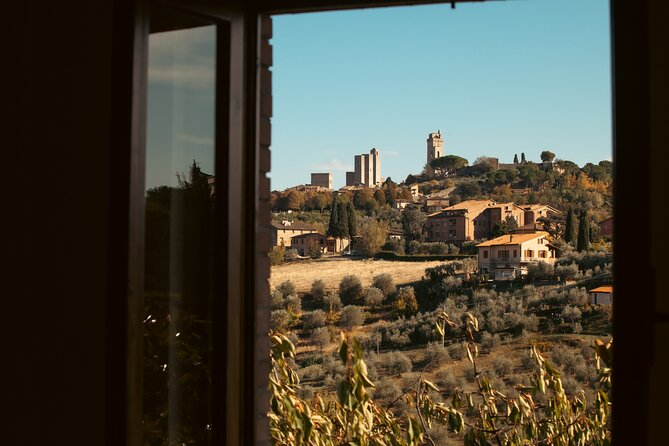
I love how the teaching is built for real beginners. The chef, Leonardo, is known for being patient, so you’re not stuck watching from the sidelines. I also like the setting: you eat while looking out toward San Gimignano, with vineyards and olive groves all around.
One thing to consider: the group stays small (up to 6), so if you’re hoping for a lively, crowd-style experience, this won’t be that. It’s focused, hands-on, and intentionally unhurried.
In This Review
- Key Things That Make This Class Memorable
- From San Gimignano to Podere La Marronaia’s Rustic Kitchen
- Milling Organic Grain on a Table Mill Changes Everything
- Kneading, Rolling, and Shaping Tuscan Pasta Like a Pro (Even If You’re Not)
- Sauces and Bruschetta: Building the Meal, Not Just Pasta
- Wine, Olive Oil, and Balsamic Tasting with the Family Hosts
- Timing, Pace, and What the 3 Hours Really Means
- Price and Value: What You’re Paying for at $378.16
- Who Should Book This Pasta Class in Your Tuscany Trip
- Should You Book Golden Grains & Gourmet Pasta?
- FAQ
- Where is the meeting point for the cooking class?
- How long does the experience last?
- What is the maximum group size?
- What will I learn to make?
- Do I need cooking experience?
- Is there wine and olive oil tasting?
- Do I get a confirmation after booking?
- Is free cancellation available?
- Is a mobile ticket used?
Key Things That Make This Class Memorable
- Milling three types of organic grains right before you start cooking
- Learning classic Tuscan shapes through kneading, rolling, and shaping
- Making sauces with fresh local ingredients to match your pasta
- Eating what you make, seated in a charming countryside setting
- Organic wine, extra-virgin olive oil, and balsamic vinegar tasting with the family hosts
- A small group (max 6) that keeps instruction personal
From San Gimignano to Podere La Marronaia’s Rustic Kitchen
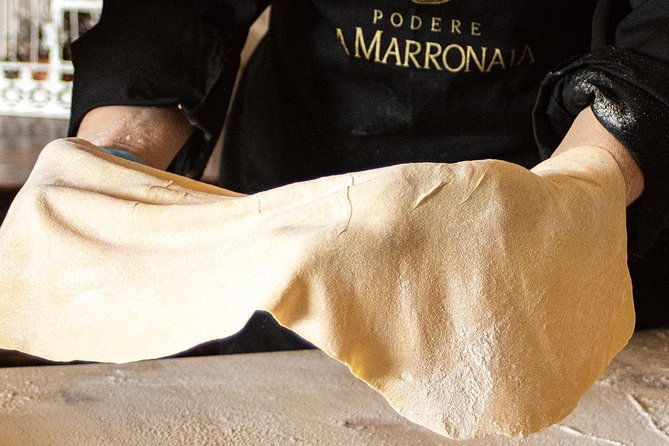
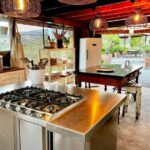
The meeting point is Via Martiri di Citerna, 2, San Gimignano—easy to tie into a day already planned in the historic center. The estate is just a short walk from town, but once you arrive, the mood changes fast. You’re no longer in the tourist lanes. You’re in a working family setting with vineyards and olive groves nearby, and the kitchen feels rustic and lived-in, not staged.
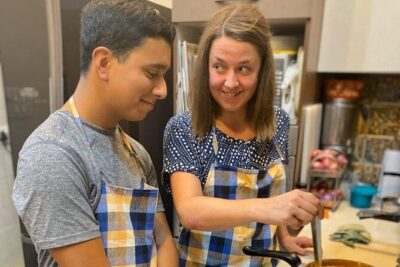
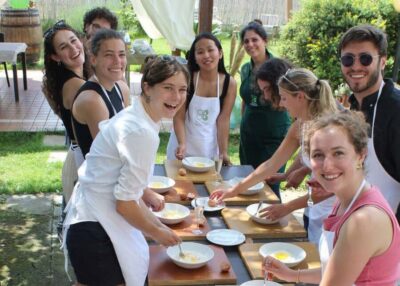
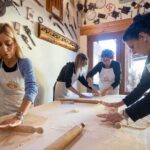
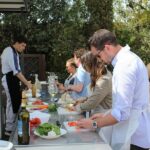
This is also the kind of experience that benefits from smaller numbers. With a maximum of 6 travelers, you’re more likely to get direct help when your dough feels too sticky, your rolling is uneven, or you’re not sure how thin is thin enough. If you’ve ever taken a class where you spent half the time waiting for the instructor to finish with someone else, you’ll appreciate the pacing here.
You can also read our reviews of more tours and experiences in San Gimignano.

Milling Organic Grain on a Table Mill Changes Everything
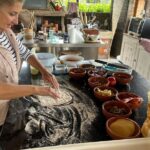
Most pasta classes start with flour that’s already ready to go. Here, you start with grain—and that matters more than you’d think. You’ll mill three different kinds of organic grains using a table mill at the estate. It’s hands-on, sensory work: you get to see the transformation from whole grains to flour-like meal, and you understand why homemade pasta has that flavor depth store-bought pasta can’t match.
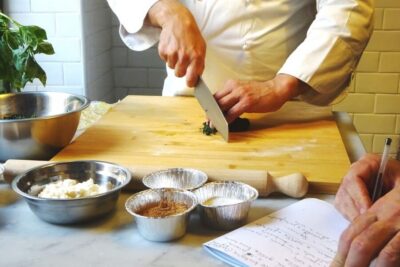
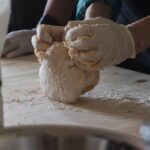
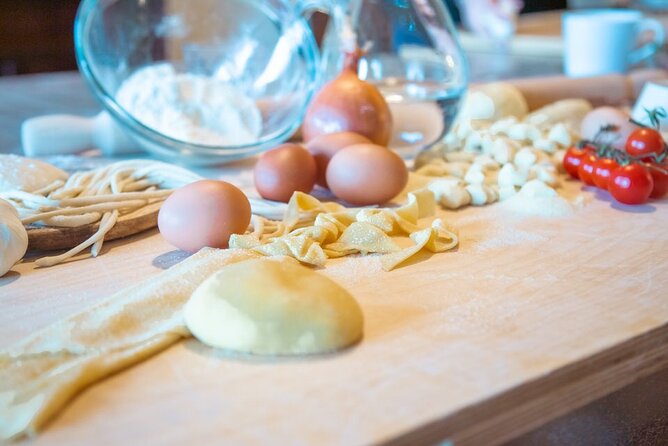
Then comes the dough work. You’ll knead, roll, and shape your pasta, guided by expert chefs. Even if you’re new to making dough, the goal isn’t perfection. The goal is understanding the feel—how dough tightens as it rests and kneads, how it rolls when it’s properly hydrated, and how shapes hold up when cooked.
If you like food that feels like a skill, not just a recipe, this starting point is a big win. It turns pasta from something you order into something you actually know how to make.
Kneading, Rolling, and Shaping Tuscan Pasta Like a Pro (Even If You’re Not)
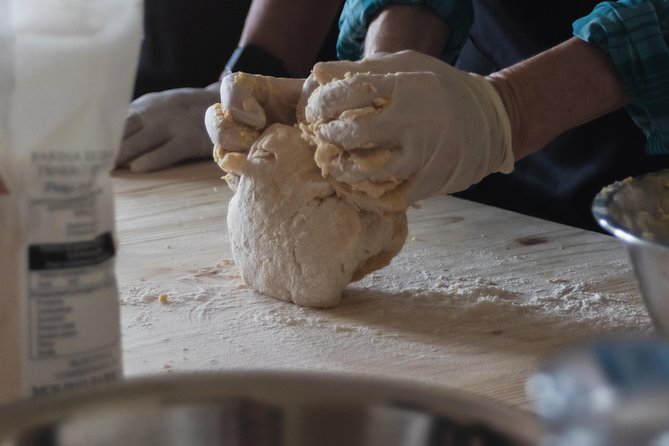
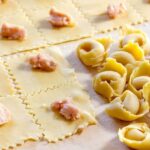
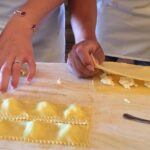
Once the dough is ready, the class shifts into technique. You’ll learn classic Tuscan methods—kneading, rolling, shaping—and you’ll make different varieties of pasta. That variety is important because it teaches you how dough behaves differently depending on the shape and thickness.
Here’s what you can expect to feel during the process:
- Your first attempts will be slightly imperfect, and that’s normal.
- Rolling takes patience. You’ll likely do more than one pass to get a consistent thickness.
- Shaping is where you start to build confidence. When your pasta holds its form, the work clicks.
A standout detail from the experience is how calm the instruction is for novices. One person highlighted Leonardo’s patience specifically, and that tracks with the overall vibe: this isn’t about rushing you through steps. It’s about helping you finish with pasta you’re proud to cook and eat.
Sauces and Bruschetta: Building the Meal, Not Just Pasta
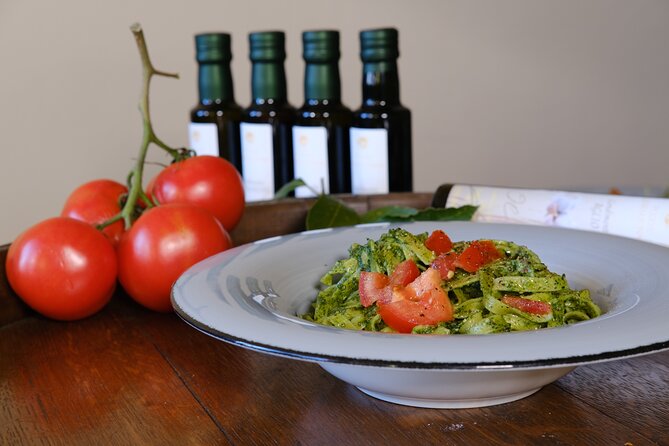
Pasta alone is great, but the real satisfaction comes when you can pair it with a sauce that actually fits. In this class, you’ll prepare authentic sauces using fresh, local ingredients made to complement the pasta you just shaped.
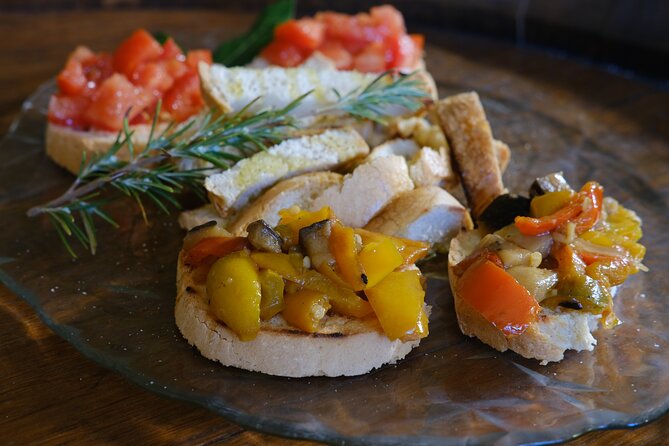
Depending on the exact menu that day, you may also cook a bread-based Italian starter like bruschetta, which shows up in the experience as a memorable extra. Even if you’ve had bruschetta before, there’s something different about making it as part of the flow—because you’re learning how the meal comes together, bite by bite.
Practical tip: if sauces are your favorite part of Italian food, pay attention to how the ingredients are handled and balanced. You’ll come away thinking less like a recipe-follower and more like a cook who understands why certain flavors work together.
Wine, Olive Oil, and Balsamic Tasting with the Family Hosts
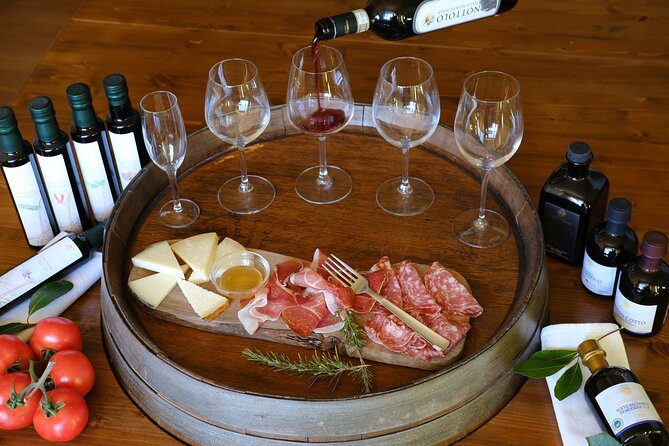
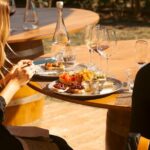
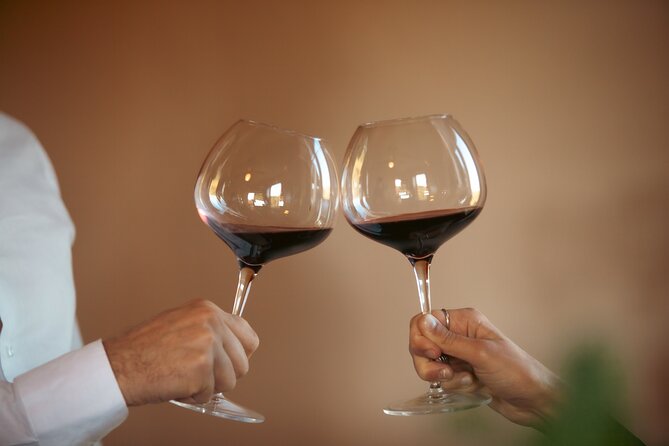
After cooking, the class shifts into eating and tasting—still part lesson, part celebration. You’ll relax in a charming setting and enjoy what you made, paired with a curated tasting from the estate.
The tasting includes:
- Organic and biodynamic wines
- Extra-virgin olive oil
- Balsamic vinegar
This is one of those moments where you’ll feel the difference between just drinking wine and actually learning how to taste. Even if you’re not a wine expert, the act of pairing helps your palate understand what the pasta and sauces need. Olive oil tasting is especially valuable in Tuscany, because it’s not just a condiment—it’s a main flavor you’re learning to recognize.
Another reason this part lands so well: you’re not doing it in a factory-style tasting room. You’re doing it at a family-owned estate, and they share stories about Tuscan culinary traditions. That turns the meal into something more personal, and it’s exactly the kind of context that makes food experiences stick in your memory.
Timing, Pace, and What the 3 Hours Really Means
The class runs about 3 hours. That’s a sweet spot: long enough to learn real technique and actually cook dinner, but not so long that you’re wiped out after. Since the group is small and the pace is hands-on, you’ll likely spend your time moving through distinct phases—milling, dough work, shaping, sauce prep, then eating and tasting.
You should plan for a full, satisfying meal at the end. This is not a quick demo where you taste a bite and leave hungry. You cook and then enjoy your handmade dishes, paired with the estate tasting.
Also, keep your afternoon logistics simple. If you’re doing other activities right after, you’ll want to avoid something that requires intense focus right away, since wine and a full meal naturally slow you down.
Price and Value: What You’re Paying for at $378.16
At $378.16 per person, this isn’t a budget activity. But it’s also not pricing you only for the food. You’re paying for the full experience package: private-style instruction, ingredient work that starts with milling, and an estate setting that turns class into dinner.
Here’s what adds value in a tangible way:
- Small group size (max 6), which means more time and attention from chefs
- Table milling of organic grains, not just using pre-made flour
- Hands-on pasta making from kneading to shaping
- Fresh ingredient sauce preparation
- A real sit-down component with organic/biodynamic wine and olive oil tasting
If you’re the kind of traveler who likes to leave with a repeatable skill, the cost starts to make sense. You’re not just buying an evening out—you’re buying an education in how Tuscan pasta is built, plus a meal that’s genuinely yours.
If you’re mostly looking for a quick, casual bite of Italian food, you might decide to spend less elsewhere. But if you want to understand the process and bring it home as knowledge, this class targets that goal directly.
Who Should Book This Pasta Class in Your Tuscany Trip
This works best for:
- Food lovers who want hands-on technique, not just observation
- First-time pasta makers (because the instruction is structured for novices)
- Travelers who want Tuscany to feel personal, not staged
- Couples and small groups who prefer small-group experiences
- People who enjoy pairing cooking with wine and olive oil education
If you’re traveling as part of a larger group, remember the class caps out at 6, so you may need separate bookings to keep everyone together. On the flip side, if you’re solo, you’ll still get plenty of interaction since the number of people is limited.
And since the meeting point is in San Gimignano and the estate is a short walk away, you can pair this with an evening stroll afterward—assuming you’re still standing after your meal and tasting.
Should You Book Golden Grains & Gourmet Pasta?
If your idea of a great day in Tuscany is using your hands, learning real technique, and eating what you make in a beautiful setting, I’d book it. The biggest strengths are the grain-to-dough start, the calm instruction from chefs like Leonardo, and the fact that you finish with a meal paired with estate organic wines and olive oil.
Skip it only if you want something fast and casual, or if you’re not that interested in learning how pasta is actually made. This class rewards curiosity and a bit of patience while you roll and shape.
If that sounds like you, this is the kind of experience that turns into a story you tell later—because you didn’t just see Tuscany. You cooked it.
FAQ
Where is the meeting point for the cooking class?
The class meets at Via Martiri di Citerna, 2, 53037 San Gimignano SI, Italy. The activity ends back at the same meeting point.
How long does the experience last?
It lasts about 3 hours.
What is the maximum group size?
The class has a maximum of 6 travelers.
What will I learn to make?
You’ll learn to craft traditional Tuscan pasta from scratch, including milling organic grains and then kneading, rolling, and shaping pasta. You’ll also prepare sauces with fresh local ingredients, and the experience includes items like bruschetta.
Do I need cooking experience?
No. The class is suitable for all skill levels, and the instruction is designed to help novices.
Is there wine and olive oil tasting?
Yes. After cooking, you’ll enjoy a tasting of the estate’s organic wines, extra-virgin olive oil, and balsamic vinegar.
Do I get a confirmation after booking?
Confirmation is received within 48 hours of booking, subject to availability.
Is free cancellation available?
Yes. You can cancel up to 24 hours in advance for a full refund.
Is a mobile ticket used?
Yes, the experience includes a mobile ticket.