REVIEW · SAN GIMIGNANO
Truffle Hunting and Cooking Class
Book on Viator →Operated by Podere La Marronaia- Sosta Alle Colonne · Bookable on Viator
Truffles are not random in Tuscany. This 4.5-hour San Gimignano outing pairs truffle hunting with four-legged helpers and a hands-on cooking class, all capped by tastings with a view.
I really like two things here: the organic wine and extra-virgin olive oil sampling feels substantial (not just a sip-and-run), and the Tuscan lunch is the main event, not a small appetizer moment. You’ll get a full plate with fresh truffle in several courses.
One thing to plan for: fresh truffle availability needs at least two days notice. If you’re booking last-minute, you may want to ask how they’ll handle the truffle ingredient.
In This Review
- Key things to know before you go
- Truffle hunting logistics: 11:00 start and a short ride to the woods
- The wood walk with four-legged truffle hunters
- Vineyard and olive grove tour before the cooking starts
- The cooking class: cleaning, treating, and cooking fresh truffles
- Tuscan lunch with fresh truffle courses, plus wine and olive oil tastings
- Price and value: what $367.46 really includes in a group of six
- What to bring and how to plan for fresh truffles
- Who should book this truffle hunt and who might skip it
- Should you book Truffle Hunting and Cooking Class in San Gimignano?
- FAQ
- How long is the truffle hunting and cooking class?
- Where does the tour start, and when does it end?
- What is included in the meal?
- Do I need to book ahead for fresh truffles?
- How big is the group?
- Is it free to cancel?
Key things to know before you go
- Four-legged truffle helpers do the searching, so you learn by watching and listening.
- A wood walk near the winery keeps logistics easy, with only a short drive involved.
- Vineyard and olive grove stop adds context before you start cooking.
- You cook, then you eat: your hands help, and you taste everything you make.
- Fresh-truffle timing matters: plan ahead if you want the real deal.
- Small group size (max 6) makes it feel personal and lets you ask questions.
Truffle hunting logistics: 11:00 start and a short ride to the woods
This experience runs about 4 hours 30 minutes and starts at 11:00 am at Via Martiri di Citerna, 2, San Gimignano. You’ll head to a nearby winery area first, and then you’ll travel to the wood where the truffle work happens. The key detail for your day: the hunting area is only about a 5-minute drive from the winery, so you’re not spending half the time commuting.
Why I like that setup: it keeps the energy focused. You’re not bouncing from one far-flung location to another. You get a real rhythm—learn the topic, go outside to see it, then come back to cook and eat.
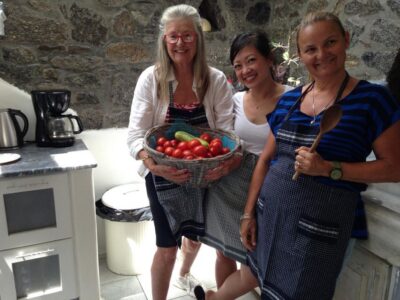
Group size is capped at six travelers, which changes the feel immediately. In a small group, it’s easier to notice what the guide is doing and to get help with the cooking steps (especially when you’re handling truffles, which are delicate and pretty specific to clean and treat).
It’s offered in English, and you’ll get a mobile ticket. If you prefer using your phone for everything, this one is straightforward.
You can also read our reviews of more tours and experiences in San Gimignano.


The wood walk with four-legged truffle hunters
The heart of the experience is the truffle hunt. You’ll be in the wood near the winery, where you learn what truffles are, how to find them, and how they’re used in Tuscan cooking. The approach is hands-on and visual: you understand the process while you’re right there in the environment where it actually happens.
And yes, the four-legged friends are the star. They help with the research, and the whole session is built around learning through observation. You’re not just hearing a lecture. You’re watching signals, learning what to look for, and picking up the practical reality that truffles aren’t something you spot casually like a mushroom after rain.
The best way to prepare mentally is to expect it to feel a bit like a real field activity. Even with a small group, you’ll likely be moving around the wood area for a portion of the time. I’d wear closed-toe shoes and be ready for uneven ground, since you’ll be working outdoors.
If you’re coming for the novelty, you’ll get it. If you’re coming because you want to understand the food, you’ll get that too. This is where truffle stops being a fancy ingredient and becomes something you can reason about: where it grows, how it’s searched for, and why preparation matters.
Vineyard and olive grove tour before the cooking starts
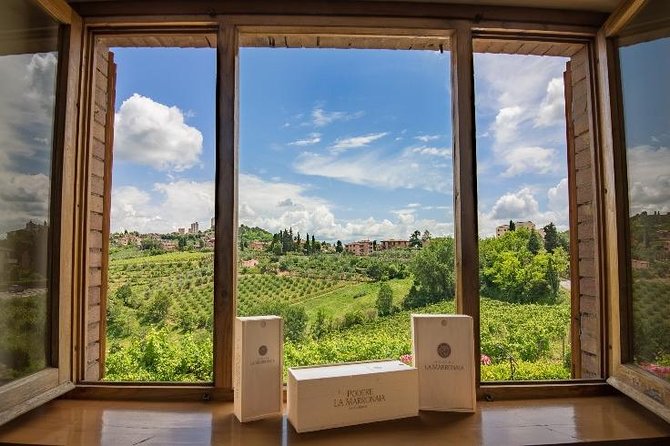
After the hunt, you shift gears into learning mode indoors and outdoors near the production areas. You’ll get a small tour of the vineyard and the olive grove before the cooking lesson begins. It’s not a long museum-style walk. It’s the kind of short, targeted tour that helps you understand the source behind what you’ll taste later.
This part works because it connects dots. Wine and olive oil are not just items on a menu here. You’re learning the estate logic: history and production, then tasting later with that background in your head.
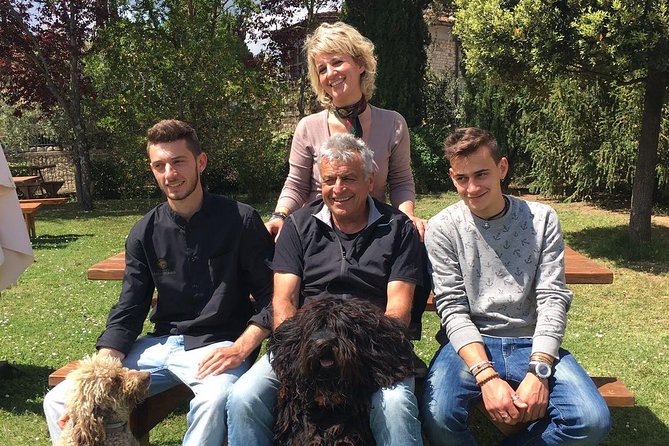
You’ll also get notions and curiosities about truffles from a family member. That matters more than you might think. Truffles have a reputation for being expensive and hard to handle, so a clear explanation helps you feel less intimidated. You learn what to expect when cleaning and preparing them, and what makes them different from other ingredients.
There’s a subtle benefit in the order of the day. You don’t go straight to cooking without context. You hunt first, then tour, then cook. When you start working in the kitchen, the truffle story already has shape.
The cooking class: cleaning, treating, and cooking fresh truffles
Once you’re back for the lesson, you’ll move into the practical steps. You’ll learn how to treat and clean truffles, and then how to cook with them in the kitchen. This is where many truffle experiences fall short, but this one is built to get you doing real work.
The focus is on fresh truffles and making sure you handle them the right way. If you’ve ever wondered why truffles are so often paired with simple flavors, this portion helps answer that. The technique supports the ingredient rather than overpowering it.
After the cooking steps, you get to taste all the dishes you prepared. That’s a big deal for value. You’re not watching someone else cook while you wait. You’re participating, then eating the results, which makes the time feel earned.
You can also expect kitchen guidance to tie back to the hunt. The steps you learn aren’t random culinary trivia; they connect back to how truffles are discovered and how freshness affects flavor and aroma.
If you’re sensitive to timing—like you want your meal without delays—this format can surprise you in a good way. Since you cook and then eat, it naturally turns into a longer, fuller lunch experience.
Tuscan lunch with fresh truffle courses, plus wine and olive oil tastings
At the table, the day delivers. The menu includes:
- Truffle bruschetta (starter)
- Homemade pasta with fresh truffle (main)
- Pork filet with fresh truffle (main)
- Tiramisù truffles (dessert)
Come hungry. The portions and the course count are what make this feel like a true meal rather than a light tasting. You’re getting multiple fresh-truffle moments across starter, pasta, meat, and dessert, which is the best way to understand how truffle flavor changes with different food types.
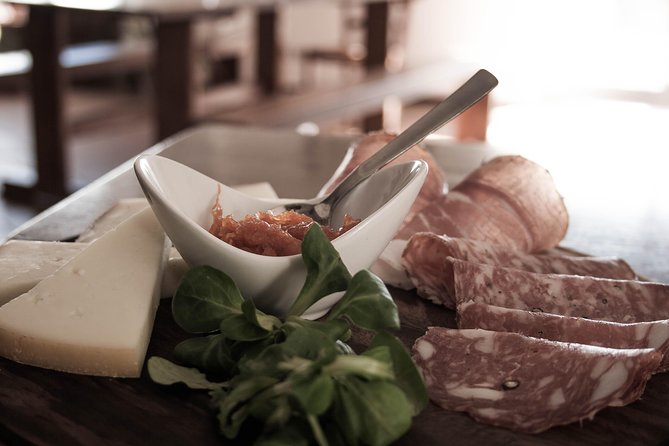
Then you add the tastings. You’ll sample a variety of organic red and white wines and extra-virgin olive oils. This is not limited to one quick pour. The experience is built like a structured tasting segment after the lunch rhythm.
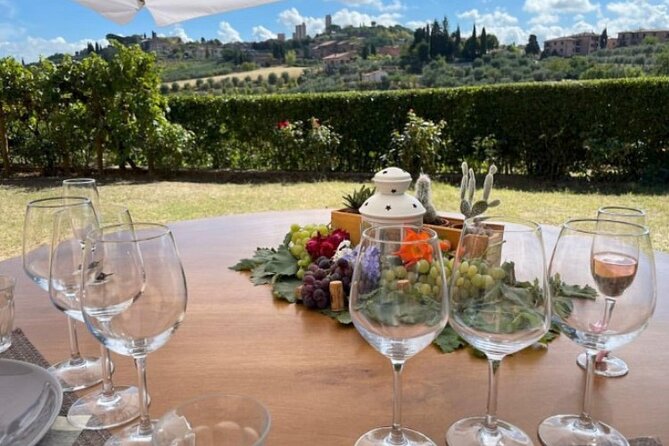
The view element adds another layer. You’ll have views of San Gimignano and the surrounding hills during the Tuscan lunch, which makes your meal feel like it belongs to the place. Food tastes better when you’re not rushing and when the setting is part of the experience.
One more practical note: because the lunch is full-course, you’ll want to treat this as your big food event of the day. If you plan to eat again soon after, you’ll probably be overdoing it.
Price and value: what $367.46 really includes in a group of six
At $367.46 per person, this is not a budget activity. So the real question is what you’re getting for the price.
You’re paying for three things that usually cost more separately in Tuscany:
- A small-group truffle hunt (max 6) near San Gimignano, with specialized help and outdoor instruction.
- A hands-on cooking class where you learn truffle cleaning and preparation and then eat what you made.
- A substantial tasting meal with fresh-truffle courses plus organic wine and extra-virgin olive oil.
The “max 6 travelers” limit matters for value because it reduces the feeling of being herded. You get more attention per person, which is important when you’re learning a delicate ingredient like truffles.
If you’re a couple or a small group, this tends to be a sweet spot. It feels social, not crowded, and the pacing works better when you’re not competing for space or tools in the kitchen.
Also, the tour is about 4 hours 30 minutes, which is long enough to feel like an event, not a quick excursion. The time is actually used: outdoor hunting, brief estate tour, cooking instruction, and then a full meal with tastings.
So yes, it costs real money. But it’s not just “pay to taste.” It’s “pay to learn and eat,” in a way that adds up.
What to bring and how to plan for fresh truffles
Here’s what you should keep in mind before you go, based on the experience rules and how the day runs.
First: the truffles. You need to give at least two days notice to find fresh truffles. If you book right before your visit, you might need to coordinate or ask how they’ll handle the ingredient. For best odds at the full fresh-truffle menu, plan ahead.
Second: timing. The experience starts at 11:00 am and ends back at the meeting point. Since it includes a full lunch and tastings, you’ll want to set your day up around this being your main meal.
Third: comfort. You’ll spend time outdoors in the wood. Wear shoes that can handle uneven ground. Bring a light layer if you tend to get cool outdoors, since woods can feel cooler even on mild days.
Finally: language and ticket format. It’s offered in English, and you’ll receive a mobile ticket. If you like simple check-in, this should fit your style.
One practical consideration: sometimes schedules shift. On at least one occasion, the wine tasting time moved earlier at the last minute, and they arranged transportation. If you’re coming from somewhere else in town, give yourself a buffer so a timing change doesn’t stress you out.
Who should book this truffle hunt and who might skip it
I think this tour is a great match if you want more than a tasting. You’ll enjoy it most if you like food learning and you don’t mind that the day includes real cooking time and a real lunch.
It also fits well if you’re:
- traveling as a couple or small group and want a calmer pace
- interested in wine and olive oil beyond just drinking
- curious about how truffles go from forest to kitchen
I’d think twice if you’re looking for something fast. Since you hunt, tour, cook, and eat, this is designed as a full food experience. If you prefer quick highlights and short tastings, you might find the length a bit much.
If you have questions or a special reason to learn the truffle process, this small group format helps. When the group is only six people, you’re more likely to get answers and support.
Should you book Truffle Hunting and Cooking Class in San Gimignano?
I’d book it if you want an actual truffle day: the hunt, the handling lessons, and a lunch that includes several fresh-truffle courses plus organic wine and extra-virgin olive oil. The small group size and the hands-on cooking make the price feel more justified than a typical wine tasting alone.
I’d hold off or at least message in advance if your schedule is tight and you can’t meet the two-day fresh-truffle notice. Fresh truffles are the point here, so planning for that improves your odds of getting the full experience as intended.
If you’re excited by food that tastes like it came from the ground, not a label on a menu, this is one of the more satisfying ways to spend a half-day in the San Gimignano area.
FAQ
How long is the truffle hunting and cooking class?
It runs about 4 hours 30 minutes (approx.).
Where does the tour start, and when does it end?
It starts at Via Martiri di Citerna, 2, 53037 San Gimignano SI, Italy at 11:00 am. It ends back at the meeting point.
What is included in the meal?
You’ll cook and then taste dishes including truffle bruschetta, homemade pasta with fresh truffle, pork filet with fresh truffle, and tiramisù truffles.
Do I need to book ahead for fresh truffles?
Yes. You need to give at least two days notice to find fresh truffles.
How big is the group?
The tour/activity has a maximum of 6 travelers.
Is it free to cancel?
Yes. You can cancel up to 24 hours in advance of the experience for a full refund.