REVIEW · CATANIA
Cooking Class Arancini in Catania
Book on GetYourGuide →Operated by Futuro e Lavoro · Bookable on GetYourGuide
The best souvenirs are edible. In Catania, you learn to make arancini and Sicilian almond paste in a real kitchen lab, then you taste what you cooked.
This class is built around doing the work, not just watching. Two things I especially like are the hands-on focus (rice, fillings, and the crunchy coating) and the fact that you leave with a recipe booklet to keep going at home.
One possible drawback: the recipe booklet may not be detailed enough for everyone, especially around rice directions and quantities, so you may need to pay close attention during the lesson.
In This Review
- Key things you’ll notice right away
- A Catania cooking class built around two Sicilian icons
- Where the class starts in Catania (and how to find it)
- Languages you can expect
- Inside the kitchen lab: how arancini training really works
- 1) The rice: cooking it so it holds together
- 2) Fillings: choose your style, including vegetarian options
- 3) The crunchy breading: what gives the bite
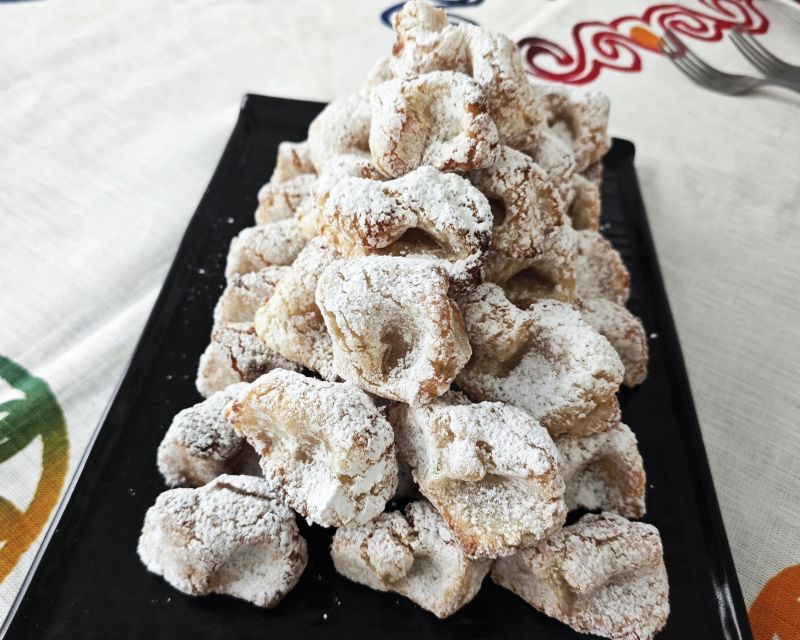
- Sicilian almond paste: sweet technique, not just mixing
- The tasting: wine, water, coffee, and your own results
- The recipe booklet: useful to take home, with one caution
- Who this Catania arancini-and-almond-paste class is best for
- Meeting the chef: friendly, English-capable instruction
- Practical tips to get the most from the class
- Should you book this Catania arancini-and-almond-paste class?
- FAQ
- What is the duration of the cooking class in Catania?
- Where does the class meet?
- Is instruction available in English?
- Do you learn both arancini and almond paste?
- Is the class suitable for vegetarians?
- What do you get at the end besides food?
Key things you’ll notice right away
- Small group (up to 6) means more back-and-forth with your instructor and fewer awkward stand-and-watch moments
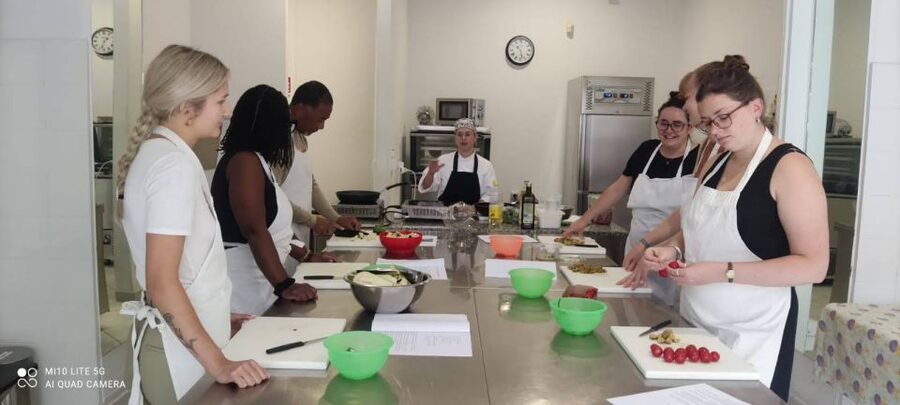
- Real laboratory kitchen setup with a professional chef, so techniques feel practical and doable
- Two Sicilian symbols in one session: arancini plus almond paste
- Vegetarian-friendly filling options so you can customize without missing the fun
- Tasting at the end with Sicilian-type wine, water, and coffee
- Take-home recipes in a booklet, useful even if you’ll still rely on what you learn live
A Catania cooking class built around two Sicilian icons
If you want real Sicilian food that people actually brag about, start with arancini. These golden rice balls are one of those dishes that look simple until you try shaping them without turning them into rice confetti. This class also adds another local favorite: almond paste, the sweet backbone of many Sicilian pastries.
What makes the experience stand out is the pairing. You spend your time on two different textures and flavors—savory, crisp, and starchy on one side; sweet, fragrant, and nutty on the other. It’s a smart way to learn more than one technique and understand how Sicilian cooking thinks.
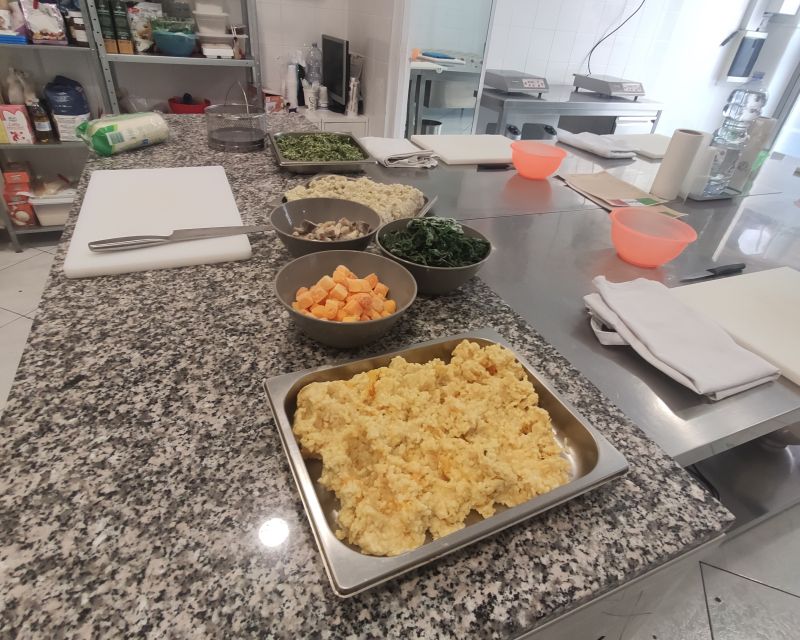
You’re not stuck in a classroom vibe either. The setting is a laboratorio di cucina, which matters. A kitchen lab usually means you’ll have space to work, tools ready when you need them, and staff who know the difference between a good step and the right step.
You can also read our reviews of more tours and experiences in Catania.
Where the class starts in Catania (and how to find it)
The meeting point is listed as Laboratorio di cucina with coordinates 37.51484298706055, 15.102240562438965. If you’re walking, give yourself a little extra time in the area so you can settle in before cooking starts.
This class is only 3 hours, so you want to arrive with calm energy. Long lunches and a relaxed pace are great, but you don’t want to start the lesson stressed. With a small group of up to 6, the whole session runs like a workshop: you’ll move from explanation to hands-on quickly.
Languages you can expect
Instruction is available in English and Italian. That’s a big plus if you’re not fluent, especially for technique-heavy steps like rice texture and breading consistency.
Inside the kitchen lab: how arancini training really works
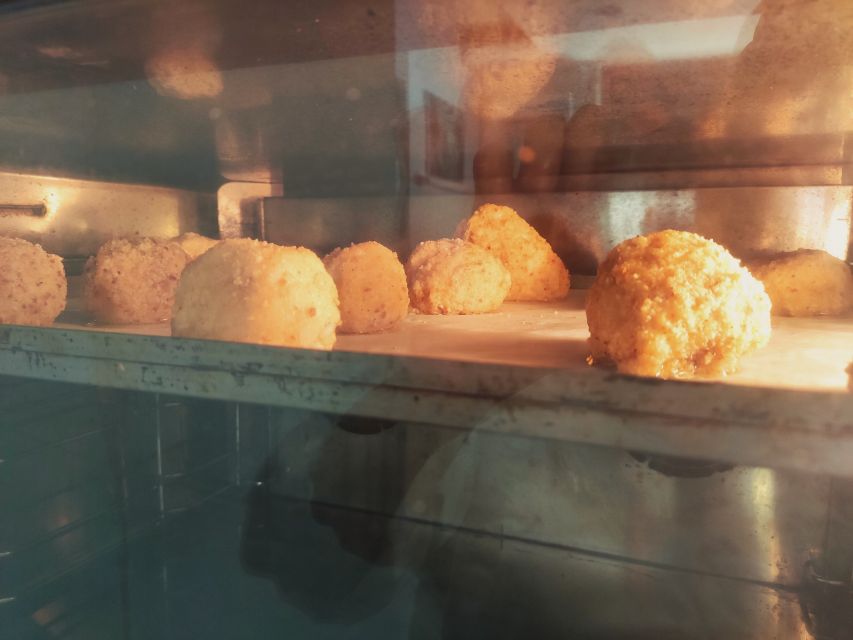
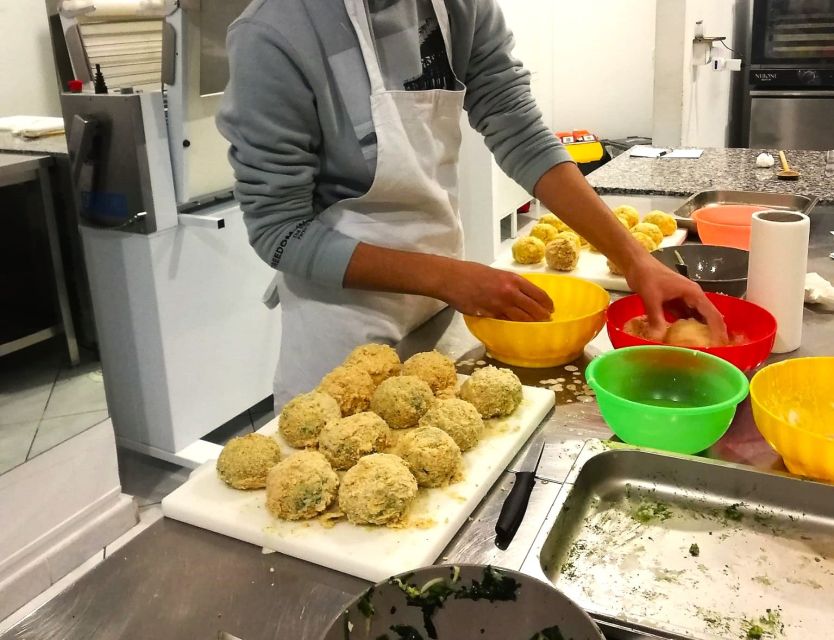
Your arancini lesson is structured around the core parts of the dish: the rice base, the fillings, and the crunchy coating. This is where you’ll learn what actually makes arancini taste like arancini, not just fried rice balls.
1) The rice: cooking it so it holds together
You’ll learn how the rice used for arancini should be cooked. The key idea is texture. The rice needs to be cooked so it can be shaped and still keep a firm structure once it’s stuffed and coated.
In classes like this, the instructor focus usually goes beyond time and heat. You’ll get guidance on what to watch for in the rice so it doesn’t end up too wet (hard to shape) or too dry (crumbles and breaks).
2) Fillings: choose your style, including vegetarian options
After the rice foundation is ready, you’ll make different types of fillings. The format is flexible: you can build vegetarian fillings too, so you aren’t stuck choosing only one flavor pathway.
Fillings are the part that makes each arancino different. The lesson approach helps you understand stuffing as a technique, not a lucky guess. You’ll practice how to portion, add filling without leaking, and close the rice around it.
Even if you’re not planning to replicate everything at home perfectly, learning stuffing mechanics is worth it. It gives you confidence when you make them again in your own kitchen.
3) The crunchy breading: what gives the bite
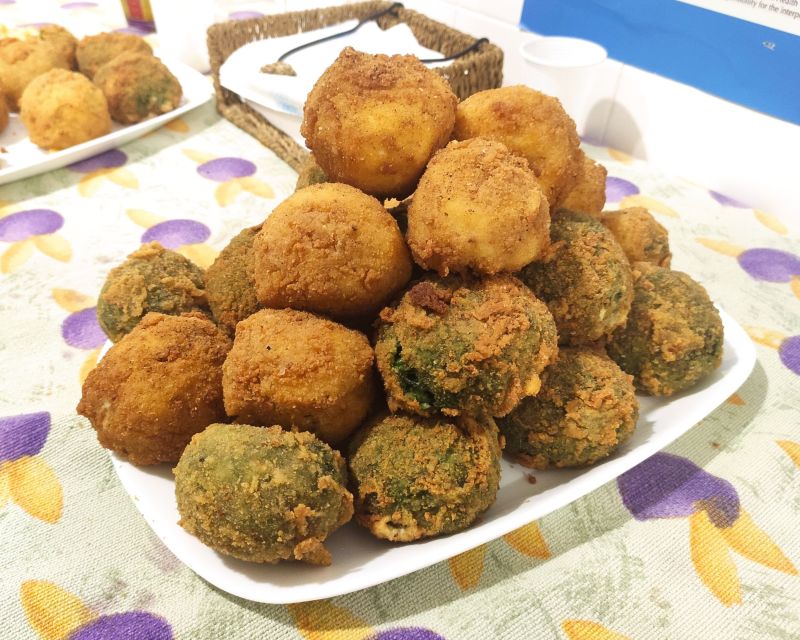
Next comes the coating. You’ll be taught how to make the typical crunchy breading that gives arancini their signature crunch.
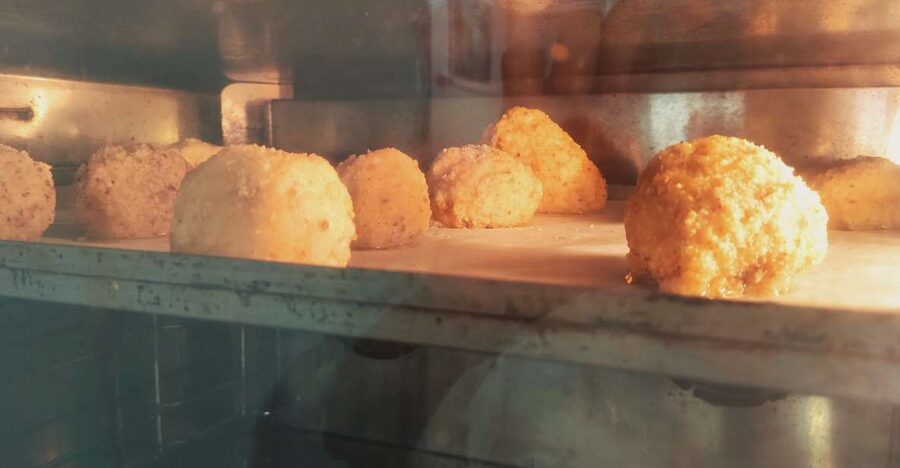
This isn’t just about frying. It’s about how the coating clings and browns. You’ll learn the practical steps so your arancini keep their crisp texture instead of going soft too fast after cooking.
Sicilian almond paste: sweet technique, not just mixing
Then you switch gears to the second Sicilian symbol: almond paste. Almond paste is one of those ingredients that can taste bland if it’s rushed, and magical if the texture is right.
During the lesson, you’ll be taught how to make it step-by-step. Even without fancy equipment, you’re working toward a specific consistency and a sweet, almond-forward flavor.
This part is great if you want something you can use beyond one dessert. Almond paste is often a building block in Sicilian baking, so learning how to make it gives you more options once you’re home.
The tasting: wine, water, coffee, and your own results
After the cooking work, you get a tasting of the various types of arancini and almond paste. This is more than a polite ending. It’s your reality check.
You’ll be able to compare textures and flavors from the different fillings and see how the breading performs. And with almond paste, you’ll notice how changes in texture affect taste.
You’ll also be offered Sicilian-type wine, plus water and coffee. That means the class ends like a small Sicilian meal, not just a snack break. Since the group is small, it also feels social without turning into forced small talk.
Some people also mention bringing leftovers home. That makes sense with a session that produces multiple arancini and tastings—so if you have a kitchen bag ready, it’s a smart move.
The recipe booklet: useful to take home, with one caution
At the end, you receive a booklet with recipes. This is one of the strongest value points, because making arancini at home is where the learning either sticks or fades.
That said, one practical caveat came up: at least one participant found the booklet didn’t have enough detail to reproduce the rice step, and the quantities weren’t clear. They also described it as incomplete.
So here’s how you should handle it as a cook-in-the-making: treat the booklet as a memory aid, not your only instruction manual. If you want to nail arancini at home, the biggest payoff comes from paying close attention during the rice and shaping guidance.
If your goal is to recreate it exactly, you’ll likely do best by taking notes during the lesson. Even a few short bullets help when you’re back in your kitchen a few days later.
Who this Catania arancini-and-almond-paste class is best for
This is ideal if you:
- want a hands-on Sicilian cooking experience rather than a passive tour
- love learning technique (rice texture, stuffing, crunchy breading)
- prefer small group classes where the instructor can correct your method
- have dietary preferences and want vegetarian fillings as an option
- enjoy tasting what you make with a local-style finish (wine, coffee)
It’s also a good fit for couples and food-focused solo travelers. One small-group advantage is that it can feel personal even when only a couple people are in the class. That’s where you get more explanation and less rushing.
For timing, plan for a full 3-hour block. Don’t schedule your next activity right behind it unless it’s flexible. After cooking, you’ll want a buffer to cool down, eat, and digest the experience.
Meeting the chef: friendly, English-capable instruction
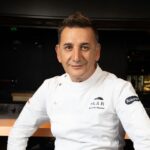
The class is taught by a professional chef, and English instruction is available. More than one person noted that the teaching style is friendly and clear, with a good sense of humor in the kitchen.
One instructor name that came up is Agata, described as an amazing chef and teacher. When an instructor like that is involved, it usually means you’ll get more than just steps—you’ll get the why behind them. That helps you adjust when you’re cooking at home and the rice behaves slightly differently depending on your brand or pot.
Also, the class has a limited group size of 6 participants, so you’re more likely to get individualized help. That’s especially important for shaping and coating, where tiny differences change results fast.
Practical tips to get the most from the class
Here are a few things that will make your 3 hours smoother and more likely to produce arancini you’re proud of:
- Bring the mindset of hands-on learning. Arancini isn’t a museum object. You’ll handle rice.
- Pay close attention during the rice step. Texture is everything for shaping and final bite.
- If you want vegetarian fillings, say so early. It helps the instructor plan the workflow.
- Ask quick questions while you’re still at that station. Waiting until the end is when details get fuzzy.
- If you care about replicating the recipe later, jot down the key rice notes, even if the booklet exists.
And yes, expect a real kitchen mess in the best way. The point is to learn in the middle of the action.
Should you book this Catania arancini-and-almond-paste class?
I think you should book it if you want a true Sicilian food skill, taught in a professional kitchen, with a small group and a tasting finish. The structure—rice, fillings, crunchy breading, then almond paste—makes it a good “skills per hour” choice. You’re also not just leaving with food. You leave with a recipe booklet and the techniques to build on it.
You might hesitate if you’re the kind of cook who needs an ultra-detailed written guide for everything, especially the rice instructions and quantities. Based on one concern raised, the booklet may not be enough on its own. In that case, it’s not a dealbreaker—just means you should treat the live instruction as the main source and take notes.
Overall, this is a strong pick for anyone who’s in Catania and wants more than a meal. You’re taking home two Sicilian staples, plus the confidence to make them again.
FAQ
What is the duration of the cooking class in Catania?
The class lasts 3 hours.
Where does the class meet?
You meet at Laboratorio di cucina, coordinates 37.51484298706055, 15.102240562438965.
Is instruction available in English?
Yes. The instructor teaches in English and Italian.
Do you learn both arancini and almond paste?
Yes. You learn how to make Sicilian arancini and also how to make Sicilian almond paste.
Is the class suitable for vegetarians?
Vegetarian fillings are possible during the arancini portion, so it can work well if you avoid meat in your fillings.
What do you get at the end besides food?
You’ll have a tasting of arancini and almond paste, and you’ll also be given a booklet with the recipes. You may also be offered Sicilian-type wine, water, and coffee as part of the experience.