REVIEW · ROME
Walking tour in the Heart of Rome and a Cooking Class in a Very Small Group
Book on Viator →Operated by Sublime Tours · Bookable on Viator
Rome is best when your stomach is already planning dinner. This is a small-group combo that pairs a guided walk through classic sights with a hands-on fresh pasta lesson at a local restaurant.
I love how the route gives you clear context without turning into a lecture, starting right at Piazza Barberini and keeping momentum through the Spanish Steps, Trevi Fountain, and the Pantheon. I also like that you don’t just watch cooking: you make pasta from scratch and leave with recipes for everything you prepared. One possible drawback: several sights are covered briefly, so if you want long photo stops or extra time in a single landmark, you may feel a bit time-pressured.
In This Review
- Key Highlights You’ll Care About
- A Tiny-Group Rome Combo: Sights plus Real Cooking Time
- Piazza Barberini to Spanish Steps: Getting Your Bearings Fast
- Trevi Fountain and the Ancient Aqueduct Clues
- Piazza di Pietra and Santa Maria Sopra Minerva: Small Stops, Big Payoff
- Pantheon on Your Route: Why This Order Works
- Piazza Navona to the Restaurant Table: When the Walk Becomes Dinner
- The Pasta Lesson: Fresh-Made, Recipe-Backed, and Actually Fun
- What You’ll Eat: Appetizer, Pasta Dish, Dessert
- Price and Value: Where the Money Actually Goes
- Who This Tour Fits Best (and Who Might Prefer Something Else)
- Tips to Get the Most Out of the Afternoon
- Should You Book This Heart of Rome Pasta Class?
- FAQ
- How long is the walking tour and cooking class?
- What is the group size limit?
- What language is the tour offered in?
- How much does it cost per person?
- Where does the tour start?
- Where does the tour end?
- Is there a mobile ticket?
- What do you do during the cooking class?
- What is the cancellation policy?
Key Highlights You’ll Care About
- Max 8 travelers keeps the walk personal and the cooking session easy to follow
- Four hours total means you get major sights plus a full meal experience
- Fresh pasta hands-on with step-by-step help from the chef and guide
- Stop-by-stop storytelling that connects monuments to what you’ll eat
- Appetizer, pasta, and dessert so the class ends as an actual dinner
A Tiny-Group Rome Combo: Sights plus Real Cooking Time
This tour is built for people who want two Rome experiences without running from place to place all day. You start with a guided walk through the historic center, then shift gears into a very small-group cooking class where the city’s flavors turn into something you can actually recreate at home.
The big win is pacing. You’re not stuck in one place for hours, but you also aren’t skimming. Each stop is short enough to keep you moving, yet structured enough that you understand why the spot matters. And because the group stays small, you’re more likely to get answers when you ask questions rather than just nod politely.
You can also read our reviews of more tours and experiences in Rome.

Piazza Barberini to Spanish Steps: Getting Your Bearings Fast
The tour kicks off at Piazza Barberini, a smart choice because it feels like Rome’s “real life” at street level. Your guide sets the tone early, pointing out what you’ll see and how the area connects to the bigger historic center. It’s the kind of start that helps you stop feeling lost the moment you step outside.
Then you head to the Spanish Steps, one of those places you’ve seen in photos a thousand times. What you gain here is context: you learn the history and the little curiosities around the square and its surroundings. That turns a postcard scene into something you can explain to your travel partner.
A practical note: you’ll be standing and walking through busy areas. The good news is the tour keeps stops tight and useful, so you’re not stuck waiting around.
Trevi Fountain and the Ancient Aqueduct Clues
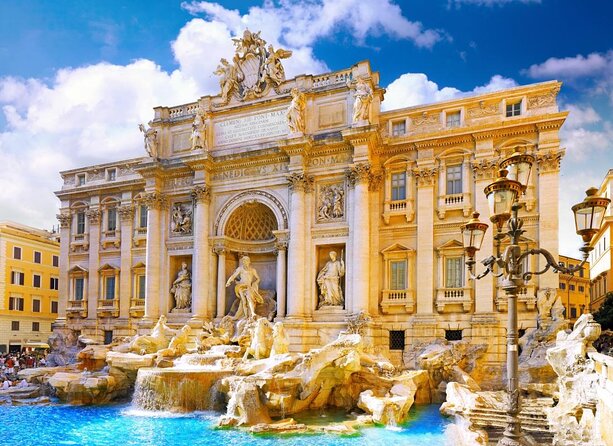
Next comes Fontana di Trevi, and the route is more than just scenic wandering. On the way, you pass the ruins of an ancient aqueduct, and then you reach the fountain that nearly everyone comes to see. The guide’s explanation helps you notice details instead of just aiming your camera and hoping for the best.
Once you’re at Trevi, you get time to do the classic things: wander around, take photos, and throw in coins. That free-wandering moment is important. It lets you enjoy the place on your own terms after the history portion gives you something to look for.
Trevi can be crowded, so this is where timing matters. The tour structure helps you experience the fountain without feeling like you’re spending the whole day stalled in front of it.
Piazza di Pietra and Santa Maria Sopra Minerva: Small Stops, Big Payoff
From Trevi you move to Piazza di Pietra, where the guide zeroes in on the square and Hadrian’s temple nearby. This is a great reminder that Rome is layered. Even when the setting looks like an everyday square, there’s often something ancient underneath or just a short walk away.
Then it’s on to Chiesa di Santa Maria Sopra Minerva, where you hear about Bernini’s elephant. That’s exactly the kind of detail that makes a walking tour worth doing. You’re not only learning dates and names; you’re learning the visual jokes and artistic choices that people built into the city.
These stops are brief by design. The upside is you cover variety in a single afternoon. The trade-off is that you won’t have long time to fully explore each site the way you might on a standalone visit.
Pantheon on Your Route: Why This Order Works
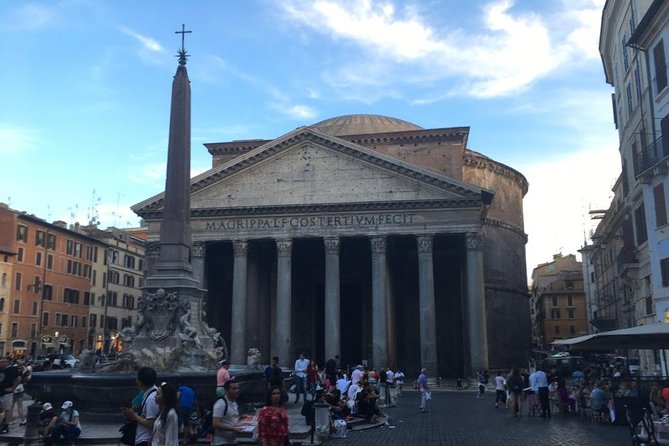
You arrive at the Pantheon, one of Rome’s most powerful landmarks. The guide explains what makes it important and how it influenced later Renaissance artists. Even if you’ve seen photos, you’ll likely notice more once you understand what later generations borrowed from it.
The Pantheon portion is timed to fit the rest of the day, so it’s not a slow, lingering visit. But it is enough time to get oriented, appreciate the building’s impact, and still keep your energy for what comes next.
If you’re the kind of person who likes structure—where you know what to look for while you’re standing there—this stop hits the sweet spot.


Piazza Navona to the Restaurant Table: When the Walk Becomes Dinner
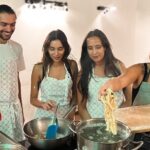
After the final walking segment near Piazza Navona, you head into a local restaurant for the cooking class. This transition is one of the best parts of the experience because it turns the afternoon from sightseeing into something you can eat.
Piazza Navona is another scene you’ll recognize instantly. The guide gives a historical explanation of the square, and that helps you see it with context rather than just as a pretty stop.
Then you move to the restaurant, where the tour shifts from Roman monuments to Roman technique.
The Pasta Lesson: Fresh-Made, Recipe-Backed, and Actually Fun
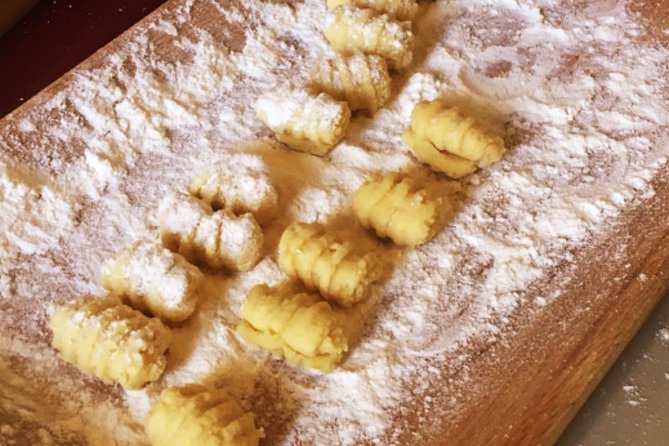
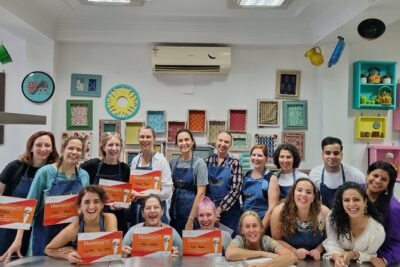
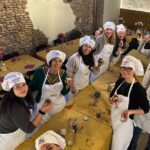
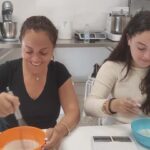
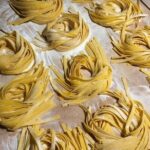
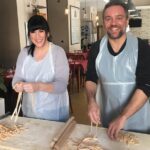
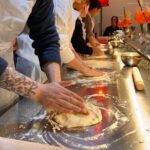
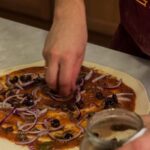
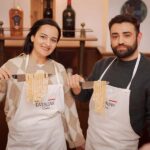
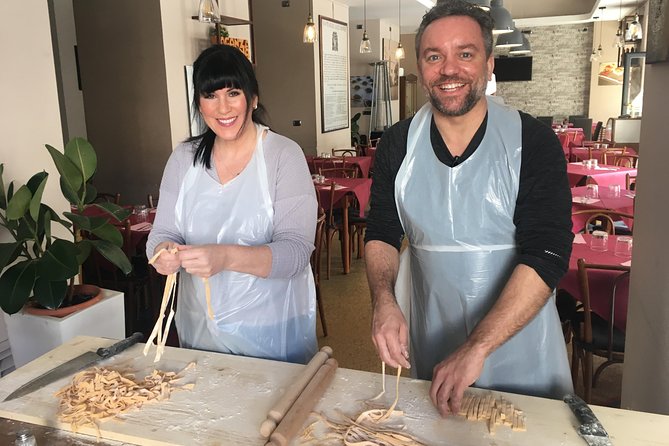
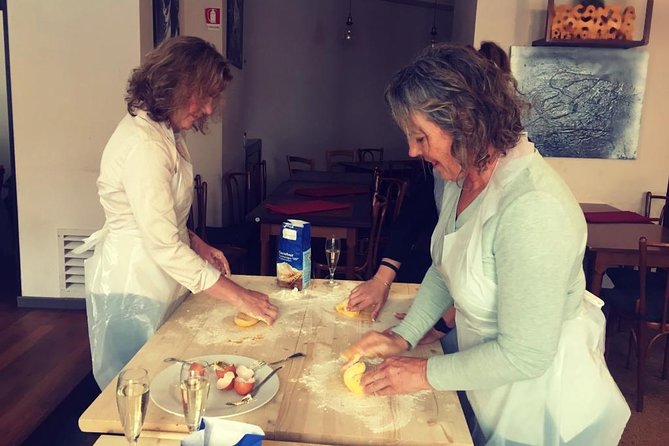
This is not a passive food show. You make pasta from scratch, guided step by step in a very small group setting.
In one session, the menu included artichokes, gnocchi (mixing, rolling, and working the dough), and ciabelline, a crunchy cookie with a licorice flavor. That kind of menu is exactly what makes the class feel like more than just pasta-with-a-side-story. You get a mix of flavors and textures, plus hands-on practice with Italian techniques.
Another advantage: you receive recipes for all the dishes you prepared. That matters because cooking lessons are often forgotten the next time you’re tired and hungry and staring at your pantry. The recipe pages give you a real chance to repeat the meal at home, not just remember the taste.
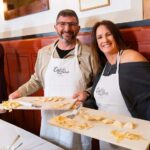
Also, pay attention to how your guide works alongside the chef. In at least one class, the guide Nina supported the experience with translation during the cooking session with Chef Paula. If language is a barrier for you, having that kind of support can make a hands-on lesson feel much less stressful.
What You’ll Eat: Appetizer, Pasta Dish, Dessert
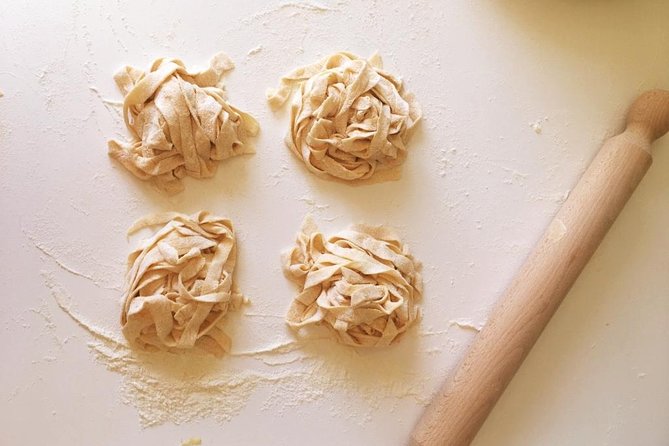
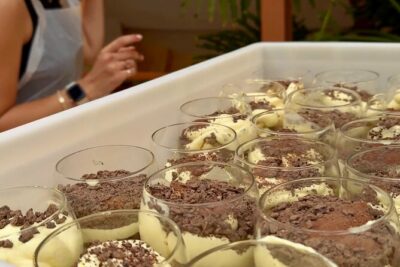
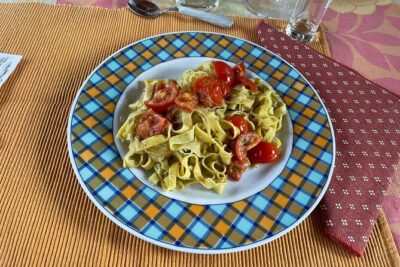
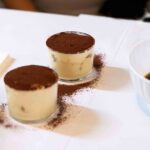
The lesson is designed to end as a full meal: an appetizer, a pasta dish, and dessert. That’s a big value point. You’re paying for guidance and instruction, but you’re also paying for food you can actually enjoy while it’s fresh and made by your own hands.
Because the menu can vary by class, focus on the structure: you’re always guided through a sequence that starts with prepping, then builds into pasta work, then finishes with dessert. That flow makes the time feel productive, not chaotic.
Price and Value: Where the Money Actually Goes
At $142.98 per person, this isn’t a budget activity. But it’s also not just a walking tour bundled with a vague tasting. You’re paying for:
- a guided walk through multiple major landmarks
- a small-group cooking class in a local restaurant
- the instructor plus the chef’s time
- recipes for everything you make
- and a full meal structure (appetizer, pasta, dessert)
If you’ve ever paid for a cooking class that only covers one component, this tends to feel more complete. And since the tour is only about four hours, it slots nicely into a Rome trip without stealing your entire day.
Who This Tour Fits Best (and Who Might Prefer Something Else)
This is a strong choice if you want a practical Rome afternoon: a guided route that makes sightseeing easier, followed by a cooking lesson that gives you something to take home.
It also fits families and mixed groups, since one of the high ratings came from a family experience where the guide kept things enjoyable for everyone. The small group size (up to 8 travelers) supports that kind of relaxed, question-friendly flow.
Who might skip it? If you want long, unhurried time inside a single monument, this won’t be your best match. Several stops are short, and the day is structured toward keeping you moving and feeding you at the end.
Tips to Get the Most Out of the Afternoon
A few things that will help you enjoy it more:
- Wear shoes you’re comfortable standing and walking in. Rome sidewalks can be uneven, and you’ll spend meaningful time on your feet.
- Bring a phone with camera space and some battery. You’ll have photo time at spots like Trevi, and it helps to capture moments while the guide’s context is fresh.
- Go into the cooking class ready to get hands-on, even if you’re a little nervous. The pace is set up for learning, not showing off.
If you’re planning around timing, booking earlier can reduce headaches. On average, this tour is booked about 41 days in advance, so it’s smart to lock in your date if your schedule is tight.
Should You Book This Heart of Rome Pasta Class?
Yes—if you like your Rome day to include both landmarks and something edible you can practice later. The combination of a structured walk (from Piazza Barberini through the Spanish Steps and Trevi to the Pantheon) and a hands-on, recipe-backed cooking session is a great way to make limited time in the city feel full.
Book it especially if you:
- want a very small group experience
- enjoy learning what you’re looking at, not just moving from stop to stop
- want a real dinner ending, not a quick snack
Consider another option if you’re the type who needs longer time in fewer places. This day is efficient. It covers a lot, and it’s designed to move you toward the restaurant while everything is still fun and fresh.
If that sounds like your kind of Rome afternoon, this one is a strong bet.
FAQ
How long is the walking tour and cooking class?
The experience is about 4 hours.
What is the group size limit?
The tour has a maximum of 8 travelers.
What language is the tour offered in?
It’s offered in English.
How much does it cost per person?
The price is $142.98 per person.
Where does the tour start?
The meeting point is Piazza Barberini, P.za Barberini, 00187 Roma RM, Italy.
Where does the tour end?
It ends close to the Pantheon, near Piazza della Rotonda, 00186 Roma RM, Italy.
Is there a mobile ticket?
Yes, the tour includes a mobile ticket.
What do you do during the cooking class?
You make fresh pasta from scratch, and the lesson includes an appetizer, a pasta dish, and dessert. Recipes are provided for all the dishes you prepared.
What is the cancellation policy?
Free cancellation is available up to 24 hours in advance for a full refund. If you cancel less than 24 hours before the start time, the amount paid is not refunded.