REVIEW · HANOI
Hanoi: Maya Traditional Cooking Class & Market Tour
Book on GetYourGuide →Operated by Crossing Vietnam Tour · Bookable on GetYourGuide
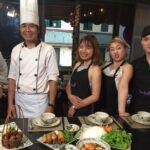
Food starts at the market, not the stove. I like the way this class pairs a hands-on kitchen lesson with the Yen Thai market so you understand ingredients before you cook, and I also like that you end up making Hanoi favorites like egg coffee and multiple pho-style dishes. With small groups (up to 10), you get real step-by-step help, and instructors such as Lee, Devin, Ruby, Iris, and Stefanie are repeatedly praised for clear English and patient pacing.
One thing to plan around: afternoon sessions may not have market access every day, since local markets are usually strongest in the morning.
Key highlights at a glance
- Yen Thai market first, so you can spot herbs, sauces, and substitutes before cooking
- Step-by-step cooking for nem ran, nom du du, pho cuon, and pho tron
- A true Hanoi special: ca phe trung (egg coffee), plus seasonal fruit dessert
- Small group format (max 10), with English support and hands-on instruction
- Included meal extras: all food and drinks, plus local wine tasting
In This Review
- Why This Hanoi Cooking Class Works So Well in 3–4 Hours
- Yen Thai Market: Where You Learn Ingredients (and Substitutions)
- Maya Kitchen: Four Classic Dishes Plus Egg Coffee
- Nem Ran: Fried Spring Rolls and the Art of Even Rolls
- Nom Du Du: Papaya Salad with Sour-Sweet Balance
- Pho Cuon: Pho Rolls You Assemble With Confidence
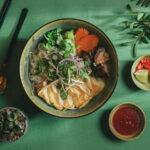
- Pho Tron: Mixed Pho and Comfort-Style Assembly
- Ca Phe Trung: Egg Coffee, Hanoi Style
- Eating What You Made: Portion Fit, Drinks, and Local Wine Tasting
- Guides, English Support, and Real Adjustments for Food Needs
- Price and Value: Why $22 Can Feel Like a Steal
- Practical Logistics: Meeting Point, Timing, and What to Expect
- Should You Book This Hanoi Cooking Class?
- FAQ
- How long is the Hanoi Maya Traditional Cooking Class & Market Tour?
- What dishes and drinks are included in the menu?
- Is this a small group experience?
- Is hotel pickup included?
- Where do I meet for the tour?
- What about local wine tasting and dessert?
- What should I know about afternoon sessions and the market?
- What are the cancellation and payment options?
Why This Hanoi Cooking Class Works So Well in 3–4 Hours
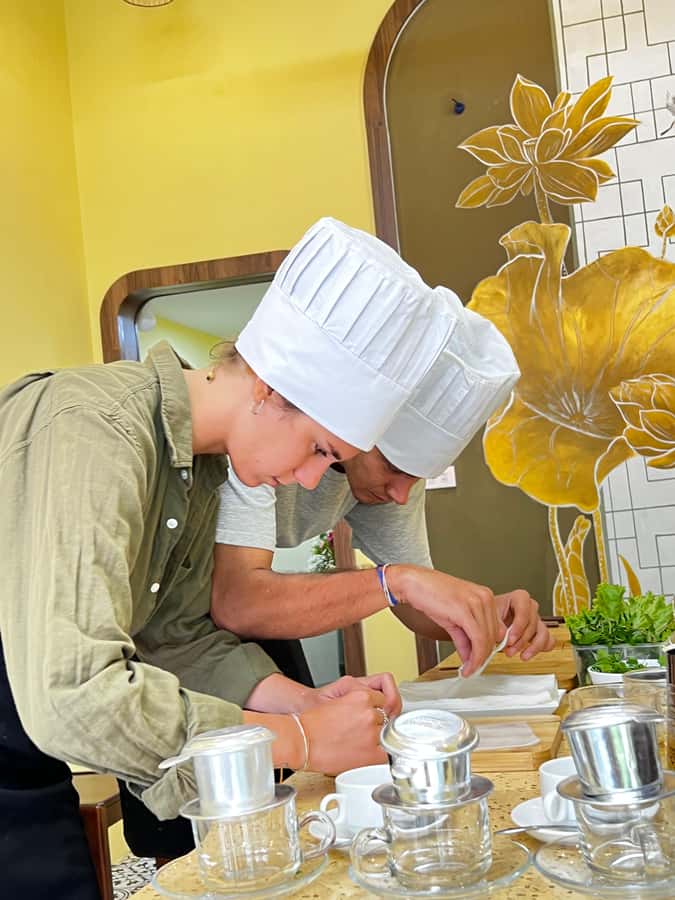
This is the kind of experience that makes sense early in a trip to Hanoi. You don’t just taste Vietnamese food—you learn how it’s built. The timing is tight (about 3–4 hours), but the structure is smart: market tour up front, then cooking, then eating what you made.
The biggest value here is context. When you see ingredients in a real local market, things that can feel random back home start to click. You learn what sour means in Vietnamese cooking, how herbs are chosen, and why some dishes rely on quick balance rather than heavy cooking or complex technique. Then the class turns that understanding into practical skills you can repeat later.
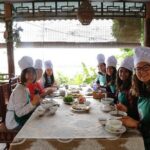
I also like that it’s not a huge production. The group is limited to 10 participants, and the instruction is step-by-step. Based on how guides like Devin and Ruby run sessions, you’ll typically get lots of attention while you work—especially if you’re nervous about getting the rolls even or getting flavors right.
One more plus: you finish with a full sit-down meal. Several guides are known for making sure the food is eaten at the end of class (so you’re not left snacking mid-session), and the portion sizes tend to be “just enough” for trying everything without feeling stuffed.
Yen Thai Market: Where You Learn Ingredients (and Substitutions)
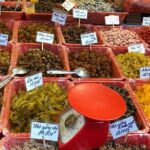
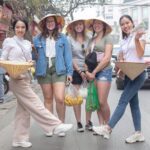
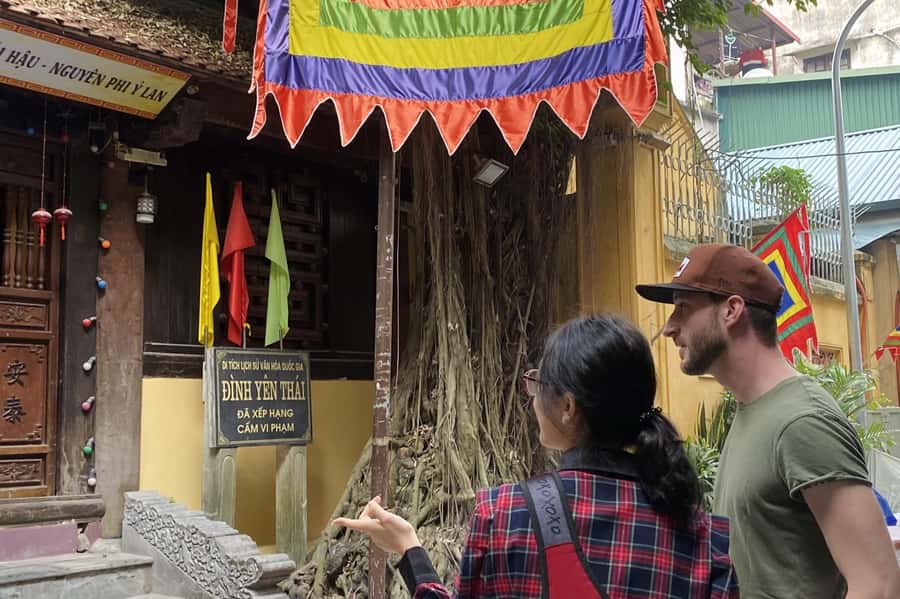
The day starts with a welcome at the office, then you head to Yen Thai market. This stop is more than a photo break. It’s where you learn what Vietnamese kitchens actually buy—fresh produce, herbs, packaged items you might not recognize, and the ingredients that give dishes their signature taste.
Expect a lively walk with the goal of buying what the class will use. You’ll see fresh items that don’t always show up in tourist-friendly supermarkets, and you’ll get a sense of how Vietnamese recipes rely on specific textures and aromas—not just on “flavor” in the general sense.
A few themes worth paying attention to:
- How herbs and greens look when they’re fresh (and how quickly they can lose quality if handled badly)
- What vendors offer that can act as substitutes when something isn’t available later
- Which fruit is seasonal for the dessert part of the experience
Some guides (like Lee and Jewel in past classes) are especially good at talking through fruit variety, including fruits many people have never tried. If you’re curious about why Vietnamese fruit tastes different from what you’re used to—less candy-sweet, more floral or crisp—you’ll enjoy this portion.
If you’re doing the afternoon session, keep in mind the market may not be available every day. Local markets often run best in the morning, so your best bet for that market-first feel is an earlier departure time when offered.
You can also read our reviews of more tours and experiences in Hanoi.
Maya Kitchen: Four Classic Dishes Plus Egg Coffee
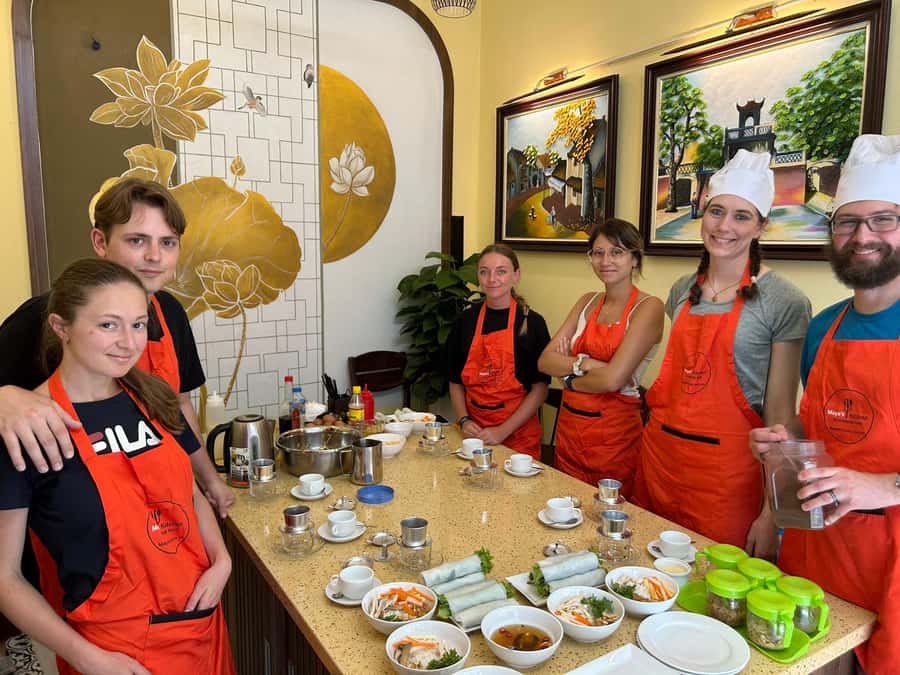
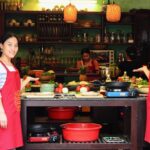
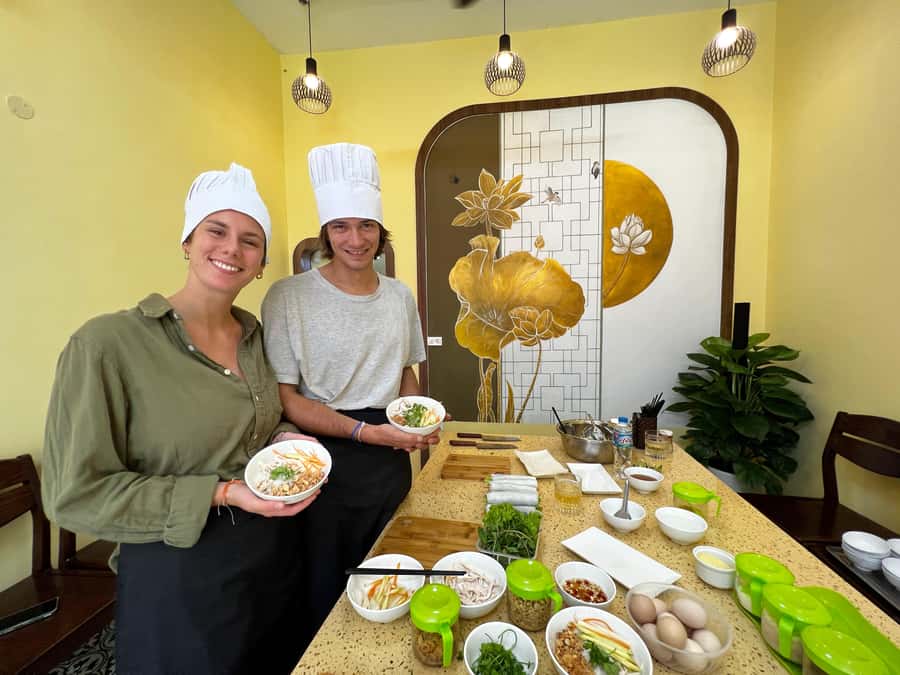
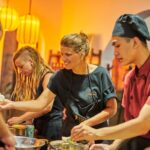
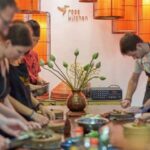
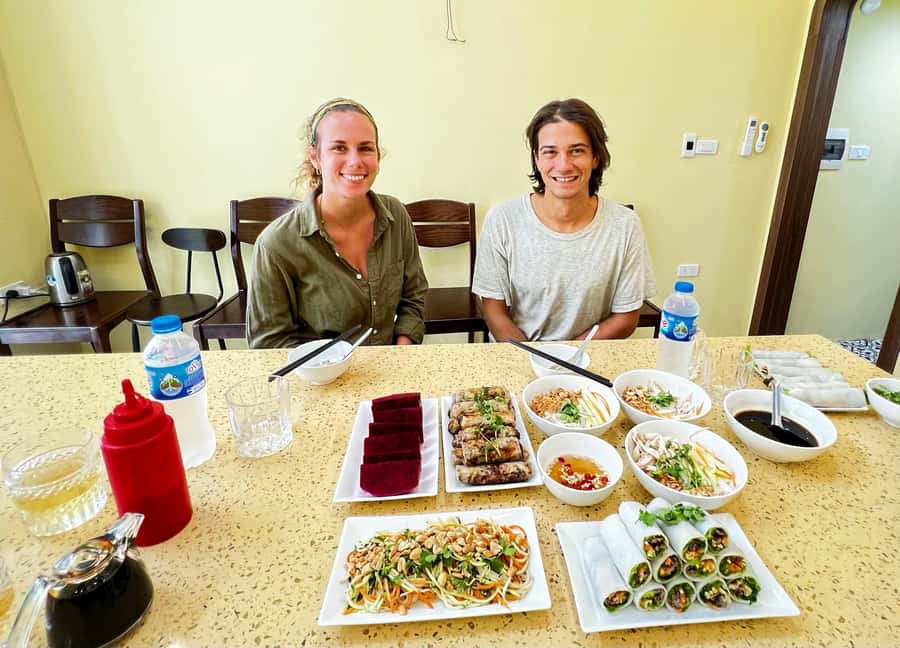
After the market, you move to the kitchen for a focused cooking lesson. You’ll make four classic Vietnamese dishes, plus Vietnamese egg coffee, all with guidance from your instructor.
The dishes are designed as a progression:
- Start with something hands-on and technique-heavy: nem ran (fried spring rolls)
- Move into a flavor-balancing salad: nom du du (papaya salad)
- Then switch to something assembled: pho cuon (pho rolls)
- Finish with a more mixed, comforting style dish: pho tron (mixed pho)
- And close with a Hanoi signature drink: ca phe trung (egg coffee)
Nem Ran: Fried Spring Rolls and the Art of Even Rolls
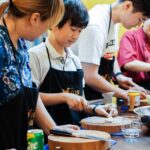
Your first cooking stop is fried spring rolls—often treated like a national holiday dish. The class focuses on technique: how to portion, how to wrap, and how to shape so the roll cooks evenly.
This is where a good instructor makes the difference. Guides like Lee and Iris are known for patient coaching, and the setup tends to keep you moving step-by-step. You’ll likely practice until your rolls are even enough to look like something you’d bring to a family gathering, not just something that holds together.
Practical takeaway for you: don’t rush the wrapping stage. Most of the payoff comes from consistent size and tightness, because that’s what affects how crisp and “rollable” the final result is.
Nom Du Du: Papaya Salad with Sour-Sweet Balance
Next comes papaya salad (nom du du), and it’s all about flavor balance—especially that sour + sweet contrast Vietnamese cooks aim for.
This dish is a great learning tool because it teaches you what to adjust. If one component dominates, the whole salad feels off. The class style is meant to show you how ingredients combine and why the dressing matters as much as the fruit.
If you’re the type who likes food that wakes up your palate, this is one of the most satisfying dishes to make. And if you’re not used to Vietnamese salads, you’ll still leave knowing what makes it work.
Pho Cuon: Pho Rolls You Assemble With Confidence
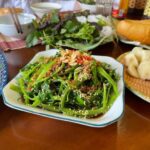
Then you’ll work on pho cuon (pho rolls). This is not a complicated dish in ingredients, but it rewards technique and timing. You’re assembling a rolled dish where texture matters—what you choose to fill, how you place it, and how you keep everything neat enough to eat comfortably.
Guides such as Stephanie and Lena Chan have been praised for making the steps easy to follow, which matters here. If you’ve ever struggled with rolling anything—sushi, spring rolls, dumplings—this part is where the “hands-on” value really shows.

Pho Tron: Mixed Pho and Comfort-Style Assembly
Finally, you make pho tron (mixed pho). It’s a different style than a straight bowl of pho because it mixes components rather than serving everything in one clean arrangement.
Think of it as the “put it together right” lesson. You’re learning how to combine elements so the dish tastes cohesive, not random. If you love pho but want to understand how Vietnamese cooks think beyond the bowl, this is a useful dish to learn.
Ca Phe Trung: Egg Coffee, Hanoi Style
No Hanoi cooking class feels complete without egg coffee (ca phe trung). You’ll learn how to make it as part of the cooking session, not as a separate tasting.
Egg coffee is a great skill-builder because it’s about texture and balance: sweetness, creaminess, and that distinctive coffee flavor. Several guides have been noted for explaining this clearly in English, which helps a lot if you’re the kind of person who usually thinks egg-based drinks are too hard.
Eating What You Made: Portion Fit, Drinks, and Local Wine Tasting
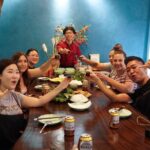
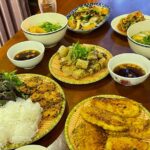
One of the best things about this class is that you don’t cook and then wander off. You sit down and enjoy everything you made.
That matters because it changes your learning. While you’re eating, you’re more likely to remember what you did right or wrong in each step. It’s also when the flavors come into focus—your papaya salad tastes different once it’s fully built, and your roll work shows up in crunch and structure.
The class includes:
- All food and drinks
- Local wine tasting
- Seasonal fruits for dessert
- Drinking water
- A cooking recipe to take with you
A few notes based on what’s been shared about past sessions:
- The meal includes enough variety that it feels like a real experience, not just “samples.”
- Some people end up with leftovers packed, so if you’re hoping to stretch the experience into another meal, you’ll likely have options.
- Air-conditioned kitchen time is part of the experience, which helps if Hanoi heat is doing its thing outside.
The local wine tasting is a nice add-on if you want to understand Vietnamese flavors beyond food. Just keep it moderate—this is a cooking class, so you’ll still want your focus for technique.
Guides, English Support, and Real Adjustments for Food Needs
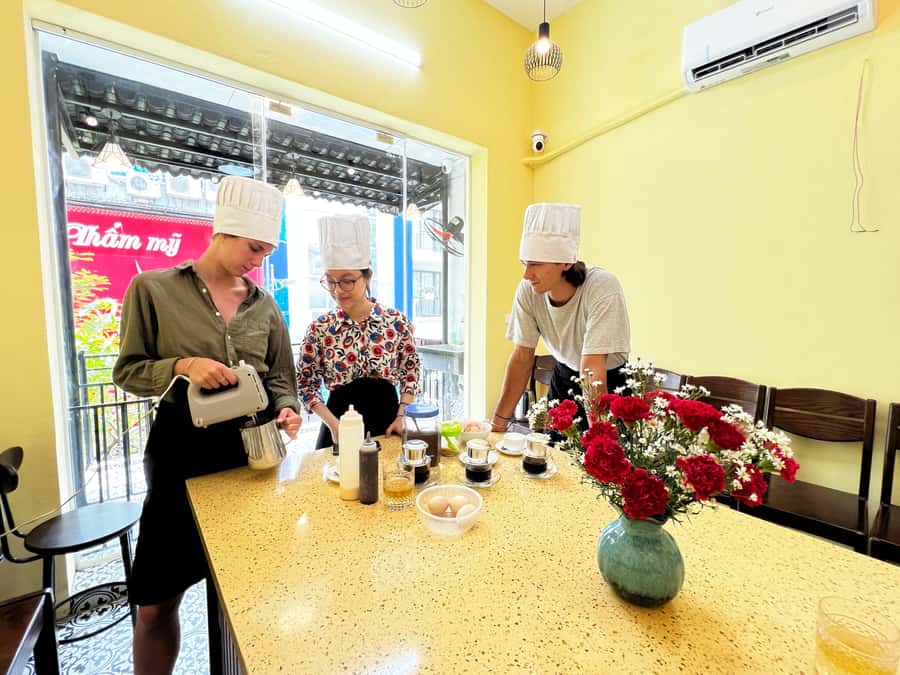
This class is designed for small groups and English instruction (with Vietnamese support). In past sessions, guides have been praised for being friendly and organized, and several have been singled out for making the steps easy even for beginners.
Names that come up often include Devin, Ruby, Iris, Stefanie, Stephanie, Aurora, Anne, and Ashley. While you won’t pick your instructor, you can feel confident from the pattern: the teaching style tends to be hands-on, patient, and not overly rushed.
Another important value: diet adjustments. At least one participant noted that a nut allergy was handled during the class without drama. That doesn’t mean every situation will be identical, but it does suggest the team takes dietary notes seriously. If you have allergies or strong preferences, tell the organizer ahead of time and ask what can be adapted.
Price and Value: Why $22 Can Feel Like a Steal
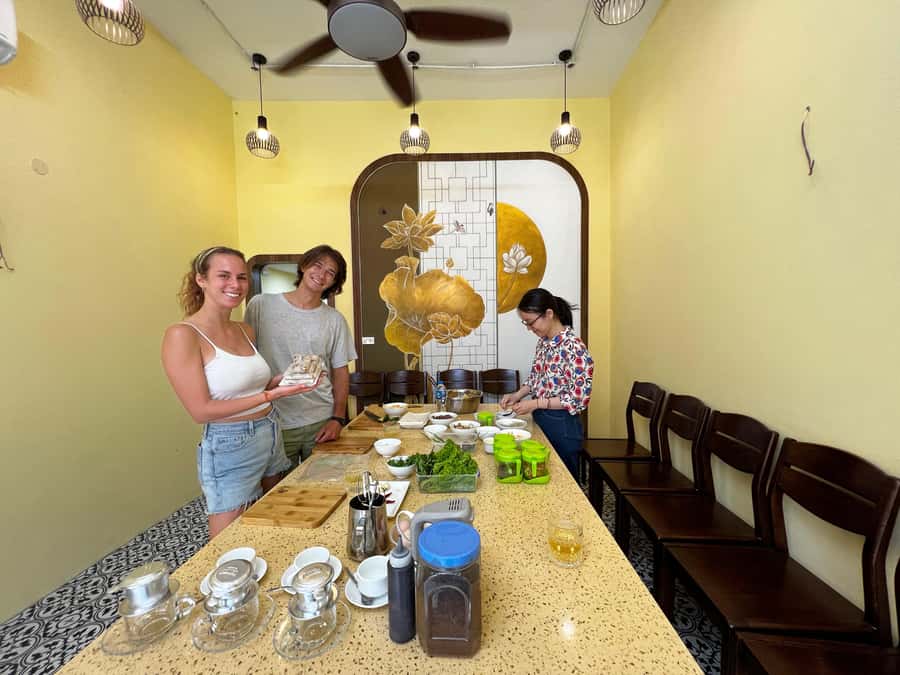
At $22 per person, this is one of the better “skills + meal” deals in Hanoi. Here’s why: you’re paying for more than a cooking demo.
Your ticket includes:
- The market tour
- Purchases at the market for the class
- An instructor
- All food and drinks
- Seasonal fruits for dessert
- Local wine tasting
- Drinking water
- Cooking recipe to take home
When you compare that to buying market food plus booking a private cooking tutor plus paying for lunch separately, the pricing starts to look sensible fast. The market component matters too. You get to see, learn, and select ingredients with a guide, rather than guessing what’s important and hoping you buy the right stuff.
The only clear catch is logistics. There’s no hotel pickup and drop-off, so you’ll want to be comfortable getting to the meeting point.
Practical Logistics: Meeting Point, Timing, and What to Expect
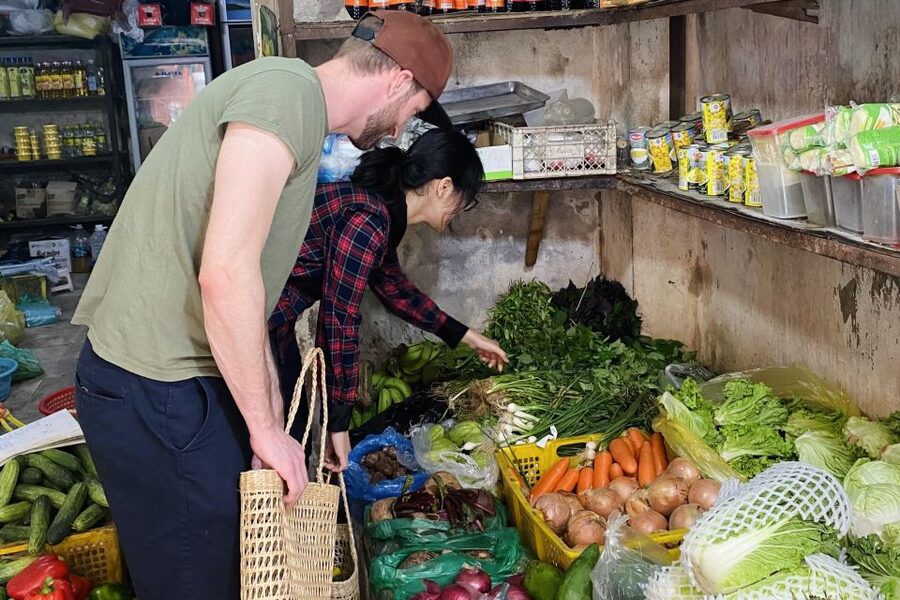
You’ll meet at the office of Crossing Vietnam Tour (listed as the meeting point). Plan to arrive a few minutes early, especially if you’re trying to match your session time.
Timing note that matters: the experience runs 3–4 hours, but your session start can affect whether the market is available in the way you expect. The afternoon option exists, but you should remember markets are usually morning-focused, so some days may not include the same market access.
In terms of how the class flows, expect:
- a welcome and intro
- a market walk for ingredients and market-life context
- a move to the kitchen for step-by-step cooking
- a full meal at the end
- recipes provided after (many people have shared that they receive recipes after the class)
If you’re wondering whether you’ll be “too full,” many past participants have described the dishes as the right size for four items plus egg coffee, without feeling like you’ll need to unbutton your shirt for the rest of the day.
Should You Book This Hanoi Cooking Class?
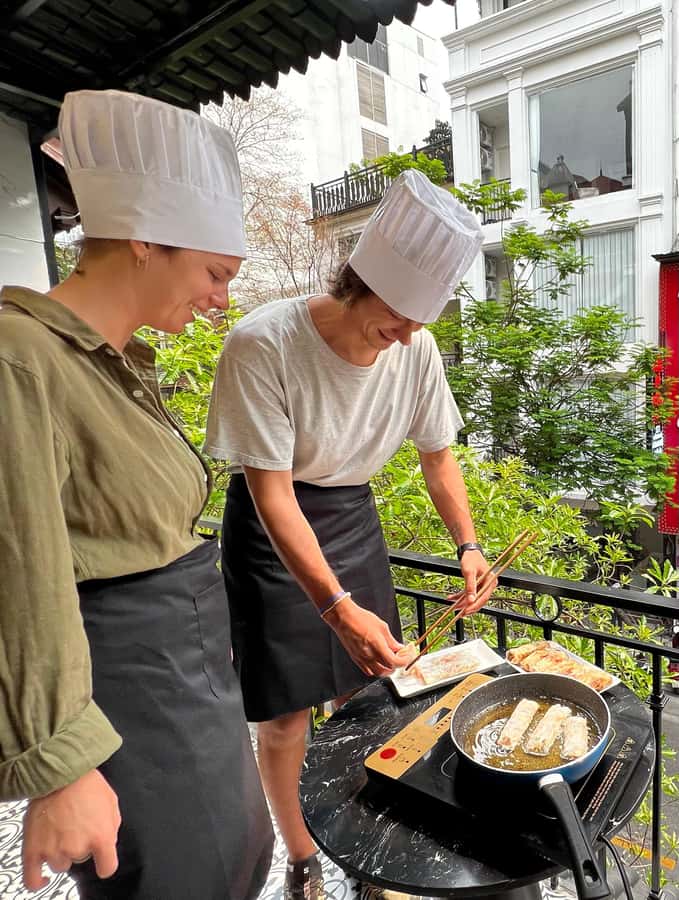
I think you should book it if you want more than a one-time food stop. This gives you a practical base: you learn key Vietnamese dishes you can recreate, not just what tastes good once.
Book it especially if:
- you like hands-on classes and want step-by-step guidance
- you enjoy pho and want to understand pho beyond one style
- you’re curious about Vietnamese ingredients and want real market context
- you’d like a structured way to learn Hanoi flavors in half a day
Consider skipping or switching session times if:
- you really want the market walk to be guaranteed, because afternoon sessions may have changes
- you rely on hotel pickup and don’t want to manage getting to the meeting point
If your goal is to leave Hanoi with both great memories and repeatable cooking skills, this is a strong choice for the price.
FAQ
How long is the Hanoi Maya Traditional Cooking Class & Market Tour?
It lasts about 3–4 hours, depending on the session time and schedule.
What dishes and drinks are included in the menu?
You’ll learn to make Pho Tron, Pho Cuon (Pho rolls), Nem Ran (fried spring rolls), Nom Du Du (papaya salad), and Ca Phe Trung (egg coffee). Dessert is seasonal fruits.
Is this a small group experience?
Yes. The group is limited to 10 participants.
Is hotel pickup included?
No. The tour does not include hotel pickup and drop-off.
Where do I meet for the tour?
The meeting point is the Travel agency Crossing Vietnam Tour office.
What about local wine tasting and dessert?
Local wine tasting is included, and dessert is seasonal fruits.
What should I know about afternoon sessions and the market?
For afternoon sessions, markets may not be available on some days because local markets are usually held in the morning.
What are the cancellation and payment options?
You can cancel up to 24 hours in advance for a full refund, and you can reserve now and pay later (pay nothing today).