REVIEW · SICILY
Vegan Cooking Class in Catania with Lunch and Dinner
Book on Viator →Operated by Futuro e Lavoro · Bookable on Viator
Vegan Sicily can be seriously delicious. In Catania, this hands-on cooking class teaches you the island feel of Mediterranean food using vegan ingredients, and you leave with recipes you can actually repeat. It runs about 3 hours, ending with the lunch and dinner you cook.
I like that you cook Sicilian favorites in a real kitchen, starting with fresh pasta alla Norma and building flavors the way locals think about them. I also love the table part: you taste everything you made with a glass of Sicilian wine included, so the class turns into a proper meal.
The flip side is it’s still 3 hours of steady action. If you prefer a slow, watch-only experience, this one may feel like a hands-on sprint.
In This Review
- Key highlights
- Entering the Catania kitchen: meeting point and what you’ll do first
- Fresh pasta alla Norma: the “wow” dish you’ll learn hands-on
- Caponata sweet and sour: learning the balance that makes Sicilian food click
- Bruschetta with basil pesto and cherry tomatoes: the quick, crowd-friendly move
- Vegan almond paste dessert: a Sicilian sweet that doesn’t feel heavy
- The meal part: tasting your dishes with Sicilian wine
- How the teaching works in English (and why Simona’s style stands out)
- Group energy and the “easy to follow” goal
- Price and value: what $119.72 buys you in real life
- Who this class is best for in Catania
- Should you book it? My straight advice
- FAQ
- What is the duration of the vegan cooking class in Catania?
- What’s included with the class price?
- Is the class offered in English?
- How big is the group?
- Where is the meeting point?
- Is the venue near public transportation?
- What dishes are on the sample menu?
- Can I cancel for free?
Key highlights
- Fresh pasta alla Norma made with vegan ingredients, not a watered-down concept
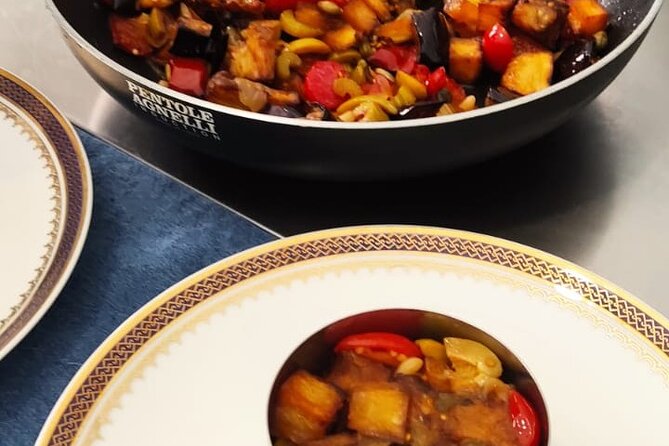
- Sweet and sour caponata you can recreate at home once you know the steps
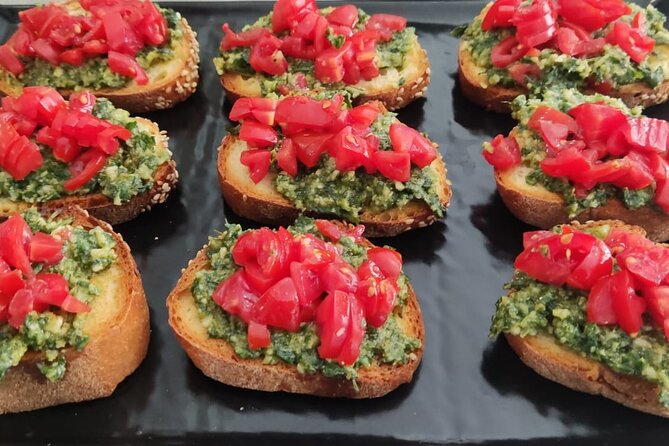
- Bruschetta with basil pesto and cherry tomatoes, a classic combination handled Sicilian-style
- Vegan almond paste for a satisfying sweet finish
- Wine included with your tasting, so you eat what you cook
- Small groups (up to 12, with a max of 14) and teaching in English
Entering the Catania kitchen: meeting point and what you’ll do first
The class meets at Via Cervignano, 42 (Catania), and it’s conveniently placed near public transport. If you’re using the subway, the stops GALATEA and ITALIA are nearby, so you won’t need a long scramble with bags.
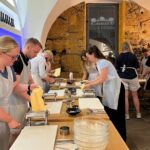
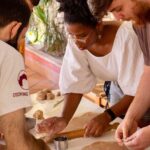
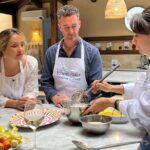
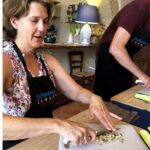
Once you’re in, you’re using a proper, equipped laboratory-style kitchen with professional tools. That matters more than it sounds. In many cooking workshops, you’re stuck with basic gear and vague directions. Here, you’re set up to actually cook, then eat what you made, with a clean workflow that keeps the group moving.
You’ll start preparing Sicilian dishes right away. There’s no long lecture marathon. This format is a big part of why it works for people who cook often and people who don’t cook much.
You can also read our reviews of more tours and experiences in Sicily.
Fresh pasta alla Norma: the “wow” dish you’ll learn hands-on
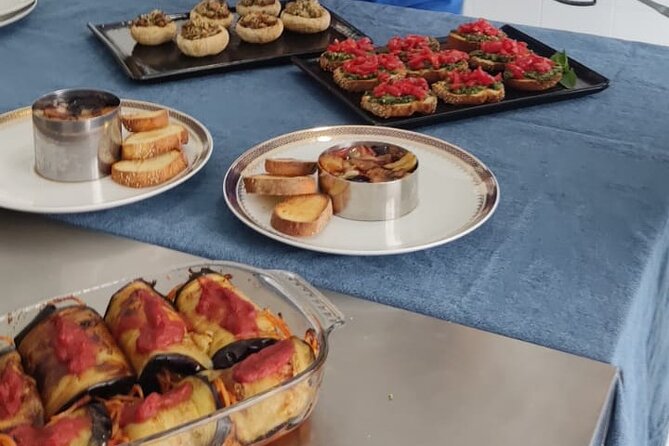
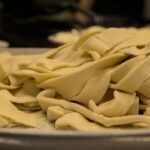
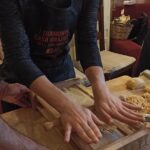
The first main on the sample menu is fresh pasta alla Norma, done in a vegan approach. Even if you already know the flavors of alla Norma from the classic world, this lesson is valuable because it focuses on how you build the dish’s character using plant-based products.
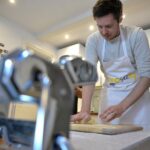
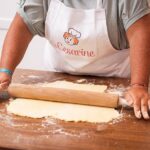
What you’ll get out of this step is technique, not just ingredients. You’ll be involved in preparing the pasta and working through the key components of the dish as the chef shows you. The goal is that you can repeat it at home, not that you only understand it today.
A practical tip: keep an eye on timing. Fresh pasta is most forgiving when you handle it with the rhythm the kitchen sets. When the instructor moves the group forward, follow along and don’t try to be a hero—ask if you’re unsure, then continue.
Caponata sweet and sour: learning the balance that makes Sicilian food click
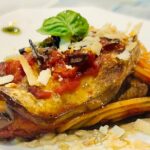
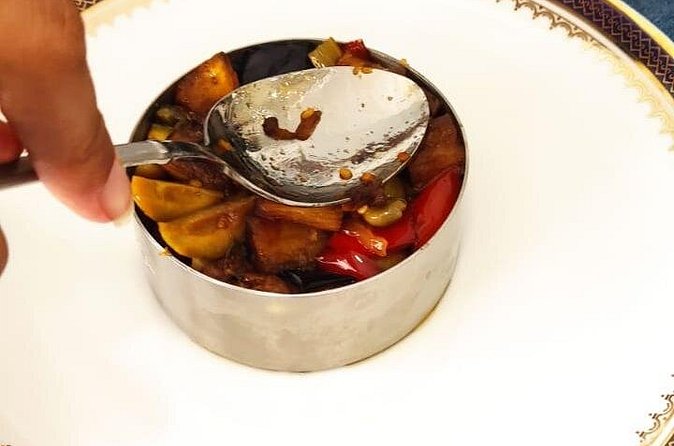
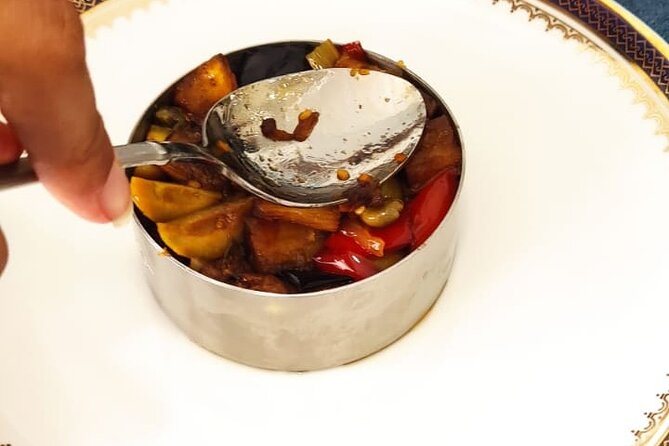
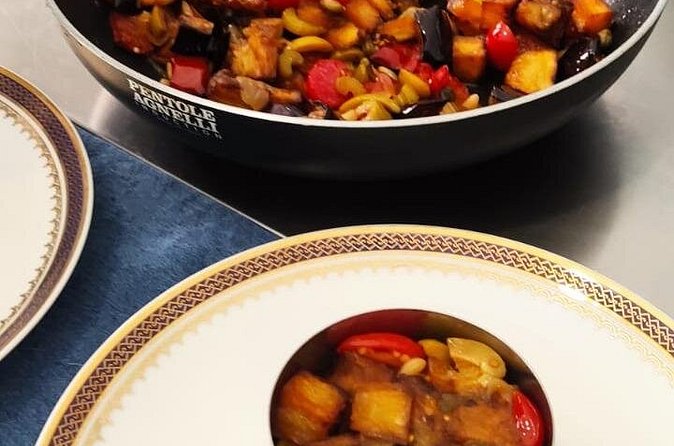
Next up is sweet and sour Sicilian caponata, one of those dishes that tastes like it always has a story behind it. The big takeaway isn’t the word caponata. It’s the balancing act implied by sweet and sour: you learn how to combine flavors so none of them flat-out dominate.
This is one of the most satisfying parts of a vegan class like this, because caponata can easily become either dull or overly sweet if you don’t get the proportions and the texture right. You’re tasting as you go, so you quickly learn what the kitchen is aiming for.
Also, caponata is a great “home cooking” win. Once you get the structure, it’s easier to adapt—serve it with pasta, use it as a topping, or eat it alongside other dishes you already know.
Bruschetta with basil pesto and cherry tomatoes: the quick, crowd-friendly move
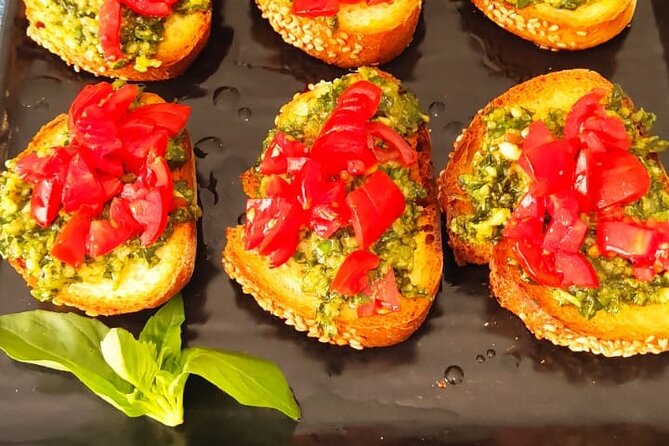
For the next main, you’ll make bruschetta with basil pesto and cherry tomatoes. This is the kind of recipe that can be simple on paper, but the details are where it becomes great—freshness, balance, and the right build order.
What I like about including this dish in the class is that it gives you contrast. After the pasta and caponata work, bruschetta is a more direct assembly-style task. You still learn, but you get to enjoy the moment of putting everything together instead of only doing long-cook steps.
For best results at home, treat this as a freshness recipe. If you make it ahead, basil can lose its punch. So if you want to recreate the class experience, plan to assemble close to eating.
Vegan almond paste dessert: a Sicilian sweet that doesn’t feel heavy
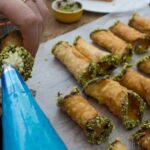
Dessert is vegan almond paste, and that choice is smart for two reasons. First, almonds fit beautifully with Sicilian flavors, so it feels local rather than random. Second, it gives you a sweet finish that’s satisfying without turning the meal into a sugar bomb.
In class, you’ll prepare the dessert as part of the flow, then finish by eating it with the rest of the meal. The value here is learning how almond-based sweets behave when they’re fully plant-based—texture, sweetness level, and how it holds up when served.
If you love the idea of vegan food that tastes like it belongs in the region, this dessert is a strong proof point.
The meal part: tasting your dishes with Sicilian wine
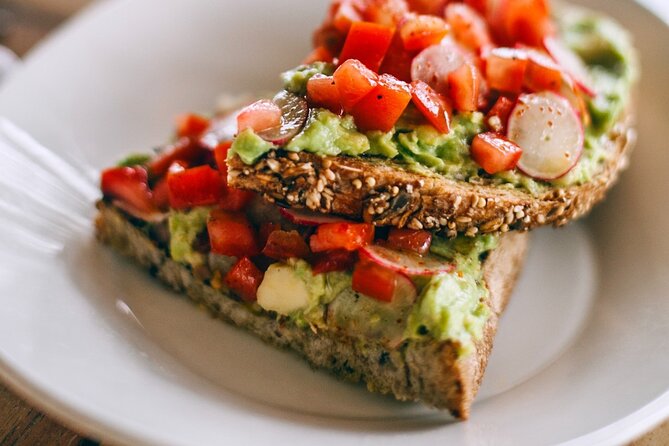
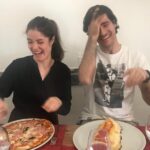
Yes, you taste what you prepare—and there’s a glass of Sicilian wine included with the tasting. That combination matters. Cooking lessons can turn into a series of separate tasks where the food only becomes real at the very end.
Here, the meal feeling is built in. You cook, then you sit down and eat what you made with a wine pairing that keeps the experience grounded in Sicily rather than turning it into a generic vegan event.
One practical thing: pace yourself. There are multiple dishes on the menu, and you’re eating as you would in a real meal. If you’re hungry, good. If you’re not a fast eater, slow down and enjoy the middle dishes so you don’t rush the dessert.
How the teaching works in English (and why Simona’s style stands out)
The class is offered in English, and it’s designed for a small group: a minimum of 2 and a maximum of 12 people for the cooking itself. The activity also lists a maximum of 14 travelers, which suggests you’re still in a tight setting. In practice, that kind of size usually means you get more than just a camera-ready performance.
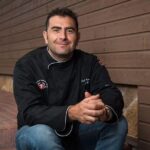
The chefs and organizers keep the tone friendly and focused. In particular, the instruction is led by Simona, who is described as a professional chef trained around the world. You can feel that kind of training in how she teaches: fun, informative, and relaxed—even for the people in the group who don’t cook much.
And Grazia is mentioned as part of the organizing team. That’s a small detail, but it helps explain the smoothness people feel during the experience. When communication and coordination are handled well, you spend your time cooking instead of waiting or guessing.
Group energy and the “easy to follow” goal
This class is built around one core promise: you get involved in making dishes you can replicate at home. That doesn’t mean you’ll leave with a cookbook full of complex techniques. It means the steps are taught in a way that makes sense outside the kitchen too.
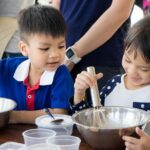
It also means the group format is practical. When you’re working with a small crew, you can ask questions in the moment. You don’t get lost in a crowd. And since the menu includes pasta, caponata, bruschetta, and dessert, you get a spread of skills rather than only one cooking method.
If you come with friends, it’s a nice mix of teamwork and personal responsibility. You’ll help, you’ll learn, and you’ll still feel like you accomplished something by the time the meal starts.
Price and value: what $119.72 buys you in real life
The price is $119.72 per person for an experience running about 3 hours, including lunch and dinner elements through tasting and the included dishes. Is it worth it? In my opinion, it’s fair because you’re not just paying for a demonstration.
You’re also getting:
- Use of professional kitchen equipment
- Food and products for the dishes
- Tasting with a glass of Sicilian wine
- A participation certificate
In other words, you’re paying for the full package: ingredients, teaching, and the meal created from scratch in a working kitchen. If you try to recreate this on your own, you’ll spend time sourcing ingredients, and you’ll still miss the guided “how to make it taste right” part.
One more angle: this type of class tends to book up. The class is often reserved about 25 days in advance, so if you’re traveling at peak times, planning ahead helps you lock in a spot.
Who this class is best for in Catania
This is a great fit if you:
- Want Mediterranean flavors with a vegan twist, rather than a compromise menu
- Like the idea of learning recipes you’ll actually cook again
- Prefer a small-group experience where you can ask questions
- Are in Catania for a short stay and want a focused activity that ends with a full meal
It’s also a good choice if you’re traveling with someone who doesn’t cook. The format is hands-on, but it’s guided, so the experience is built to work even when not everyone loves the process.
If you’re only looking for a big sightseeing day, this probably won’t replace that. Think of it as an evening in Sicily’s food culture, not a tour of monuments.
Should you book it? My straight advice
Book this vegan Sicilian cooking class if you want a high-value meal experience with real teaching, not a quick snack stop. The menu is well chosen—pasta, caponata, bruschetta, and almond paste—so you leave with a set of recipes that feel unmistakably Sicilian while still being vegan.
Skip it if you dislike cooking and would rather watch from a distance, or if you want a longer day of activities. This one is short and active by design.
If you’re the type who likes to bring home more than photos, this class is a solid yes.
FAQ
What is the duration of the vegan cooking class in Catania?
It lasts about 3 hours (approx.).
What’s included with the class price?
You get the use of professional kitchen equipment, food and products to prepare the dishes, tasting of the dishes with a glass of Sicilian wine, and a participation certificate.
Is the class offered in English?
Yes, it’s offered in English.
How big is the group?
The class is held for a minimum of 2 and a maximum of 12 people, and the activity has a maximum of 14 travelers.
Where is the meeting point?
The start location is Via Cervignano, 42, 95129 Catania CT, Italy. The activity ends back at the meeting point.
Is the venue near public transportation?
Yes. It’s described as being a few steps from the subway stops GALATEA and ITALIA.
What dishes are on the sample menu?
The sample menu includes fresh pasta alla Norma, sweet and sour Sicilian caponata, bruschetta with basil pesto and cherry tomatoes, and vegan almond paste.
Can I cancel for free?
Yes. Free cancellation is available up to 24 hours in advance for a full refund, and the experience may be rescheduled or refunded if weather conditions cause cancellation.