REVIEW · ESSAOUIRA
Traditional Moroccan Cooking Class
Book on Viator →Operated by Cooking With Chef FATIMA · Bookable on Viator
Essaouira tastes better when you shop first. This Moroccan cooking class starts in the old medina and turns market shopping into part of the lesson, not just a prelude. You’ll cook in Chef Fatima’s home, with a friendly, step-by-step approach that makes the recipes feel doable after you get home.
I especially love how the class builds from fresh ingredients—spices, vegetables, and staples—into clear, practical cooking. The other big win is the meal itself: you’ll welcome in with Moroccan mint tea and finish by savoring what you made with more mint tea. One possible drawback: the course does not include pastilla, and one part of the experience can feel like preparing and eating together rather than a nonstop “technique-only” class.
In This Review
- Key Highlights
- Why This Essaouira Cooking Class Starts in the Old Medina
- Bab Marrakech Meeting Point: Easy Start, Clear Momentum
- Market Shopping With Chef Fatima: Buying Ingredients Like a Local
- In the Home Kitchen: Couscous Step-by-Step (and Real Help)
- What You’ll Cook: Tagine, Couscous, Harira, and Moroccan Bread
- Berber Mint Tea and the Rhythm of Eating Together
- Price and Value: What You’re Really Paying For at $39
- Logistics That Actually Matter Once You’re There
- Who Should Book This Cooking Class in Essaouira?
- Should You Book Chef Fatima’s Moroccan Cooking Class?
- FAQ
- How long is the Traditional Moroccan Cooking Class in Essaouira?
- What time does the experience start?
- Where do we meet for the class?
- What Moroccan dishes will I learn to cook?
- Is pastilla included in the experience?
- How much does it cost, and can I get a refund if I cancel?
Key Highlights
- Medina market shopping with a local host so you learn what to buy and why
- Hands-on cooking at Fatima’s home kitchen, with guidance you can follow
- Couscous taught step by step, plus dishes like tagine, harira, and Moroccan bread
- Spice moments that make sense—from choosing ingredients to using them in cooking
- Tea and sharing at the center of the experience, not just a quick side drink
- Private group format, so the pace stays comfortable for your own group
Why This Essaouira Cooking Class Starts in the Old Medina
If your idea of a cooking class is sitting at a counter and getting handed ingredients, this one works differently. You start in the old medina near Place de l’Horloge and walk into the markets with Chef Fatima. That matters because Moroccan cooking is built on a few key choices: what’s fresh, what’s fragrant, and what’s balanced in the bowl and on the plate.
The set-up also helps you remember the food. When you see vegetables piled high, spices traded by the handful, and locals moving at market speed, the recipes stop feeling abstract. You start thinking like a cook: What’s the texture? How strong is this spice? What does this ingredient taste like on its own?
And the vibe is human. You’re not rushed through a script. You’re guided through shopping, then into the home kitchen, where the cooking steps connect back to what you picked up in the market. For many people, that’s the part that turns a class into a memory you’ll actually use again.
You can also read our reviews of more tours and experiences in Essaouira.
Bab Marrakech Meeting Point: Easy Start, Clear Momentum
Your morning starts at Parking Bab Marrakech, Place Bab Marrakech, Essaouira 44000, Morocco, with a start time of 9:30 am. The meeting spot is straightforward, and it’s near public transportation, which is handy if you’re staying in or around the medina.
From a practical point of view, starting here is smart. Bab Marrakech is one of the logical gateways into the old city. You can get your bearings fast, and once the group meets, you can move right into market mode instead of spending the first hour figuring out where to go.
Also, this is a private tour/activity—meaning it’s only your group, not a mixed crowd. That usually improves the experience with cooking classes, because you get a more relaxed pace, and you’re more likely to get questions answered in the way that helps you.
A small but useful detail: the tour uses a mobile ticket. Bring your phone with the confirmation handy so you don’t waste time at the start.
Market Shopping With Chef Fatima: Buying Ingredients Like a Local
The class includes exploring the markets and buying fresh ingredients from locals. That’s not filler. It’s where the learning begins, because Moroccan cooking depends on ingredients you can’t fully substitute at home.
Here’s what you’re likely to focus on during the shopping portion:
- Vegetables that are good for stews and salads (you’ll see choices for dishes like tagine and aubergine-style preparations)
- Spices and blends that affect the flavor direction of the whole meal
- Staples and bread basics that set the foundation for the rest of your plate
In the experiences people rave about most, there’s often a real connection to spices—sometimes even watching them prepared or handled for the meal you’re cooking. Even if you’re not a spice nerd before class, you leave with an instinct for what to choose and how much to use.
This is also where you learn how locals think. You’ll see that buying isn’t only about “fresh.” It’s about aroma, color, and the right mix for the dish you’re making. When Chef Fatima talks you through the choices, you’re not memorizing a list. You’re building a cooking mindset you can repeat later.
In the Home Kitchen: Couscous Step-by-Step (and Real Help)
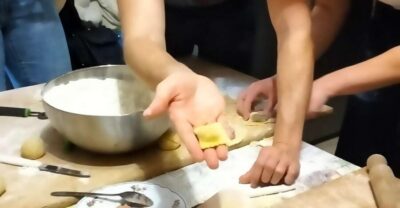
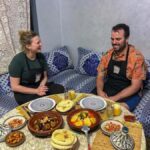
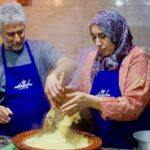
After shopping, you’ll head to Chef Fatima’s home. You’ll be welcomed with Moroccan mint tea, then you’ll start cooking together. The class is structured around step-by-step guidance, especially for couscous.
Couscous can feel intimidating if you’ve only seen it once or twice. Here, you’ll learn the process in a way that’s meant to be repeatable: you’ll work through the steps while Chef Fatima explains what you’re doing and what to watch for. That’s key. The goal isn’t just to finish a dish—it’s to understand how the method leads to the result.
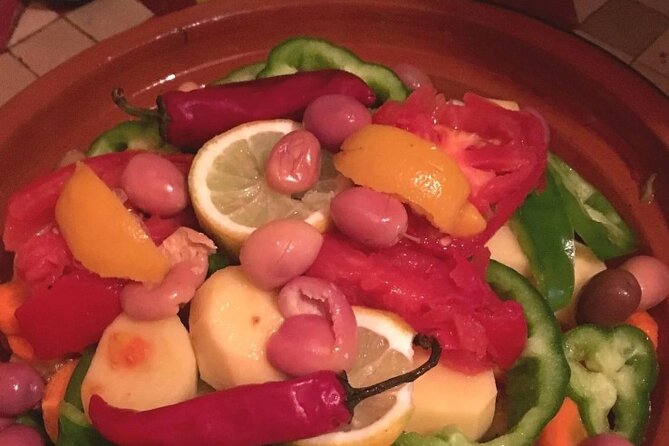
You’ll also learn how tagines come together in a way that makes sense: the role of seasoning, how ingredients get layered, and how you can tell when flavors are developing properly. Many people especially like that the class includes practical tips for tagine prep and vegetable sides.
One more note: this isn’t a sterile cooking school lab. It’s a real home kitchen. That authenticity matters because it changes the teaching style. You’re more likely to get answers to the questions you actually have—like how to adjust flavor or what substitutions won’t ruin the result.
What You’ll Cook: Tagine, Couscous, Harira, and Moroccan Bread
Based on the experience description, you’ll cook Moroccan dishes such as tagines, couscous, Harira (Moroccan soup), and Moroccan bread. The exact dishes can vary, but the focus is traditional Moroccan comfort food and staple techniques.
Here’s how to think about the menu in a useful way:
- Tagines teach you balance. You’re dealing with a slow-style flavor approach where spices, aromatics, and time matter. Even if you don’t have the same cookware later, the flavor logic transfers well.
- Couscous teaches you structure. It’s one of the best Moroccan skills to learn because it pairs with many dishes and works for everything from a family lunch to a dinner with friends.
- Harira is the soup-side learning moment. If you only ever think of Harira as something you eat occasionally, this class helps you understand it as a method: warming spices, hearty components, and a comforting finish.
- Moroccan bread is the foundation. Bread is not a side in this food culture; it’s a tool for eating. Learning bread basics makes the meal feel complete, not assembled.
The course does not include pastilla. That’s a real consideration if you were hoping to cover the full classic Moroccan “big four.” Pastilla takes longer to prepare, and the experience explicitly says it’s not included. Still, you’ll leave with plenty of other iconic dishes.
Berber Mint Tea and the Rhythm of Eating Together
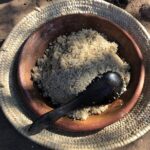
You’ll get mint tea when you arrive at Chef Fatima’s home, and you’ll also savor your work with Moroccan mint tea at the end. In Moroccan food culture, tea isn’t decoration. It’s part of the flow: meet, cook, share, and then sit down for the payoff.
This matters for two reasons. First, it’s a way to break the tension that can come with cooking classes. Instead of feeling like you must produce perfect results quickly, you can focus on learning. Second, it gives you a real sense of timing—how long you can reasonably spend making, tasting, and adjusting in a home setting.
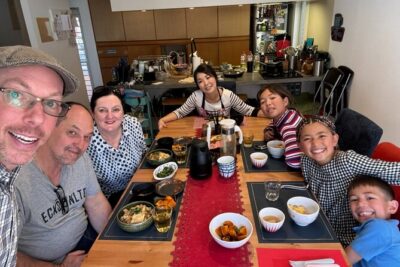
You’ll also likely notice that the experience has a social pace. Some people interpret that as more of a shared meal than a strict class, and that can be true depending on your expectations. If you want hands-on technique every minute, you may feel the class is gentler than you hoped. If you like conversation, tasting, and relaxed instruction, that same pacing is exactly why people love it.
Either way, when you eat what you cooked, you get instant feedback. That’s the fastest way to learn flavors and adjust your future cooking.
Price and Value: What You’re Really Paying For at $39
At $39 per person for about 4 hours, this class is positioned as a value-friendly experience—especially in a place like Essaouira where food-focused experiences can vary a lot in price and depth.
Here’s where the value comes from:
- You’re not just learning recipes; you’re also seeing how ingredients are chosen in the market.
- You’re cooking in a real home setting, with an instructor who walks you through the process.
- You’re eating what you make, with mint tea included as part of the experience flow.
- It’s private for your group, which often makes the per-person cost feel fair because you’re not competing for attention.
If you compare it to taking a “general culinary tour” without a meal, this class gives you a stronger payoff. If you compare it to a higher-priced atelier-style class, the difference is that you’re not paying for a fancy venue—you’re paying for time, teaching, and a shared table in a local home.
And honestly, the best value comes when you leave with enough understanding to cook again. Learning couscous step-by-step plus tagine logic plus bread basics is a strong pack of practical skills for the price.
Logistics That Actually Matter Once You’re There
A few details will help your trip go smoothly.
- Start time: 9:30 am. Plan to arrive a bit early so you can settle near Bab Marrakech and find your host without stress.
- Duration: about 4 hours. This fits well into a day in Essaouira without swallowing the whole afternoon.
- Private format: only your group participates. That makes it easier to ask questions and move at a comfortable pace.
- Mobile ticket: keep your phone ready for confirmation details.
You’ll also want to wear comfortable shoes. Market walking is part of the experience, and Essaouira’s old-city lanes aren’t designed for stiff heels or slow shuffling.
Who Should Book This Cooking Class in Essaouira?
This class is a great fit if you want an authentic Moroccan food day rather than a box-checked activity. I’d especially recommend it for:
- Couples or small groups who like learning in a home setting
- Food lovers who want to know how to buy spices and ingredients, not just cook from a worksheet
- People who enjoy mint tea, conversation, and a shared table while cooking
- Anyone who wants to learn couscous and tagine logic in a step-by-step way
It may be less ideal if:
- You’re expecting a long, strict technical workshop only about cooking methods (not shopping, not social pacing)
- You specifically want pastilla included in the class menu
Should You Book Chef Fatima’s Moroccan Cooking Class?
Yes—if you want a real Esseouira food experience with market shopping, step-by-step couscous instruction, and a meal you’ll actually remember. The $39 price looks especially fair because you’re getting both the ingredient story and the cooking outcome, plus mint tea as part of the rhythm.
Book it if you’ll enjoy a shared, home-style pace and you value learning how to choose spices and fresh produce. Skip it only if pastilla is a deal-breaker for you, or if you need a highly structured, technique-only classroom with zero downtime.
FAQ
How long is the Traditional Moroccan Cooking Class in Essaouira?
It runs for about 4 hours.
What time does the experience start?
The start time is 9:30 am.
Where do we meet for the class?
Meet at Parking Bab Marrakech, Place Bab Marrakech, Essaouira 44000, Morocco.
What Moroccan dishes will I learn to cook?
You’ll cook Moroccan dishes like couscous, tagines, Harira (Moroccan soup), and Moroccan bread.
Is pastilla included in the experience?
No. Pastilla is not included because it takes a lot of time.
How much does it cost, and can I get a refund if I cancel?
The price is $39.00 per person. You can cancel up to 24 hours in advance for a full refund. If you cancel less than 24 hours before the start time, the amount paid isn’t refunded.