REVIEW · MALAGA
Malaga Tapas Cooking Class
Book on Viator →Operated by Spain Food Sherpas · Bookable on Viator
Cooking tapas in Malaga feels like cheating.
This class is built around Atarazanas Market and real kitchen time in the Art District SOHO, so you go from picking ingredients to eating what you made. I like how it spotlights Malaga’s specific flavors, not generic Spanish cooking, and it kicks off with an extra virgin olive oil tasting you can actually talk about later.
Two big things I like: you get hands-on instruction to make classic dishes such as tortilla de patatas and a Pedro Ximénez–sauce style main, and you also get to learn the food logic behind tapear, from olive oil to regional ingredients. The instructors I saw mentioned in reviews include Alba, Felipe, Anaïs, Elise, Simone, and Belen, and the consistent vibe is clear directions plus a friendly teaching style for small groups.
One consideration: the market part depends on the time slot. The Atarazanas Market visit is only included on the daytime class from Monday to Saturday, and evenings and Sundays run about 3 hours without the market.
In This Review
- Key highlights worth planning around
- Where your Malaga tapas lesson starts: Atarazanas Market
- Olive oil tasting and the SOHO kitchen: why the start matters
- Daytime vs evening sessions: what changes in real life
- Daytime class (Mon–Sat)
- Evening and Sunday class
- The tapas menu you’ll actually make (and why it’s a smart mix)
- Pairing your food with local wine or beer
- What you leave with: recipes, fruits, and that extra gift
- The real value of $84.66: food time, learning, and included extras
- Who should book this class (and who might not love it)
- Practical tips: meeting point, timing, and making the most of it
- Should you book? My take on whether this Malaga tapas class is worth it
- FAQ
- Is the Atarazanas Market visit included in every class?
- How long is the cooking class?
- What’s included with the price?
- Does the experience offer hotel pickup?
- Can I request dietary accommodations?
- What language is the class offered in, and how big is the group?
Key highlights worth planning around
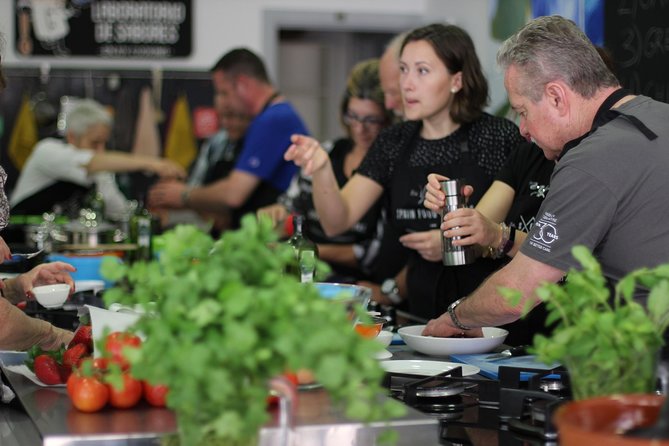
- Atarazanas Market (daytime only): you shop for fresh seasonal produce before you cook
- Olive oil tasting + Aloreña olives: a starting point that sets the whole menu in context
- You cook 4 tapas-style dishes: not just watch and snack
- Wine or beer pairing: included with the menu, plus a pre-meal snack and fruit
- Modern SOHO kitchen setup: big, clean, and practical for hands-on cooking
- Take-home recipes and a special gift: you leave with more than full bellies
Where your Malaga tapas lesson starts: Atarazanas Market
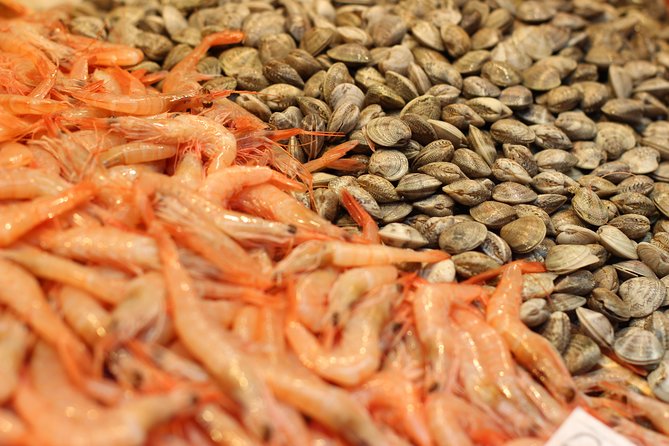
The best tapas lessons don’t start with a stove. They start with shopping.
In this experience, you begin at Mercado Central de Atarazanas. If you’re there on the daytime class (Monday to Saturday), you’ll have time to sample and choose ingredients with a guide, then connect those choices to what you’ll cook later. This matters because Malaga’s food isn’t just “Spanish.” It’s shaped by coastal ingredients, local produce, and the city’s tapear culture.
The practical part: the market visit is only included in daytime hours. Atarazanas closes in the evenings and on Sundays, so if you book an evening session, you should expect cooking time only. Also, the market is closed on specific holidays (Jan 1, Jan 6, Feb 28, certain Holy Week days, May 1, Aug 15 and Aug 19, Sept 8, Oct 12, Nov 1, Dec 6 and Dec 8, and Dec 25). If your trip lands on one of those dates, plan for a different class flow.
If you love food markets, this is the kind of tour that helps you see what you’re eating. Instead of thinking, I’ll try that, you start asking: what’s in it, where does it come from, and why does this pair work?
You can also read our reviews of more tours and experiences in Malaga.

Olive oil tasting and the SOHO kitchen: why the start matters
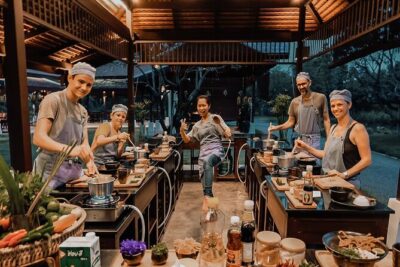
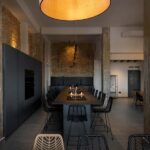
From the market, it’s about a 5-minute walk to the cooking kitchen in Málaga’s Art District (SOHO). The place is modern and big, which is exactly what you want for a hands-on class. Tight kitchens can turn teaching into chaos. A wider space keeps the stations moving and keeps instructions clear.
You also start strong with an extra virgin olive oil tasting. The oils are local, and you’ll taste different varieties, plus famous Aloreña olives right away. This does two useful things for you:
- It trains your palate for the flavors you’ll use while cooking.
- It gives you a “baseline” so you can recreate the idea at home, even if the brands are different.
In many cooking classes, the tasting feels like a bonus. Here it’s more like the warm-up lap. Once you understand the olive oil and olives, the tapas menu makes more sense, because a lot of Malaga cooking leans on good fats, proper salting, and smart seasoning rather than complicated tricks.
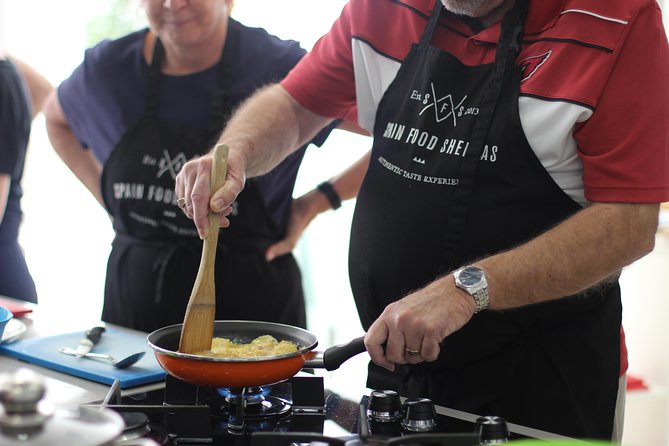
And yes, you’re cooking alongside real kitchen tools, not tiny demo setups. The tone from reviews is consistent: clean facilities, good utensils, and an instructor who keeps the group moving without losing your focus.
Daytime vs evening sessions: what changes in real life
This is the detail that can change whether the class feels like a market experience or a pure cooking meal.
Daytime class (Mon–Sat)
- You include the Atarazanas Market portion.
- Your overall duration is about 3 hours 30 minutes.
- You shop for fresh, seasonal ingredients and connect them to the menu.
Evening and Sunday class
- The Atarazanas Market visit is not included because the market is closed in the evenings and Sundays.
- The class lasts about 3 hours.
If you want the full Malaga flavor journey, I’d lean daytime when possible. If you’re short on time, tired from the beach, or already spent a morning in markets, the evening option can still be worth it because you’re still cooking and eating the included tapas spread.
The tapas menu you’ll actually make (and why it’s a smart mix)
This experience focuses on Malaga tapas and nearby Andalusian favorites. You’ll learn a variety of dishes—think cod-based options like cod tostón, a Malagueña-style salad (ensalada malagüena), and a Spanish-style tortilla with eggs. That’s the “concept” list.
Then you get a practical, learn-and-eat version with four traditional tapas. Your sample menu includes:
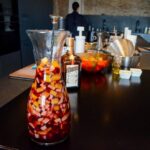
- Sangría (starter)
- Fideos tostados (crispy noodles starter)
- Pil pil prawns
- Tortilla de patatas (main)
- Solomillo al Pedro Ximénez (sirloin with Pedro Ximénez sauce)
- Churros (dessert)
Why this mix works for you:
- You get variety across textures: crispy noodles, saucy seafood, egg-based comfort, and a sweet finish.
- You practice core techniques that travel well to home cooking: getting a good tortilla texture, building flavor in pil pil-style dishes, and balancing a dessert that’s part of the tapas world.
- You’re learning Malaga’s “logic,” not only recipes. Tapas are about small plates that still taste complete.
And the class isn’t just watching. The hands-on format is what lets you take the dish home as a repeatable skill. Reviews repeatedly mention getting to cook each item, with clear instruction and good outcomes.
Pairing your food with local wine or beer
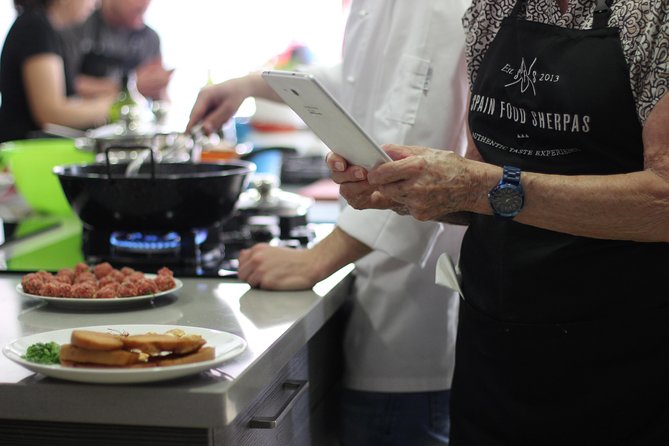
You don’t just eat—your menu comes with wine or beer, paired to go with what you make. There’s also a pre-meal snack and seasonal fruits included, which helps you settle in without arriving at the stove starving.
The wine component is especially helpful for learning. You’re told the wine is from the region and made with local grapes. That’s more than a label on a bottle. It teaches you what kind of wine style tends to show up alongside tapas: something that doesn’t overpower food that’s often salty, savory, and sometimes sweet.
How to use this on your next night out:
- When you order tapas after the class, look for pairings that match the dish’s dominant flavor: seafood wants freshness, tortilla wants something that handles eggs and salt, and desserts like churros want sweetness balance.
- If you remember one thing, make it this: tapas culture is built on pairing and pacing, not ordering one huge plate and calling it a day.
You’ll also get a sense of how tapear rhythms work, because you’re eating as a group with the meal built around the cooking steps.
What you leave with: recipes, fruits, and that extra gift
By the end, you sit down and eat everything you made. That’s the fun part, but the payoff is what comes after.
You leave with:
- All recipes (so you can recreate the menu at home)
- A list of recipes plus a special gift
- Seasonal fruits during the experience
- Olive oil and olive flavor insights you’ll remember long after dinner
For your kitchen back home, the recipes matter because tapas can look simple but depend on small choices: heat level, timing, and how you balance salt and acid. Written recipes plus the tasting step make it easier to repeat your favorites rather than only remembering that it was good.
The real value of $84.66: food time, learning, and included extras
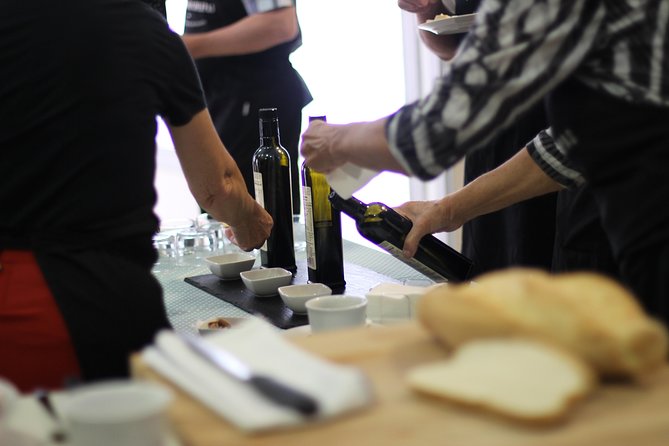
At $84.66 per person, this class isn’t “cheap,” but it’s also not pricing itself like a fancy restaurant dinner with a cooking demo attached. You’re getting a package:
- Market time (in daytime sessions)
- Olive oil tasting and Aloreña olives
- 4 different traditional tapas you cook and eat
- Wine or beer pairing
- Pre-meal snack and seasonal fruit
- Recipes to take home
- A modern kitchen setup for hands-on work
Here’s how to judge the value for yourself. Ask: how many of these ingredients and teachable skills would cost you separately if you tried to copy it on your own? Market ingredients add up fast. Wine and guided tasting aren’t free either. The biggest value is the time: you’re not just consuming Malaga—you’re learning techniques in a controlled setting with someone correcting your steps.
One more value detail: group size maxes at 16. In a near-maximum group, you might not feel like it’s one-on-one teaching. Still, the format is designed for clear steps so you can cook rather than hover.
Who should book this class (and who might not love it)
I think this is a strong fit if you:
- Want a practical introduction to Malaga-specific tapas
- Like markets and want to shop for seasonal ingredients
- Prefer hands-on lessons over watching someone else cook
- Enjoy wine or beer pairings with your meal
- Want a take-home recipe set, not just a night out
You might be less thrilled if:
- You only care about cooking and not market shopping, and you’re booking an evening or Sunday session without Atarazanas included.
- You need a very advanced, multi-course culinary training program. This class is about approachable traditional tapas and getting you cooking with confidence.
Good news: it works for couples and families. One class experience was done with kids aged 11 and 13, and the cooking portion was described as not overly complex—more about enjoying and learning together.
Practical tips: meeting point, timing, and making the most of it
You’ll meet at Kulinarea, Avenida de Manuel Agustín Heredia, 24, Distrito Centro, 29001 Málaga. The activity ends back at the same meeting point.
A few practical notes that help:
- Go hungry, but not painfully so. The pre-meal snack and fruits help you settle in, so you don’t need to arrive starving.
- Bring any dietary needs when booking. The experience says you should advise specific dietary requirements at time of booking, so do that early.
- Expect a short walk between market and kitchen. It’s around 5 minutes.
Also, confirmation happens at booking time, and the class offers mobile tickets and runs in English. It’s near public transportation, which is useful if you’re hopping between sights.
Should you book? My take on whether this Malaga tapas class is worth it
Book it if you want a real taste of Malaga that includes both food shopping and cooking—especially on daytime (Mon–Sat) when the Atarazanas Market visit is included. The olive oil tasting sets the tone, the menu gives you a smart mix of seafood, eggs, meat sauce flavor, and dessert, and you leave with recipes that help you repeat what you learned.
Skip it or choose a different slot only if your schedule forces you into an evening or Sunday class and you were mainly hoping for the market part. In that case, you’ll still cook and eat well, but the experience changes from a market-to-kitchen journey into a kitchen-focused meal.
If you’re in Malaga and you want a night that feels like a local food ritual—tapear, not tourist eating—this is a solid pick.
FAQ
Is the Atarazanas Market visit included in every class?
No. The Atarazanas Market visit is included only in the daytime class from Monday to Saturday. The market is closed in the evenings and on Sundays, so evening and Sunday classes do not include it.
How long is the cooking class?
The daytime class is about 3 hours 30 minutes. The evening and Sunday class lasts 3 hours.
What’s included with the price?
You get olive oil tasting, an Aloreña olives or roasted almonds snack, 4 different traditional tapas, wine or beer paired with the menu, seasonal fruits, and all the recipes.
Does the experience offer hotel pickup?
No. Hotel pickup and drop-off are not included. You meet at Kulinarea and the activity ends back at the meeting point.
Can I request dietary accommodations?
Yes. You should advise any specific dietary requirements at the time of booking.
What language is the class offered in, and how big is the group?
The class is offered in English. The maximum group size is 16 travelers.