REVIEW · NEW ORLEANS
New Orleans Hands-On Cooking Class with Meal
Book on Viator →Operated by New Orleans School of Cooking · Bookable on Viator
Want to learn gumbo without stress? This hands-on class at the New Orleans School of Cooking is a fun, small-group way to make a real Louisiana dinner, then eat it right away. You’ll work at a kitchen counter, guided by a pro chef, and finish the experience with a full meal plus take-home goodies like an apron and recipe set.
I especially like how interactive it is, not a sit-and-watch demo. And I love that you get a complete menu and drinks included, so you’re not scrambling for lunch plans afterward. The main catch to consider: you’ll be on your feet and cooking for a while, and if you need dietary special requests there can be a $10 fee paid on site.
In This Review
- Key highlights worth circling
- Inside the New Orleans School of Cooking: where your hands start working
- Small group setup and how the chefs keep everyone moving
- Menu in motion: bisque or gumbo, shrimp and grits or jambalaya, and dessert
- After you cook: wine, Abita Amber Beer, and sitting down as a group
- French Quarter time: a short taste that pairs well with cooking
- Value at $162: what you get beyond a demo
- Practical tips: dietary fees, being on your feet, and what to bring
- Book it or skip it
- FAQ
- How many people are in the class?
- How long is the cooking class?
- What food and drinks are included?
- Is alcohol included, and is there an age requirement?
- Are dietary restrictions accommodated?
- What is the cancellation policy?
Key highlights worth circling
- Maximum group size of 10 with up to 5 cooktops, so you actually cook
- Chef-led, step-by-step instruction with practical technique you can reuse at home
- Full meal + drinks included, including red or white wine, plus Abita Amber Beer
- Class recipes and a souvenir apron (the white apron is listed as an $18.99 value)
- French Quarter stop to connect your food lesson to the city around you
Inside the New Orleans School of Cooking: where your hands start working
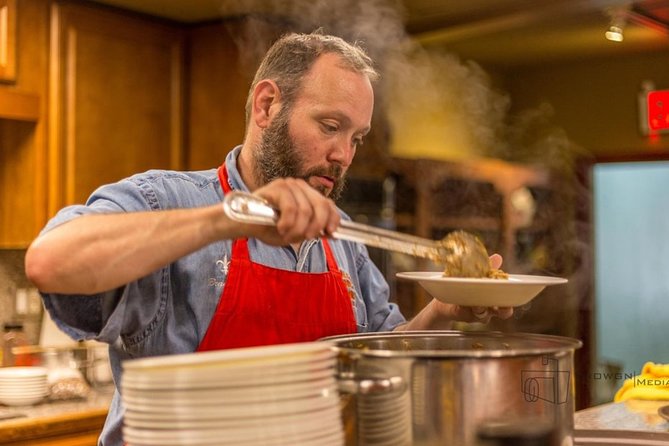
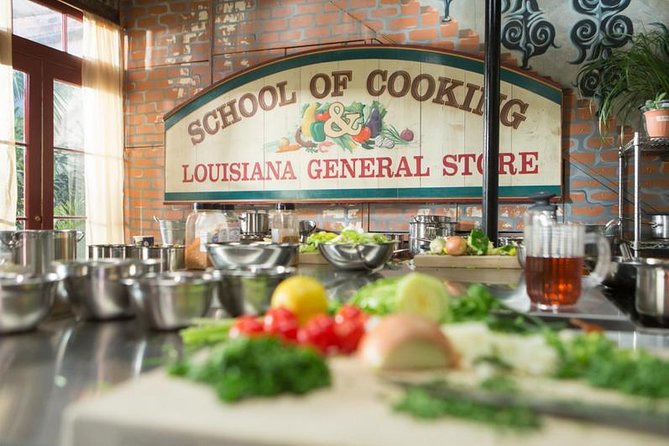
The experience starts at the New Orleans School of Cooking (524 St Louis St), and it moves at a kitchen pace. This is built for participation: you cut, season, and cook while the chef talks you through what matters and what to watch for. The vibe is casual, and the dress code is simple—think comfortable clothes you can stand in.
You’re also not stuck with just one recipe. The class is designed around a full dinner flow, which is why it lasts about 3 hours. That time matters because you’re not just tasting flavors—you’re practicing technique. For instance, if the menu includes gumbo, you’ll get a hands-on look at the roux process. One of the most praised parts in this class is learning how a base like that comes together and why it changes the whole dish.
If you’re newer to cooking, this format is a plus. You’re not expected to already know Louisiana staples. The chefs used in the class—like Chef Ricardo, Chef Eric, Chef Cindy, Chef G, and Austin—show up with clear directions and lots of encouragement, including humor. That combination helps if you’re nervous about cooking in front of people.
You can also read our reviews of more tours and experiences in New Orleans.
Small group setup and how the chefs keep everyone moving
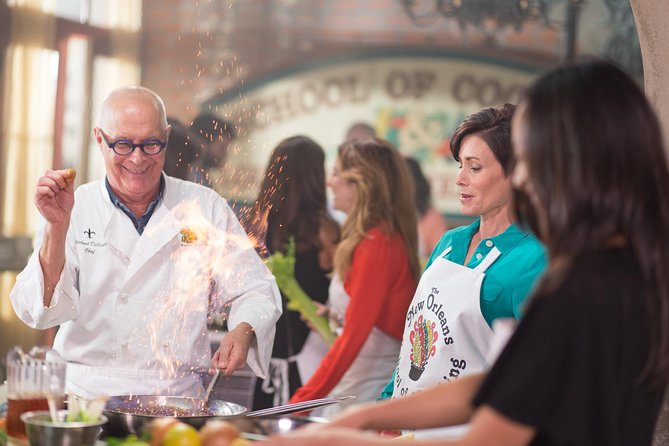
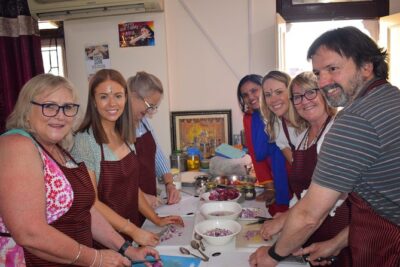
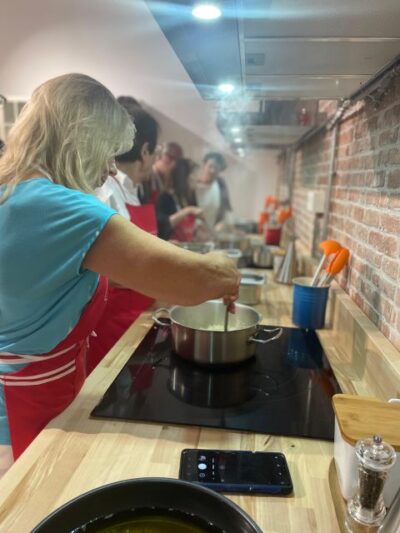
The class keeps group size tight: up to 10 people. That’s not a random number. It’s tied to the kitchen setup—there are 5 cooktops, so you’re not stuck waiting for equipment. Singles may be paired with another individual, which helps keep the pace going and keeps you from feeling like you’re doing everything alone.
The most consistent theme in the feedback is organization. The cooking is split so you can move through tasks without getting buried in downtime. You might do different roles—chopping, seasoning, stirring, assembling—but you’re still part of the action. One review-style takeaway that’s useful for you: expect to be busy and learn by doing, not by watching. Several people also highlight that it can be a longer stretch standing at the stations, so comfy shoes help.
This is also one of those experiences where the chef’s personality matters. You may meet instructors like Chef Eric or Chef Ricardo, who are praised for being attentive and patient, or Chef Cindy and Austin, noted for humor and clear instruction. Even when the cooking is complex on paper—gumbo, jambalaya, grits—the teaching style is meant to make it manageable.
Practical note: confirmation is sent at booking, and the experience uses a mobile ticket. If you like getting your day set early, plan to have that ticket ready on your phone.
Menu in motion: bisque or gumbo, shrimp and grits or jambalaya, and dessert
The menu is built around classic Louisiana choices, with options that can shift by session. A typical structure looks like this:
- Starter: Yam-Crab Bisque or Gumbo
- Main: BBQ Shrimp and Grits or Jambalaya
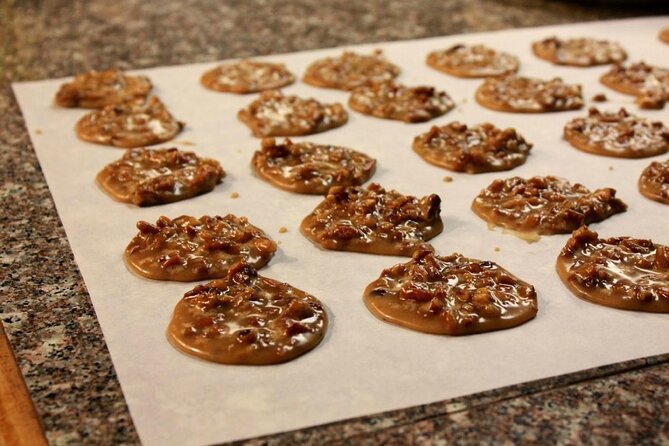
- Dessert: Bananas Foster or Pralines
What you learn isn’t just a list of ingredients. It’s how the dish behaves as you cook it. For example, bisque tends to reward attention to texture and seasoning balance, while gumbo (when it’s on the menu) is all about getting the base right before everything else goes in. Reviews frequently call out learning the process behind the base and how it leads to a dish that tastes finished, not just mixed.
If your main is BBQ shrimp and grits, you’ll see how grits go from plain to flavorful with the right heat and additions. If your main is jambalaya, you’ll practice layering flavors so it tastes deep without being complicated. A lot of people leave talking about the hands-on steps and the fact that the dishes actually come together well even if you’re not a regular home cook.
Dessert is part of the fun factor here. Bananas Foster shows up often, and people love it because it’s dramatic, fragrant, and very doable when someone walks you through the timing. Pralines are another classic choice and give you a sweet finish that feels unmistakably New Orleans.
After you cook: wine, Abita Amber Beer, and sitting down as a group
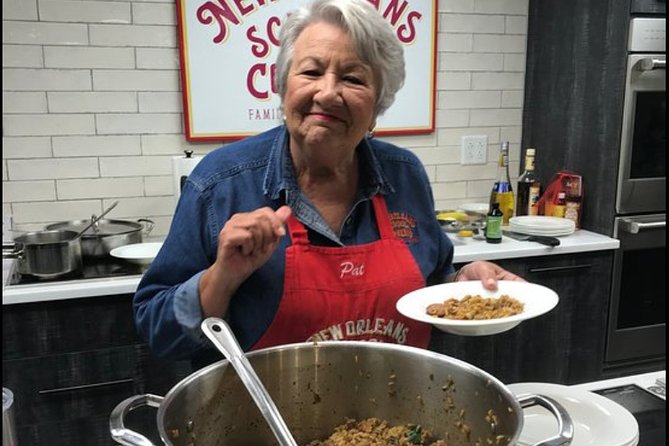
Here’s one reason this class feels like a smart pick: you don’t cook and then leave hungry. After your prep and cooking, you sit down and eat the meal you made. That means you can taste immediately what you worked on—no guessing, no hoping it worked out.
Drinks are included with the meal. The class provides red or white wine, plus Abita Amber Beer (a local brew). Non-alcoholic options are also included: iced tea, lemonade, and coffee. Since the minimum age is 18, alcohol is only relevant if everyone in your group meets that age rule.
A small but important practical point: this is a meal plus a class. If you’re planning a busy food day in the French Quarter, I’d treat this as your lunch or early dinner anchor and build the rest around it. One of the most repeated tips is basically that you should skip a full meal beforehand because the class portion is substantial.
Also, the meal is shared with fellow students. That turns the cooking class into a social break without making it feel like forced group bonding. People often mention the experience feeling like good fellowship at the table—talking about food, laughing while stirring, and then eating together like you actually accomplished something.
French Quarter time: a short taste that pairs well with cooking
The experience includes a French Quarter stop as part of the overall run. The schedule is short (about 3 hours total), so don’t plan on it being a full tour of the Quarter. Instead, think of it as a connection moment: your food lesson has context, and you’re not stuck in a kitchen bubble the whole time.
Even without a long sightseeing block, the timing works well. You get the culinary lesson first, then you can look at the Quarter streets and landmarks with a new lens—food as culture, not just a menu item. If you’re trying to “do something” early in your trip (especially on your first or second day), this format gives you energy and direction rather than just another meal.
If you rely on public transportation, it helps that the location is near transit. That makes it easier to pair this with other Quarter stops before or after.
Value at $162: what you get beyond a demo
At $162 per person, this isn’t a cheap kitchen toy. But you’re not paying for a table-side lecture. You’re paying for:
- A hands-on cooking class led by a professional chef
- A full meal you help prepare
- Alcoholic and non-alcoholic beverages (wine, Abita Amber Beer, plus iced tea, lemonade, coffee)
- A take-home recipe set
- A souvenir New Orleans School of Cooking white apron (listed value: $18.99)
- A structured group size (up to 10) so you can actually participate
That’s the key to the value. Many cooking experiences either focus on watching or focus on skills without feeding you. This one does both. It also includes beverages, so you’re not adding drink costs later.
One more money-saver angle: the recipes and apron mean you’re not just spending on a one-time experience. You can try the dishes again at home, and the class includes an extra incentive: you can submit photos of recipes you cook at home to receive a diploma. That turns your investment into a repeatable project instead of a single afternoon memory.
At the planning level, it also books ahead. The average booking window is about 37 days. If your trip lines up with popular dates, booking early helps you lock in a slot.
Practical tips: dietary fees, being on your feet, and what to bring
A few real-world things can make or break your comfort.
Dietary needs: You’re asked to advise dietary requirements at booking. For special requests tied to dietary restrictions, there’s a $10 fee payable on site. Build that into your budget if you have restrictions that require adjustments.
Minimum age: Minimum age is 18.
Comfort matters: Dress code is casual, but you’ll likely be standing and moving between tasks. Reviews frequently mention being on your feet for a long time, so wear shoes you can handle for a couple of hours.
Group pacing: With up to 10 people and 5 cooktops, the class is designed to keep everyone working. That’s great for engagement, but it also means you’ll stay active. If you want a slow, sit-down, watch-everything style, this may not match your pace.
Where to meet: Start at 524 St Louis St and the activity ends back at the meeting point.
Book it or skip it
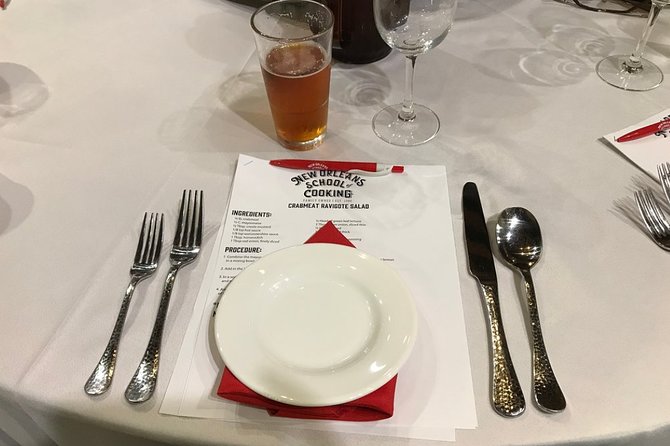
I’d book this if you want a genuine New Orleans food experience that mixes hands-on cooking with an actual meal at the end. It’s also a strong pick for first-timers who want iconic dishes—gumbo (sometimes), bisque, shrimp and grits, jambalaya, bananas foster or pralines—without needing serious culinary skills.
I’d think twice if your goal is mostly sightseeing, since it’s about cooking and eating, with only a French Quarter stop included. And if you’re sensitive to standing for a while, plan for comfort ahead of time.
If you’re on a food trip and you want one stop that teaches you something you can repeat at home, this hits the sweet spot: you cook, you eat, and you leave with recipes and an apron.
FAQ
How many people are in the class?
The class has a maximum of 10 travelers, with up to 5 cooktops for hands-on work.
How long is the cooking class?
It lasts about 3 hours.
What food and drinks are included?
You get a cooking class and a full meal, plus beverages including Abita Amber Beer, red or white wine, iced tea, lemonade, and coffee.
Is alcohol included, and is there an age requirement?
Yes, alcohol is included. The minimum age is 18.
Are dietary restrictions accommodated?
You should advise dietary requirements at booking. Special requests due to dietary restrictions have a $10 fee payable on site.
What is the cancellation policy?
You can cancel up to 24 hours in advance for a full refund. Within 24 hours, the amount paid is not refunded. If the minimum number of travelers isn’t met, you’ll be offered an alternative date/experience or a full refund.