REVIEW · CRETE
Cretan Cooking Class and Olive Oil Tasting
Book on Viator →Operated by Cretan Vibes · Bookable on Viator
Cooking over a real family farm beats a classroom any day. Here you’ll cook with Marianna and Mama Stella in an outdoor kitchen between olive trees, then sit down to eat what you made with local wine. I especially loved the hands-on teaching (you’re doing the work, not just watching) and the olive oil tasting that actually explains how to spot real extra virgin quality. One heads-up: it’s rural, so you’ll want to plan how you’ll get there since private transportation isn’t included.
This is priced at $114.93 per person for about four hours, and it’s not just a meal. You get ingredients, tools, a full food experience plus a guided tasting, and you take leftovers home—plus recipes and photos emailed after. The group stays small (max 12), which helps the pace feel relaxed and personal.
In This Review
- Key reasons people love this Cretan cooking and olive oil experience
- A farm kitchen under olive trees: what you’re really paying for
- What you’ll cook: classic Cretan dishes, taught hands-on
- Starters: dakos, stuffed bites, and garden flavors
- Mains: vegetarian options and two very Cretan meat styles
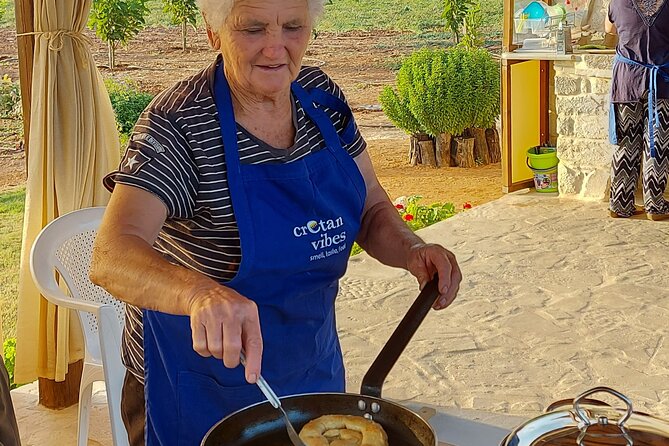
- Dessert: cheese pies fried in extra virgin olive oil
- Olive oil tasting 101: learn what extra virgin is (and isn’t)
- The meal after class: wine, coffee, and leftovers you can pack
- Group size and timing: why the 4 hours feel friendly
- Price and value: is $114.93 really fair?
- Who should book this cooking class in Crete?
- Tips to make the class easier and more rewarding
- Should you book Cretan Vibes cooking class and olive oil tasting?
- FAQ
- How long is the Cretan cooking class and olive oil tasting?
- What is the price per person?
- What language is the class offered in?
- How many people are in the group?
- Is the experience hands-on, or mostly watching?
- Do you taste olive oil during the class?
- Is there a meal included?
- Is wine included?
- Do you get recipes after the tour?
- What should I know about transportation and location?
Key reasons people love this Cretan cooking and olive oil experience
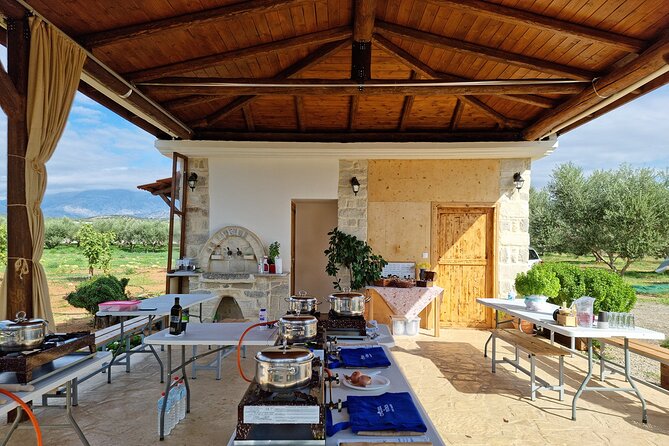
- Cook family-style with Marianna and Mama Stella, step by step, while you’re actively making dishes
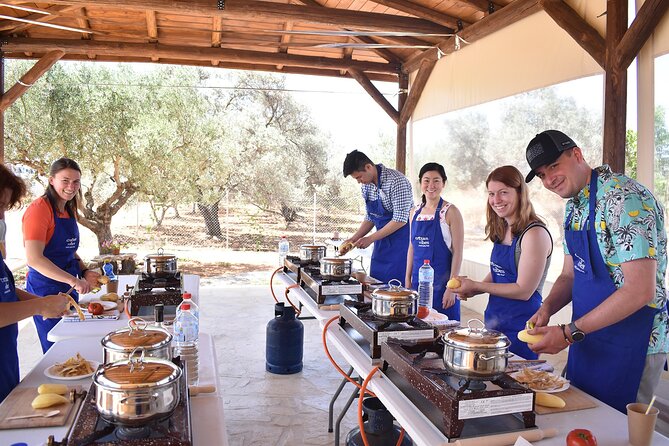
- Outdoor kitchen under olive trees, in a farm setting that feels practical and calm
- Olive oil tasting with real “how to taste” skills, including bitterness and how to spot defects
- A full meal you actually leave with, including leftovers packed for you
- Take-home recipes and photos by email, so you can recreate the dishes later
- Small-group feel, so questions don’t get lost in the crowd
A farm kitchen under olive trees: what you’re really paying for
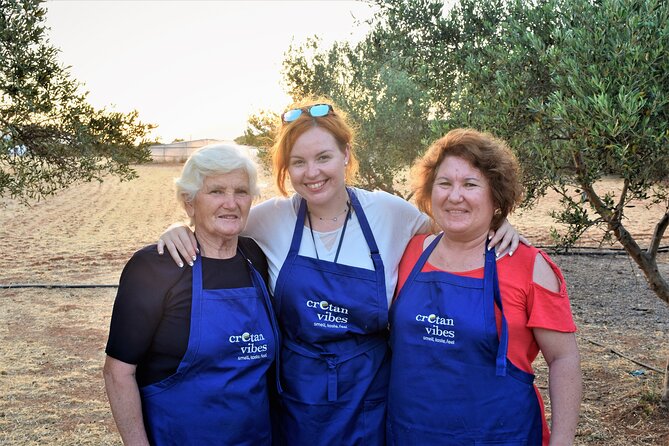
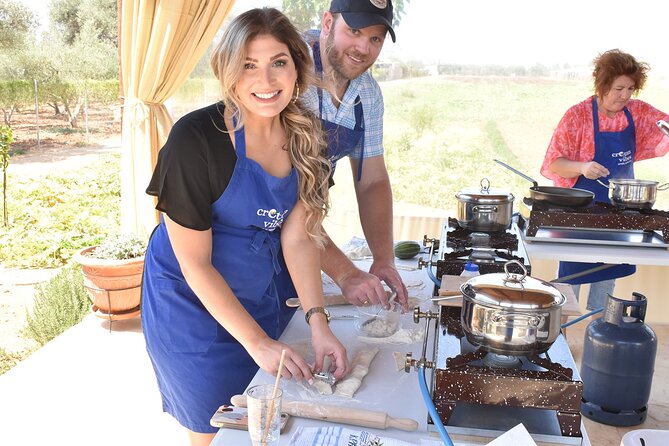
The biggest difference here is the setting. This class happens at Cretan Vibes, in a rural area off the main flow—at a place that’s built around their olive-growing life. That matters because the food doesn’t feel like a performance. It feels like everyday Cretan cooking, taught by people who do it because it’s theirs.
When you arrive, you’re welcomed with homemade refreshments (coffee/tea and lemonade-type drinks are part of the experience), and you get a clear idea of what’s coming next. The pace is friendly, not rushed. You can tell they want you to feel comfortable working with ingredients—especially if you’re not a confident cook.
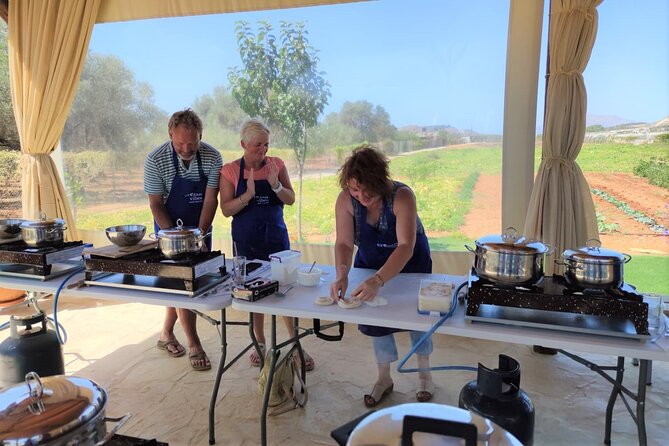
There’s also a modern, open-air cooking space that blends into the landscape around the farm. You’re outside, but not stuck in chaos. Think: functional workstations, enough room to move, and a dining setup that makes the meal feel like an event.
Practical note: the tour ends back where it starts. It’s also near public transportation, but since private transport isn’t included, you’ll want to match your plans to that.
You can also read our reviews of more tours and experiences in Crete.

What you’ll cook: classic Cretan dishes, taught hands-on
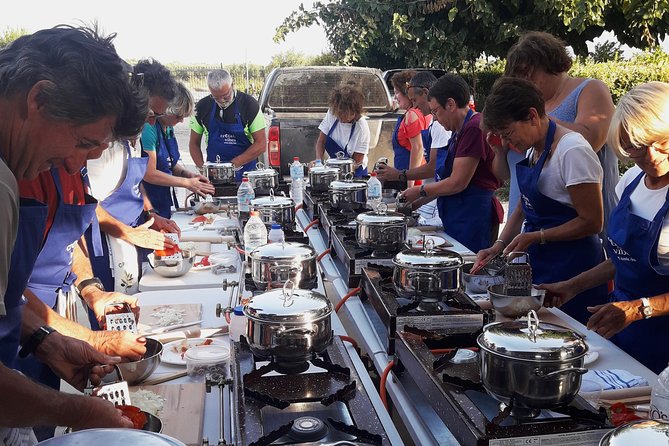
This is a fully hands-on class. You’ll be cooking during the session and then eating a full Cretan meal afterward, not just sampling small bites. One line that sums it up: you’re not learning Cretan food as theory—you’re learning it as technique.
The class is described as a 3-course meal, and the experience also states you’ll create five Cretan dishes. In practice, that usually means you’ll work through multiple recipes and components that add up to a full meal. The menu examples include both starters and mains plus dessert, so you’re likely to see a spread of textures and methods.
Here’s what they highlight as part of the menu and what you can expect to learn:
Starters: dakos, stuffed bites, and garden flavors
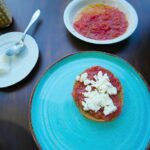
- Cretan Dakos: rusk with fresh tomato sauce, mizithra cheese, oregano, and their extra virgin olive oil. This is the kind of dish where timing matters—so you learn how to build flavor with simple ingredients.
- Cretan Dolmadakia (stuffed grape leaves): you’ll learn the stuffed-leaf approach that shows up in many Greek islands, but with a Cretan style.
- Stuffed zucchini flowers: aromatic and very “Cretan garden,” and a great way to learn a filling-and-stuffing technique.
Even if some items aren’t identical to what you expect, the teaching focus is consistent: you learn how to assemble and cook these dishes using traditional steps, and then you eat them while they’re at their best.
Mains: vegetarian options and two very Cretan meat styles
The class includes both vegetarian/vegan and meat-based main possibilities. Examples include:
- Vegetarian/Vegan Giaxni: green beans with potatoes and zucchini, fresh tomato sauce, and ksinoxondros (described as a family product made by grandma). This is the kind of main that tastes full even without meat because the sauce and herbs do the heavy lifting.
- Lamb with artichokes: lamb paired with artichokes, potatoes, fennel, and fresh tomato sauce.
- Augolemono: a lemon-egg sauce dish with pork or chicken (free range), plus leeks or lettuce, onions, potatoes, dill, eggs, and fresh lemon juice. This one’s a big clue to Cretan cooking: freshness and balance.
- Cretan Stifado: described as a spring or autumn dish. It can be made with chicken, rabbit, or even snails—so you learn about how flexible the recipe can be depending on tradition and season.
- Lamb with stamnagathi: lamb with a local green (stamnagathi) and fresh tomato sauce.
Dessert: cheese pies fried in extra virgin olive oil
Dessert examples include:
- Sarikopites or Kalitsounia: a dough stuffed with fresh Cretan cheese (described as made by grandma) and fried in the family’s extra virgin olive oil.
I like this dessert because it wraps the lesson. Olive oil isn’t just something you taste. It shows up again in the final dish.


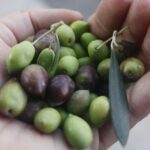

Olive oil tasting 101: learn what extra virgin is (and isn’t)
If you come to Crete for food, you’ll quickly realize olive oil is not a side character. It’s the backbone. This class treats it like one too, with an educational tasting guided by an olive-growing family.
You’ll learn how to recognize authentic extra virgin olive oil and how to evaluate it with your senses—not just your price label. The tasting covers:
- how to identify aromas
- how to taste and interpret flavors
- what bitterness can mean in quality terms
- tips for spotting defects in lower-quality oils
- practical guidance for choosing olive oil when you shop
This is the part I find most useful to take home. After the tasting, you’re not just thinking, “This tastes good.” You can start explaining why it’s good, and you’ll know what to look for when you’re buying oil later.
They also include a video of their olive harvest—behind the scenes. That gives the tasting context, so you connect what you’re smelling and tasting to how the oil actually comes to be.
The meal after class: wine, coffee, and leftovers you can pack
The moment you stop cooking and eat what you made is where the class turns from lesson to memory. You’ll enjoy your creations as a full meal with Cretan wine, and there are also handmade refreshments along the way—things like lemonade are mentioned as part of their welcome.
They also pack your leftovers carefully for you to take home. That’s not a throwaway perk. When a class includes leftovers, you get a second meal later, which stretches the value and makes it easier to share the food with someone back at your rental.
Another nice touch: you receive recipes and photos afterward via email. So you don’t have to rely on memory when you want to recreate the dishes.
Group size and timing: why the 4 hours feel friendly
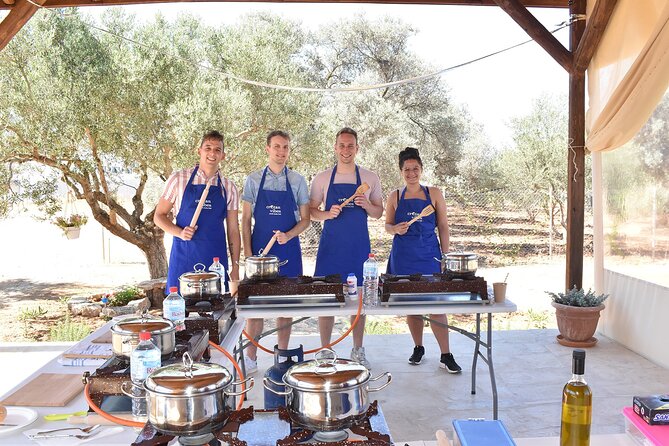
The experience runs about four hours. It’s also limited to a maximum of 12 travelers, which keeps it from feeling like a production line. In some cases, groups can end up smaller—so you might get more hands-on time than you expected.
The pace is described as relaxed, with no long downtime. You’ll keep moving between tasks: prepping, stuffing, assembling sauces or fillings, and learning the logic behind each dish.
This works well for:
- beginners who feel intimidated by cooking classes
- confident cooks who want a fresh set of techniques and flavors
- families, including kids old enough to handle short, safe cooking tasks (it’s been enjoyed across ages)
Price and value: is $114.93 really fair?
Let’s talk straight about money. $114.93 per person sounds reasonable for Greece, but the real question is what’s included and how much you actually do during the time.
Here’s what you get:
- the full meal after class
- a premium olive oil tasting
- alcoholic beverages (local wine) with your meal
- coffee and/or tea plus homemade refreshments
- all cooking ingredients and the cooking setup
- recipes sent to you by email and photos of the experience
- leftovers packed to take home
When you add that up, you’re paying for a complete food program—multiple dishes, a guided olive oil lesson, and the real-world “everything included” convenience of ingredients and tools. Since you also leave with leftovers and follow-up recipes, it can stretch into more than one meal at home.
If you’re the type who just wants a quick tasting, this might feel like more than you need. But if you want to learn by doing, and you care about olive oil quality, it’s priced in a way that matches the effort.
Who should book this cooking class in Crete?
Book it if you want a food experience that feels personal and practical.
You’ll likely enjoy it if you:
- love Cretan classics and want to make them yourself
- care about olive oil quality and want a real tasting framework
- want a small-group evening with lots of interaction
- prefer rural, local settings over crowded, tourist-focused ones
You might think twice if you:
- need private transportation handled for you
- strongly dislike outdoor farm settings
- only want a very short activity (this is about four hours)
One good sign: dietary restrictions have been respected in at least one case, and the menu includes a vegetarian/vegan option (like Giaxni). Still, if you have a serious dietary need, I’d make sure you confirm specifics when booking.
Tips to make the class easier and more rewarding
A few practical pointers can help you get more value out of the experience:
- Wear comfortable clothes you don’t mind getting a little messy. You’re hands-on, and you’ll be close to ingredients.
- Go into the olive oil tasting with a willingness to slow down. The lesson is about sensing aromas and flavors, and that works better when you’re not rushing.
- Ask questions during assembly steps. The hosts are there to guide you, and you’ll get more from the technique when you understand the why.
- Plan to bring room in your bag for leftovers. They pack them for you, and you’ll be glad you did.
- Save the email recipes and photos right away after the class. It’s the easiest way to replicate what you learned without guessing later.
Also, since the class depends on good weather, it’s smart to build some flexibility into your schedule for that evening.
Should you book Cretan Vibes cooking class and olive oil tasting?
I’d book it if your idea of a great Crete day includes real cooking, olive oil knowledge you can use later, and a meal that feels like it came from a family kitchen—not a staged tasting room. The hands-on structure with Marianna and Mama Stella, the outdoor setting between olive trees, and the fact that olive oil is taught as a skill (not just poured) make this one of those experiences that’s both fun and useful.
If you’re only looking for a quick bite, or you don’t want to plan around rural access, you may prefer something closer to where you’re staying. But if you want to go home with recipes, leftovers, and a better sense of what makes extra virgin extra virgin, this is a strong pick.
FAQ
How long is the Cretan cooking class and olive oil tasting?
It runs about 4 hours (approx.).
What is the price per person?
The price is $114.93 per person.
What language is the class offered in?
The experience is offered in English.
How many people are in the group?
The tour has a maximum of 12 travelers.
Is the experience hands-on, or mostly watching?
It’s designed to be 100% hands-on. You cook and participate, while the hosts guide you step by step.
Do you taste olive oil during the class?
Yes. You get an educational olive oil tasting focused on extra virgin quality, aromas, flavors, bitterness, and how to identify defects.
Is there a meal included?
Yes. After the cooking session, you’ll enjoy a full meal with what you made, and leftovers are packed to take home.
Is wine included?
Yes. Local wine is included to accompany your meal, along with coffee and/or tea.
Do you get recipes after the tour?
Yes. You receive recipes and photos of the experience afterward via email.
What should I know about transportation and location?
Private transportation is not included. The start is at Cretan Vibes (Eθνικη οδο, Μοίρες 704 00, Greece), and it ends back at the meeting point. The activity is near public transportation.