REVIEW · HO CHI MINH CITY
Unique farm to Table cooking class in Saigon
Book on Viator →Operated by HCM Cooking Class · Bookable on Viator
This is cooking class energy, but with a real twist: you start by collecting fresh ingredients on a nearby organic farm. I like that it is farm-to-table at the source and not just a demo, and I also like that the class is 100% hands-on so you actually learn the steps, not just watch them.
The one thing to plan around is time. The farm is outside central Ho Chi Minh City, and traffic can stretch the drive, so a smooth morning depends on your schedule and patience.
You’ll come back with a set of practical recipes, plus a certificate, and you’ll sit down to enjoy what you make with coffee or tea. It’s a full, structured half-day that mixes countryside learning with a cooking rhythm you can repeat at home.
In This Review
- Key things that make this class worth your time
- Price and logistics: what you’re paying for in Saigon
- Getting there: pickup, traffic, and why timing feels different
- The farm arrival: hats, baskets, and an organic garden tour
- Harvesting your ingredients: mints, mushrooms, and hands-on confidence
- Cooking in a classroom kitchen: 4 dishes, your own station, real instruction
- Eating your work: coffee or tea and a proper sit-down
- What you take home: recipes, certificates, and back-home results
- Who should book this farm-to-table cooking class
- A possible drawback to consider before you go
- Should you book this cooking class in Saigon?
- FAQ
- How long is the Saigon farm-to-table cooking class?
- What is the price per person?
- Is hotel pickup and drop-off included?
- How many dishes will I cook?
- Does the tour include lunch?
- Are drinks included?
- Do I get recipes to take home?
- Is there a vegetarian option?
- How big is the group?
- What is the cancellation policy?
Key things that make this class worth your time
- Hotel pickup and drop-off so you do not waste your morning navigating traffic
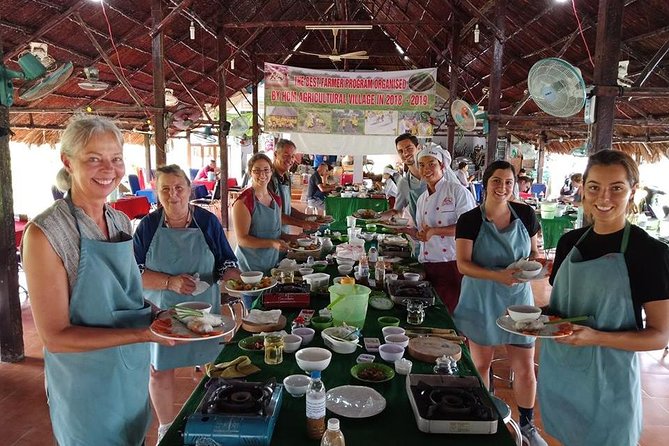
- Hands-on stations for 4 dishes, not a one-pot show-and-tell
- Organic garden harvest for herbs, vegetables, and mushrooms you actually use in your meal
- Farm nutrition talk that connects ingredients to flavor and health
- Small group size (max 15), which makes it easier to get answers while you cook
- Recipes and a certificate so the experience keeps paying off after you leave
Price and logistics: what you’re paying for in Saigon
At $67 per person for about 6.5 hours, this isn’t the cheapest cooking activity in town. But you’re paying for three things that usually cost extra when booked separately: round-trip hotel transport, guided farm time, and a full cooking class structured around multiple dishes.
The transport matters because Saigon traffic is not subtle. You’re heading out to the farm, and the class still gives you a coherent schedule once you’re there. You also get bottled water included, and the meal is part of the package, with lunch served as part of the experience.
One practical note: drinks are not included, so budget for anything beyond the coffee or tea served with your meal. If you’re the type who orders water or soda out of habit, keep that in mind.
You can also read our reviews of more tours and experiences in Ho Chi Minh City.



Getting there: pickup, traffic, and why timing feels different
This class includes hotel pickup and drop-off by air-conditioned vehicle, which is a big deal in Ho Chi Minh City. You start early, and the farm visit plus cooking takes up most of the morning window.
Even with pickup, the drive can be longer than it looks on a map. In real life, you may spend over an hour each way depending on road conditions. That is not a reason to skip it, but it does affect how you plan the rest of your day. If you have another must-do booked later, choose something flexible.
If you hate feeling rushed, this is still a solid choice because the day is organized and you’ll be kept busy: farm walk, harvesting, cooking, then eating.
The farm arrival: hats, baskets, and an organic garden tour
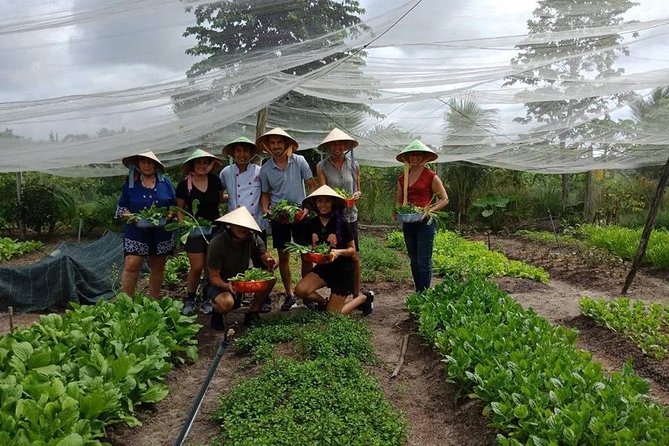
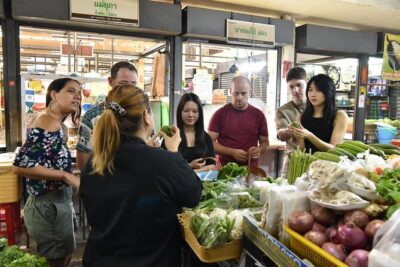
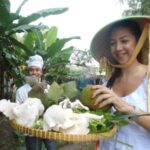
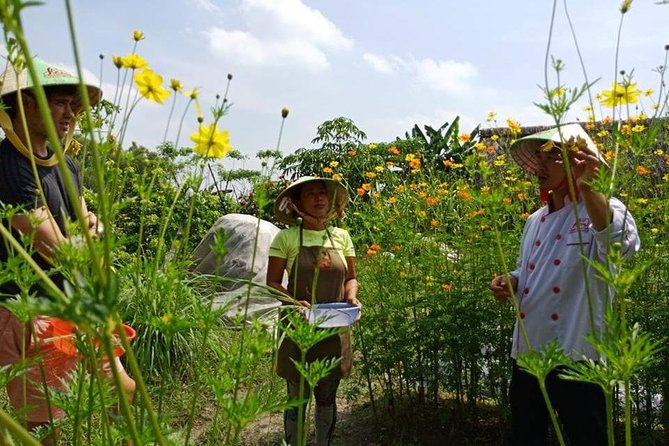
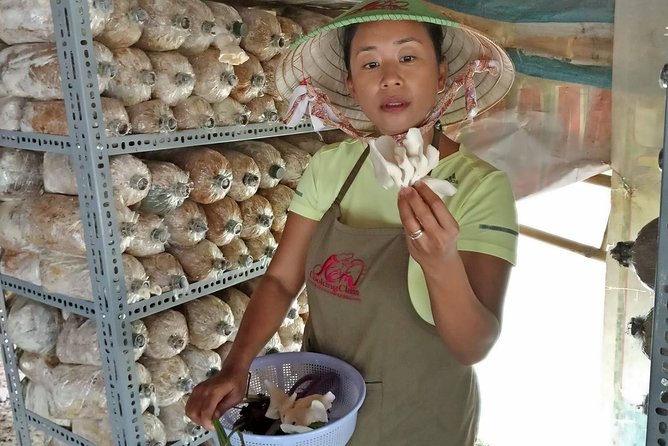
You do not just arrive and start cooking. First, you’re welcomed in a traditional way, then guided through the farm area to learn what grows there and why it matters. You’ll see a lot of plants beyond the obvious greens. People highlight varieties of herbs, vegetables, and mushrooms, and the garden talk focuses on nutrition from different plants.
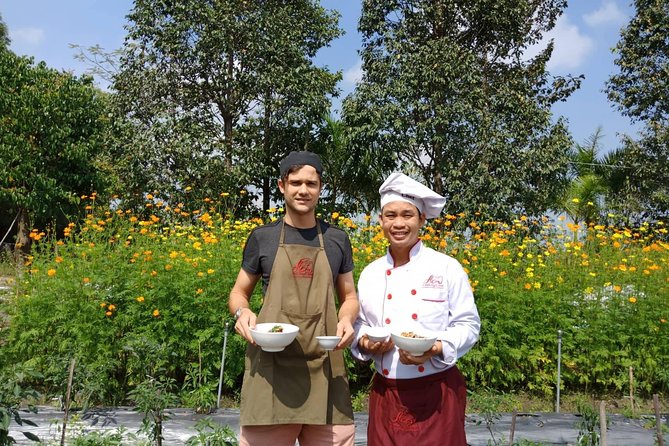
In several runs, the teaching team includes people like Linh and Tien for the farm side, while the chef leads the kitchen portion. Chef names you might hear during your day include Chef Tan and Chef Alice. The pattern is the same: one person helps you connect the ingredients to the cooking, then the chef turns that knowledge into dishes you can make again.
This part is also where you slow down and learn. A guided farm walk gives you context for what Vietnamese cooking tastes like when you use fresh herbs at the right moment. It’s the difference between cooking with ingredients and cooking with flavors that still feel alive.
Harvesting your ingredients: mints, mushrooms, and hands-on confidence
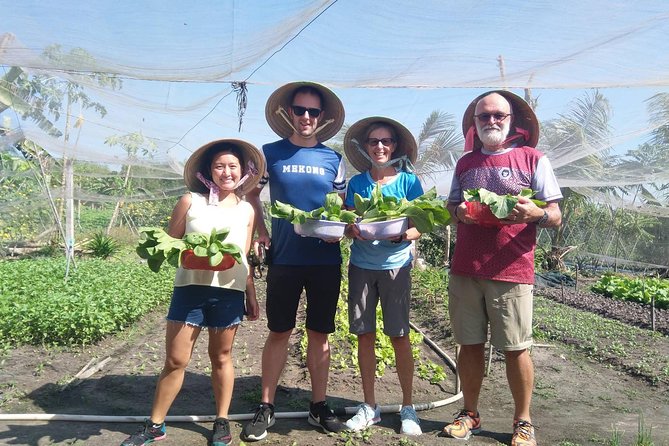
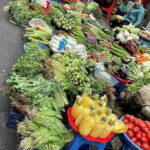
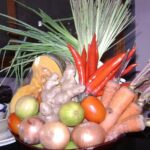
One of the best parts is that you pick what you will cook. You collect your own vegetables for the meal, including herbs and other garden produce mentioned in the highlights like mints and mushrooms.
This is more than a fun photo moment. Harvesting forces you to pay attention to what you’re choosing. You start noticing differences in leaf shape, aroma, and texture. Later in the kitchen, that awareness helps you understand why one herb goes in a specific step or why certain ingredients need prep right away.
You also get a welcome into farm life. Some groups mention seeing cows or buffaloes on the property, and you may be offered something to drink during the visit, like shiso tea. Those small details are part of what makes the day feel more like a farm outing than a commercial class.
And yes, it can feel busy once you’re in the thick of it—there’s real farm activity. That’s normal. Just keep your focus on your plants and your questions.
Cooking in a classroom kitchen: 4 dishes, your own station, real instruction
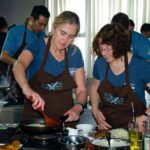
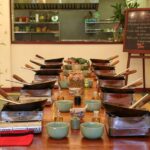
After harvesting, you move into the cooking area to make four traditional Vietnamese dishes. The experience is designed to be 100% hands-on, and that’s exactly what you want if your goal is skill, not just a meal.
In reviews, people emphasize that staff do meaningful prep before you start cooking. That matters because it keeps the class from turning into chaos. You still do the work—chopping, mixing, assembling—but you’re not starting from scratch with every ingredient.
You’ll typically get clear, step-by-step instruction from the chef. Chef Tan, Chef Alice, and other instructors (like Nu mentioned for simplifying instructions) show up in different language and teaching styles, but the consistent theme is structure: they explain what you’re doing and why, then let you do it.
You also get practical kitchen pacing. Many cooking classes move too fast, and beginners get lost. Here, the class is built to keep you moving through the menu while you understand each stage. If you are a first-timer, this format is a relief.
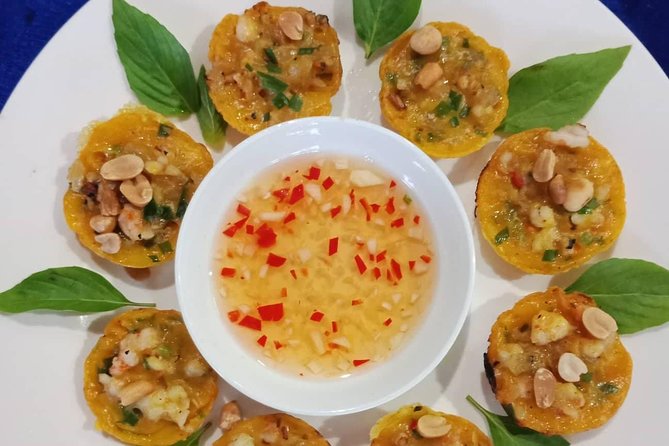
A common standout dish mentioned is a noodle salad—people call it one of the best things they ate while in the city. Even if your exact menu differs slightly, the takeaway is consistent: you’ll likely make at least one dish that relies on fresh herbs and balanced flavors, not just sauce.


Eating your work: coffee or tea and a proper sit-down
Once cooking is done, you get to enjoy the meal you made, typically with coffee or tea. This is one of those simple design choices that makes the class feel complete. You are not rushed into the next activity right after your hands get messy.
You’ll also understand your food better when you eat it right away. Your brain connects the taste to the steps you just did. That is how you build memory for flavors, not just recipes.
The lunch portion included means you should not expect to hunt for food afterward. If you’re the kind of person who normally snacks constantly while sightseeing, you’ll likely feel satisfied rather than stuck to hunger. People also describe the portions as plentiful, so come with an appetite.
What you take home: recipes, certificates, and back-home results
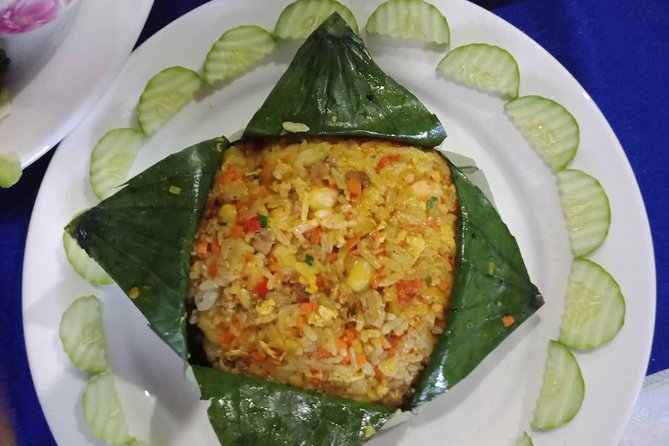
This tour is built around leaving you with something usable. You receive recipes to remember what you made, and you also get a certificate.
For me, this is one of the biggest value signals. A great cooking class doesn’t just give you a lunch; it gives you a method. Recipes help you repeat the dishes, and the certificate is an easy motivator when you’re digging through your notes later and need a reason to actually cook.
Also, the farm side makes your recipes more meaningful. When you learn why certain herbs and greens are used—plus what they bring nutritionally—you’re more likely to substitute correctly at home. You might not find the exact same produce, but you’ll know what type of ingredient to look for and how it should behave in the dish.
Some groups also mention receiving photos after the event, which is a nice extra if you want reminders beyond the recipes. Not a deal-maker, but it helps the day stay memorable.
Who should book this farm-to-table cooking class
This class is a great fit if you want an experience that feels authentic but still structured. You’ll get:
- a guided farm walk with harvesting
- hands-on cooking with real instruction
- a full meal with coffee or tea
- recipes and a certificate to take home
You’ll probably enjoy it most if you like cooking, even casually. You do not need to be an experienced home chef. The format is beginner-friendly because ingredients are prepared in advance and the chef leads step-by-step.
It also works well if this is your first time visiting Ho Chi Minh City. You escape the city for a half-day and see how farm ingredients shape Vietnamese flavors. One reason this stands out is that you’re not stuck in a single indoor cooking room the whole time.
A possible drawback to consider before you go
The biggest drawback is simple: time and distance. The farm is north of the city center, and traffic can push the drive longer than you expect. If you have a tight itinerary with non-negotiable plans later, schedule your next commitment with buffer time.
Second, language can be a factor. The available info says vegetarian options are offered if you ask, but it does not list language guarantees. Reviews mention experiences where expectations about a specific language were not met. If language matters a lot, message the provider after booking to confirm what will be used on your day.
Should you book this cooking class in Saigon?
Book it if you want a farm-to-table day with real technique. The best reasons to choose it are the ingredient harvesting and the fact that you cook four dishes with hands-on instruction. At $67, you’re buying transport, structure, multiple dishes, and take-home recipes, not just a brief cooking demo.
Skip it only if your schedule is too rigid for a longer drive, or if you know you hate cooking with your hands. Also consider looking for another option if you want a purely indoor experience, because the day starts with a farm walk and harvesting.
If you want something memorable and practical—something that turns Vietnamese food into skills you can repeat at home—this is a strong pick.
FAQ
How long is the Saigon farm-to-table cooking class?
It runs for about 6 hours 30 minutes.
What is the price per person?
The price is $67.00 per person.
Is hotel pickup and drop-off included?
Yes, the experience includes hotel pickup and drop-off in Ho Chi Minh City.
How many dishes will I cook?
You will learn to cook four traditional Vietnamese dishes.
Does the tour include lunch?
Yes. Lunch is included as part of the experience.
Are drinks included?
Bottled water is included. Coffee or tea is served with your meal, but other drinks are not included.
Do I get recipes to take home?
Yes. You receive recipes after the class.
Is there a vegetarian option?
Yes. A vegetarian option is available if you request it at booking.
How big is the group?
The tour has a maximum of 15 travelers.
What is the cancellation policy?
You can cancel for a full refund up to 24 hours before the experience starts. If you cancel within 24 hours, the amount paid is not refunded.