REVIEW · HO CHI MINH CITY
Cooking Class with Ben Thanh Market visit
Book on GetYourGuide →Operated by Saigon Cooking Class · Bookable on GetYourGuide
Cooking starts at the market. You’ll shop Ben Thanh Market with a chef first, then cook a full 3-course meal yourself, not just watch. It’s a practical way to learn Vietnamese flavors through the ingredients you actually pick.
I love how the chef turns the market into a lesson. You walk, you ask questions, and you learn what to look for in produce and pantry items before you start cooking.
I also love the hands-on setup: you cook along step by step with your own tools and ingredients. The only thing to consider is that the pace can feel quick at times, so if you need extra time on specific steps, speak up and slow it down.
In This Review
- Key Things to Know Before You Go
- Why Ben Thanh Market First Makes This Class Worth It
- Finding the Cua Tay Gate Meeting Point (9:00 AM)
- Market Shopping With Your Chef: What You’re Really Learning
- Taxi to the Kitchen: From Shopping Mode to Cooking Mode
- The Hands-On Cooking Class From 10:00 AM to 1:00 PM
- Your 3-Course Meal: Cooking and Eating the Same Morning
- Flavor Rules That Keep It Authentic: No MSG, No Knorr
- Diet Changes: Vegetarian and Allergy-Friendly Options
- Pace and Teaching Style: Helpful Tips So You Don’t Feel Rushed
- Price and Value: Is $45 a Good Deal?
- Who Should Book This Ben Thanh Market Cooking Class?
- Should You Book It?
- FAQ
- Where do I meet the chef for the Ben Thanh Market and cooking class?
- What time does the experience run?
- Is pick-up and drop-off included?
- What’s included in the $45 price?
- Can the menu be adapted for vegetarians or allergies?
- Are MSG or Knorr powders used?
- Can I cancel and get a refund?
Key Things to Know Before You Go
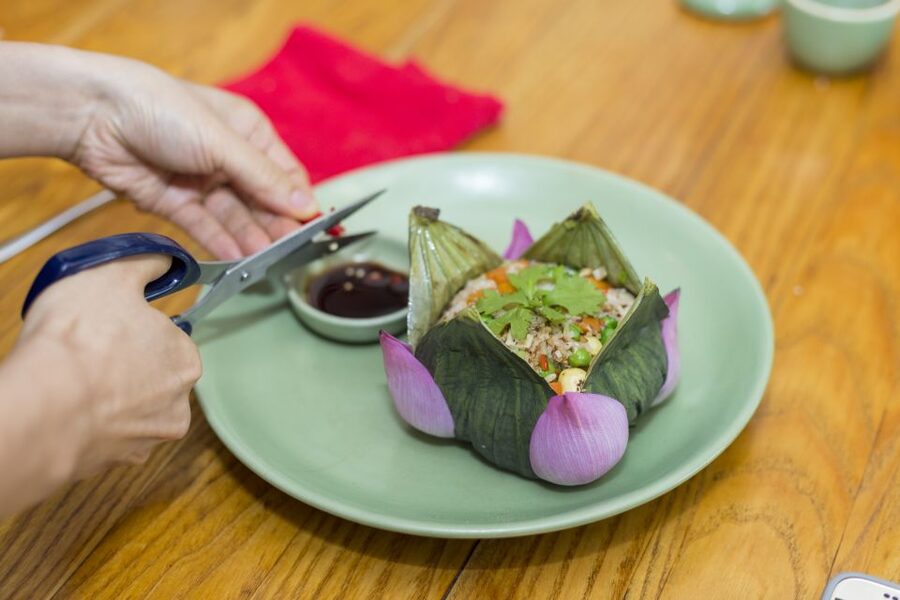
- Ben Thanh Market with a chef so ingredient choices make sense once you’re in the kitchen
- Hands-on cooking for each person with your own equipment and ingredients
- A true 3-course meal where you cook and then sit down to eat what you made
- MSG and Knorr powders forbidden, so flavors come from real cooking, not shortcuts
- Dietary changes are supported for vegetarians and allergies if you tell them in advance
- Small-group feel (including classes described for different ages and skill levels)
Why Ben Thanh Market First Makes This Class Worth It
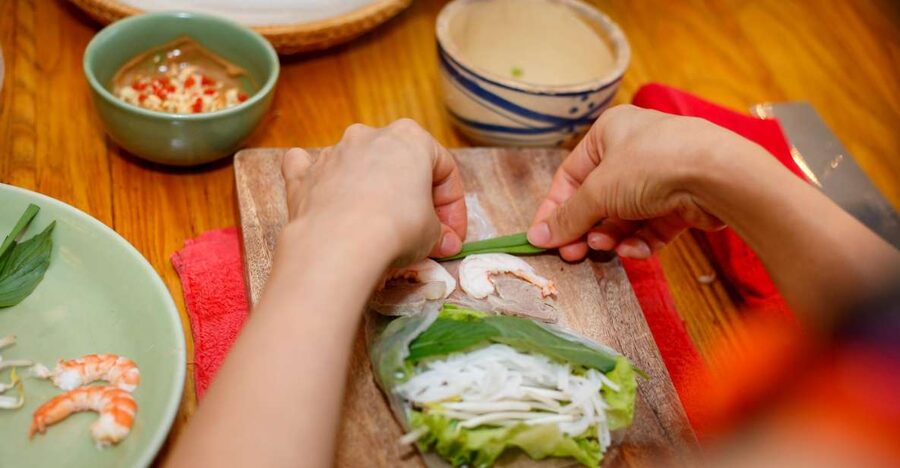
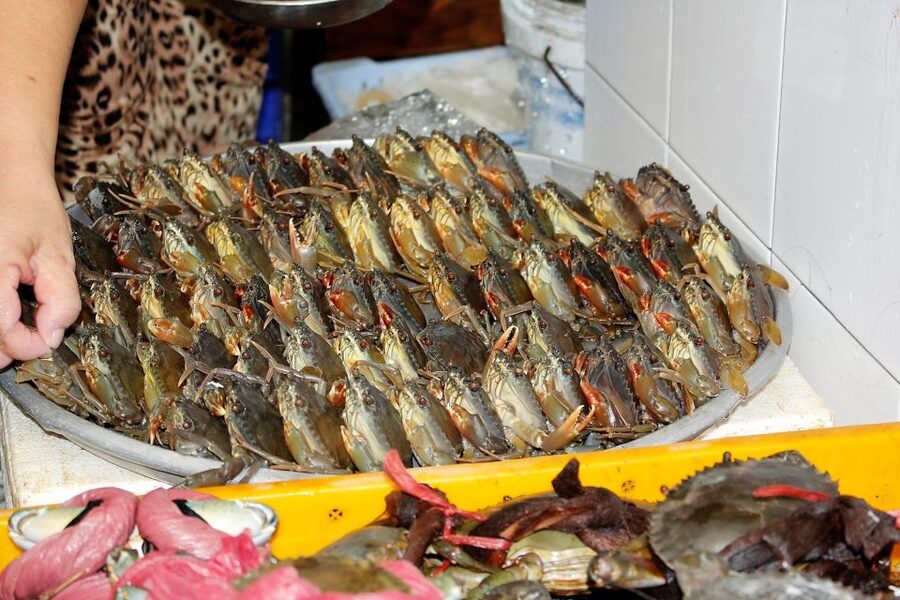
This is the kind of cooking class that starts with reality, not a pre-plated demo. You’re at Ben Thanh Market before the cooking begins, so when your chef talks about aromatics, vegetables, herbs, or what makes a sauce work, it connects to something you just saw.
And you get a meal out of it. Many classes feel like a “see-and-sample” experience. Here, you’re doing the work and then eating the result. That alone makes the class feel like a good use of a morning instead of a pricey souvenir with a side of food.
You can also read our reviews of more tours and experiences in Ho Chi Minh City.



Finding the Cua Tay Gate Meeting Point (9:00 AM)
You’ll start at 9:00 AM at the Cua Tay gate of Ben Thanh Market on Phan Chu Trinh Street. Look for your chef wearing a Saigon Cooking Class t-shirt. This is one of those details that sounds simple until you arrive 10 minutes late and end up wandering around a lot.
After the market portion, you’ll head to the cooking location by taxi (included). There’s no pick-up or drop-off, so plan to get yourself to the meeting point on time.
Market Shopping With Your Chef: What You’re Really Learning
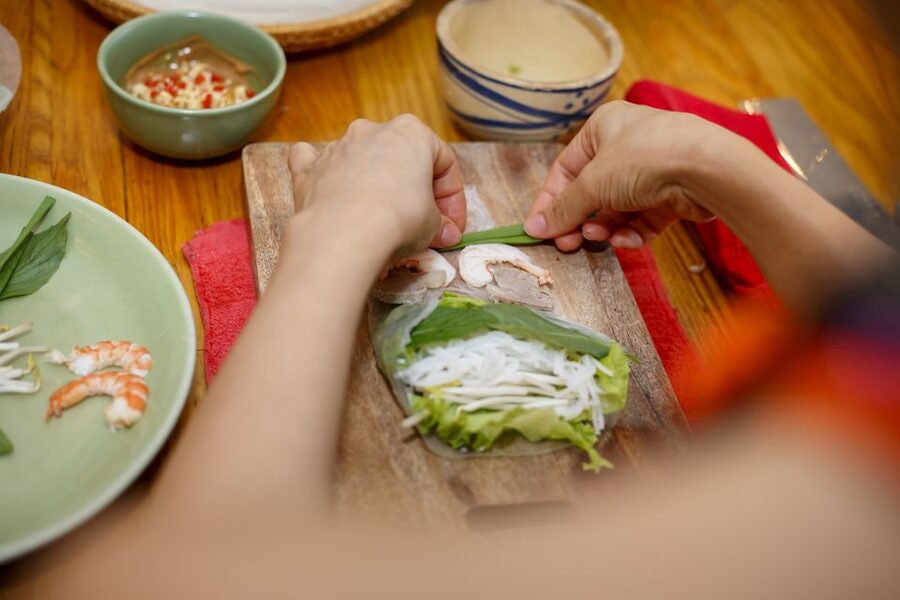
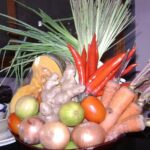
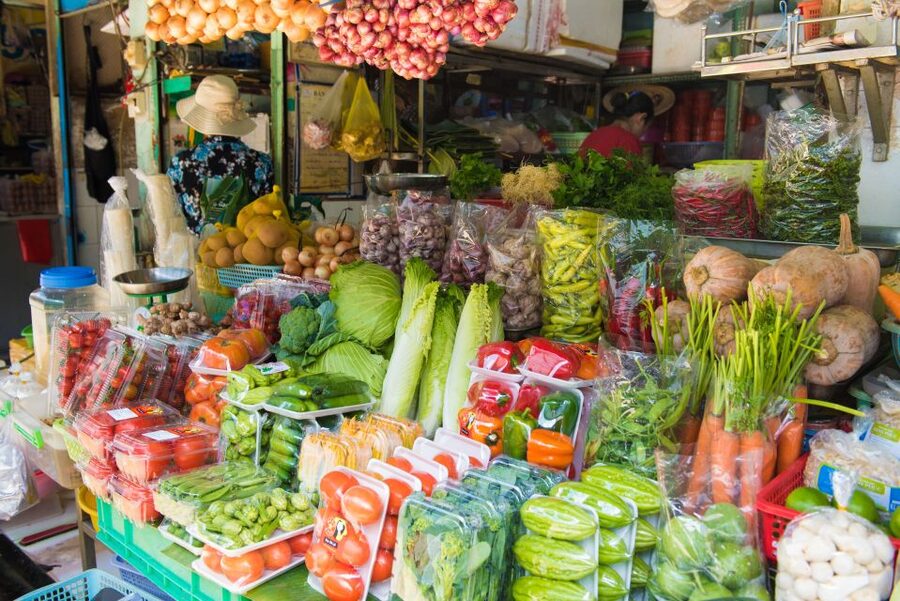
The market time runs from 9:00 AM to about 9:50 AM. The goal isn’t to buy everything under the sun. It’s to pick the ingredients that match what you’ll cook later, and to learn how Vietnamese cooks think about ingredients in real life.
In a few accounts of the class, the chef guides were praised for explaining how different varieties are used, and for pointing out which items matter for the dish you’re going to make. That’s the practical side of market shopping: you learn what to buy and why, not just what everything is called.
A helpful mindset for this part: come hungry for questions. If you’re the type who likes to cook at home, ask about ingredient swaps and how to choose good versions in a supermarket. Even if you can’t copy the exact brands later, you’ll understand the cooking logic.
One more small tip: don’t overpack the morning. You’ll be walking around the market, and then cooking right after. Comfortable shoes help more than you’d think.
Taxi to the Kitchen: From Shopping Mode to Cooking Mode
At around 9:40 AM, your chef takes you back by taxi to start the cooking class. This transition matters because you don’t waste time trying to figure out how to get between places while you’re still in a market mindset.
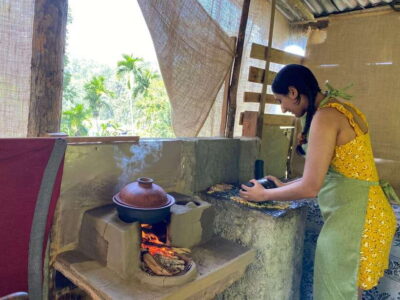
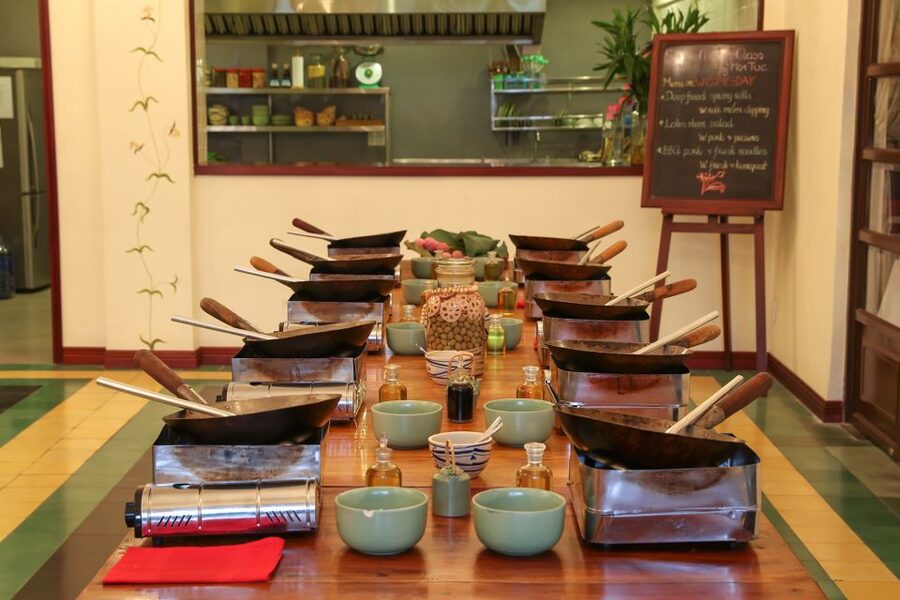
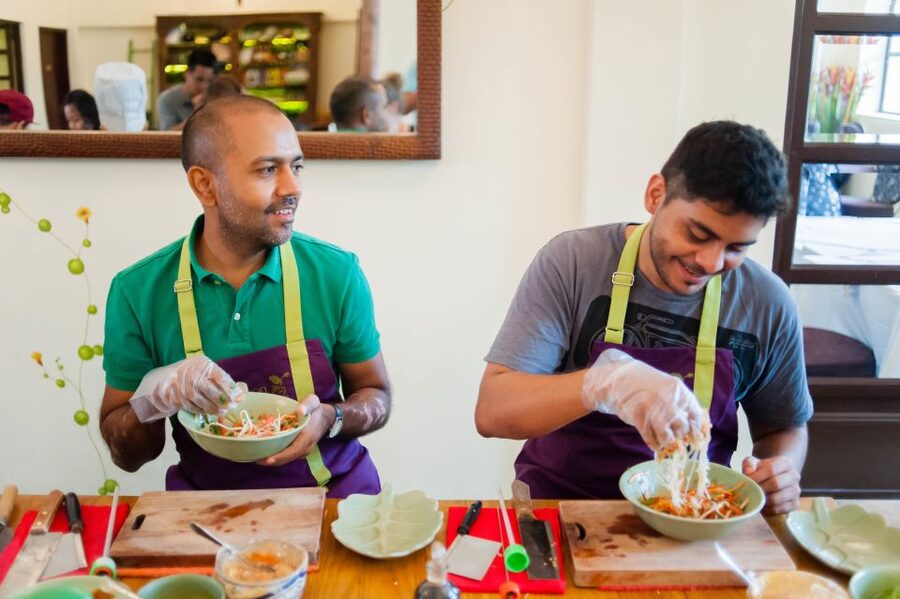
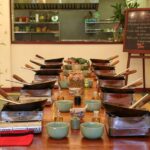
When you arrive, you’re in full cooking setup mode. The class is designed so you aren’t just standing around. Each person gets equipment and ingredients, which helps you follow along step by step without losing the plot.
Some sessions are described as being held in a traditional-style setting, including an old colonial building. Either way, the atmosphere is geared for active cooking, not background entertainment.
The Hands-On Cooking Class From 10:00 AM to 1:00 PM
The cooking portion runs from 10:00 AM until 1:00 PM. That’s enough time to actually learn technique and not just move fast through a recipe.
Here’s how it typically feels when you’re in it:
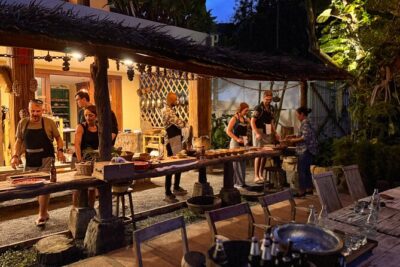
- You cook together as a group, following the chef’s instructions.
- You work with your own portion and tools, so you can practice rather than only watch.
- There’s prep support behind the scenes (some ingredient portioning), which keeps the class focused on cooking skills instead of turning it into a full-time chopping job.
What I like about this structure is that it balances realism with sanity. If everything were totally from scratch, beginners would struggle and experienced cooks would get bored. Your chef keeps the rhythm moving, while still letting you do real hands-on work.


Your 3-Course Meal: Cooking and Eating the Same Morning
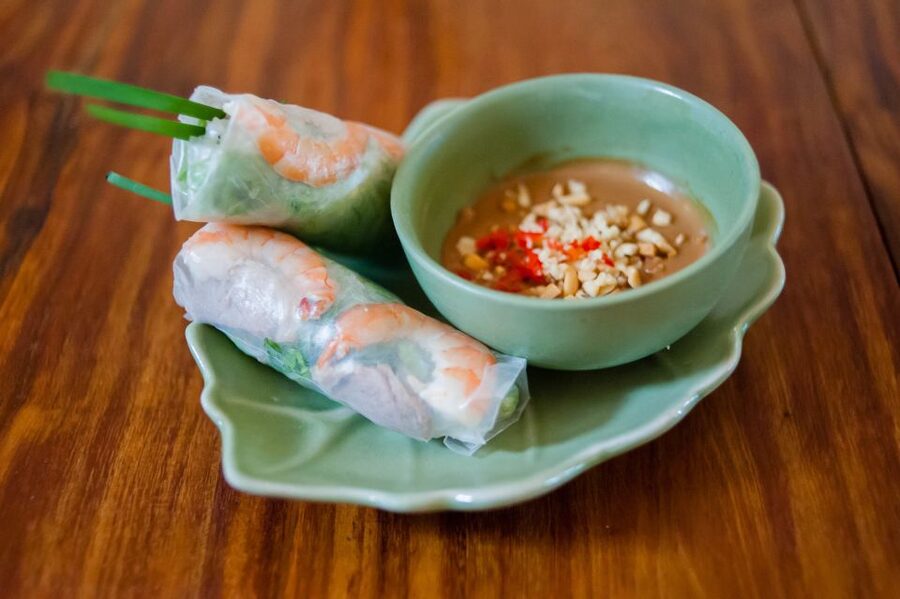
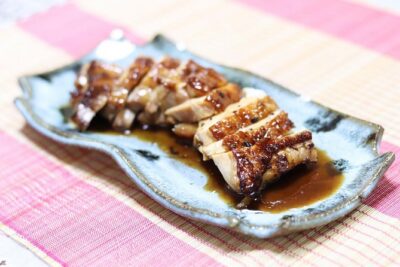
You’ll make and enjoy a 3-course meal. The biggest value here is that you get feedback from the tasting part. When you cook something yourself, you notice texture, balance, aroma, and saltiness in a way that you don’t when someone else cooks.
One detail you should plan for: you might get a sweet course at the end, and at least one class account mentions a dessert surprise. Either way, you’ll want to save room. If you show up snacking, you’ll miss the point of cooking-to-eating timing.
Also, this isn’t just about eating the food. The cooking class is built so you can replicate it later. You receive a digital recipe book, which is ideal when you don’t want to carry paper pages home.
Flavor Rules That Keep It Authentic: No MSG, No Knorr
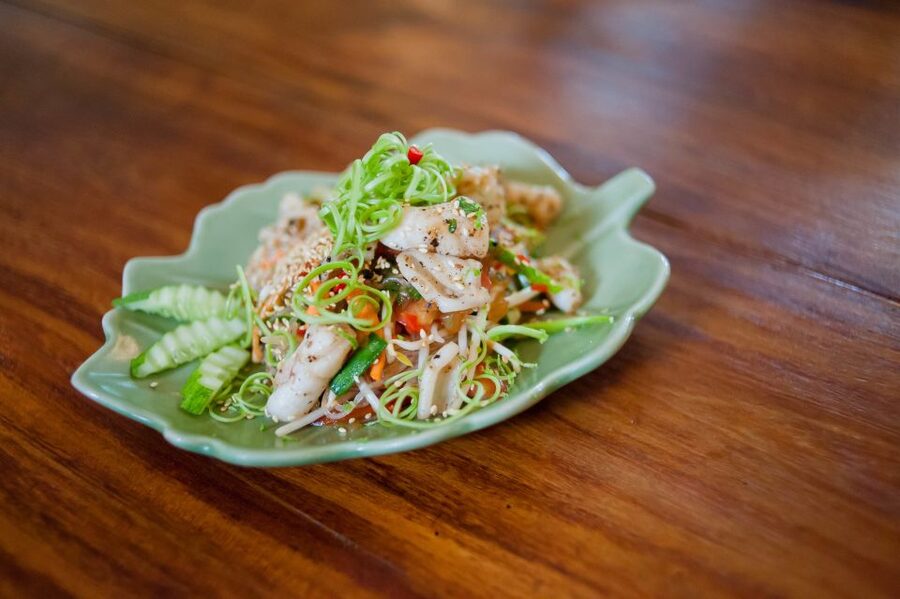
One of the clearest signs this class takes taste seriously is their ingredient policy. MSG and Knorr powders are forbidden. That doesn’t just affect the final flavor. It changes how you understand the dish.
Instead of relying on seasoning shortcuts, you learn what the dish actually needs: the balance of aromatics, salt, sweetness, acid, and cooking technique. When you practice at home later, you’ll be less tempted to patch flavor with the same kind of seasoning add-ons.
If you’re the kind of cook who likes control over ingredients, you’ll probably appreciate this rule more than you expect.
Diet Changes: Vegetarian and Allergy-Friendly Options
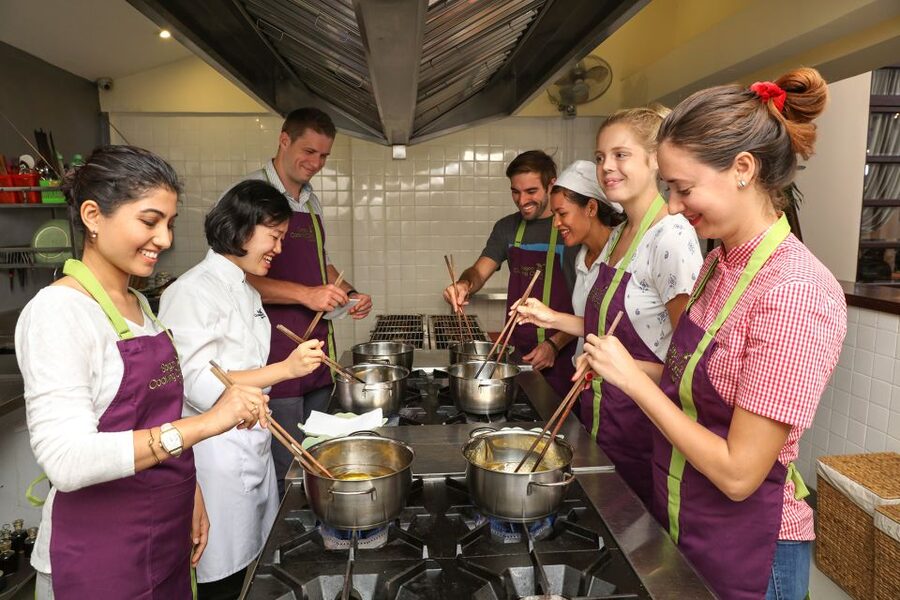
The menu can be adapted for vegetarians and for people with food allergies, as long as you let the team know in advance. That’s important because it affects the entire class, not just what gets served at the table.
If you have allergies, communicate early so the chef can adjust ingredients and avoid last-minute confusion. One class account specifically notes they handled allergy needs by changing ingredients so the participant could still take part.
This is also the kind of class where an adaptation can actually work better than you might think. When you cook alongside the chef, the food is tailored in real time instead of arriving already prepared.
Pace and Teaching Style: Helpful Tips So You Don’t Feel Rushed
The cooking experience is generally described as clear and step-by-step. A lot of praise goes to instructors for patient explanations and strong English. Names that come up include Chef Ly and Oanh, and guides such as Li, Thao, and Wan are mentioned for leading portions of the experience.
That said, one caution shows up too: sometimes the chef can be quick during specific steps, and if you’re juggling multiple tasks, it can feel like you have to catch up. If you tend to learn slowly, don’t try to silently keep up. Ask for clarification or repetition. The best outcome is you understand the step, not you finish it under pressure.
A practical approach:
- Watch the step first, then start.
- If you get lost, pause and ask. Don’t pretend you’re fine.
- Take a breath between tasks. Vietnamese cooking often involves timing, not just technique.
Price and Value: Is $45 a Good Deal?
At $45 per person for a roughly 4-hour experience, this isn’t a cheap “snack and watch” activity. But it often feels like good value if you care about learning and eating what you make.
You’re paying for four things that matter:
- Market time with a chef, so the ingredients aren’t random.
- Hands-on cooking with individualized tools and ingredients.
- A full 3-course meal, which is food you would otherwise pay for.
- A digital recipe book, so you can cook again later.
When you compare it to the cost of dining out plus a basic cooking class, the market-to-plate format is the value engine. You’re not just getting a single dish. You get an entire cooking session plus the meal.
Who Should Book This Ben Thanh Market Cooking Class?
This class is a great fit if you want:
- A morning plan that combines culture and cooking.
- Something interactive for people who don’t just want to eat.
- A chance to learn ingredients and technique you can use back home.
It also seems workable across different comfort levels. One account mentions the class being taught to a mixed group including young students (as young as 8) with calm, clear instruction. So if you’re a beginner, don’t assume you’ll feel overwhelmed—just be ready to focus during the cooking.
If you hate group schedules or you like wandering with zero structure, this might feel a bit “guided.” But the structure is the point: you get a real meal out of it and clear steps you can repeat.
Should You Book It?
Book this if you want a hands-on Vietnamese cooking experience that starts at Ben Thanh Market, uses a clear flavor philosophy (no MSG, no Knorr), and ends with a meal you cooked yourself. At $45, it’s also priced in a way that can feel fair when you factor in market instruction, guided technique, and the 3-course payoff.
Skip it if you’re extremely time-sensitive, or if you strongly prefer ultra-slow cooking with lots of free-form practice. The pace is usually good, but it can move fast in spots.
If you’re somewhere in the middle, you’ll probably leave with both full bellies and a practical understanding of how Vietnamese meals come together.
FAQ
Where do I meet the chef for the Ben Thanh Market and cooking class?
Meet the chef at 9:00 AM at the Cua Tay gate of Ben Thanh Market on Phan Chu Trinh Street. The chef will be wearing a Saigon Cooking Class t-shirt.
What time does the experience run?
It lasts about 4 hours. The market visit runs from 9:00 AM to 9:50 AM, and the cooking class runs from 10:00 AM to 1:00 PM.
Is pick-up and drop-off included?
No. Pick-up and drop-off are not included. After the market visit, you’ll go to the cooking class by taxi (included).
What’s included in the $45 price?
The price includes the market tour, a 3-course cooking class, iced tea and water, and a digital recipe book.
Can the menu be adapted for vegetarians or allergies?
Yes. The menu can be adapted for vegetarians and for people with food allergies if you let them know in advance.
Are MSG or Knorr powders used?
No. MSG and Knorr powders/enhance flavors are forbidden.
Can I cancel and get a refund?
Yes. You get free cancellation up to 24 hours in advance for a full refund.