REVIEW · ADDIS ABABA
Unique Ethiopian Cooking Class and Coffee Ceremony with a Local in Addis Ababa
Book on Viator →Operated by Traveling Spoon · Bookable on Viator
Your best Ethiopian meal might start in someone’s kitchen. This in-home cooking class with Daniel and Tigist turns Addis Ababa food into a real-life story, not a script. I love how they teach injera step by step, and I also love the hands-on coffee roasting and ceremony that follows.
One heads-up: this experience does not include hotel pickup, and the meeting point is listed simply, so you’ll want to confirm exactly where to meet and plan for local transit time.
In This Review
- Key Takeaways Before You Go
- A Home-Cooked Ethiopia Lesson, Not a Commercial Class
- Injera in a Real Kitchen: Pour, Cook, and Flip What You Made
- The Second Dish: Shiro or Tibs (and How to Add More)
- Coffee Ceremony With Freshly Roasted Beans
- What You Eat: A Seasonal Menu With Meal Included
- Timing and Schedule: About 3 Hours in Addis Ababa
- Getting There: Near Public Transportation, Still Plan Carefully
- Price and Value: What $116 Buys You
- Who This Cooking Class Suits Best
- Small Logistics to Keep in Mind
- Should You Book Daniel and Tigist’s Addis Ababa Cooking Class?
- FAQ
- What is the duration of the Addis Ababa Ethiopian cooking class and coffee ceremony?
- Where does the experience take place?
- Is hotel pickup included?
- What dishes will I learn to cook?
- Will the menu be the same year-round?
- Can I make it vegetarian?
- Are there options for people with dietary restrictions or allergies?
- Can I request an extra dish to cook?
- What is included in the price?
- Is this a group tour or private?
Key Takeaways Before You Go
- Private, home-kitchen setting in Addis Ababa’s outskirts, calmer than the center
- Injera practice focused on pouring and getting the cook right
- Coffee ceremony with fresh beans, including hand-roasting
- You can learn a second dish like shiro or tibs (and add more if you request it)
- Vegetarian option available if you mention it during booking
- Market time may happen, depending on the day and flow of your visit
A Home-Cooked Ethiopia Lesson, Not a Commercial Class
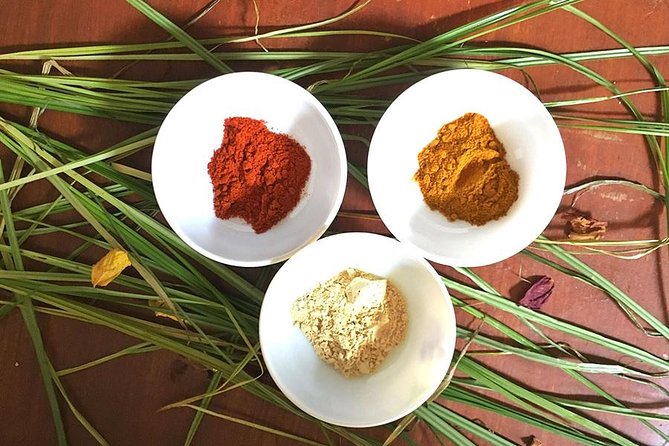
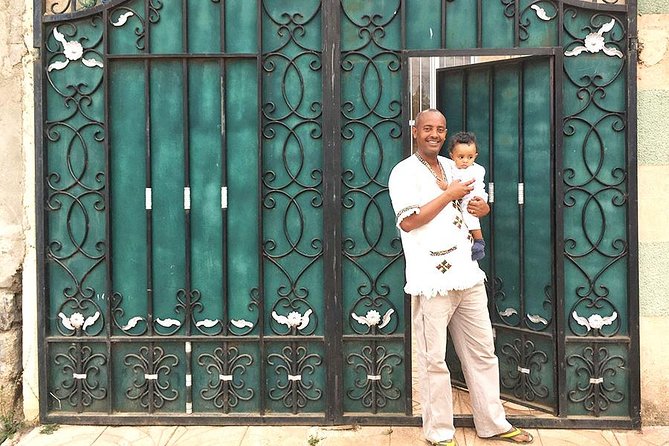
This isn’t a factory-style cooking show where everyone watches and then eats. You’re invited into Daniel and Tigist’s home to cook with people who live Ethiopian food every day. That alone changes the feel of the experience. It’s quieter, more personal, and you get a better sense of what daily life in Addis Ababa looks like.
Their home is in the outskirts of the city, in an area that feels more relaxed than the tourist-heavy core. It’s described as clean and comfortable, with a lived-in warmth—family photos and a sense that you’re stepping into real routines. Depending on whether you’re there in the evening or on the weekend, you might even meet their three boys, which can make the whole meal feel even more like a shared family moment.
One important note: the pace is meant to teach you. This is not labeled like a commercial class with pre-planned stations and scripted lines. You’ll be part of the kitchen action, and you’ll eat what you make.
You can also read our reviews of more tours and experiences in Addis Ababa.
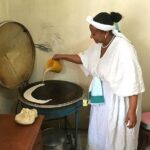
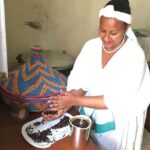
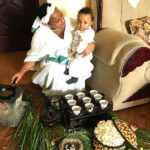
Injera in a Real Kitchen: Pour, Cook, and Flip What You Made
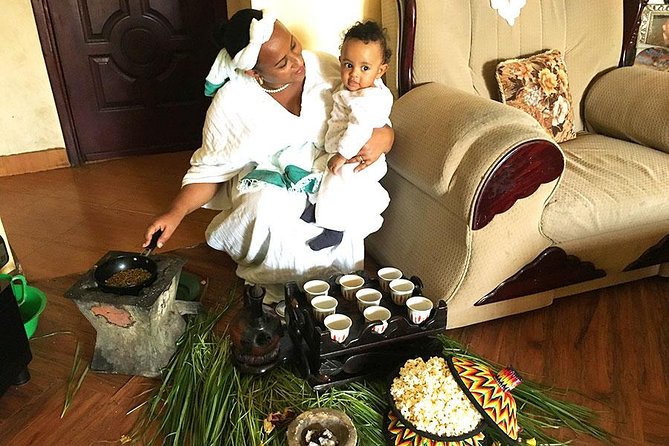
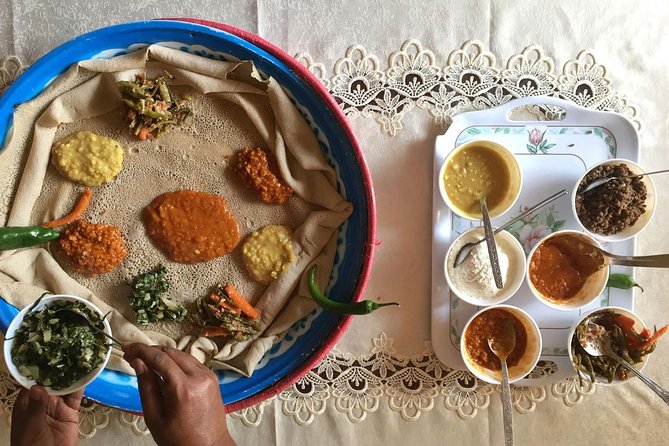
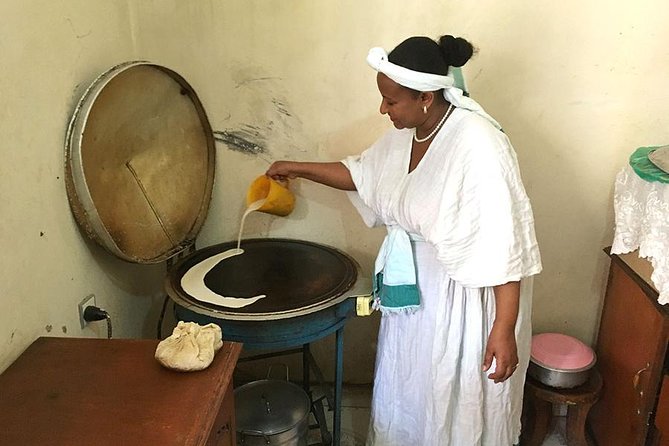
Injera is the star. It’s the fermented flatbread that anchors most Ethiopian meals, and getting it right is half the lesson. Tigist handles this side of the teaching during the class, showing you how to pour and how to cook it so it turns into the recognizable texture you want.
What I like about the way they teach injera is that it’s practical. You’re not just learning a recipe. You’re learning technique—how the batter behaves, how heat affects the cook, and how timing matters when you’re working with something fermented rather than plain flour.
You’ll likely spend a good chunk of your two-hour cooking portion focused on injera itself. If you’ve never cooked fermented foods, don’t worry. This is presented as a teach-you-in-the-moment experience, not a chemistry lecture.
And yes, injera is meant to be shared. As the meal comes together, your injera isn’t just a side. It’s how you pick up stews, scoop flavors, and build your bite.
The Second Dish: Shiro or Tibs (and How to Add More)
Besides injera, you may learn another classic Ethiopian dish. Depending on season and what’s planned for your day, Tigist might guide you through something like:
- Shiro (a chickpea or broad bean stew)
- Tibs (stir-fried meat with spices and vegetables)
These choices matter because they represent two different Ethiopian flavor directions. Shiro leans into thick, comforting lentil or bean flavor with spices that feel rounded. Tibs brings more heat and movement—stir-fry energy with spices that cling to meat and vegetables.
You also have a way to personalize the class. If you want to learn an additional dish, you can add that in the notes when you book, and it will extend the cooking time. That’s a smart option if you’re the type of traveler who loves learning multiple dishes rather than just sampling.
Vegetarian travelers should know there’s a vegetarian option available. You’ll want to mention it when you book so the plan can fit your needs.
Coffee Ceremony With Freshly Roasted Beans
After cooking, you shift into the coffee ritual. This isn’t just getting a cup. You learn to roast beans and then participate in a proper Ethiopian coffee ceremony flow.
The roasting part is a big deal. Freshly roasted beans smell different than pre-roasted coffee. You can also pick up how roasting time changes flavor. That makes the whole ceremony feel like a real craft rather than a tourist performance.
The ceremony comes after the cooking portion, so your brain is already in food mode. It pairs beautifully with what you made earlier. You’ll taste and understand how Ethiopian meals often end: with warmth, conversation, and coffee that feels like it belongs to the table, not a separate event.
If you’re a coffee fan, this is one of the most practical ways to connect Ethiopian cuisine to Ethiopian culture. Ethiopian food isn’t only about spices—it’s also about rhythm and hospitality.
What You Eat: A Seasonal Menu With Meal Included
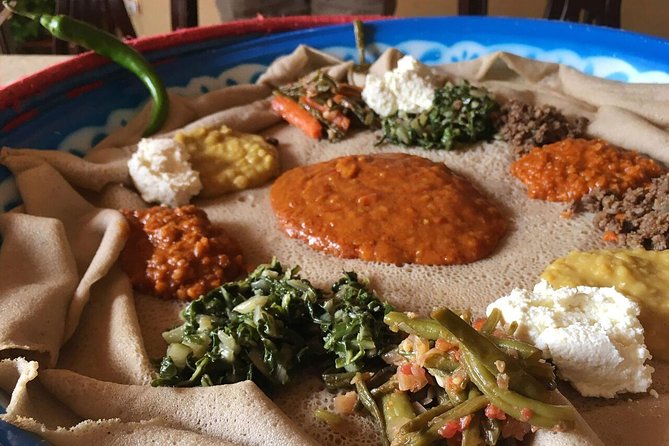
Your experience includes a meal with Daniel, plus beverages. The big picture is simple: you cook, you eat what you made, and you get a coffee ceremony finish.
The details shift because the menu may vary depending on the season. That’s good news. Seasonal adjustments mean you’re more likely to taste what’s truly practical and available, not the same version every day.
In most cases, the meal will revolve around the injera you cooked and the dish (or dishes) Tigist teaches with you—often including something in the lane of shiro or tibs. Expect that Ethiopian food is bold in aroma and spice, but also built for sharing and eating with hands.
If you have dietary restrictions beyond vegetarian—like allergies—you should flag them at booking. The tour info says you can advise dietary needs, allergies, and preferences when you book, so the hosts can plan accordingly.
Timing and Schedule: About 3 Hours in Addis Ababa
This is about a 3-hour experience. The cooking class itself is around two hours, followed by the coffee ceremony portion.
Because there’s no hotel pickup included, you’ll be responsible for getting yourself to the meeting point and back. The tour ends back at the meeting point, so you’re not dropped off in some different part of town.
That sounds minor, but in Addis it matters. Depending on where you stay, this experience can be easiest if you:
- can handle a taxi ride or local transit without stress, and
- have a small buffer for traffic and finding the exact spot.
One review detail I found especially useful: meeting point confusion can happen if your schedule expectations don’t match what’s written on the day. The safest move is to confirm the meeting point details ahead of time and keep your phone charged. Aim to arrive a few minutes early rather than rushing right on time.
Getting There: Near Public Transportation, Still Plan Carefully
The activity is listed as being near public transportation, which helps. If you’d rather avoid taxis, you can likely reach the area by bus or shared transport—but you’ll want to check routes based on where you start in Addis.
The meeting point is listed as an unnamed road in Addis Ababa, and the end point is the same as the meeting point. That can feel vague at first, but it also fits the reality of a home-based experience. You’re going to a neighborhood address and meeting area, not a big landmark.
Because the tour is private for your group, you don’t have to worry about mixing with strangers in a commercial setting. Still, private doesn’t mean automatic. You’ll want to communicate clearly so you don’t lose time before the cooking begins.
Price and Value: What $116 Buys You
At $116 per person, you’re paying for a home experience with real instruction, a shared meal, and coffee roasting/ceremony. It’s not just ingredients and a recipe card.
Here’s how the value tends to break down:
- You’re learning core skills (injera technique plus roasting and ceremony). That’s harder to replicate on your own than, say, a basic tasting.
- A full meal is included, and beverages are included too.
- Taxes, fees, and handling charges are included, plus gratuities are included. You’re not guessing what to pay extra.
- It’s private to your group. You’re not sharing the kitchen time with strangers.
The one part to weigh is location logistics. No pickup means more of the burden is on you. If getting there is easy from where you stay, this becomes a very strong value. If it’s far and complicated, you may feel the cost more, because you’re also paying your time in transit.
Who This Cooking Class Suits Best
I think this is a great fit if you:
- want a cultural food experience rather than another checklist tour
- enjoy hands-on cooking, especially when it includes fermented food
- love coffee culture and want to see roasting and ceremony as an actual craft
- prefer a home setting with a smaller, calmer feel
It also works well for families and multigenerational groups, because the meal format is naturally shared. You might find the home atmosphere especially comforting if you’re tired of loud, crowded sightseeing.
If you’re the kind of traveler who dislikes being in someone’s home environment for extended time, you may want to consider whether the home-based format feels right for you. Still, the tour is framed as comfortable and clean, and the hosts are described as warm.
Small Logistics to Keep in Mind
A few practical points make this smoother:
- Allergies and restrictions: tell the host at booking time.
- Vegetarian option exists, so ask for it when you book.
- Menu varies seasonally, so expect some flexibility.
- If you want an extra dish, include it in the booking notes early enough for planning.
- You’ll receive confirmation within 48 hours of booking, depending on availability.
Also, this is listed as a private, personalized experience. That’s a real plus for conversation and teaching pace, since the kitchen time can be adjusted to your group.
Should You Book Daniel and Tigist’s Addis Ababa Cooking Class?
If you care about learning the real way Ethiopian food is made—especially injera and coffee—I’d book this. It’s the kind of experience that’s hard to replicate with a cookbook, because you’re learning from people who do it daily in their own kitchen.
Skip it only if you know you’ll be stressed about logistics. Since there’s no hotel pickup, you need a plan for getting to the meeting point and back. If your schedule is tight and you dislike local navigation, you might feel friction.
For most visitors, though, this is one of the strongest ways to spend a few hours in Addis Ababa. You’ll leave with food you made, a better sense of Ethiopian hospitality, and coffee knowledge you can actually use next time you roast at home.
FAQ
What is the duration of the Addis Ababa Ethiopian cooking class and coffee ceremony?
It runs for about 3 hours.
Where does the experience take place?
The cooking class and coffee ceremony take place in a local host’s home in Addis Ababa.
Is hotel pickup included?
No. Hotel pickup and drop-off are not included, and the tour ends back at the meeting point.
What dishes will I learn to cook?
You’ll learn injera. Depending on the day and season, you might also learn dishes such as shiro or tibs.
Will the menu be the same year-round?
No. The menu may vary depending on the season.
Can I make it vegetarian?
Yes. A vegetarian option is available if you advise at booking.
Are there options for people with dietary restrictions or allergies?
Yes. You can advise dietary restrictions, allergies, or preferences at booking so the hosts can plan accordingly.
Can I request an extra dish to cook?
Yes. If you want to learn an additional dish, you can add it in the notes section when booking, and it will extend the cooking time.
What is included in the price?
The price includes a private cooking class plus meal, beverages, all taxes/fees/handling charges, and gratuities.
Is this a group tour or private?
It’s a private, personalized experience. Only your group participates. Service animals are allowed.