REVIEW · KUALA LUMPUR
Malaysian Hands-On Cooking Class : Masala Medley
Book on Viator →Operated by Cooking Class in Kuala Lumpur: Masala Medley · Bookable on Viator
A stove, an apron, and four dishes you’ll finish yourself. In Malaysian Hands-On Cooking Class: Masala Medley, you get your own station and real guidance to learn how tempering spices, building masalas, and making masala chai from scratch works in everyday home cooking. I especially like that it’s not a lecture. You slice, spice, stir, and serve while you’re learning.
I also like the small-group feel—maximum 12 people—because you can actually ask questions and get adjustments as you cook. One possible drawback: while the class is listed at about 3 hours, timing can feel shorter on certain days, so you’ll want to show up a few minutes early and keep your expectations flexible.
In This Review
- Key things that make Masala Medley worth your time
- Entering A Cooking Class Above Jalan Imbi
- Your Own Station: The Difference Between Cooking and Watching
- Spice Orientation: How Masalas and Tempering Get Practical
- Pakora Starter: Crisp Texture and Control
- Chicken Curry, Basmati Rice, and Cucumber Pachdi
- Chicken curry
- Basmati rice
- Cucumber pachdi
- Kesari Dessert: A Comforting Finish
- Masala Chai From Scratch: The Take-Home Skill
- Photo Session, Certificate, and Your Digital Recipe Booklet
- Price and Timing: Is $66.99 a Good Value in Kuala Lumpur?
- Who This Cooking Class Suits Best
- Should You Book Masala Medley?
- FAQ
- How long is the Masala Medley cooking class?
- Is the class hands-on or just a demonstration?
- What dishes will I cook during the class?
- What’s included in the price?
- Where does the class start?
- Is transport to and from the class included?
- What is the cancellation policy?
Key things that make Masala Medley worth your time
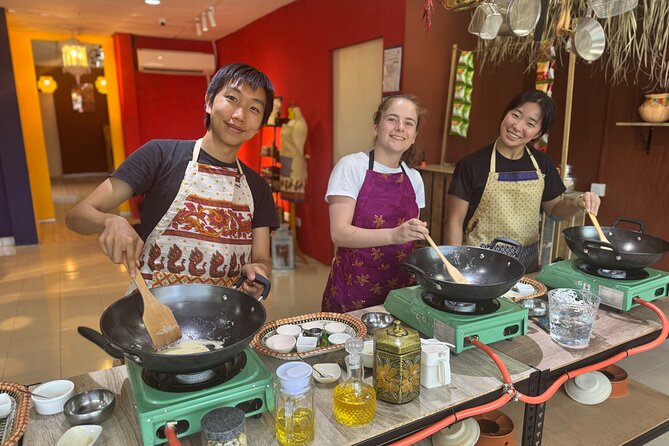
- Your own gas stove and tools: You’re cooking at your station, not watching from the sidelines.
- A four-dish, from-scratch flow: pakora, chicken curry, kesari, and masala chai are all part of the standard session.
- Spice technique focus: You learn tempering and how masalas are built, not just what goes in the pot.
- Small group size (max 12): Easier to get help and keep the class moving smoothly.
- Take-home value: A digital recipe booklet plus a participation certificate and a door gift.
Entering A Cooking Class Above Jalan Imbi
Masala Medley starts in Bukit Bintang, in a first-floor studio at 76A Jln Imbi—above a local bakery. The setup matters. You’re not wandering into some big, anonymous venue. You’re stepping into a working neighborhood spot where the smells are already doing half the work of getting you hungry and curious.
The class uses a mobile ticket, and it’s near public transportation. Transport to and from the class isn’t included, so plan your route around the Jalan Imbi area (and give yourself a little buffer so you’re not rushing when you arrive).
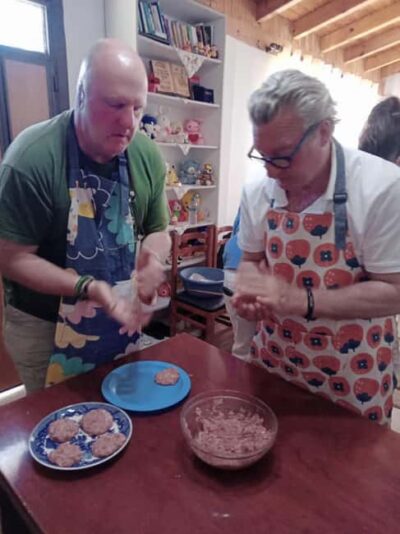
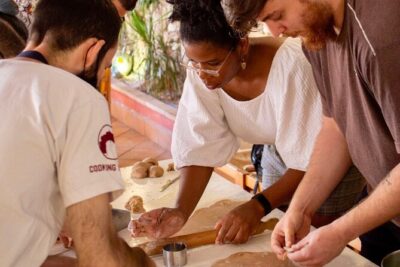
Inside, the experience is built for hands-on cooking with a friendly pace. You get a quick orientation, an apron, and then the work starts right away. This is where the course earns its keep: you’re learning by doing, while someone is there to guide you step-by-step.
You can also read our reviews of more tours and experiences in Kuala Lumpur.

Your Own Station: The Difference Between Cooking and Watching
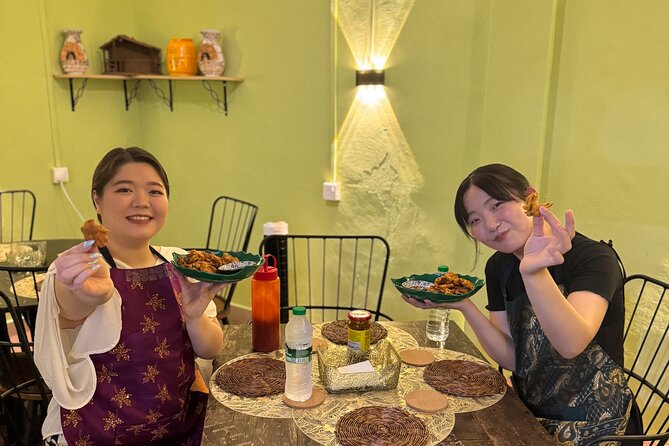
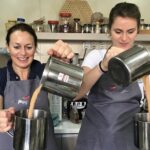
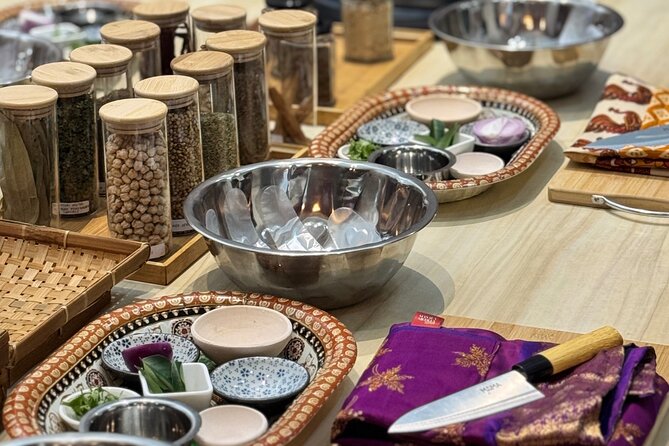
The biggest practical win here is that each person gets their own gas stove, counter space, and full cooking tools. That means you don’t just learn ingredients—you learn timing, heat control, and what “right” looks like as the dish develops.
If you’ve ever taken a cooking class where you chop for five minutes and then go back to watching, this won’t feel like that. You’re actively slicing, stirring, and serving throughout. It’s also a good fit for beginners, because the guidance is structured around the sequence of the dishes rather than assuming you already know Malaysian/Indian cooking rhythms.
You’ll also notice the class is set up so you can finish what you start. The session includes enough food that it functions as a meal plan, not a snack-and-fleeting demo. You’ll eat what you cooked—fresh and still warm—then you’ll carry the method home with the recipe booklet.
Spice Orientation: How Masalas and Tempering Get Practical
Before the first dish, you’ll go through a spice orientation. This isn’t just “here’s cumin, here’s turmeric.” You get the key idea: Malaysian-Indian cooking relies on how spices are used, their aromas, and how heat changes them in the pot.
One technique the class highlights is tempering spices. In plain terms, tempering is the moment spices hit hot oil (or fat) so their flavor releases quickly instead of turning flat. That’s the kind of small move that can make a curry taste like home instead of like a spice list.
You’ll also learn how a masala is built. Even if you’ve cooked “curry” before, masala thinking tends to be more about the method: what gets cooked first, how to balance fragrance with depth, and how to keep the sauce cohesive.
I like this part because it helps you stop guessing later. Once you understand what the spices are doing, you can adjust at home without feeling lost.
Pakora Starter: Crisp Texture and Control
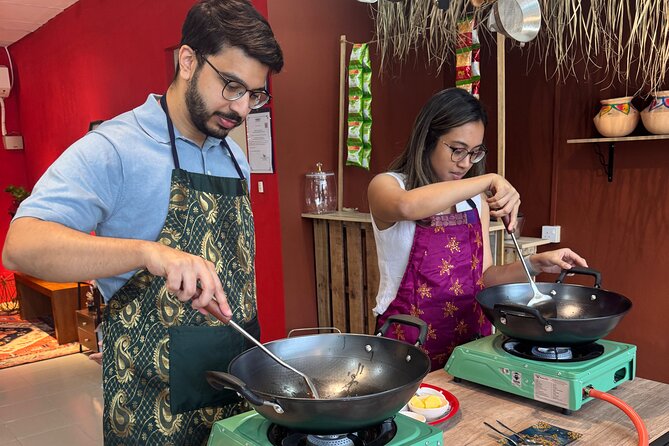
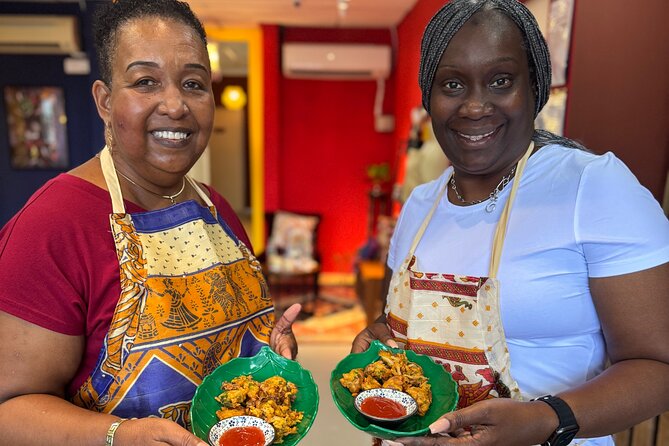
Your appetizer is pakora, a crispy vegetable fritter. This is a smart first dish because it teaches you technique without requiring complicated equipment. You get practice with chopping, seasoning, and getting the batter or mix to behave so it fries up with that crisp edge.
Pakora also works as a confidence builder. If you mess up slightly, you still have a finished result you can taste right away. And you’re not stuck waiting—after you make it, you get to enjoy it before moving on.
A helpful detail to keep in mind: not every single component has to be handled at the last second. The class may manage some smaller prep items in advance so your hands stay busy with the cooking you came for. That’s normal for professional instruction, especially in a tight three-ish hour schedule.
Chicken Curry, Basmati Rice, and Cucumber Pachdi
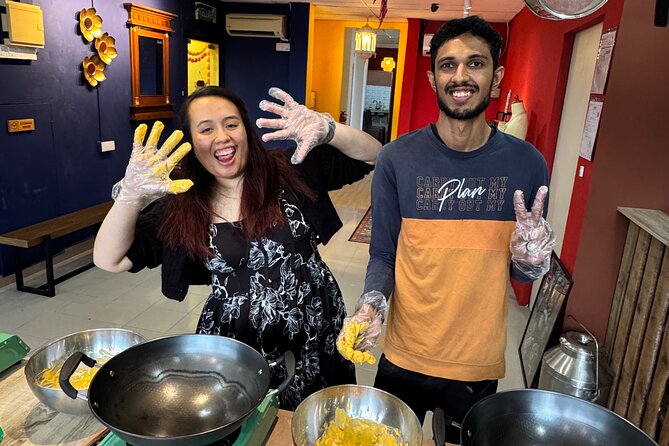
Next comes the main course: chicken curry from scratch, paired with fragrant basmati rice and a refreshing cucumber pachdi.
Chicken curry
What you learn here is how curry becomes more than sauce. You’ll work through the sequence that builds flavor—when spices go in, how the chicken cooks, and how the curry develops depth. The class specifically focuses on building rich masalas and learning how tempering supports that process.
If you’re new to curry making, pay attention to what the instructor says about heat and timing. In curry cooking, small timing differences can be the difference between “tastes right” and “tastes muted.”
Basmati rice
Rice seems simple, but it’s one of the core skills of making a complete Malaysian/Indian plate. The goal is fragrant basmati that complements the curry instead of turning into a wet afterthought. You’ll get guidance designed for beginners, so you’re not stuck guessing measurements or cook consistency.
Cucumber pachdi
Cucumber pachdi is the cooling counterweight. It’s the dish that keeps the meal balanced when the curry is doing most of the heavy flavor lifting. I like having this on the menu because it teaches you that good home cooking isn’t only about heat—it’s about contrast.
Kesari Dessert: A Comforting Finish
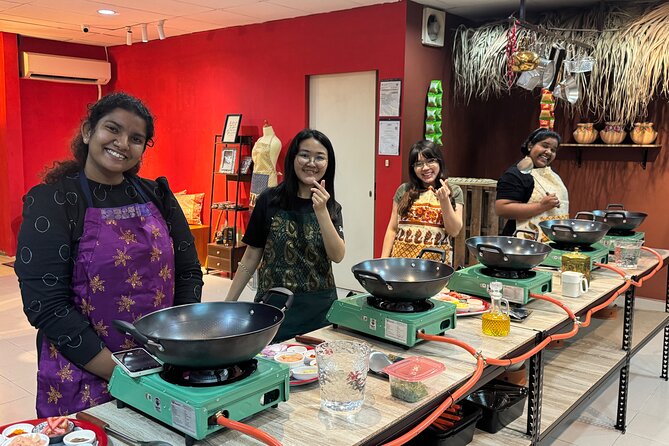
After the main course, you make Kesari, an Indian dessert. The class treats it as a real cooking step, not an add-on you can ignore.
Kesari also gives you a chance to shift techniques. You’re not focused on savory spice building anymore—you’re focused on getting a dessert’s texture and flavor right with what you’re tasting along the way.
This is a nice balance if you’re coming for Malaysian cooking but you enjoy Indian sweets too. It broadens your repertoire without turning the class into a chemistry experiment.
Masala Chai From Scratch: The Take-Home Skill
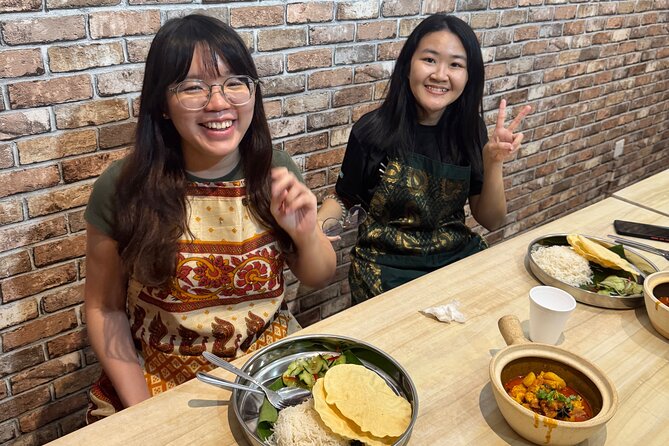
The session ends with masala chai brewed from scratch. For many people, this is the moment the class clicks into place—tea becomes the final proof that you can translate the spice lesson beyond the curry pot.
Masala chai teaches two key things: spice release and balance. If the spice mix is treated correctly, you get fragrance without harshness. You also learn how the drink comes together through brewing, not just by adding ingredients.
I find this especially useful because chai is easy to reproduce at home compared with some complex dishes. Once you know how tempering and spice timing work, you can make chai your go-to comfort drink and not just a one-time class project.
Photo Session, Certificate, and Your Digital Recipe Booklet
The class wraps with a photo session, a participation certificate, a door gift, and a digital recipe booklet.
That might sound like extra, but it’s actually part of the practical value. Photos remind you what the finished dishes look like when you try again at home. The recipe booklet helps you recreate the sequence—especially the spices and cooking order. Cooking classes can be fun in the moment, but the best ones help you keep the method.
If you like cooking as a hobby, this take-home material is where the $66.99 starts to make sense. You’re not only paying for time in the studio; you’re paying to get a usable guide you can revisit.
Price and Timing: Is $66.99 a Good Value in Kuala Lumpur?
The price is $66.99 per person and the class runs about 3 hours. For Kuala Lumpur, that’s a reasonable rate when you factor in what’s included: multiple dishes you cook, drinks, snacks, and full access to your own stove and tools.
Here’s how I’d think about value for your money:
- If you want to eat while learning, this price works because you leave with a full plate of food you prepared.
- If you only want to watch and taste, you might feel the cost more sharply, because the value is tied to the hands-on work.
- If you need a very precise schedule, keep in mind one comment that the class felt shorter than expected. The standard expectation is around three hours, but real-world classes can run a bit fast or slow depending on the day and the group.
My practical advice: arrive with time to breathe. If the class ends quickly, you’ll enjoy the extra flexibility instead of feeling squeezed.
Who This Cooking Class Suits Best
Masala Medley is a strong match if you fall into any of these categories:
- You’re a beginner and want step-by-step guidance with a real cooking station.
- You’re curious about Malaysian home cooking and how Indian flavors show up in everyday dishes.
- You like eating what you cook, not just getting a few bites.
- You prefer a small group (max 12) where you can ask questions.
If you’re already an advanced cook, you may still enjoy it for the chai and spice technique pieces—tempering and masala building are useful skills no matter your level.
And if you’re traveling in a couple, this is a fun shared activity because both people get to cook at their own station instead of splitting the job into watching and waiting.
Should You Book Masala Medley?
Yes—if you want a hands-on Kuala Lumpur cooking class that teaches technique and gives you a full meal you helped create. The strongest reasons to book are the four-part flow of pakora, chicken curry, kesari, and masala chai, plus the fact that you work at your own stove with step-by-step support from the instructor (many people highlight the clarity and warmth of the guidance from Rene).
The main reason to pause is simple: if you’re expecting a strict, always-three-hour timetable or you’re hoping for only one dish, you might feel disappointed. Plan for roughly three hours, expect four dishes as the standard, and show up ready to cook.
If that sounds like your kind of day, this class is a smart buy.
FAQ
How long is the Masala Medley cooking class?
The class duration is listed as about 3 hours.
Is the class hands-on or just a demonstration?
It’s fully hands-on. Each person has their own cooking station to slice, spice, stir, and cook the dishes.
What dishes will I cook during the class?
The class includes pakora (appetizer), chicken curry with basmati rice and cucumber pachdi (main), kesari (dessert), and masala chai brewed from scratch.
What’s included in the price?
The price includes the meals you cook, bottled water, coffee and/or tea, snacks, and full cooking tools plus a gas stove and counter space for each person.
Where does the class start?
It starts at First Floor, 76A, Jln Imbi, Bukit Bintang, 55100 Kuala Lumpur.
Is transport to and from the class included?
No. Transport before and after class is not included.
What is the cancellation policy?
You can cancel for a full refund if you cancel at least 24 hours before the experience start time. Free cancellation is available.