REVIEW · LUANG PRABANG
Luang Prabang: Cooking Class at the Former Royal Palace
Book on GetYourGuide →Operated by Victoria Xiengthong Palace Hotel · Bookable on GetYourGuide
Royal palaces and Lao food make a smart combo. I love the market walk with the chef (names like Nov and Noi pop up in recent classes), because you learn what ingredients are for, not just what they are. I also love the payoff lunch on a riverside terrace overlooking the Mekong, made from the dishes you cooked yourself. One heads-up: you’ll be on your feet for a while, so come ready to stand and chop with comfortable shoes.
This is a small-group Luang Prabang cooking class limited to 10 people, taught in English, and set at Victoria Xiengthong Palace (the former royal palace area) with lunch at Alame Restaurant. The full experience is around 4 hours, and you’ll get take-home recipes to help you recreate the flavors back home. If you want vegetarian options, tell them in advance, and bring a hat since you’ll be outside for part of the day.
In This Review
- Key things I’d bet you’ll remember
- Luang Prabang’s Former Royal Palace Kitchen: Why This Class Feels Different
- Morning Market Time: The Ingredients Lesson You’ll Use Later
- Sightseeing on the Way Back: Short, Pleasant, and Often Unscheduled
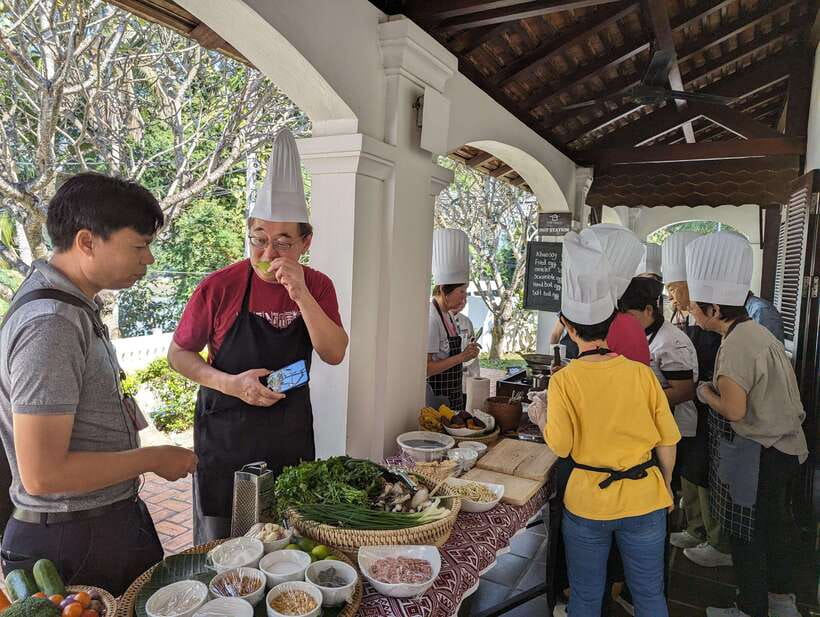
- Cooking at Alame Restaurant: What Hands-On Really Means Here
- The Chef Connection: English Instruction and a Friendly Pace
- Lunch by the Mekong: Eating What You Cook (and Why It Tastes Better)
- Price and Value at $45: What You Get for Your Money
- Who This Luang Prabang Class Is Best For (and Who Should Skip It)
- Booking Decision: Should You Book This Class?
- FAQ
- How much does the Luang Prabang cooking class cost?
- How long is the experience?
- Where do I meet for the tour?
- What’s included in the $45 price?
- What’s not included?
- Is there an option for vegetarians?
- What language is the instruction?
- What do I need to bring?
- Is there anything I should not bring or do?
Key things I’d bet you’ll remember
- Market shopping with a chef so you understand herbs, spices, and common Lao staples before the stove
- Royal grounds at Victoria Xiengthong Palace for a calm, historic-feeling place to learn
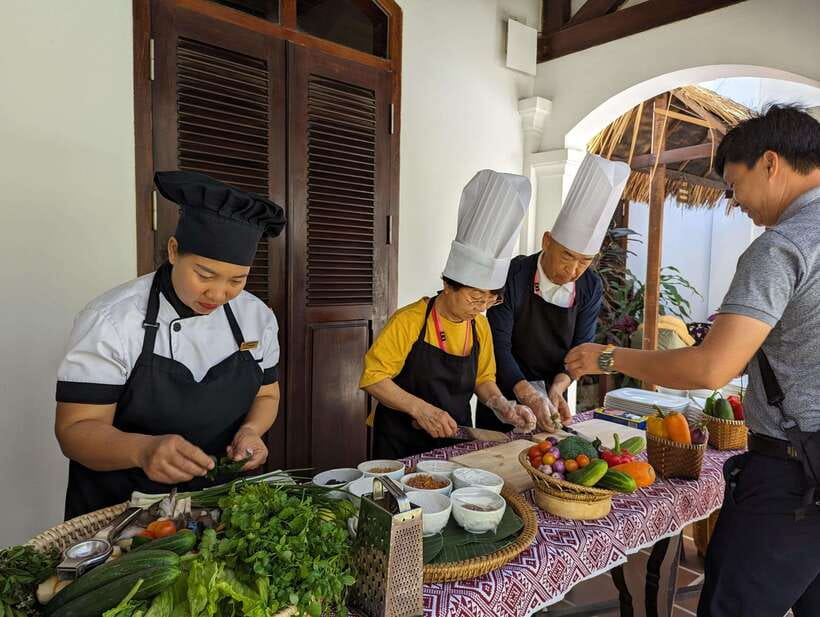
- Hands-on cooking where you actually cut, mix, and cook (not just watch)
- Mekong-side lunch at Alame Restaurant with the dishes you made
- Take-home recipes so you can repeat favorites later
- Small group size (max 10) keeps the pace friendly and questions easy to ask
Luang Prabang’s Former Royal Palace Kitchen: Why This Class Feels Different
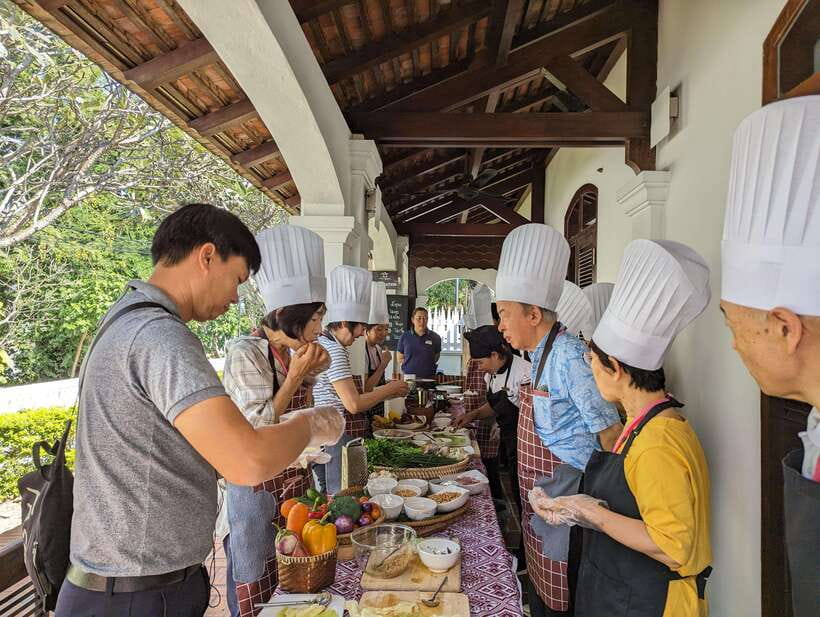
A lot of cooking classes in Asia teach you technique and hand you a meal. This one adds a setting that quietly changes your mood—Victoria Xiengthong Palace has that former-royal calm, with a heritage vibe that makes the day feel special without being stuffy. You start near Wat Xiengthong Temple, then the experience unfolds between sightseeing time and a working kitchen setup at Alame Restaurant.
What makes it click is the pacing. You don’t jump straight into cooking like a cooking-show sprint. You first get context for what you’ll eat later—ingredients, flavors, and how Lao dishes are built. Then you move into a hands-on class where you can taste as you go. The result is less like a performance and more like learning a regional skillset.
The class lasts about 4 hours total, though cooking time is the big anchor. In practice, you may also have some quiet waiting while the kitchen team preps the “behind-the-scenes” parts. Some people like having that space; if you prefer to stay busy every minute, you should know there can be downtime before the cooking gets rolling.
You can also read our reviews of more tours and experiences in Luang Prabang.
Morning Market Time: The Ingredients Lesson You’ll Use Later
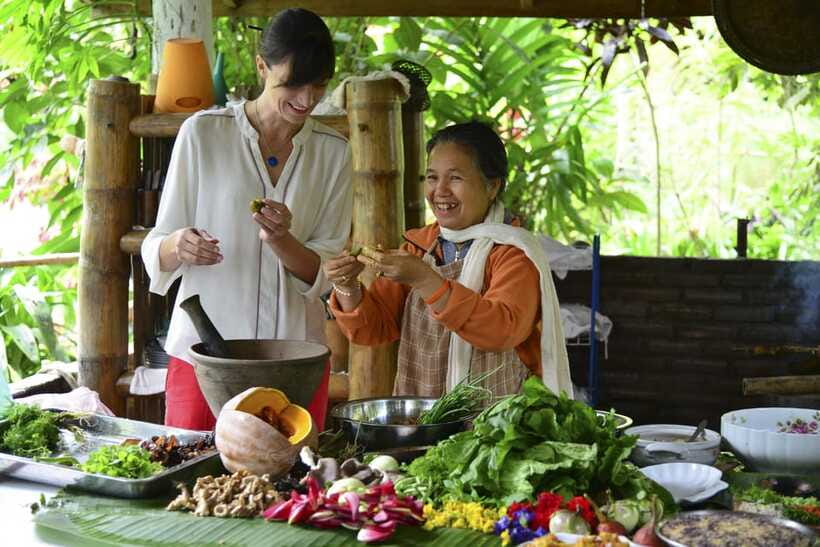
The day starts with a morning market visit led by the chef. You’ll choose fresh ingredients for your Lao dishes, and you’ll get explanations about what matters—what to look for, how certain herbs smell and taste, and why some flavor combos show up again and again in Lao cooking.
This is one of the most praised parts of the experience, and for good reason. A market walk is where you learn the “why” of the meal:
- You see ingredients in real form, not as packaged versions.
- You get practical guidance on what’s worth buying and what each item does in the dish.
- You also get a feel for Lao flavor direction—fresh herbs, sour notes, savory warmth, and that balance Lao food is known for.
Transportation to the market is included (by bicycle or tuk tuk, depending on how they run your group). Either way, the point is the same: you’re not just browsing on your own; you’re learning with someone who can steer you away from confusion and toward the ingredients that actually matter.
If you like food, this market piece is more than a warm-up. It becomes your reference guide later when you’re chopping, mixing, and assembling dishes.
Sightseeing on the Way Back: Short, Pleasant, and Often Unscheduled
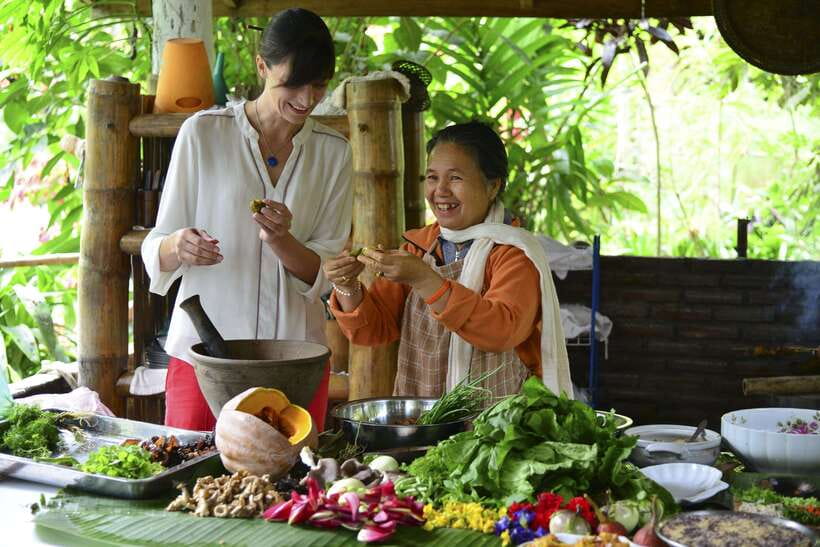
After you’ve started your day at the palace grounds, there’s time built in for sightseeing (about 1 hour). Think of this as a chance to connect the dots between the city’s heritage atmosphere and the meal you’re about to cook.
In real life, that “in-between” time can be flexible. Some classes include an easy wander while chefs handle prep. You might also be offered a coffee break. The common theme: you get a buffer so the kitchen doesn’t run on stress.
For you, this matters because it keeps the cooking portion more relaxed. If everyone had to sprint from market to stove, the class would feel rushed. Here, the downtime usually makes the meal better—less frantic energy, more time to ask questions, and more room for tasting.
Cooking at Alame Restaurant: What Hands-On Really Means Here
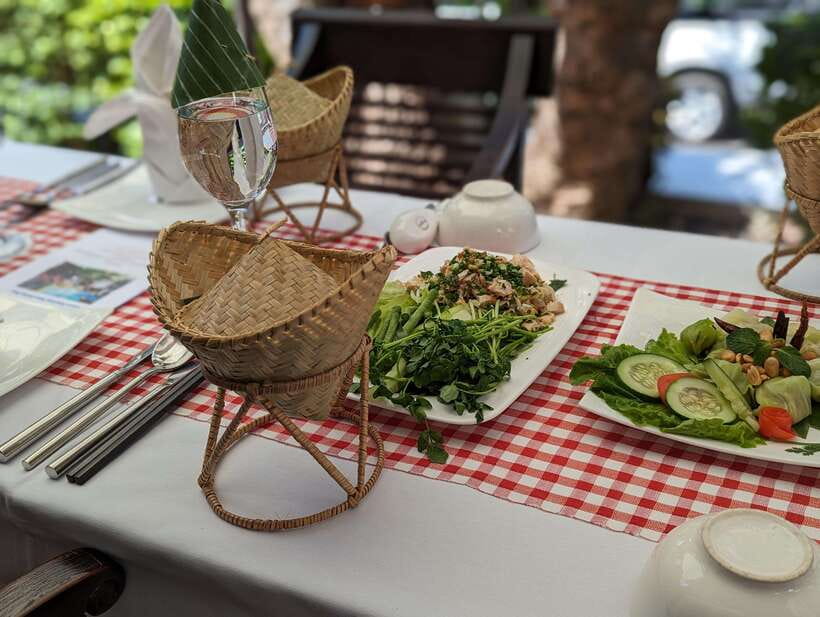
The cooking class is where you turn ingredient knowledge into real skill. You’ll head to Alame Restaurant (riverside, with Mekong views) and get an English-speaking instructor leading you through traditional Lao dishes using authentic techniques.
What you’ll cook can vary by day and instructor, but the dishes referenced in recent classes give you a strong idea of the flavor range. Common examples include:
- Laab (often chicken laab), which is bright, herb-forward, and built on careful seasoning
- A sour soup style (reviews mention pork and mushroom elements)
- Fresh salads and herb-based starters
- A coconut dessert, including rice-ball style sweets (often described as rice balls in coconut milk)
- Some classes include sticky rice preparation, which is a Lao staple rather than a side thought
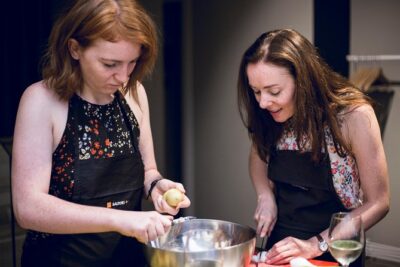
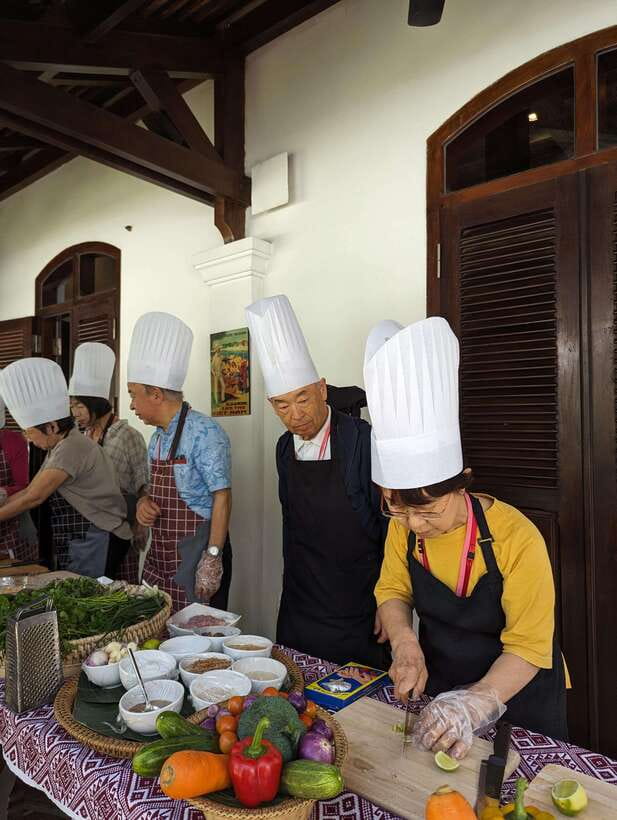
Here’s the difference between a good class and a decent one: you’re not just stirring. You’re helping make the dish. People mention doing cutting and cooking with guidance from the restaurant staff (often with a sous chef involved behind the scenes). That’s what builds confidence. Even if you’re a complete beginner, you’re actively participating.
Also, the class structure tends to teach technique, not just steps. For example, you’ll hear what to adjust when flavors need balancing—sour, salty, spicy, herb brightness. That’s the stuff you can carry home.
The Chef Connection: English Instruction and a Friendly Pace
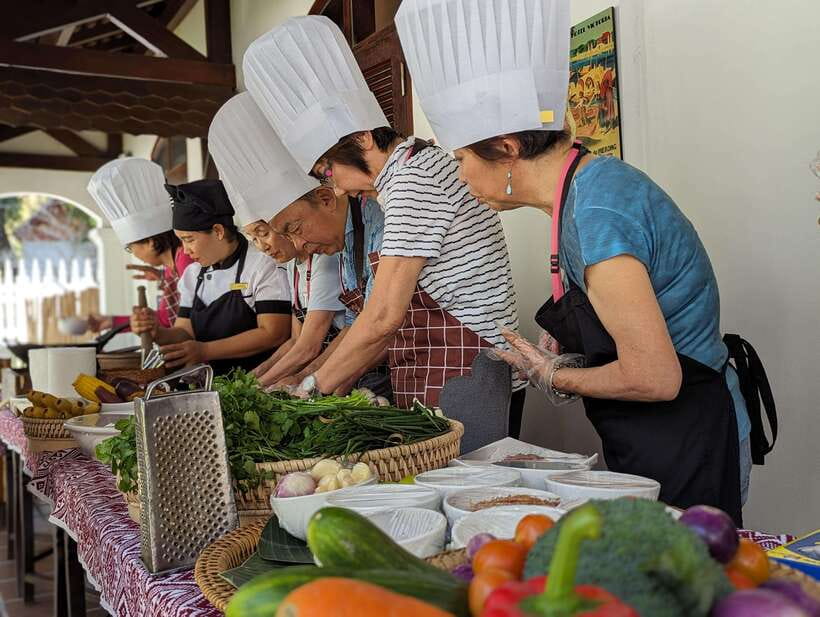
English instruction is included, and small group size (up to 10) matters more than you might think. With fewer people, the chef can slow down when questions come up and can guide each person to the right level of contribution.
Recent classes also highlight how personality shapes the day. Instructors such as Noi, Nov, and Vannasone are described as patient, kind, and funny—meaning the tone stays easy even when you’re learning new flavors or a new cooking method. That matters because Lao cuisine depends a lot on tasting and adjusting, not just following rigid instructions.
One more practical note: the experience expects you to be comfortable standing for extended periods. So plan on a bit of physical effort. This isn’t a hands-off workshop.
Lunch by the Mekong: Eating What You Cook (and Why It Tastes Better)
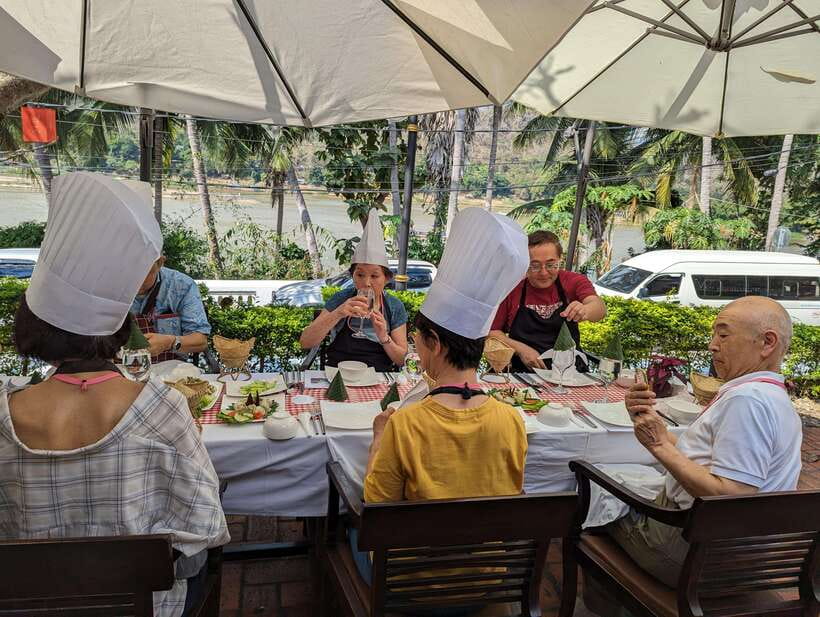
Lunch is served at the end of the cooking block, and it’s not an afterthought. You sit down and eat the dishes you made, usually on a terrace that looks out toward the Mekong. That setting turns “meal” into “reward,” and it also helps you evaluate what you did.
When you eat your own laab or soup, you can connect flavor choices to technique. You start to understand things like:
- why fresh herbs matter more than people expect
- how sour elements change the whole taste profile
- how coconut sweetness smooths and rounds out a meal
And because you’ve been shopping and cooking, your appetite tends to be in the right mood. You’re not arriving hungry and confused; you’re ready to taste with context.
If you’re the type who likes to take pictures, the view and food both deliver. But the bigger value is how you’ll leave knowing what to recreate—not just remembering how it looked.
Price and Value at $45: What You Get for Your Money
At $45 per person, this class is priced for what you’d normally pay for a market experience plus a proper cooking session with lunch. The big value is that it’s not only a lecture-style cooking demo.
You’re paying for:
- the morning market tour (included; by bicycle or tuk tuk)
- the cooking class itself
- lunch after cooking
- English instruction
- small group attention (max 10)
- take-home recipes
What’s not included is drinks and tips, so budget a bit extra for that. But the overall deal is solid because you’re getting three connected parts: market learning, active cooking, then eating what you made.
If you’ve already done a DIY market stroll, you might think you don’t need the guidance. Still, a guided market walk is what makes the cooking portion more meaningful. Without that ingredient context, you’d be following steps without fully understanding the flavors.
Who This Luang Prabang Class Is Best For (and Who Should Skip It)
This is a great fit if you want:
- an authentic Lao food experience beyond a restaurant meal
- hands-on cooking where you actually participate
- a small-group, English-led class with take-home recipes
- a cultural setting tied to the former royal palace area
It’s especially good for couples or small groups who want a shared activity that feels local and not like another checklist stop.
You might consider a different option if:
- you strongly dislike standing for long stretches
- you need wheelchair access (this isn’t suitable for wheelchair users)
- you’re traveling with very small babies (not suitable under 1 year) or you fall into the provider’s age limits
If you’re unsure, the safest approach is to match your comfort level with the standing time and kitchen setup.
Booking Decision: Should You Book This Class?
Yes, if you like learning food the practical way—by seeing ingredients first, then cooking them yourself, then eating right away with the Mekong view as a bonus. The market + hands-on + lunch combination is the reason this stands out, and the take-home recipes make it easier to turn the experience into real memories you can cook again.
Book it with confidence if you’re a food lover, a first-time cook, or someone who wants Lao cuisine to feel understandable. Skip it only if you know you can’t handle the standing time or you need accessibility support the activity doesn’t provide.
If you’re in Luang Prabang and you want one activity that pays off on multiple levels—learning, eating, and skill—this is a strong choice.
FAQ
How much does the Luang Prabang cooking class cost?
The price is $45 per person.
How long is the experience?
The duration is about 4 hours.
Where do I meet for the tour?
You meet at Kounxoau Rd, Ban Phonehueng, Luang Prabang, near Wat Xiengthong Temple.
What’s included in the $45 price?
Included are the morning market tour (by bicycle or tuk tuk), the cooking class, and lunch.
What’s not included?
Drinks and tips are not included.
Is there an option for vegetarians?
Vegetarian options are available, but you need to notify them in advance.
What language is the instruction?
The instructor speaks English.
What do I need to bring?
You should bring a hat.
Is there anything I should not bring or do?
You can’t bring weapons or sharp objects. Drinks in the vehicle, alcohol, and drugs are not allowed, and baby carriages are not allowed.