REVIEW · LUANG PRABANG
The Namkhan – Cooking Class
Book on Viator →Operated by Activity Center by The Namkhan · Bookable on Viator
A cooking class in Luang Prabang beats a restaurant stop. Here you pick vegetables from The Namkhan’s organic gardens, then cook Lao food with a local chef in a calm resort setting by the Khan River. Reviews also highlight the cultural explanations and strong English, so you’re not stuck guessing what you’re tasting.
Two things I love about this experience are the hands-on harvest-and-cook flow and the small-group feel (max 6 travelers). You help wash, clean, and prep ingredients, then cook your own dish with clear guidance. A possible drawback: it’s weather-dependent, so if conditions are poor you may have to shift dates.
If you’re coming for a quick, hands-off meal, this isn’t that. But if you want a practical Lao cooking lesson that feels like local life, this class has strong value for your time.
In This Review
- Key highlights you’ll care about
- Cooking at The Namkhan: what makes it feel real
- Getting started at the Namkhan Wellness Center
- Harvesting veggies in the organic gardens and greenhouses
- Cooking your Lao dish with a local chef
- Farm-to-table eating: what you’ll actually get out of it
- Small group size, guides, and the cultural layer
- Price and value for a 3-hour Lao cooking lesson
- Weather, timing, and how to plan your day
- Who should book (and who should skip)
- Should you book the Namkhan Cooking Class?
- FAQ
- How long is the Namkhan cooking class?
- Where does the cooking class start?
- What time does it end?
- Is there a mobile ticket?
- When do I get confirmation after booking?
- How many people are in the group?
- What happens during the class?
- Are service animals allowed?
- Is there any alcohol rule on site?
- What if the weather is poor?
- What is the cancellation policy?
Key highlights you’ll care about
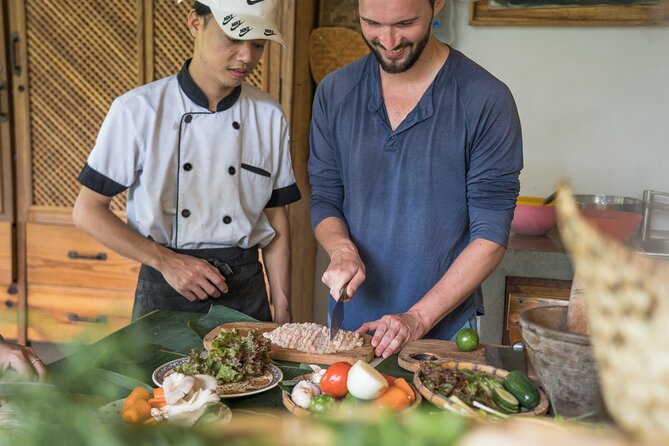
- Pick vegetables on an organic farm before you cook
- Chef-led instruction in strong English, with culture explained
- Hands-on prep plus cooking, with everyone participating
- Farm-to-table meal setting in resort grounds near the Khan River
- Small group limit (6 max) for more attention
Cooking at The Namkhan: what makes it feel real
The Namkhan is an eco-resort setup on the Khan River, and that matters. This class doesn’t just hand you an ingredient list and a recipe card. It starts with the garden work, so you see how seasonal vegetables turn into Lao meals.
I also like that the experience is designed like a full loop: harvest, wash/clean, cook, then eat what you made. That’s a big difference from classes that feel like a demo where you mostly watch. Reviews back this up with comments about picking, cleaning, and cooking, plus everyone helping at the same time.
Another plus: the instruction is described as professional and easy to follow. One review specifically praised the guide’s English and how well they explained Laos culture, not just cooking technique. And the general manager, Carl, is mentioned as checking in to make sure people are satisfied. That kind of real human attention is a good sign when you’re paying for a hands-on lesson.
You can also read our reviews of more tours and experiences in Luang Prabang.
Getting started at the Namkhan Wellness Center
Your experience begins back at The Namkhan Wellness Center in Don Keo Village (Luang Prabang). The class is listed as about 3 hours, and it ends at the same meeting point, so you’re not dealing with a confusing multi-area route.
In practical terms, that makes it easier to plan your day. You can treat this as a focused activity without worrying you’ll be crossing town at the last minute. It’s also near public transportation, which helps if you’re not using a private driver.
One more practical note from the experience details: you’ll receive a confirmation within 48 hours of booking (subject to availability). And the tour uses a mobile ticket, which usually means fewer printed-paper hassles on the day.
Harvesting veggies in the organic gardens and greenhouses
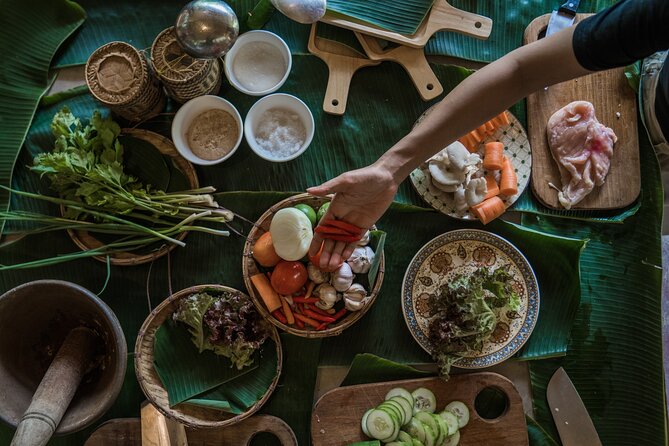
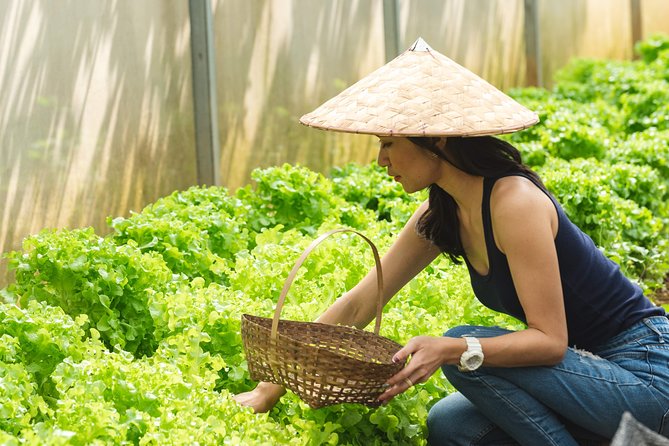
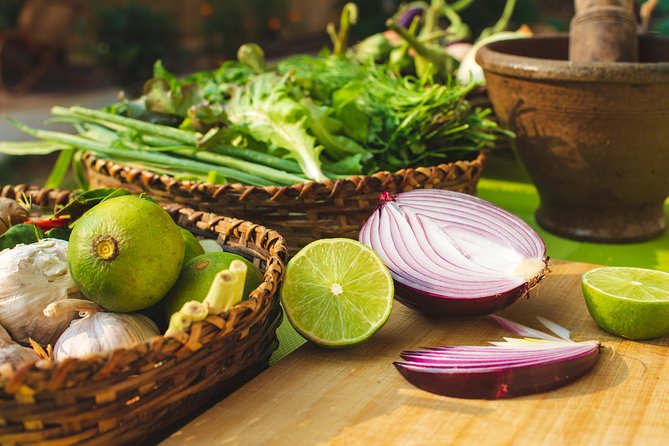
This is the part that turns a cooking class into an experience you’ll remember. You’ll head out to harvest vegetables from The Namkhan’s organic gardens and greenhouses before cooking.
From the reviews, I’m especially glad they call out the full process, not just plucking produce. People mention washing and cleaning the vegetables too. That gives you a real sense of how food prep works in daily Lao kitchens, where freshness and seasonality are the whole point.
What this means for you: go prepared to get involved. Even if you’re not the most confident cook, the “wash, clean, then cook” rhythm makes it easier to jump in. Wear clothes you’re comfortable with if you might get splashed while cleaning vegetables. And if you don’t love close-to-the-ground work, just know the harvest portion may require a bit of bending and hand work.
Cooking your Lao dish with a local chef
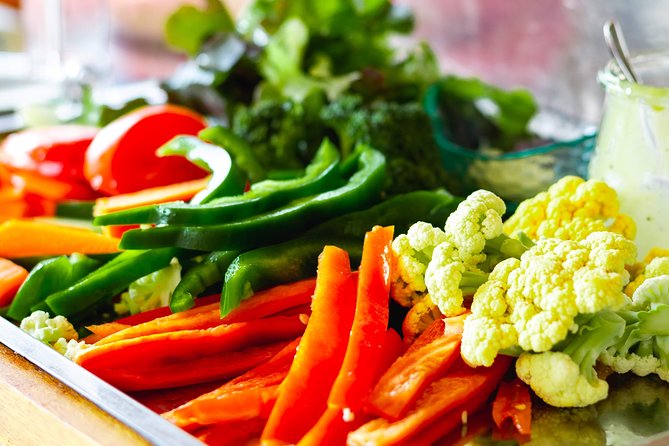
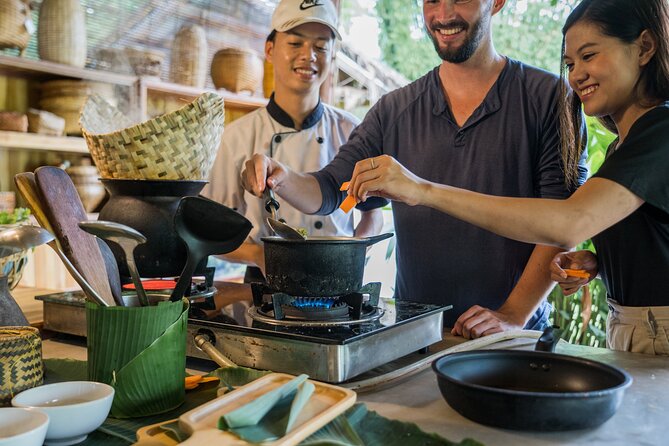
Once you’re back, the chef guides you through cooking your Lao traditional dish. This is a guided class at The Namkhan’s farm-to-table restaurant, so the food you cook isn’t separated from where it came from.
What I think is valuable here is the teaching style. Reviews highlight instruction that’s both traditional and professional, with the guide speaking excellent English and explaining cultural context. That’s important because Lao cooking has its own logic—balances of herbs, aromatics, and flavors—and it’s much easier to learn when someone puts technique into words you can actually follow.
Also, the class is small (max 6 travelers). That usually translates to more practical help when you hit a question like:
- How do you know when an ingredient is ready?
- Which part of the prep matters most?
- How should it taste when it’s done?
If you prefer learning in a group where you can ask questions without shouting across the table, this size is a real advantage.
Farm-to-table eating: what you’ll actually get out of it
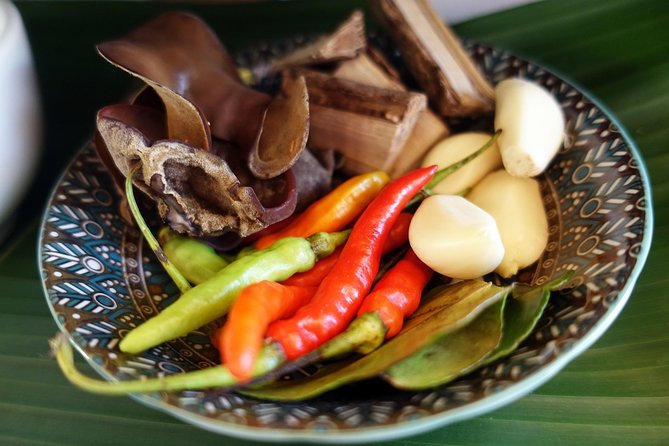
After cooking, you eat in the farm-to-table restaurant setting. One review sums it up as a round experience: vegetables picked in the garden, everyone helping, then enjoying the food in a nice resort atmosphere. That blend matters. You get the effort of cooking, but you’re not eating in some rushed corner.
Another detail I found useful from the reviews: recipes afterward. People say the recipes provided are top-notch. If you want to recreate what you made at home (or at least remember the ingredient logic), leaving with the dish plan is a big deal. Most cooking classes are forgettable once you get back to your hotel—having recipes changes that.
One thing to keep in mind: the class is at a resort, and the experience provider notes that the legal drinking age above 18 is strictly enforced on premises. So if alcohol matters to your plans, plan around that rule.
Small group size, guides, and the cultural layer
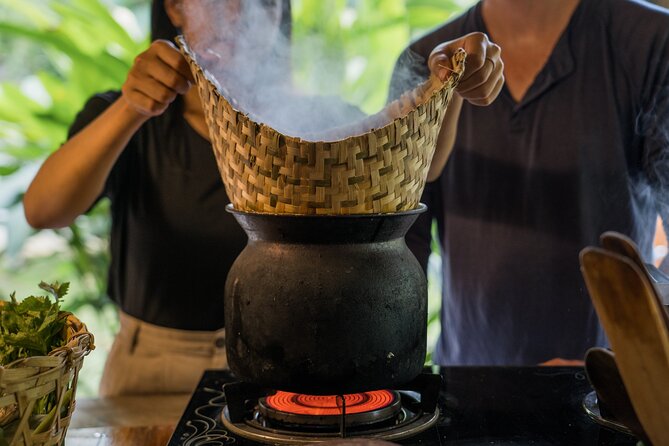
This class is capped at 6 travelers, and that’s not just a number. In a small group, the chef can slow down when you need it. It also helps the cultural explanation land. When someone is walking you through why ingredients are used, you’re more likely to remember it because you’re in the conversation.
English support is a standout theme in the reviews. One review calls out the guide speaking amazing English and explaining Laos culture. That’s exactly what you want in a cooking class abroad: the technique plus the meaning, not just one without the other.
I also like that the experience mentions active care from leadership. Carl is specifically named in a response tied to the reviews, and that reinforces the impression of an operation that checks on satisfaction. For you, that should mean fewer awkward moments where you’re left wondering if everything is okay.
And yes, it’s an eco-resort atmosphere, not a factory kitchen. The setting by the Khan River is part of the “why” here. It makes the day feel slower and more grounded than a typical class in a dense city space.
Price and value for a 3-hour Lao cooking lesson
The price is $63.34 per person for about 3 hours. That can sound high or fair depending on what you compare it to.
Here’s how I think about value with this class:
- You’re paying for more than cooking instruction. You’re paying for ingredients you harvest yourself from an organic farm portion of the resort.
- You’re paying for guided help from a chef and support from staff who check satisfaction.
- You’re paying for the experience setting—an eco-resort with a farm-to-table meal structure.
- You likely leave with recipes, which extends the value beyond the 3-hour window.
If you’ve ever taken cooking lessons where you don’t really do much beyond watching, this one is the opposite. The hands-on harvest and cleanup (wash and clean) is part of the core experience, not a bonus.
So for many people, this price is in the “worth it” category, especially if you want something authentic and not just another photo stop. If your budget is tight and you only want the meal, it may feel like you’re paying for the lesson component. But if you like learning, the cost makes more sense.
Weather, timing, and how to plan your day
This experience requires good weather. If it’s canceled due to poor weather, you’ll be offered a different date or a full refund.
That’s a big practical point in Luang Prabang. If you book on a day with rain in the forecast, you could lose time. My advice: treat this like a flexible afternoon plan and don’t schedule your next big activity too close after it ends.
It’s also booked around 39 days in advance on average, which suggests it’s a popular slot. If you’re traveling during peak periods, booking sooner can help you get the time you want.
For timing, the class is about 3 hours and starts/ends at the same place. That makes it easier to slot into a typical itinerary with morning sightseeing and an early evening plan afterward.
Who should book (and who should skip)
This class is a strong match if you want:
- A hands-on cooking lesson where you actually prep and cook
- A Lao-food experience tied to organic farming and seasonal ingredients
- Clear instruction in English and cultural context
- A small group setting (max 6)
It may be less ideal if:
- You hate getting involved in washing/cleaning ingredients
- You want a super fast meal only
- Your schedule can’t handle weather-based changes
Should you book the Namkhan Cooking Class?
I’d book it if you’re in Luang Prabang and you want a cooking day that feels connected to where the food comes from. The harvest component, the chef-led instruction, and the small-group attention are the big reasons. Add the garden-to-meal flow and the mention of recipes afterward, and it becomes more than a one-time activity.
Skip it only if you’re looking for a passive tour or your timing is too rigid for weather. Otherwise, for $63.34, you’re getting a focused 3-hour Lao cooking experience with real participation and a setting that matches the theme.
FAQ
How long is the Namkhan cooking class?
It runs for about 3 hours.
Where does the cooking class start?
It starts at The Namkhan Activity Center, also listed as the Namkhan Wellness Center in Don Keo Village, Luang Prabang.
What time does it end?
It ends back at the same meeting point.
Is there a mobile ticket?
Yes, the experience uses a mobile ticket.
When do I get confirmation after booking?
Confirmation is received within 48 hours of booking, subject to availability.
How many people are in the group?
The class has a maximum of 6 travelers.
What happens during the class?
You harvest vegetables from the organic gardens and greenhouses, then cook a Lao traditional dish with guidance from a local chef.
Are service animals allowed?
Yes, service animals are allowed.
Is there any alcohol rule on site?
The legal drinking age above 18 is strictly enforced on the premises.
What if the weather is poor?
If canceled due to poor weather, you’ll be offered a different date or a full refund.
What is the cancellation policy?
You can cancel up to 24 hours in advance for a full refund. If you cancel less than 24 hours before the start time, the amount paid is not refunded.