REVIEW · GIOIA DEL COLLE
Gioia del Colle: Apulian Cooking Class in a Masseria
Book on GetYourGuide →Operated by EBIKE RENTAL & TOUR PUGLIA · Bookable on GetYourGuide
Cooking in a real masseria feels like family time. I love learning Apulian techniques right on the farm, and I also love the small-group vibe that makes the whole class feel personal, not scripted. You pick one focus—fresh pasta, panzerotti, or Bari-style focaccia—then sit down together to eat what you made, plus seasonal favorites.
One thing to consider: you’ll likely want the optional transfer if you’re arriving without a car, since the meeting point is in Gioia del Colle and you’ll be directed to the partner masseria after.
In This Review
- Key things to know before you book
- Why a countryside masseria class is the real deal in Apulia
- Choose your dish: orecchiette, panzerotti, or Bari-style focaccia
- Fresh pasta focus: orecchiette the traditional way
- Panzerotti focus: folded, filled, fried
- Focaccia focus: Bari-style, topped and baked
- Getting there from Gioia del Colle: meeting point and transport reality
- How the 3–3.5 hours really play out
- Step 1: A warm farm welcome and a quick orientation
- Step 2: Cooking with your chosen focus
- Step 3: Seasonal accompaniments during and after cooking
- Step 4: The long-table meal
- The included meal: wine, dairy, garden flavors, and what you leave with
- Price and value at about $106: what makes it worth it
- What to bring (and small rules that affect your comfort)
- Who should book this cooking class in Apulia
- Who might not love it
- Quick practical FAQ (the stuff that decides whether you go)
- FAQ
- How long is the cooking class?
- What can I choose to cook?
- What is included in the price?
- What costs extra?
- Is this a small group class?
- Where do we meet?
- Is there help if I arrive by train?
- What languages are spoken?
- What are the rules on alcohol?
- What should I bring?
- Should you book this Gioia del Colle masseria cooking class?
Key things to know before you book
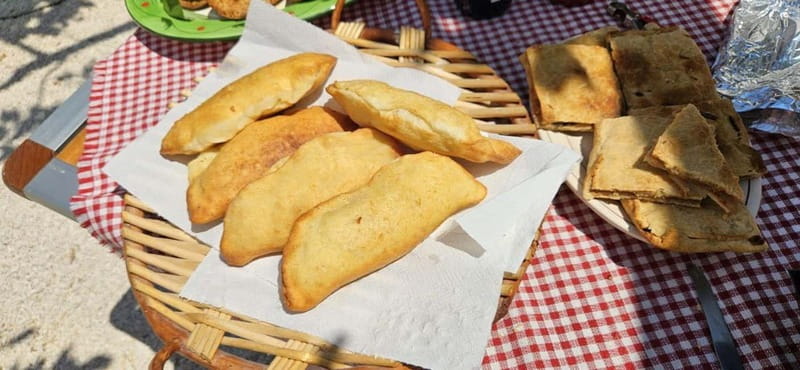
- Hands-on cooking choice: orecchiette, panzerotti, or focaccia, with guidance from the host family
- A real countryside masseria: olive trees, vineyards, and farm products that shape the menu
- Small-group atmosphere: max 8 participants (private option on request)
- Full farm meal included: what you cook plus seasonal accompaniments, bread, water, and a glass of wine
- Day ends at the long table: family-style tasting with everyone sharing
Why a countryside masseria class is the real deal in Apulia
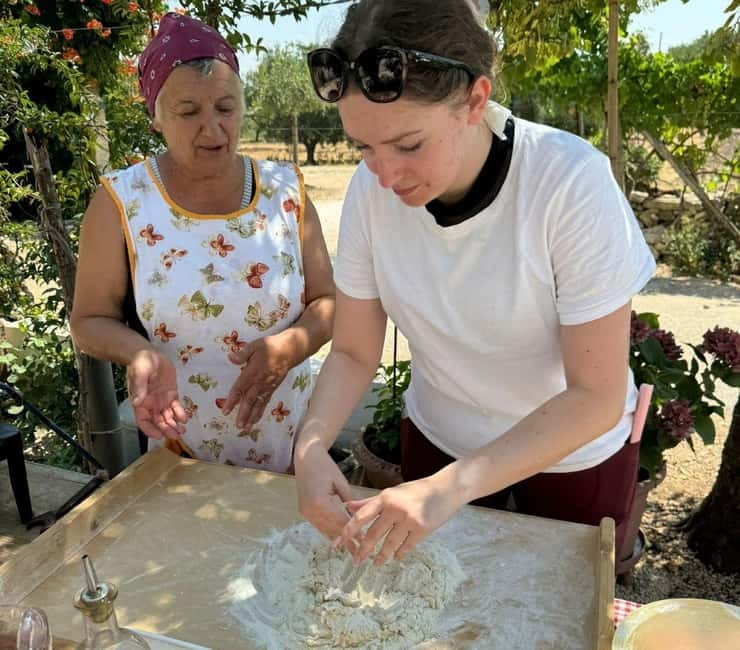
Most cooking classes in Italy feel like a show with a kitchen set. This one works differently because you’re in a working Apulian countryside setting, inside a masseria environment tied to local food. You’re not bouncing between “stations” for photos—you’re learning how people in Puglia actually make staples.
What I like most is how the class connects the farm side to the plate. The day starts with that rural backdrop—olive trees and vineyards—and ends with a meal built from the same world: dairy specialties, garden ingredients, and rustic bread. You don’t just taste Apulia; you’re taught how the dishes are shaped, filled, or topped before they reach the table.
The hands-on part matters too. Learning to shape orecchiette, folding and filling panzerotti, or topping Bari-style focaccia isn’t just fun. It’s the kind of skill that makes you feel confident enough to reproduce at least part of the dish later at home.
Choose your dish: orecchiette, panzerotti, or Bari-style focaccia
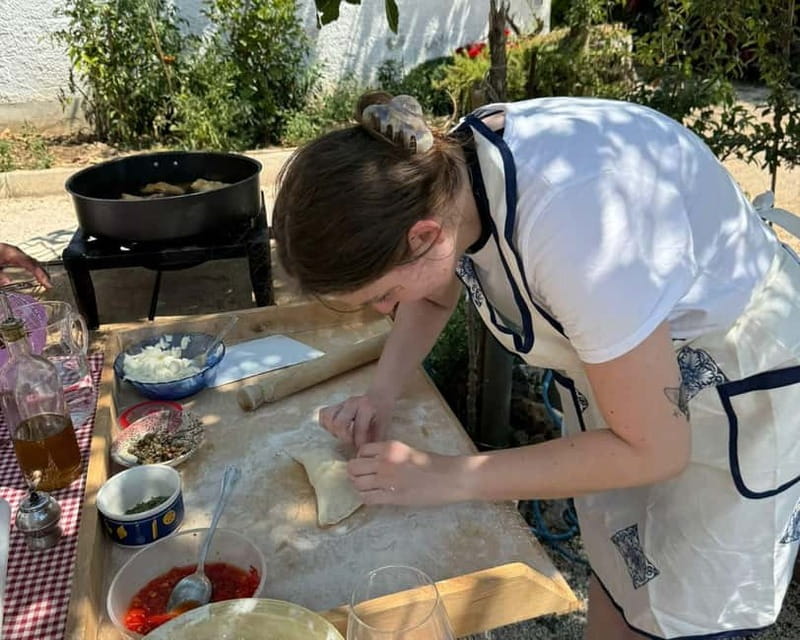
You choose your “focus” when you arrive. That choice shapes the whole rhythm of the session, so pick based on what you most want to learn (and what you’re most excited to eat).
Fresh pasta focus: orecchiette the traditional way
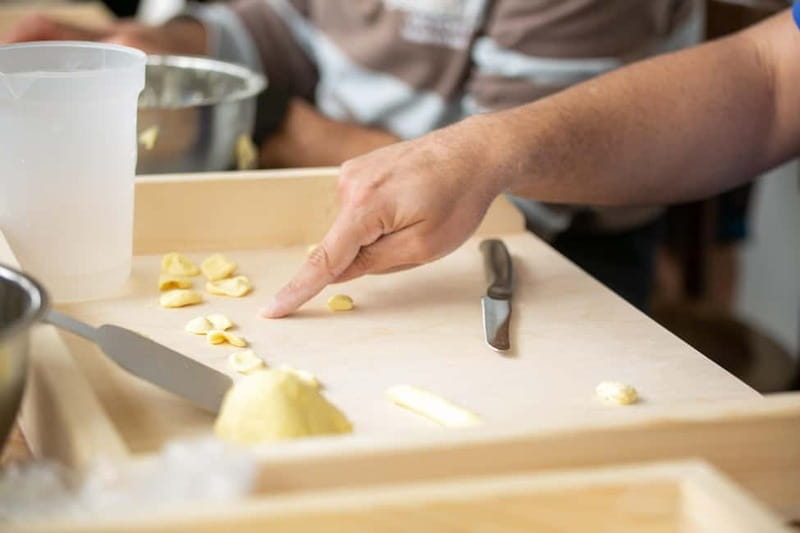
If you go the fresh pasta route, you’ll make orecchiette—Apulia’s famous little ear-shaped pasta. The emphasis here is on hand-shaping using old family techniques. Even if your first attempt looks imperfect, you’ll get the feel of the motion and the reasoning behind the shape.
Why it’s worth choosing: orecchiette is a dish you can truly “own” after the class. Once you understand how the shape forms, it’s easier to appreciate why it pairs so well with local flavors.
Panzerotti focus: folded, filled, fried
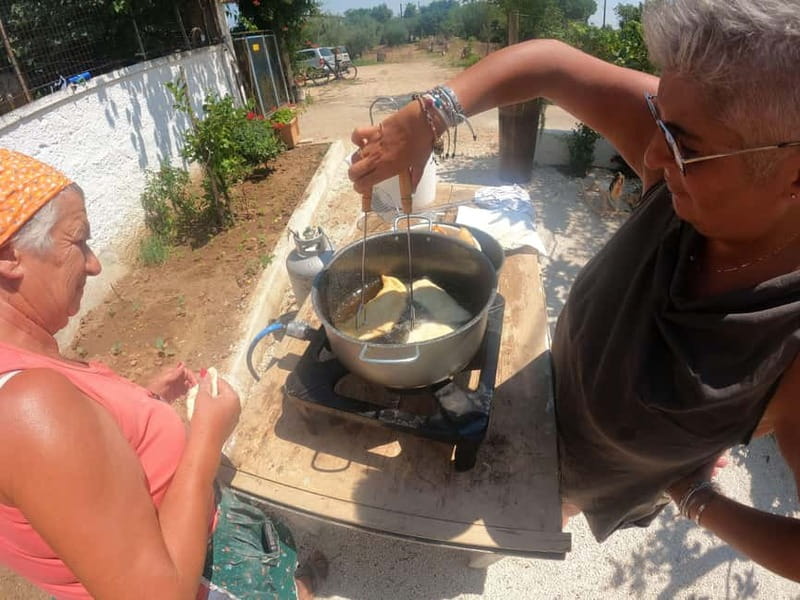
If your appetite is for something playful and dramatic, go for panzerotti. The process is hands-on and step-by-step: folding, filling, and frying until they turn golden. It’s a classic southern Italian comfort food, and the class format makes it easier to learn without the stress of doing it all solo.
One practical note: frying is involved. If you’re watching oil splatter or you’re nervous around hot surfaces, simply take cues from your host family.
Focaccia focus: Bari-style, topped and baked
For a more oven-and-topping experience, choose focaccia. You’ll learn the Bari-style approach—topped and baked to perfection. This is a great option if you want a dish that leans more toward seasoning and assembly than constant reshaping.
Getting there from Gioia del Colle: meeting point and transport reality
You meet at the class headquarters in Gioia del Colle. You’ll spot the place thanks to a sign on the door. From there, you’ll be directed to the partner masseria.
If you’re coming by public transport, there’s an optional round-trip transfer from Gioia del Colle station available as an add-on. If you’re renting a car, the logistics are likely simpler, but the key point is this: don’t plan to show up “wander style” outside of Gioia del Colle without checking the transfer details first.
The tour is run by a provider connected with touring in Puglia (and the class itself is hosted in English and Italian). So if you want a smooth start, it’s smart to confirm what your guide expects for pickup timing—especially if you’re traveling from the station.
How the 3–3.5 hours really play out
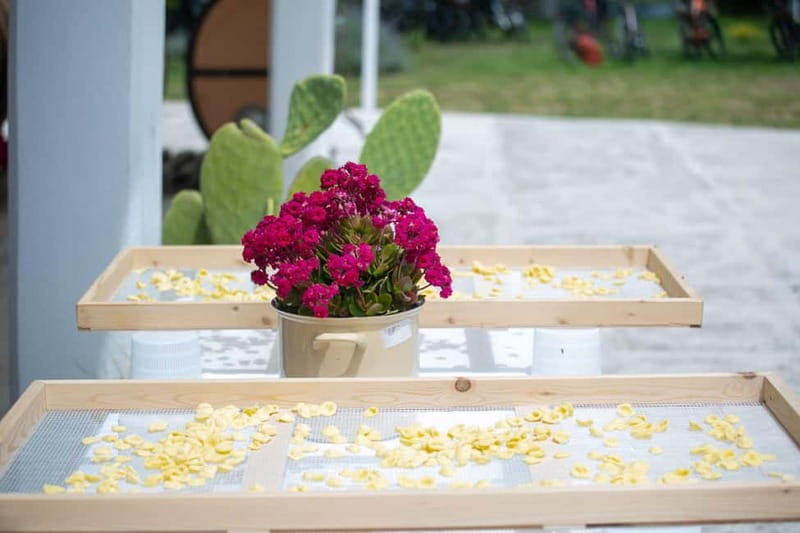
The class runs about 3 to 3.5 hours, and it feels like a full arc: welcome, cooking, then eating what you made with the family.
Step 1: A warm farm welcome and a quick orientation
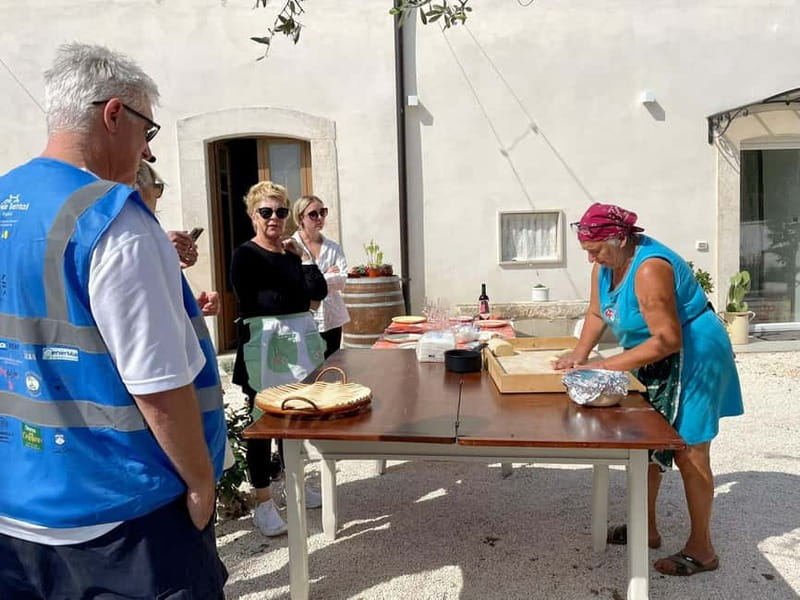
You start at the HQ, then head to the masseria. Expect a local welcome and a shift from “tour mode” to “work together” mode. Hosts guide you through traditional recipes, and the vibe stays family-style—more like joining a household day than attending a workshop.
A detail that stands out in the experience: the hosts take time explaining the farm and the food. In more than one case, the day ties into the products they grow and make, so you get context for what’s on your plate—not just instructions for your hands.
Step 2: Cooking with your chosen focus
Once you’re set up, you work on your chosen dish.
- For orecchiette, you’ll be shaping by hand, following techniques taught in a family setting.
- For panzerotti, you’ll fold and fill, then fry until golden.
- For focaccia, you’ll top and bake using the Bari-style approach.
This is where the class earns its reputation. The host family isn’t rushing you to keep up with a schedule built for the next group. With a max group size of 8, you get more attention while you learn.
Also, it’s not only technique. You learn what ingredients are doing in the dish, and why the season matters.
Step 3: Seasonal accompaniments during and after cooking
While you’re cooking, you’re also building the meal around what the farm provides. The accompaniments are described as seasonal specialties from the dairy and garden, plus rustic bread and water.
That matters because it makes the meal feel connected to the time of year, not just a fixed menu.
Step 4: The long-table meal
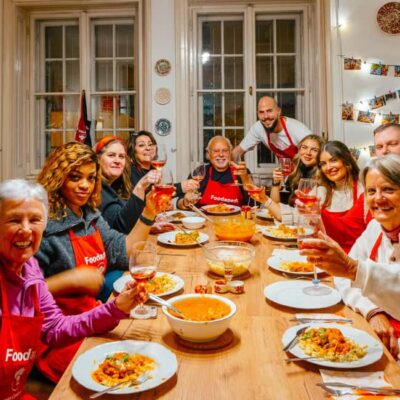
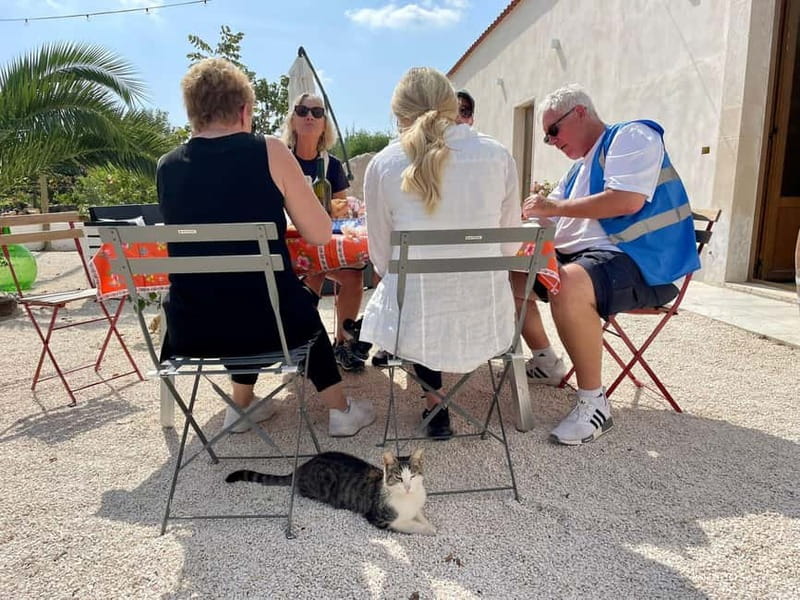
The experience ends at a shared rustic long table, where everyone eats together. This is not a quick bite and run. It’s a sit-down tasting, with your dish as the centerpiece and farm-style accompaniments around it.
In the same spirit, you may see things like local mozzarella showing up as part of the dairy side. One memorable detail from the experience is a lemon cake offered by the owner—ciambella al limone—when the meal calls for something sweet at the end.
The included meal: wine, dairy, garden flavors, and what you leave with
You get a glass of wine included, and the rest of the food is built into the experience. Here’s what “included” means in real terms:
- Cooking class with a local host
- All ingredients and equipment
- A glass of wine
- Seasonal specialties to accompany your dish
- Rustic bread and water
- A full meal that includes what you cooked plus accompaniments
A quick value reality check: you’re paying for more than instruction. You’re also paying for ingredients, equipment, and a full farm meal, plus that wine. At $106 per person for a 3–3.5 hour experience, this pricing tends to make sense when you compare it to doing an Apulia-style lunch while also paying for a guided session and the actual farm-food components.
And the meal has variety. Even though you choose one cooking focus, the table isn’t limited to just that dish. The dairy and garden sides help round out the flavors.
Price and value at about $106: what makes it worth it
At $106 per person, you should expect more than a “hands-on snack.” In this case, you’re getting:
- A real masseria setting (not a demo kitchen)
- A small group format (max 8) or a private option if you arrange it
- Your chosen dish taught from start to finish
- A full meal built from what’s seasonal, plus bread, water, and wine
The biggest value lever is attention. Small-group cooking classes often cost more because the hosts can actually teach instead of broadcasting. Here, the setup supports that pace.
If your goal is photos and surface-level food facts, you might feel the price is high. If your goal is to learn a dish and enjoy a real farm meal afterward, the cost starts to look very reasonable.
What to bring (and small rules that affect your comfort)
The experience asks you to bring biodegradable sunscreen and biodegradable insect repellent. That’s a hint that you’re spending time in a countryside farm setting where insects and sun are part of the day.
You should also know what’s not allowed: alcohol and drugs. You do get a glass of wine included, but the rules are clearly about controlling what’s brought in.
For comfort, I’d plan like you’re going outside: wear clothes you don’t mind getting a little cooking-day touched, and bring layers if the evening turns cooler.
Who should book this cooking class in Apulia
This is a strong fit if you want:
- A real Apulian masseria experience with family-style hospitality
- A small-group class where you can ask questions and learn hands-on
- One specific skill you can take home—shaping orecchiette, making panzerotti, or building Bari-style focaccia
- A meal that includes seasonal dairy and garden flavors, not just your main dish
It also works well for families. The hosts’ welcome is described as warm, and the vibe can fit kids and adults together.
Who might not love it
If you prefer super-structured, scripted touring, this style may feel too homey. If you really want a larger “group party” vibe, the max 8 setup might feel quieter than you expect.
Also, if you’re very particular about dietary needs, the tour data doesn’t spell those out. You can still ask in advance, but don’t assume they can customize beyond what’s described.
Quick practical FAQ (the stuff that decides whether you go)
FAQ
How long is the cooking class?
It lasts about 3 to 3.5 hours.
What can I choose to cook?
You can choose fresh pasta (orecchiette), panzerotti, or focaccia.
What is included in the price?
The class includes the cooking instruction, all ingredients and equipment, a glass of wine, seasonal specialties to accompany your dish, rustic bread, water, and a full meal that includes what you cooked plus accompaniments.
What costs extra?
Transfers aren’t included (but are available as an add-on). Alcoholic drinks beyond the included wine glass also aren’t included (though there’s a wine upgrade available).
Is this a small group class?
Yes. It’s designed for small groups with a maximum of 8 participants, or you can request a private option.
Where do we meet?
You meet at the headquarters in Gioia del Colle, where you’ll find it by a sign on the door. Then you’ll be directed to the partner masseria.
Is there help if I arrive by train?
There’s an optional round-trip transfer from Gioia del Colle station available as an add-on.
What languages are spoken?
The instructor speaks English and Italian.
What are the rules on alcohol?
Alcohol and drugs are not allowed. A glass of wine is included with the meal.
What should I bring?
Bring biodegradable sunscreen and biodegradable insect repellent.
Should you book this Gioia del Colle masseria cooking class?
I’d book it if you want a hands-on Apulia cooking day that feels like joining a real household table. The combination of a true masseria setting, a small max-8 group, and a full meal built from seasonal dairy and garden ingredients is what makes this one work.
Skip it if you mainly want a quick taste experience or if you don’t want to deal with farm-style logistics (like planning for insect repellent and using the optional transfer if you don’t have a car).