REVIEW · LUANG PRABANG
Luang Prabang: Bamboo Weaving Workshop & Cooking Class
Book on GetYourGuide →Operated by Wander Laos Tour Co.,Ltd · Bookable on GetYourGuide
Bamboo turns ordinary meals into a craft. In Luang Prabang, you spend half a day in a bamboo house, weaving a small souvenir mat and learning bamboo’s role in Lao life. I love the hands-on bamboo weaving that gets your hands moving fast, and it feels both calm and satisfying.
I also love the bamboo shoot cooking class, because the food is taught in a practical way you can actually repeat later. You’re not just watching dishes appear. You’re learning what goes into them and why.
One drawback to consider: this is not a good pick if you have mobility limits or you’re pregnant. The setting is a traditional bamboo house in an outdoor, rustic environment, and the activities involve working closely with tools and heat.
In This Review
- Key takeaways
- Getting to the bamboo house: tuk-tuk pickup and the 4–5 hour rhythm
- The bamboo lesson: why Lao households depend on this plant
- Weaving your souvenir mat: from bamboo strips to an overlapping weave
- Bamboo shoot cooking class: soup, banana leaf steaming, and dip
- The bamboo house meal: lunch or dinner on a bamboo tray
- Music and atmosphere: bamboo instruments and a setting you can feel
- Price and value: is $44 per person fair?
- Who should book this, and who should skip it
- Tips to make your day smoother (and more fun)
- Should you book Luang Prabang bamboo weaving and cooking?
- FAQ
- How long is the Luang Prabang bamboo weaving and cooking class?
- What time is hotel pickup?
- Where does the class take place?
- What will I make during the bamboo workshop?
- What dishes do you cook?
- Is lunch or dinner included?
- Are alcoholic drinks included?
- Are vegetarian options available?
- What is the cancellation policy?
Key takeaways
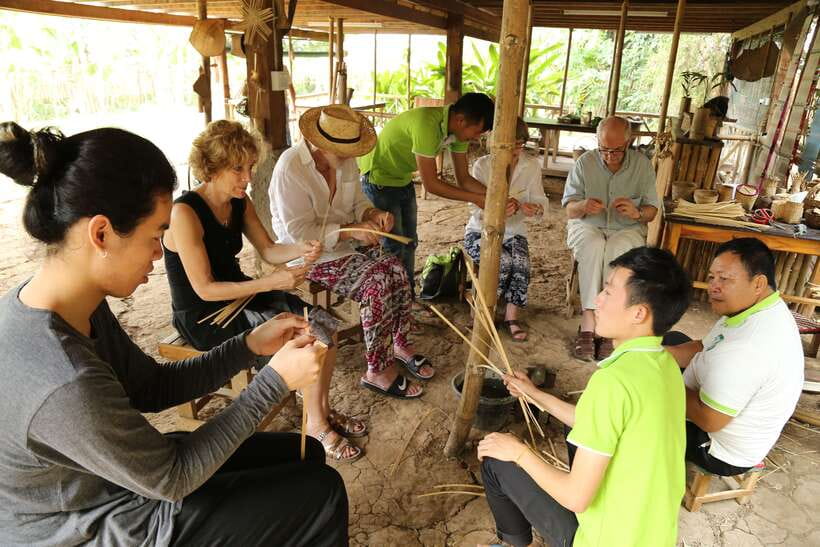
- Hands-on souvenir weaving: you’ll make a small mat from bamboo strips using an overlapping weaving method
- Bamboo shoots, not just talk: you cook bamboo shoot soup, banana leaf steaming, and a bamboo shoot dip
- Hotel pickup saves time: tuk-tuk pickup from Luang Prabang and return transport included
- A real bamboo house setting: a rustic pavilion modeled on a traditional Lao home, surrounded by greenery
- Music with bamboo instruments: you’ll see local musicians perform using bamboo
- English guidance throughout: the instructor keeps things clear and interactive
Getting to the bamboo house: tuk-tuk pickup and the 4–5 hour rhythm
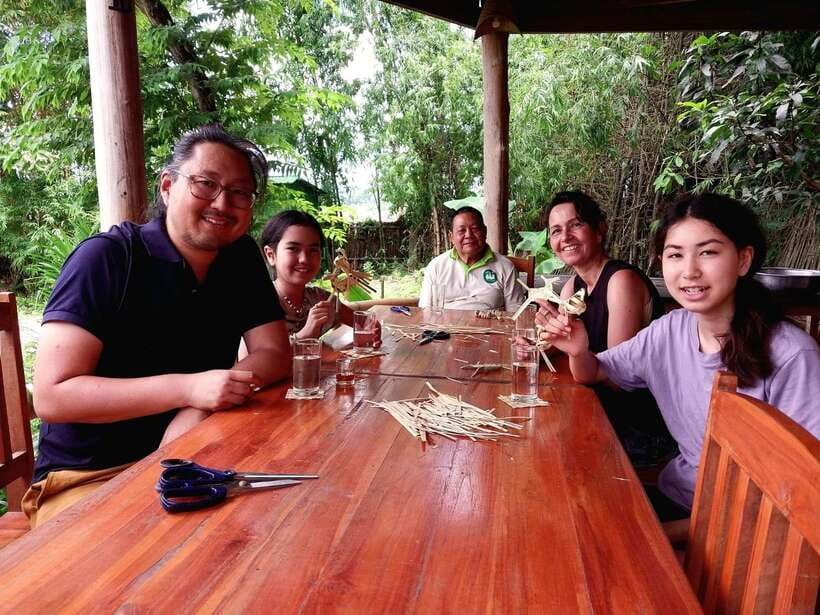
This is built for people who want a full taste of Lao culture without committing to an all-day trip. You’ll be picked up from your hotel by tuk-tuk at about 8:30 AM for the morning session or around 4:00 PM for the evening session, and the experience runs about 4 to 5 hours. You’ll head to a rustic pavilion on the outskirts of Luang Prabang, designed like a traditional Lao house.
That timing matters more than you’d think. Morning sessions tend to give you better natural light for photos, and the pace feels easy because you’re starting earlier in the day. Evening sessions are useful if you want to be done before nighttime and you like the idea of learning how to prepare your own dinner.
If you’re picky about punctuality, plan to be ready early. The pickup is scheduled, and if you miss the window by a long stretch, the trip can be canceled with no refund. Bring comfortable shoes and clothes you don’t mind getting a little dusty from bamboo and outdoor work.
You can also read our reviews of more tours and experiences in Luang Prabang.
The bamboo lesson: why Lao households depend on this plant
Before you touch any weaving material, you get oriented with a bamboo-focused welcome. Your guide explains how bamboo shows up across Lao daily life, from household tools to music. It’s not abstract. It’s practical, and you’ll learn the logic behind bamboo’s usefulness, not just that it’s important.
In the pavilion, bamboo is treated like a local resource with many jobs. You’ll hear about how everyday items are made from bamboo, including fishing tools and musical instruments. That context makes the rest of the class click, because you’re weaving and cooking with a plant you understand a bit better than before.
Many people say the instructors keep it fun as well as informative. In reviews, guides are described as humorous and clear, including one named John who guided guests step by step through crafting and cooking. You also may meet a team that runs the show with a family feel, so questions don’t feel awkward.
Weaving your souvenir mat: from bamboo strips to an overlapping weave
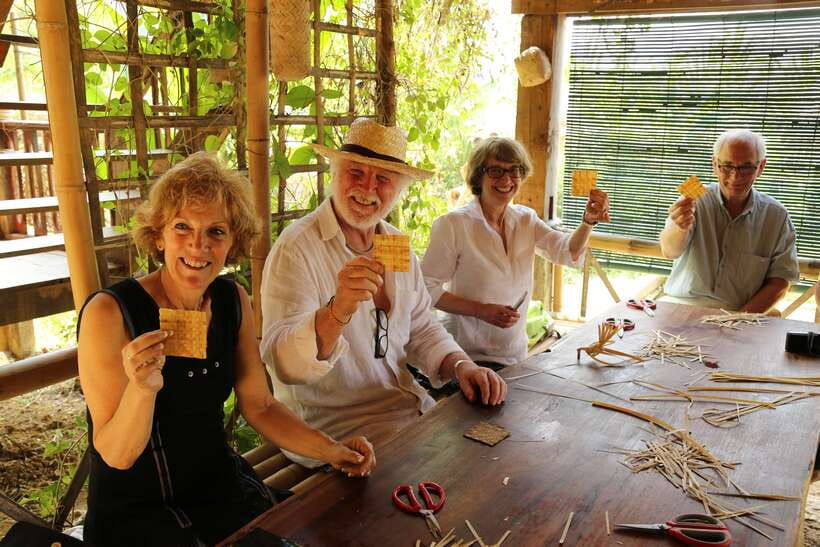
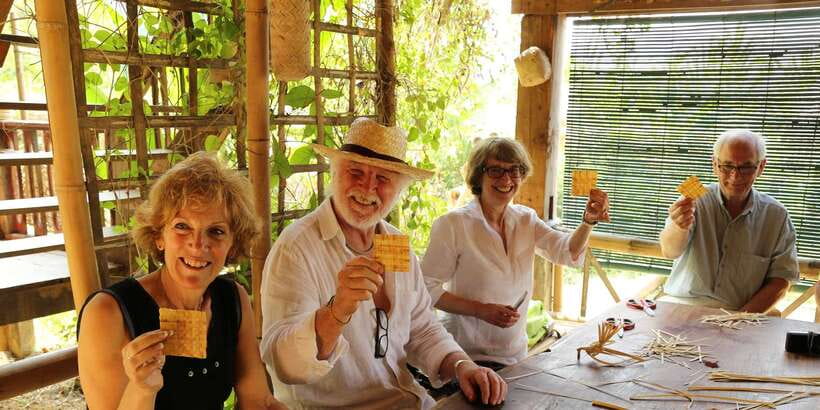
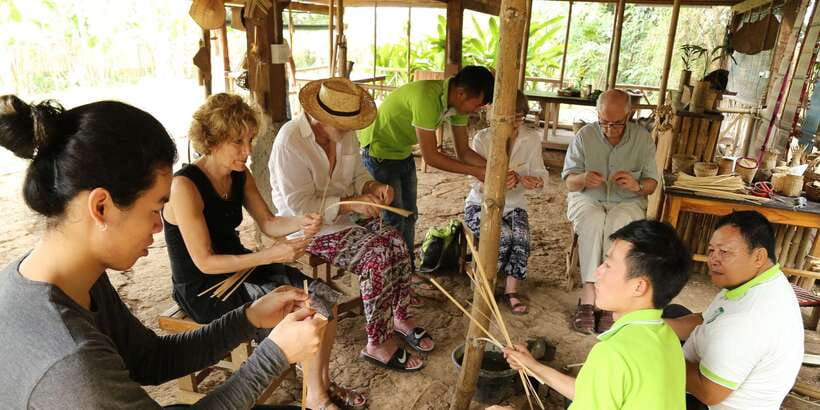
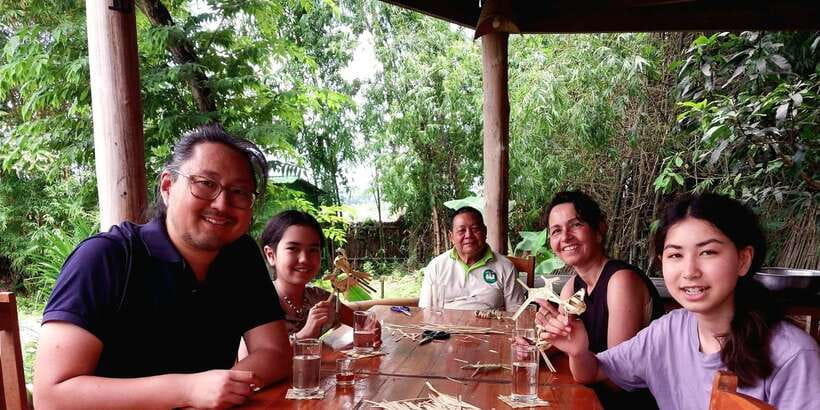
The workshop part is where this experience gets hands-on in the best way. After the bamboo intro, you’ll learn how to handle the plant itself—sharpening knives, cutting bamboo into strips, and then weaving. If you’ve never woven anything, that’s fine. The instruction is patient and focused on getting you to finish something you can take home.
You’ll start by cutting bamboo into usable strips, then move into the actual weaving technique. The mat uses an overlapping process, and that detail is important: it’s what turns thin strips into a piece that holds its shape. You’ll probably make mistakes at first, because everyone does, but your teacher corrects things as you go.
What I like about this workshop approach is that it trains you to slow down. Bamboo work forces attention—angle, tension, and consistency—so your brain quiets a bit while your hands learn. Reviews also mention it can feel soothing once you’re in rhythm, especially when you’re weaving in a relaxed garden-style setting.
Practical note: wear closed shoes. You’ll be working at close range and using tools, so comfort matters. Also, keep your expectations realistic: you’re making a small souvenir mat, not a perfect artisan-level product. The point is learning the method.
Bamboo shoot cooking class: soup, banana leaf steaming, and dip
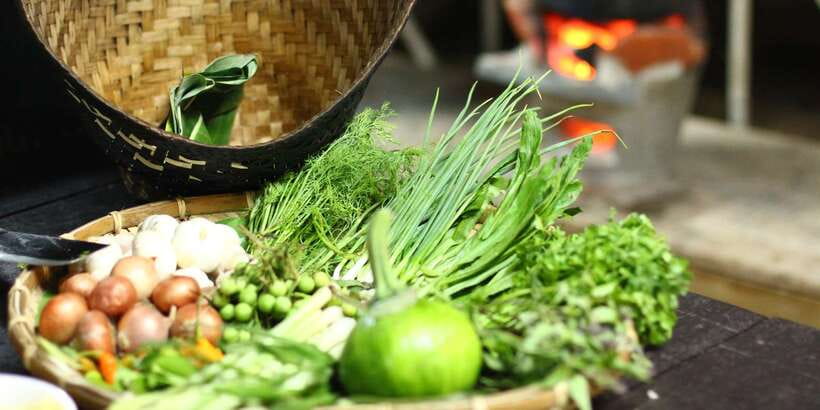
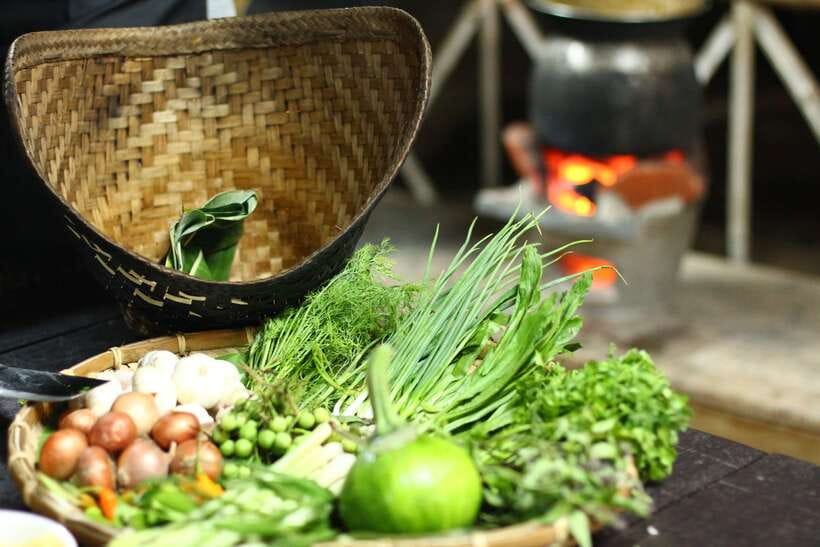
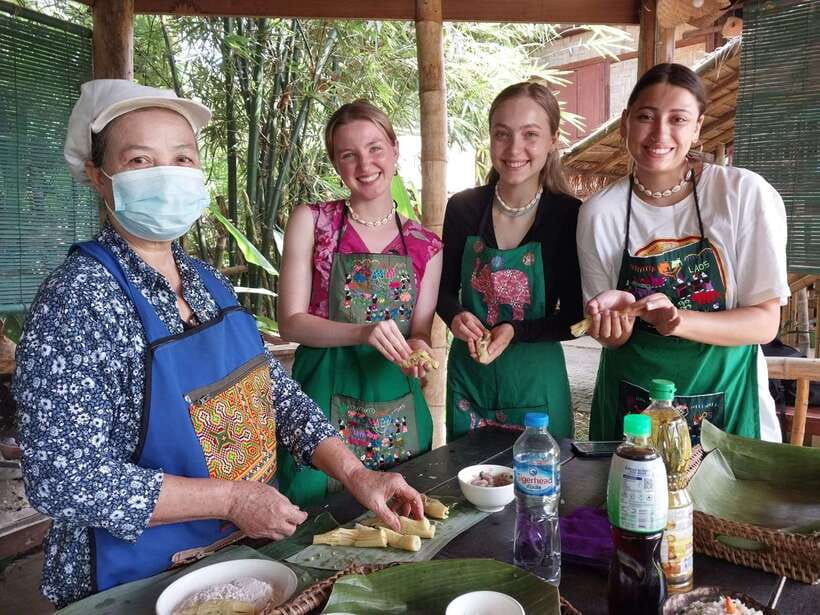
After weaving, you switch from hands-on craft to hands-on cooking. Your chef-led demonstration shows how bamboo shoots fit into Lao cuisine, and then you get involved in cooking local dishes. The class centers on bamboo shoots as a key ingredient, and you’ll work with a small menu that includes bamboo shoot soup, bamboo shoots steamed in banana leaf, and bamboo shoot dip.
Cooking here isn’t a lecture. It’s active, and it’s often done with real fire, based on what people report. That matters because bamboo shoots respond to heat and timing. You learn when they soften, how they pick up flavors, and how the dish comes together on the stove or fire rather than in a restaurant kitchen.
One review stood out for how bamboo stays central across the cooking steps. It mentioned bamboo baskets for steaming rice, stuffed bamboo shoots, and a menu that includes both meat and fish dishes plus vegetarian options. So if you eat vegetarian, you should be able to enjoy the cooking portion with appropriate alternatives.
When you taste the food, you’ll understand why the class theme is stronger than a gimmick. You’re not just making a mat and then eating randomly chosen dishes. The bamboo story connects craft and cooking, and you see how one plant becomes multiple parts of daily life.
The bamboo house meal: lunch or dinner on a bamboo tray
At the end of the cooking block, you sit down for lunch or dinner, depending on whether you booked the morning or evening session. The meal is included, and it’s served in a traditional bamboo tray, which keeps the experience consistent. It’s a small touch, but it makes the food feel like part of the workshop rather than something tacked on.
Morning sessions usually mean a full lunch after cooking. Evening sessions function more like dinner, which many people prefer after a day of temples and markets. Reviews often praise the food as delicious, and several people describe the meal as something that feels close to a special occasion, not a rushed stop.
If you’re someone who normally skips the cooking part because you think you’ll get bored, this is worth reconsidering. The meal is included, but the real value is that you’ve cooked the main dishes yourself. That turns your first bite into a small victory.
Alcoholic drinks aren’t included, so if you want beer or cocktails, plan to buy separately. Also note that food and drinks are not allowed in some parts of the activity, so follow the guide’s instructions on what you can bring.
Music and atmosphere: bamboo instruments and a setting you can feel
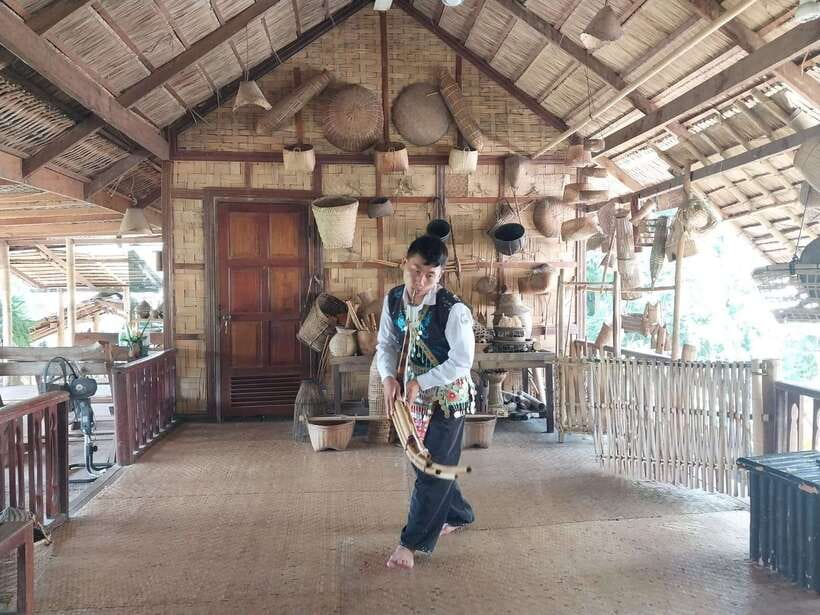
One of the easiest ways to tell a good cultural class from a forgettable one is how the atmosphere ties together. Here, the setting does. You learn and cook in a pavilion modeled on a traditional Lao house, in a scenic area outside the city. Bamboo is everywhere in the theme, and the experience doesn’t feel like you’re inside a classroom with fake props.
Then there’s the music. You’ll see bamboo musical instruments performed by local Lao musicians as part of the overall program. Some reviews also mention additional cultural elements like dancing and music with artists from local communities, so the evening session may feel a bit more like a performance after your workshop work.
For photos, morning sessions are usually your best bet because of the natural light in outdoor areas. For less thinking and more relaxing, evening sessions can work well because you’ve already gotten the main cooking practice done by the time you eat.
Bottom line: you’re learning bamboo, but you’re also breathing in the rural, lived-in feel of Luang Prabang’s outskirts. It’s not just a themed stop. It’s a working cultural space.
Price and value: is $44 per person fair?
At $44 per person for 4 to 5 hours, you’re paying for more than a class. You’re getting hotel pickup and drop-off by tuk-tuk, English-speaking instruction, the entire bamboo weaving workshop, a guided bamboo shoot cooking lesson, and a meal included (lunch or dinner). That package is hard to match if you try to piece things together on your own.
The real value is that you get two linked skills in one half-day. Most activities give you one experience—either cooking or crafting. Here, bamboo is the bridge between both, so the theme feels cohesive. And because the instruction is interactive, you’re not stuck being a passive observer.
Some people will feel the price is a bit high if they’re comparing it to temple ticket costs or street food. But this isn’t a ticket. It’s time, labor, and instruction, plus a meal. If you want one practical cultural activity that teaches you something you can carry home—how bamboo is used, and how bamboo shoots taste in Lao dishes—this offers strong value for the money.
Also, the transport quality is called out in ratings, with most reviewers giving it top scores. That means fewer headaches getting there, and fewer chances for the day to get derailed.
Who should book this, and who should skip it
This tour fits best when you want hands-on learning and you like practical culture. If you’re tired of only temples and want a different side of Laos, this is a smart shift. It’s also great for people who enjoy crafting but don’t want a long workshop day.
You should also like food if you’re choosing this. The bamboo shoot dishes are central, and the cooking class is active. If you have dietary restrictions, vegetarian options may be available, and you should mention your needs when booking or on arrival.
Who should skip it? It’s not suitable for pregnant women, people with mobility impairments, and wheelchair users. If you rely on step-free access or you can’t work comfortably in a rustic outdoor setting, this won’t be a match.
If you’re traveling with kids, reviews suggest the team can be accommodating and may help keep children engaged so adults can focus on weaving and cooking. That said, it’s still a tools-and-heat experience, so common sense matters.
Tips to make your day smoother (and more fun)
A few small choices can make the difference between a pleasant half-day and an annoying one. Wear comfortable shoes with good grip. You’ll be moving around and working close to bamboo materials and possibly uneven ground.
Bring light, comfortable clothes you can move in. Bamboo work is physical in small ways: bending, reaching, and repeating motions while you learn technique.
Plan your session based on what you care about most. Morning gives better photo conditions. Evening can feel better if you’d rather cook dinner than plan another meal later.
Finally, go in with a learn-first attitude. Your mat won’t look identical to the master’s work, and that’s the point. You’ll leave with a better understanding of bamboo and you’ll have made something with your own hands.
Should you book Luang Prabang bamboo weaving and cooking?
Book this if you want a half-day activity that feels genuinely Lao, not staged. The combination of bamboo weaving plus a bamboo shoot cooking class gives you two skills and a strong story line: one plant, many uses. If you like interactive lessons, and you’re excited to cook (not just eat), you’ll probably leave happy.
Skip it if mobility is an issue, or if you’re pregnant. Also skip it if you dislike hands-on work or don’t want to be around tools and fire.
If you’re aiming for one memorable activity outside the usual Luang Prabang loop—temples, viewpoints, and slow walks—this is a practical, satisfying choice. It’s $44 for 4 to 5 hours, with pickup and a meal included, and it teaches you something you can explain later: why bamboo matters here, and how bamboo tastes.
FAQ
How long is the Luang Prabang bamboo weaving and cooking class?
The experience runs about 4 to 5 hours.
What time is hotel pickup?
Pickup is included from Luang Prabang by tuk-tuk. It’s around 8:30 AM for the morning session and around 4:00 PM for the evening session.
Where does the class take place?
The activities happen at a rustic pavilion on the outskirts of Luang Prabang, modeled on a traditional Lao house.
What will I make during the bamboo workshop?
You’ll weave a small souvenir mat using bamboo strips and an overlapping weaving process.
What dishes do you cook?
You’ll help cook bamboo shoot soup, bamboo shoots steamed in banana leaf, and bamboo shoot dip.
Is lunch or dinner included?
Yes. Lunch or dinner is included in a traditional bamboo tray, depending on whether you book the morning or evening session.
Are alcoholic drinks included?
No. Alcoholic drinks are not included.
Are vegetarian options available?
Vegetarian options are available.
What is the cancellation policy?
You can cancel up to 24 hours in advance for a full refund.