REVIEW · KUTA
Mufu Rendang Cooking Class Kuta
Book on Viator →Operated by anika activity · Bookable on Viator
Mufu Rendang is your ticket to real Bali flavor. This hands-on class in Kuta is special because you cook classic dishes using fresh, locally sourced ingredients, and you learn the cultural meaning behind what’s on your plate. I also like the lots of prep and clear instruction from the team, including Soni and staff, so you’re not just watching. One thing to consider: it’s not a drop-off-only setup, so you’ll want to plan around pickup availability and the fact that the experience ends back at the meeting point.
The timing works well if you want a daytime activity that still leaves room for Kuta beach time afterward. You’ll be guided step-by-step through dishes like Rendang, Ayam Betutu, and Sate Lilit, then you eat the feast you helped make. For the price, it feels straightforward: $39 for a roughly four-hour meal-centered experience with lunch included.
If you’re a beginner, you’ll still get value because the class is interactive, not intimidating. If you already cook at home, you’ll enjoy picking up Balinese technique and seasoning logic you can recreate later. The main drawback I’d flag is simple: the group can be up to 50, so the experience is friendly and structured, but it won’t feel like a private kitchen session.
In This Review
- Key highlights before you go
- Getting oriented at Warung Mufu Kuta (start time, setup, and flow)
- The morning market tour: spices, produce, and what you’ll actually use later
- Back in the kitchen: what hands-on really means here
- Rendang in Balinese style: learning the logic behind slow flavor
- Ayam Betutu: working with Balinese chicken technique
- Sate Lilit: learning a different kind of satay
- Lunch included: eating the results and not rushing through it
- The teaching team: what Soni and staff do well
- Who this class suits best (and who should think twice)
- Price and value in Kuta: is $39 fair?
- Before you book: what to bring and how to get more out of it
- Should you book Mufu Rendang Cooking Class Kuta?
- FAQ
- What time does the Mufu Cooking Class start in Kuta?
- How much does the class cost?
- Is lunch included?
- Does the class include pickup?
- What dishes will I cook or make?
- Can I cancel for a full refund?
Key highlights before you go
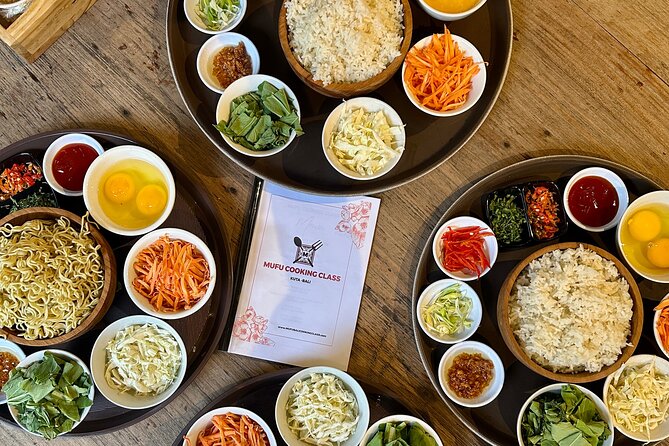
- Morning market tour focus: Learn about local spices and produce before you cook
- Hands-on kitchen time: Chop, mix, and cook with time-honored techniques
- Real Balinese lineup: Rendang, Ayam Betutu, and Sate Lilit are part of the core menu
- Instruction-led, not show-and-tell: Soni and staff are specifically praised for prep and ease of teaching
- Lunch included: You eat what you make, so the class feels complete
- Pickup offered, drop-off not included: Plan your transport around pickup details
Getting oriented at Warung Mufu Kuta (start time, setup, and flow)
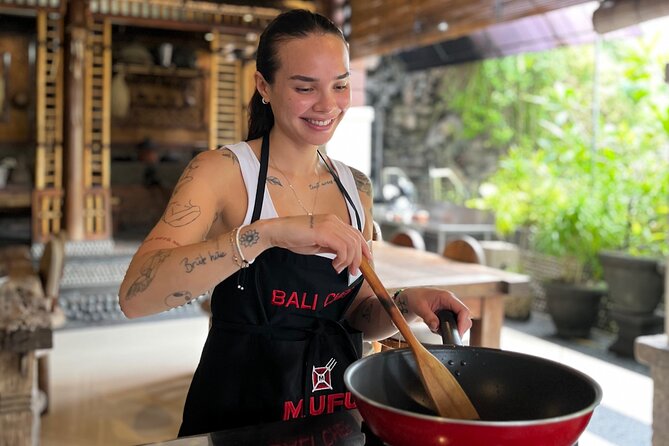
Your day starts at Warung Mufu Kuta in the Tuban/Kuta area (the address provided is Jl. Elang Blok Komplek Burung No.3, Tuban, Kec. Kuta, Kabupaten Badung, Bali 80361). The class begins at 9:30 am, and it runs for about 4 hours.
I like this start time because it’s late enough to sleep in a bit, but early enough to avoid losing the whole day to a cooking lesson. Also, the experience ends back at the meeting point, so you don’t have to worry about tracking down a return route after lunch.
The facility is described as a “beautiful facility,” and the reviews highlight a smooth, prepared vibe. Even if you’ve never cooked Balinese food before, it helps when the kitchen is organized and the staff are set up for group teaching.
One practical detail: pickup is offered, but drop-off isn’t listed as included. So if you’re relying on transport from your hotel, you’ll want to confirm whether pickup applies to your exact location. If you’re close to public transportation, that also gives you a flexible backup plan.
You can also read our reviews of more tours and experiences in Kuta.



The morning market tour: spices, produce, and what you’ll actually use later
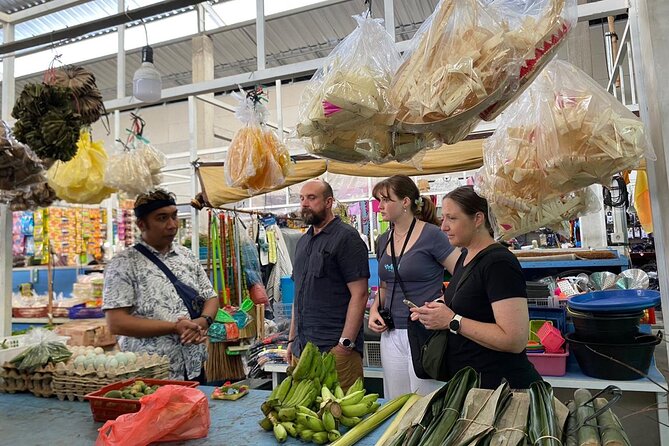
A big part of this class is the market tour. The operator specifically frames it as a morning segment, focused on local spices and produce—this isn’t just a quick walk past stalls. You’re learning the ingredients that shape Balinese cooking, and you carry that knowledge into your kitchen work.
Here’s what I think this adds for you: when you see spices and ingredients before cooking, the flavors make more sense. Instead of memorizing a recipe line-by-line, you start understanding why certain ingredients matter in Balinese dishes—especially in slow-cooked curries and meat preparations.
From the class description, the market segment supports the core cooking lessons by introducing traditional ingredients and spices you’ll prepare with later. It also helps break up the day. You’re not locked in a kitchen immediately; you get context first, then action.
Since you’re starting at 9:30 am, this is the kind of schedule that fits a morning market component. If you want to maximize the “cook with purpose” feeling, this time slot is a good bet.
Back in the kitchen: what hands-on really means here
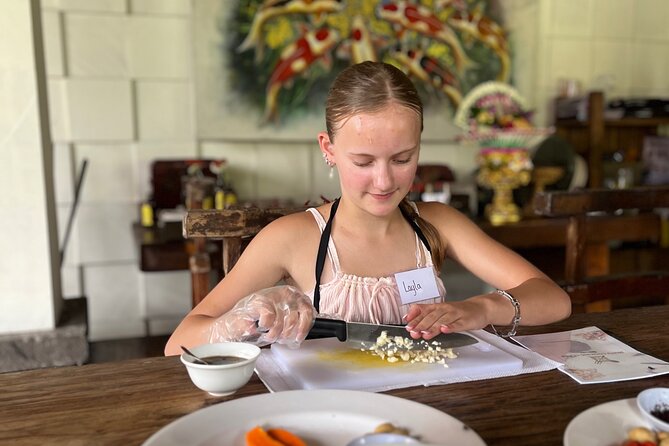
This is a hands-on cooking class, and the difference shows up quickly in the teaching style. The review feedback calls out lots of hands on prep and cooking, plus staff who make instruction feel easy to follow.
That matters for practical reasons:
- You’ll get real knife and mixing time, not just time standing nearby.
- You’ll learn cooking steps while you’re still fresh from the market, which helps you connect ingredient to outcome.
- You’ll come away with muscle memory you can repeat at home.
The class is also interactive and fun, which is exactly what you want if you’re traveling solo or you’re not sure what to expect in a group lesson. With a max group size of 50 travelers, you’ll still get structure and likely a kitchen workflow that keeps things moving.
One more detail: confirmation happens at booking, and you get a mobile ticket. That’s not “just paperwork”—it reduces the friction of showing up and finding the right group. When a class starts on time, you waste less of your vacation waiting around.
Rendang in Balinese style: learning the logic behind slow flavor
Rendang is the star for a reason: it’s rich, fragrant, and built through technique and patience. In this class, you don’t just taste it—you make it as part of the cooking lineup.
What’s valuable for you here is the emphasis on traditional methods using fresh, locally sourced ingredients. Rendang often relies on spice depth and layered seasoning, and the class approach suggests you’ll be guided through each step of preparation, so you’re not left guessing at the timing or texture.
Even if you don’t plan to cook Rendang often at home, I’d still recommend this class for learning flavor principles. Balinese rendang-style thinking can translate into other curries and meat dishes later. The same ingredient families and methods usually show up in variations.
Ayam Betutu: working with Balinese chicken technique
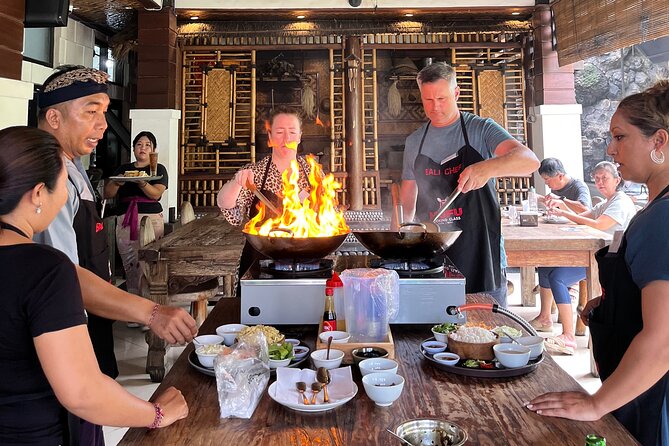
The itinerary also includes Ayam Betutu. In practice, Betutu-style chicken tends to be about seasoning, coating, and building flavor with Balinese spice work.
This class teaches you classic Balinese cooking techniques, and you’ll be chopping, mixing, and cooking as you go. That’s the key: you’ll do the steps, then you’ll eat what you made. It turns “I like chicken dishes” into “I understand what to do differently next time.”
If you’ve only had Indonesian chicken dishes in tourist restaurants, this is a chance to see how Balinese seasoning habits create a deeper, more aromatic result. The cultural context the chefs share can also help you make sense of why the dish is prepared a certain way, not just what it tastes like.

Sate Lilit: learning a different kind of satay
Sate Lilit is the kind of dish that can surprise you if your satay experience is mostly bamboo skewers or peanut-heavy dips. Here, you’ll learn it as part of the class lineup.
Why I find it useful: Sate Lilit teaches you that satay isn’t only about grilling meat chunks. It’s about shaping flavor into a grilled format using Balinese technique. Once you understand how the dish is built, you’re less likely to treat it like a “copycat” and more likely to respect the method.
And because this class is interactive, you’ll be part of the process rather than just watching. That makes the technique stick.
Lunch included: eating the results and not rushing through it
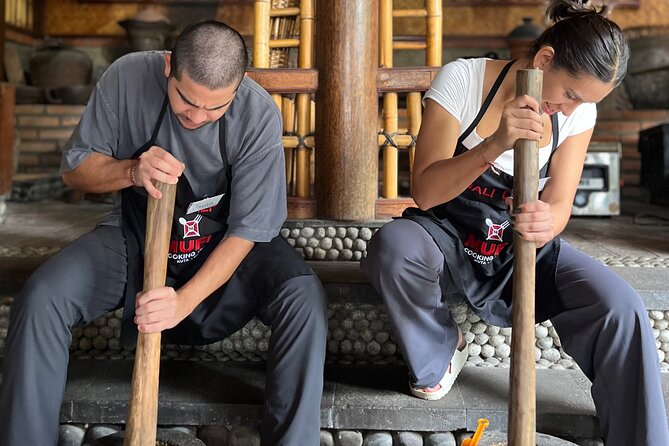
Lunch is included. That sounds basic, but it changes the whole feel of a cooking class. You’re not paying to briefly touch ingredients and then get sent to a restaurant. You cook, then you sit down and enjoy the meal you prepared.
From the experience description, you’ll end with a feast-style meal. The reviews also point to sampling multiple dishes, which suggests you’re getting a fuller tasting experience instead of one small plate.
This is where the value becomes clear for you: if you’d otherwise spend money on lunch plus pay for a class, you’re stacking both into one ticket. At $39 per person for a roughly four-hour activity with lunch included, the math is usually sensible—especially in Kuta, where meal prices vary widely depending on where you eat.
The teaching team: what Soni and staff do well
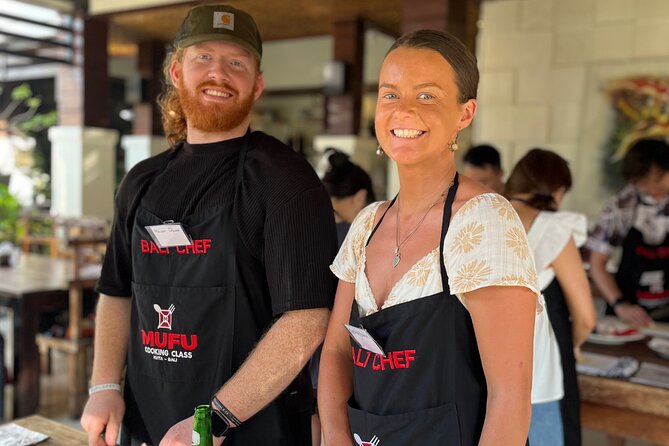
One detail I’d call out from the reviews is the way the staff teach. Soni and his team are specifically praised for wonderful preparation and ease of instruction, plus keeping things moving so you can focus on learning.
If you’ve ever taken a cooking class where you’re stuck waiting for one person’s demo, you’ll appreciate what “easy instruction” means. It usually translates to:
- clear steps
- good pacing
- staff hovering when you get stuck
- enough time to actually cook your portion
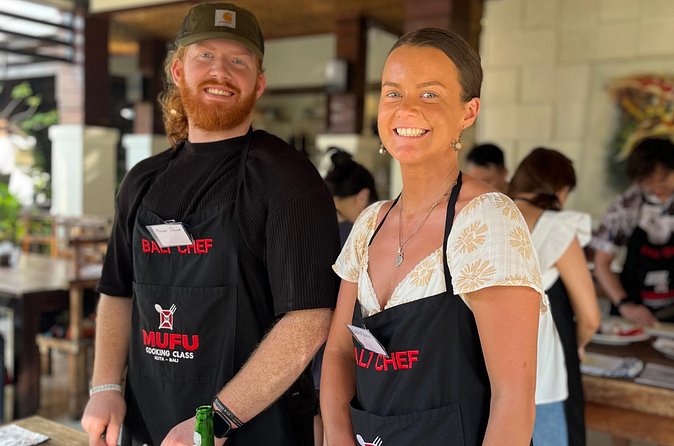
That friendly structure helps solo travelers too. You can ask questions without feeling singled out, and you still feel like you’re doing the work.
Who this class suits best (and who should think twice)
I’d especially recommend this for:
- Beginner cooks who want a guided first step into Balinese dishes
- Anyone who loves Rendang or wants to understand what makes it taste like the real thing
- Couples or small groups who want a shared activity with a satisfying payoff: lunch
- Travelers who enjoy learning culture through food, not through museum talk
You might think twice if:
- you’re hoping for a very small, private class feel (max is 50)
- you want a class that ends elsewhere (it ends back at the meeting point)
Price and value in Kuta: is $39 fair?
At $39 per person, this class feels like fair value because you get more than “a meal.” You get a structured cooking session with:
- a morning market tour component (morning format)
- hands-on prep and cooking
- multiple classic dishes (Rendang, Ayam Betutu, Sate Lilit)
- lunch included
In other words, you’re paying for ingredients, instruction, kitchen access, and a full lunch outcome. If you’re the type who likes to cook at home, that skill transfer makes the ticket even easier to justify.
And the reviews back up the main risk people worry about with cooking classes: will it be more talk than hands-on? Here, the feedback emphasizes the opposite—hands on prep, cooking, and staff support.
Before you book: what to bring and how to get more out of it
The tour data doesn’t list a gear checklist, so I’ll keep this practical and general.
Bring a swimsuit or quick-dry layer only if you’re planning to continue around Kuta afterward. In the kitchen, you’ll likely get close to spices and food prep, so wear something comfortable you don’t mind wearing again later.
A smart move: if you’re serious about recreating the flavors at home, come with questions. Ask about spice balance and technique during the steps. The class is designed for instruction, and the staff’s reputation for easy teaching suggests you’ll get direct answers.
Should you book Mufu Rendang Cooking Class Kuta?
I’d book this if you want a morning food activity in Kuta that feels real, practical, and meal-complete. The combination of a spice-focused market start and a hands-on kitchen format is the winning combo. Add in praise for Soni and staff, plus lunch included and classic dishes like Rendang, Ayam Betutu, and Sate Lilit, and you’ve got a solid value pick.
I wouldn’t choose it if you’re chasing a quiet, private class setting, or if you need a specific drop-off arrangement at the end. But for most people—especially first-time Bali food learners—this is the kind of cooking class that leaves you with something you can use: knowledge, technique, and a full plate of what you made.
FAQ
What time does the Mufu Cooking Class start in Kuta?
The start time listed is 9:30 am. The experience runs for about 4 hours.
How much does the class cost?
The price is $39.00 per person.
Is lunch included?
Yes. Lunch is included as part of the experience.
Does the class include pickup?
Pickup is offered, but drop-off is not included. The activity ends back at the meeting point.
What dishes will I cook or make?
The class includes classic Balinese dishes such as Rendang, Ayam Betutu, and Sate Lilit.
Can I cancel for a full refund?
Yes. You can cancel for a full refund up to 24 hours in advance of the experience’s start time.