REVIEW · ISTANBUL
Istanbul: Turkish Baklava Cooking Class with a Local Host
Book on GetYourGuide →Operated by Lokal Bond · Bookable on GetYourGuide
Forget restaurants; your hands make baklava. In this Istanbul apartment class, you learn Turkish baklava from scratch, rolling delicate layers and building flavor step by step with Rojda, who learned the craft from her grandmother.
Two things I really like: you get genuinely hands-on practice making the dough and shaping the layers, and you finish with your own baklava—served with Turkish tea, plus enough to enjoy later. One possible drawback: it’s a working kitchen experience, so expect flour, syrup, and a bit of mess as you knead and roll.
In This Review
- Key highlights to know before you go
- Why This Istanbul Baklava Class Works Better Than a Food Show
- Meeting Rojda in Her Cozy Apartment Kitchen
- From Dough to Paper-Thin Layers: The Skill You’ll Remember
- Walnut Filling and Warm Syrup: Where Baklava Gets Its Soul
- Tea, First Bite, and the Quiet Joy of Home Hospitality
- What You Take Home: Baklava for Loved Ones
- Price and Value: What $142 Actually Buys
- Practical Tips for the 3-Hour Workshop (Without Overthinking)
- Who Should Book This Baklava Cooking Class
- Should You Book? My Take for Istanbul Foodies
- FAQ
- How long is the Turkish baklava cooking class in Istanbul?
- What is the group size?
- Who teaches the class and what languages are offered?
- Is tea and baklava included?
- Do I make the baklava from scratch?
- Where do I meet the host?
Key highlights to know before you go
- Small group (up to 6) means you’re not stuck watching from the sidelines
- Rojda’s approach comes from her grandmother’s baklava lessons
- Forty-layer technique is part of what you learn, not just the final look
- Warm syrup + walnut filling are made and used in the class, not prepped off-site
- Tea and tasting happen right after baking, in a cozy apartment setting
Why This Istanbul Baklava Class Works Better Than a Food Show
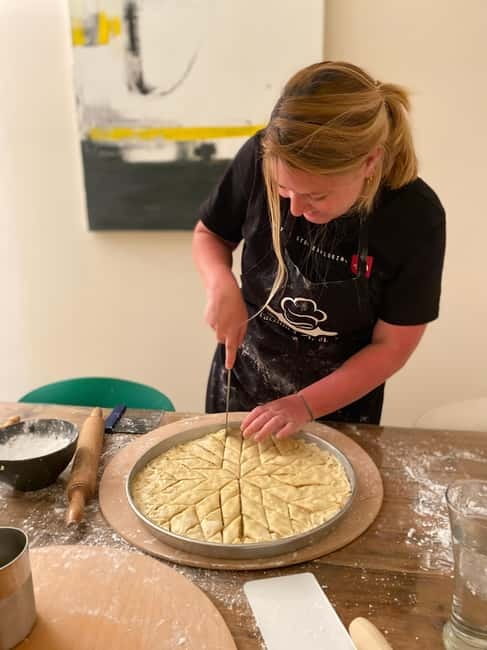
There’s a big difference between eating baklava and making it. When you roll the dough thin and stack the layers, you start to understand why baklava matters in Turkey: it’s careful work, shared time, and a dessert people make for someone they love.
This experience is built around that idea. The workshop is in a home kitchen in Istanbul, not a big commercial classroom. You’ll smell butter and warm syrup while you work, and you’ll learn the process in a way that actually sticks: dough, thin layers, walnut filling, baking, syrup.
At $142 per person for a 3-hour session, it’s not a “quick snack” add-on. The value comes from doing real tasks with guidance, eating what you make, and leaving with baklava to share.
You can also read our reviews of more tours and experiences in Istanbul.
Meeting Rojda in Her Cozy Apartment Kitchen
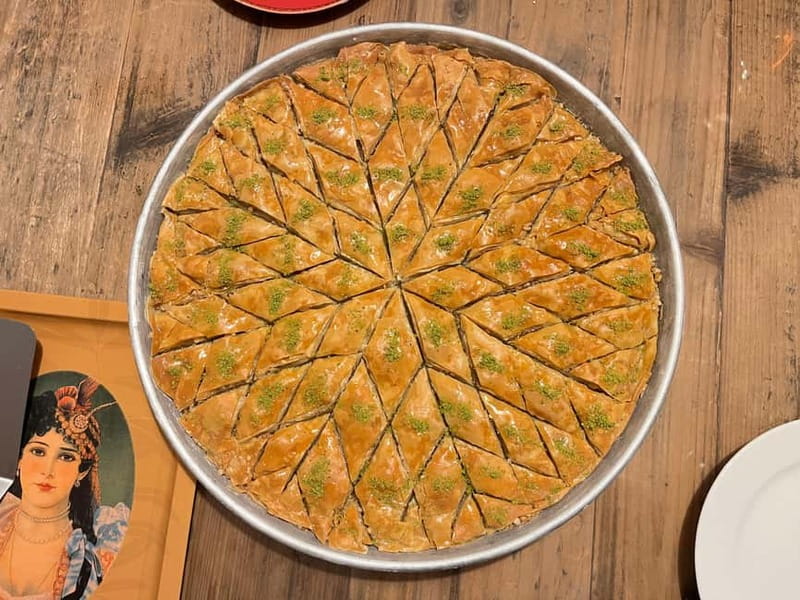
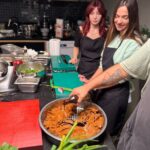
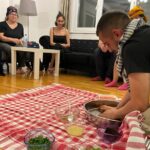
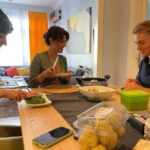
You’ll be welcomed at the host’s home, which sets the tone fast. The group is small—limited to 6 participants—so the mood stays personal instead of rushed. The class is taught by a local host with English and Turkish support, which helps if your Turkish is still in progress.
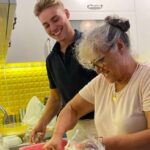
In a small home setting, conversations feel natural. One of the strongest parts of this class is the hospitality side. Based on what I’ve been told from past participants, Rojda often makes time for chatting and may even connect you with family or a friend while things are baking. That matters because baklava isn’t just technique—it’s a social food.
Practical expectation: you’ll be cooking in someone’s day-to-day space. So keep your tone relaxed, move with the flow, and don’t be surprised if the experience feels more like a warm invitation than a formal workshop.
From Dough to Paper-Thin Layers: The Skill You’ll Remember
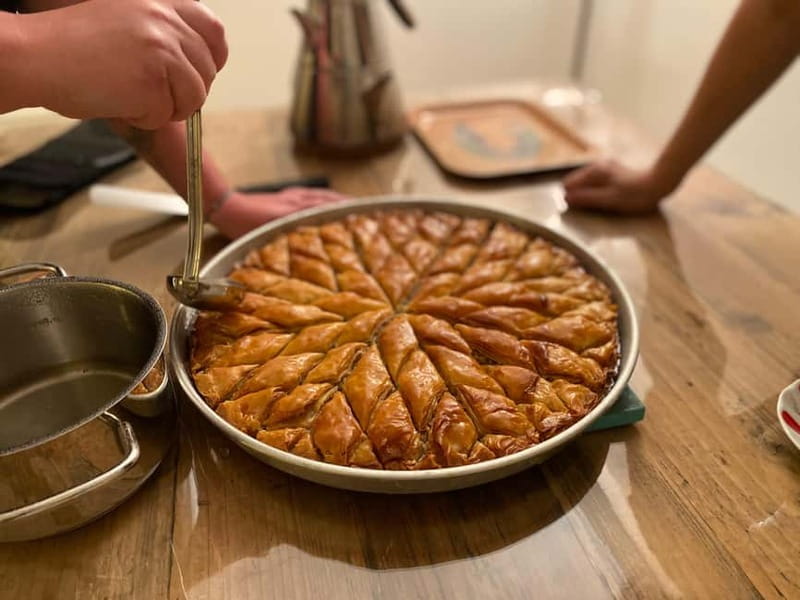
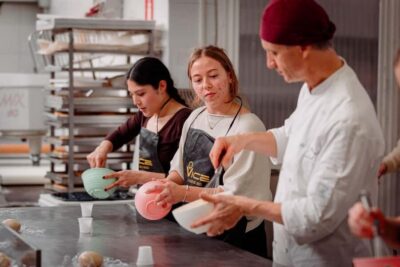
The heart of baklava is the dough and the layering. In this class, you don’t start with store-bought sheets. You’ll prepare the dough from scratch, then work through kneading and rolling until the dough becomes delicate and thin.
Here’s the part that makes this class worth it: you’re learning how to get those layers thin enough to stack. Sometimes the tradition in baklava can reach as many as forty layers. Even if your final pan isn’t exactly that number, you’ll understand the logic—more thin layers means more texture contrast when baked and soaked in syrup.
What you can realistically expect during the hands-on stage:
- You’ll knead and roll, guided by Rojda
- You’ll learn how layers are formed and stacked
- You’ll see why consistency matters (thickness affects the final bite)
This isn’t a passive tasting tour. It’s craft practice. If you like learning through repetition and want something more memorable than a guided walkthrough, this part is the payoff.
Walnut Filling and Warm Syrup: Where Baklava Gets Its Soul
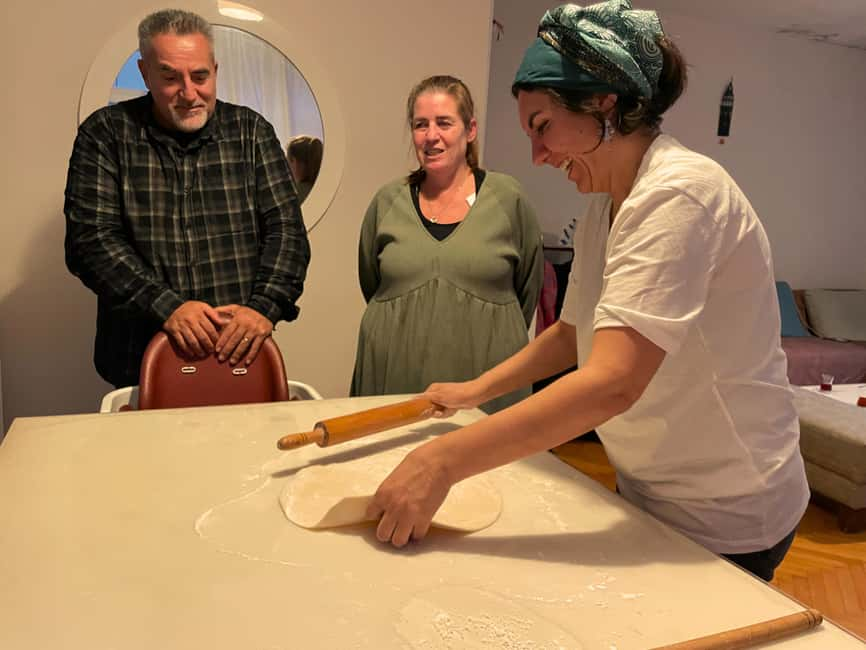
Once the layers are set, you build the filling. The class focuses on a sweet walnut filling, and you’ll prepare and use it as part of your own baklava.
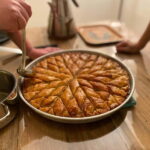
Then comes the signature moment: warm syrup. Instead of a cold drizzle, you’ll pour warm syrup over the baked baklava. That timing and temperature detail is one reason baklava tastes the way it does—syrup soaks in and spreads through the layers while the dessert is still ready to absorb.
This is also where the class becomes emotional, not just technical. Rojda frames baklava as more than a dessert: something you make for someone you care about. You may feel that shift while you’re working, especially when you realize the whole point of the layers and syrup is texture and care.
Possible consideration: syrup can be a little intense. It’s part of the tradition, so if you prefer desserts that aren’t sweet-soaked, be ready for a classic baklava profile.
Tea, First Bite, and the Quiet Joy of Home Hospitality
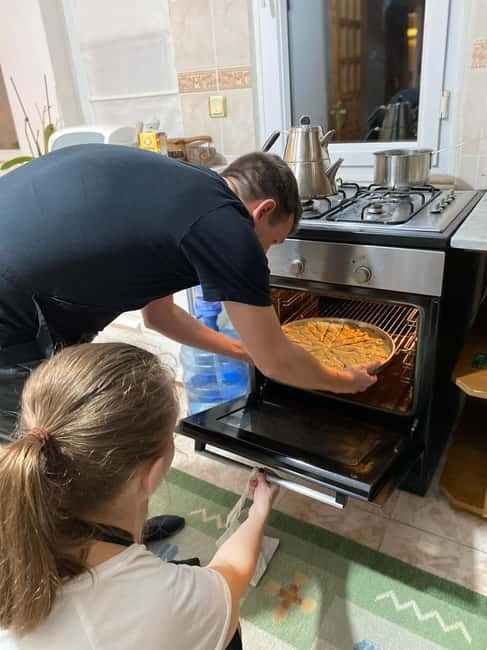
After baking, you taste what you made, and it’s paired with Turkish tea. This is the moment where technique turns into flavor. The layers you handled become crisp and tender at the same time, and the walnut filling gives that nutty sweetness under the syrup.
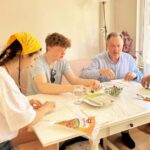
In a home-based class, the tasting also turns into a hangout. Several participants have highlighted conversation—chatting with Rojda and meeting her circle while the baklava bakes. In one case, an unexpected dinner invitation came up while the dessert was still in the oven. You shouldn’t count on that exact surprise every time, but it fits the overall vibe: hospitality is part of the experience, not an extra add-on.
If you like food culture that includes people—how they talk, how they wait together, how they serve—this class delivers. You’re not just eating; you’re watching how baklava fits into daily life.
What You Take Home: Baklava for Loved Ones
You get baklava to take home. That’s a big deal because it extends the experience beyond the 3-hour workshop. You can bring it back for friends, family, or just save it for the next day when you want a slow dessert moment.
Taking baklava home also changes how you eat it. In many Istanbul food stops, you finish on the spot and that’s it. Here, you get to control the second tasting—when you can compare texture and sweetness after it settles.
Because the class uses your own baking and your own syrup-soaking process, it feels like something you made, not something you sampled. That personal connection is often what people remember months later.
Price and Value: What $142 Actually Buys
At $142 per person for a 3-hour class with a small group, you’re paying for four things:
- Professional guidance in a home kitchen
- Ingredients and the full process, from dough to syrup
- Tea and a tasting during the workshop
- Baklava to take home
The value isn’t just the food. It’s the skill. You learn dough and layering technique, including the idea of stacking many thin layers. That kind of knowledge is hard to pick up from a restaurant meal or a quick cooking demo.
Also, the group size matters. With up to 6 participants, you can ask questions and get closer help when shaping gets tricky. That’s worth money on its own.
If you’re traveling with a “we want to learn something real” mindset, this price feels fair. If you mainly want a light activity and don’t care about technique, you might find it more than you need.
Practical Tips for the 3-Hour Workshop (Without Overthinking)
This is a hands-on baking class, so plan for active cooking work. You’ll be kneading and rolling dough, stacking layers, and working near syrup and hot baking. Keep your expectations flexible and lean into the learning.
A few practical ways to prepare:
- Wear clothes you won’t mind getting flour on
- Expect to get sticky near syrup and filling
- Come with curiosity, not pressure to produce perfect results
Timing-wise, plan for a focused block of about three hours. Because it’s in a home, you’ll also want to show up on time so you’re part of the flow when dough and layering start.
If you’re booking around other Istanbul plans, think of this as a true activity, not a quick stop. You’ll want time afterward for a stroll or a relaxed tea moment, since the smell of baklava and the sweetness may linger.
Who Should Book This Baklava Cooking Class
This class is especially good for:
- People who love Turkish food and want to understand how it’s made
- Travelers who enjoy smaller, home-style experiences over big-group tours
- Anyone interested in learning dough work and layering technique
- Food lovers who like conversation and hospitality as part of the meal
It may be less ideal if you want a purely observational experience. The workshop is designed for making and shaping. You’ll be doing the work.
Also, if you have strict dietary needs, you’ll want to ask directly about the ingredients and syrup specifics. The class description clearly covers walnut filling and warm syrup, but it doesn’t mention dietary accommodations.
Should You Book? My Take for Istanbul Foodies
If your goal is a memorable Istanbul food experience that’s more than a meal, I’d book this. The combination of hands-on dough-and-layer technique, warm syrup finishing, tea tasting, and the chance to connect with Rojda makes it feel personal and real. You also leave with baklava, which turns the experience into a second dessert moment later.
I’d especially recommend it if you’re the type who enjoys learning a craft you can repeat at home. Even if you don’t replicate the exact number of layers every time, you’ll take away the method—and that’s what makes baklava meaningful.
FAQ
How long is the Turkish baklava cooking class in Istanbul?
The workshop lasts 3 hours.
What is the group size?
It’s a small group limited to 6 participants.
Who teaches the class and what languages are offered?
The instructor speaks English and Turkish.
Is tea and baklava included?
Yes. You get tea and baklava to taste during the class, and baklava to take home.
Do I make the baklava from scratch?
Yes. The class includes preparing the dough, rolling it into thin layers, making the walnut filling, and pouring warm syrup over your baked baklava.
Where do I meet the host?
You’ll be welcomed at the host’s home.