REVIEW · ROME
Cooking Class with Lidia YoungGrandma in Jewish area
Book on Viator →Bookable on Viator
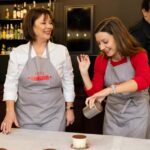
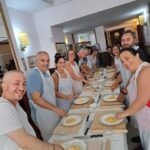
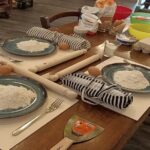
Roman pasta gets real when you cook with Lidia. This 3-hour class in Rome’s Jewish area keeps things small (just 6 people), so you get close, friendly coaching while you make fresh pasta dough and turn it into two classic Roman dishes.
What I like most is the full meal flow: a Roman aperitivo with tomato bruschetta, olives, cheese, and Italian wine before you roll and shape pasta. The other big win is how personal the teaching feels in a private home setting—Lidia and her husband guide you step-by-step and share the kind of warm hospitality that makes the whole experience feel like an invitation, not a production. One thing to consider: the menu includes carbonara made with pork cheek, so if you avoid pork (or follow a strict dietary routine), you’ll want to check in first.
In This Review
- Key highlights you’ll actually care about
- Where You’ll Cook in Rome’s Jewish Quarter (Portico d’Ottavia area)
- Your 3-Hour Flow: Aperitivo to Pasta to Tiramisù
- Getting Oriented Near Piazza Venezia and Ancient City
- The Aperitivo Moment: Tomato Bruschetta, Olives, Cheese, and Wine
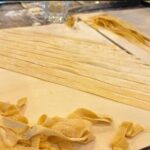
- Making Fresh Fettuccine for Carbonara (Pork Cheek, Eggs, Pecorino, Black Pepper)
- Tagliolini Cacio e Pepe: Black Pepper and Cheese in a Smaller, Finer Style
- Tiramisù: The Classic Roman Dessert Finish
- Price and Value: Why $118 Can Be a Fair Deal in Rome
- Language and Comfort: English, French, Spanish, and German
- Practical Tips So You Enjoy the Whole Experience
- Who This Cooking Class Suits Best (and Who Should Think Twice)
- Should You Book This Rome Pasta Class?
- FAQ
- How long is the cooking class in Rome?
- Where does the experience start and end?
- How many people are in the group?
- What food is included in the class?
- What languages are offered?
- Is this a private experience?
- Are service animals allowed?
- Can I get a full refund if I cancel?
Key highlights you’ll actually care about
- Small group of 6 means you’re not watching from the sidelines
- Aperitivo plus wine sets the tone before the pasta work starts
- Two homemade pasta dishes: fettuccine carbonara and tagliolini cacio e pepe
- Classic Roman ingredients are named up front, including pecorino romano and black pepper
- Tiramisù is included for the final sweet payoff
Where You’ll Cook in Rome’s Jewish Quarter (Portico d’Ottavia area)
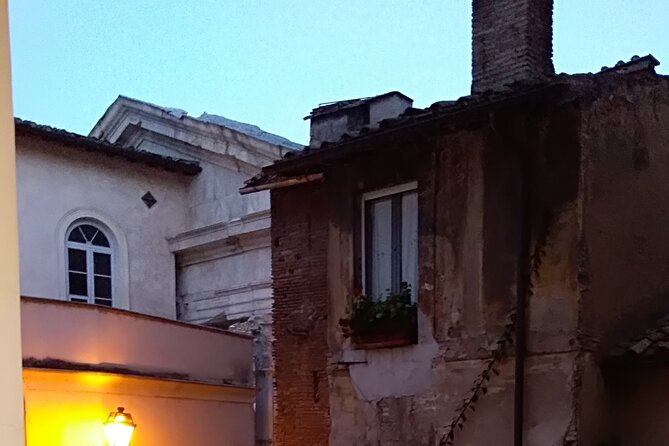
You’re meeting in a very specific pocket of Rome: near Via del Portico d’Ottavia and the Torre Soricara meeting point. That area puts you close to the city’s layered identity—Old Rome around you, and the Jewish community’s long, visible presence nearby. It’s a nice contrast to the more tourist-centered areas, because the vibe here feels lived-in rather than staged.
The class ends back at the meeting point too, which matters more than it sounds. When you’re doing hands-on cooking, you don’t want a long scramble across town afterward. You’ll also have a cleaner mental map for the rest of your day since you return where you started.
The experience runs as a private class for your group only. That’s not just a comfort perk. When you’re learning dough, sauce, and timing, it helps if your attention can stay on the kitchen instead of being split across a big crowd.
You can also read our reviews of more tours and experiences in Rome.

Your 3-Hour Flow: Aperitivo to Pasta to Tiramisù
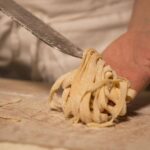
The format is simple, and that’s why it works. You start with a Roman aperitivo (food plus wine), then you move into pasta-making, then you finish with tiramisù. In about 3 hours, you go from ingredients to finished plates at a pace that feels guided rather than rushed.
For me, the most practical benefit of this structure is that you’re never stuck doing just one task for too long. You’ll get a rhythm: taste first, cook next, reward at the end. It’s also a good fit if you’re trying to build a Rome day around a specific “hands-on” memory, not just another guided walk.
Here’s what the menu tells you about the cooking focus:
- You’re learning how to handle fresh pasta dough
- You’re practicing shaping two different pasta styles (fettuccine and tagliolini)
- You’re pairing the pasta with two Roman sauce styles that teach two different flavor logics: carbonara’s creamy egg-cheese finish and cacio e pepe’s pepper-forward simplicity
Getting Oriented Near Piazza Venezia and Ancient City
The itinerary includes a stop tied to Piazza Venezia and the ancient city area. Even if you’re not spending your whole day at monuments, this kind of brief orientation is useful. It helps you connect what you’re doing in the kitchen to where you are in Rome.
Think of it as a mental warm-up: Rome’s history is often treated like a museum. Here it becomes a context. When your cooking later centers on Roman comfort food—fettuccine carbonara, tagliolini with black pepper and cheese—the city backdrop starts to feel less abstract.
One practical note: since the cooking experience is the main event, keep your attention on what you’re told at the beginning and then be ready to get hands-on. Don’t over-plan what you’ll do after, because once the kitchen starts, your day will naturally revolve around the food you’re making.
The Aperitivo Moment: Tomato Bruschetta, Olives, Cheese, and Wine
Before you roll dough, you start with a Roman aperitivo. You’ll have tomato bruschetta, olives, and cheese, plus Italian wine. That’s a smart setup.
Why it works:
- You get a taste of the flavor profile first. Roman meals often balance salt, acidity, and richness. Bruschetta gives you the acid and freshness; cheese and olives add the salty depth.
- The wine takes the edge off the learning curve. Pasta dough can feel intimidating at first, especially if you’ve never worked it before. Starting with something social and delicious helps you relax.
- It teaches the menu logic early. Later, when you’re doing carbonara and cacio e pepe, you’re not tasting blind—you already know the style of Roman seasoning you’re aiming for.
The review-style highlights you’ll likely appreciate here are that the welcome comes quickly and you feel at ease early on. That matters because a good class doesn’t wait until the second hour to make you comfortable. You start calm, and then you can focus on technique.
Making Fresh Fettuccine for Carbonara (Pork Cheek, Eggs, Pecorino, Black Pepper)
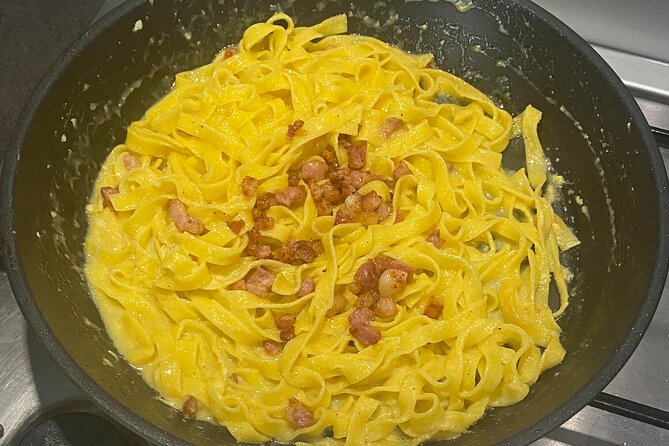
The main pasta session centers on fettuccine carbonara. The menu details are clear about what you’re working with: pork cheek, eggs, pecorino romano, and black pepper.
This part of the class is where you’ll feel the shift from beginner kitchen tasks to real Roman cooking instincts. Carbonara is deceptively simple on paper. In practice, it demands attention to how the sauce comes together and how the flavors balance. Even when you’re not doing every step alone, you’ll understand the logic behind the dish.
What you’ll likely learn that makes this class worthwhile:
- How to handle fresh dough so it rolls and stays workable
- How pasta shape affects how sauce clings
- How the carbonara ingredient combination creates its signature creaminess without needing a heavy cream base
Because pork cheek is part of the recipe, this is the main dietary “watch-out.” If you avoid pork, you should not assume there’s an automatic substitution. The menu as presented is traditional Roman carbonara with pork cheek, so confirm options ahead of time.
Also, carbonara is all about black pepper and cheese. If you’re someone who tends to be shy with seasoning at home, this class is likely to push you toward confident seasoning—because you’ll taste how the pepper and pecorino interact with the egg-based sauce.



Tagliolini Cacio e Pepe: Black Pepper and Cheese in a Smaller, Finer Style
The second pasta dish is tagliolini cacio e pepe. That name tells you the whole story: cheese and pepper do the heavy lifting.
Compared to carbonara, cacio e pepe teaches restraint. You’re not leaning on lots of extra ingredients. You’re learning how two flavors can carry a full dish when they’re balanced well.
The value here is practical. After a class like this, you stop treating recipes as a list and start thinking in combinations. You learn that:
- Pasta is the delivery system
- Pepper provides heat and aroma
- Cheese provides salt, body, and a creamy mouthfeel
If you’ve ever had cacio e pepe that tasted flat, you’ll appreciate how much technique matters. The same two ingredients can become either sharp and thin or smooth and satisfying depending on how you bring them together with the pasta.
This course also keeps your learning active by giving you two different pasta styles. Fettuccine and tagliolini aren’t just “another shape.” They change the eating experience and how sauce coats each bite.
Tiramisù: The Classic Roman Dessert Finish
You finish with tiramisù, the iconic creamy Italian dessert everyone seems to love. And yes, it’s included as part of the class menu.
This ending is more than dessert. It’s a useful way to remember the lesson structure of the night:
- Savory starter
- Two pasta milestones
- Sweet closure
Tiramisù is also the kind of dessert that benefits from seeing technique, not just reading it later. Even if you’ve made it before, a class setting can help you reset your approach to texture and balance. And if you haven’t made it, you’ll leave with something that’s recognizable, shareable, and very Rome-coded.
Price and Value: Why $118 Can Be a Fair Deal in Rome
At $118 per person for roughly 3 hours, this class isn’t a bargain-basement snack. It’s priced like a small-group, home-based culinary experience with real teaching time.
Here’s the value math that actually matters:
- Small group size (6 people) reduces the teaching bottleneck. You’re more likely to get attention when you’re shaping dough or adjusting technique.
- Food is included: aperitivo starter items, wine, two homemade pasta dishes, and tiramisù.
- You’re not just tasting. You’re making the food that you eat, which turns the cost into a memory plus a skill you can repeat at home.
If you’ve paid for cooking classes in big commercial settings, you know the risk: you may do one small step and spend the rest watching. This one signals a more hands-on, guided approach, especially with the step-by-step teaching emphasized in the experience feedback.
Also, consider timing. This is commonly booked about 85 days in advance on average, which suggests it’s popular. In practical terms, that means if you want a specific date, you should plan earlier rather than later.
Language and Comfort: English, French, Spanish, and German
The class is offered in multiple languages: English, French, Spanish, and German. That’s a big deal in Rome, where many food experiences default to Italian with basic translation.
What you’ll get from this:
- You can focus on technique instead of playing catch-up on instructions
- You can ask questions and get answers clearly
- Your group won’t feel left out, even if nobody speaks Italian
The overall feel also matters. The cooking style here is described as a peaceful, authentic yard/home setup, with an easy welcome right away. In other words: you’re not walking into a cold, formal kitchen where you feel like a visitor. You’re invited into the process.
Practical Tips So You Enjoy the Whole Experience
A few common-sense tips make this kind of class more enjoyable:
- Come hungry. You’ll eat throughout the session, including wine and a full pasta meal plus dessert.
- Wear shoes you can stand in. You’ll be working with your hands, so comfort matters.
- If you avoid pork, speak up early. Carbonara here includes pork cheek, and the menu details are part of the traditional setup.
- Take note of what you’re told about dough and sauce timing. Even if you don’t remember every step, knowing the logic will help you redo it later.
And because this is private for your group and near public transportation, you can plan around it easily. You don’t have to fight logistics across the city before or after cooking.
Who This Cooking Class Suits Best (and Who Should Think Twice)
This is ideal if you want:
- A small-group Roman cooking class with personalized guidance
- A focus on fresh pasta and two classic dishes: carbonara and cacio e pepe
- A real Rome experience tied to a specific neighborhood rather than a generic stop
It’s also great for couples or small groups who like a social-but-not-crowded atmosphere. You get structure, but you’re not in a line.
Who should think twice:
- Anyone who avoids pork should check whether modifications are possible for the carbonara portion.
- If you’re looking for a big, sightseeing-heavy day, this is not that. This is a cooking-centered experience, and it’s designed to be the main event for your time.
Should You Book This Rome Pasta Class?
I think you should book it if you want a credible Roman food experience you can remember long after you leave the stove. The combination of small group size, hands-on pasta work, and a meal that includes both savory and sweet classics makes the price feel more reasonable than it might at first glance.
If you love carbonara, black pepper cheese flavors, and tiramisù, you’re going to be in the right place. And if you care about learning from a warm, personal host setup rather than a high-volume studio, this one is built for that.
The only real decision point is dietary fit—because pork cheek is part of the carbonara menu as described. If that works for you, this is an easy yes.
FAQ
How long is the cooking class in Rome?
It runs for about 3 hours.
Where does the experience start and end?
It starts at Torre Soricara, Via del Portico d’Ottavia, 25, 00186 Roma RM, Italy, and it ends back at the same meeting point.
How many people are in the group?
The class is limited to 6 people.
What food is included in the class?
You’ll have tomato bruschetta with olives and cheese, two homemade pasta dishes (fettuccine carbonara and tagliolini cacio and pepper), and tiramisù. Italian wine is also included.
What languages are offered?
The experience is offered in English, French, Spanish, and German.
Is this a private experience?
Yes. It’s private, and only your group participates.
Are service animals allowed?
Yes, service animals are allowed.
Can I get a full refund if I cancel?
Yes. Free cancellation is available, and you can cancel up to 24 hours in advance for a full refund.