REVIEW · YOGYAKARTA
Yogyakarta: Countryside Cycling and Cooking Class Experience
Book on GetYourGuide →Operated by Jogja Borobudur Tour & Travel · Bookable on GetYourGuide
Markets, bikes, and a home kitchen in Jogja.
This day is interesting because it starts where real food begins: a visit to a local market, followed by cooking in a family setting, not a demo-style classroom. I like the fact that you get to shop for ingredients and then use them right away, with names like Maxi and Desy often leading the way.
I also love the small-group feel (limited to 8) and the mix of food with an actual ride through quiet countryside. In a few runs, the day includes cultural stop-offs like meeting people connected to tempe and watching traditional crackers being made, with Sari helping guide the bike portion.
One possible drawback: the bike tour pacing depends on the guide. If you end up far back, it can feel a bit rushed and you may struggle to hear explanations over the ride, so try to stay where you can see and hear.
In This Review
- Key things you’ll notice on this Yogyakarta day trip
- Getting picked up in Yogyakarta and leaving the noise behind
- The market walk: where cooking starts, led by Maxi and Desy
- Cooking class at a family home: hands-on, practical, and delicious
- What you actually learn in the kitchen
- Time to eat: enjoy the food hot and then sit together
- Cycling through Yogyakarta countryside on quieter village roads
- How the ride feels in real life
- Tempe, traditional crackers, and food culture stops you can watch
- Meet the people behind the day: guides named Maxi, Desy, and Sari
- Food & drinks: what’s included, and what that means for your budget
- Small group size and English guidance: why it changes the experience
- Price and value: is $41 for 8–10 hours actually fair?
- Timing: what an 8–10 hour day feels like on the ground
- What to wear and bring (so you don’t regret it later)
- Who should book this, and who might want something else
- Should you book Jogja countryside cycling and cooking?
- FAQ
- What is the duration of the Yogyakarta countryside cycling and cooking class?
- How many people are in the group?
- Is there an English-speaking guide?
- Is hotel pickup and drop-off included?
- What happens during the cooking class?
- Are food and drinks included?
- Will I receive recipes to take home?
- Can I cancel for a refund?
- Is there pay later available?
Key things you’ll notice on this Yogyakarta day trip
- Market shopping first, then cooking with what you bought
- Family-kitchen cooking with English guidance (often led by Desy)
- Countryside biking on older-style bikes through calmer village roads
- Food culture stops like tempe and traditional crackers (if included that day)
- A social feast at the end, where you eat together like a family
Getting picked up in Yogyakarta and leaving the noise behind
Your day starts with pickup from your accommodation in Yogyakarta (roundtrip transfers are included if you select that option). The point is simple: get out of the loud city mood early and head toward quieter village life where you can actually hear your guide and notice daily routines.
The transfer portion matters more than you might think. When you leave the city first, you arrive with energy for the market walk and the bike ride. You’re not just doing activities—you’re building a flow: food sourcing, cooking, then biking through the setting that produces some of those ingredients.
You can also read our reviews of more tours and experiences in Yogyakarta.
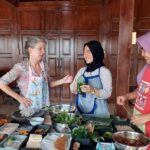
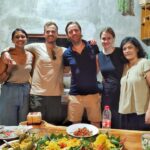
The market walk: where cooking starts, led by Maxi and Desy
A highlight for me is the market portion, because it turns food into something personal. In many cases, Maxi picks you up and then you meet Desy at the market to guide you through what to buy and why.
You’ll see common cooking ingredients like vegetables, rice, herbs, and spices. The guide explains what people use for everyday Indonesian flavors, so you start to connect dishes to ingredients rather than memorizing recipes like a worksheet.
Practical tip: markets can be busy and a little crowded on foot. Wear comfortable shoes and keep your hands free for buying and carrying light items if the group is doing that together.
Cooking class at a family home: hands-on, practical, and delicious
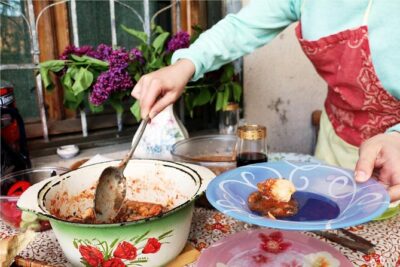
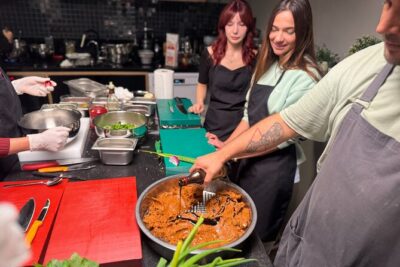
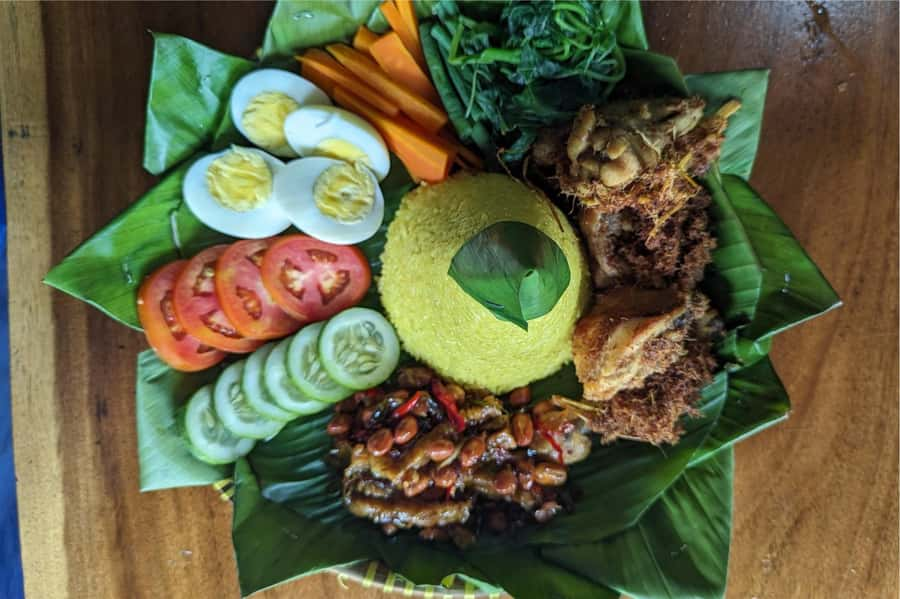
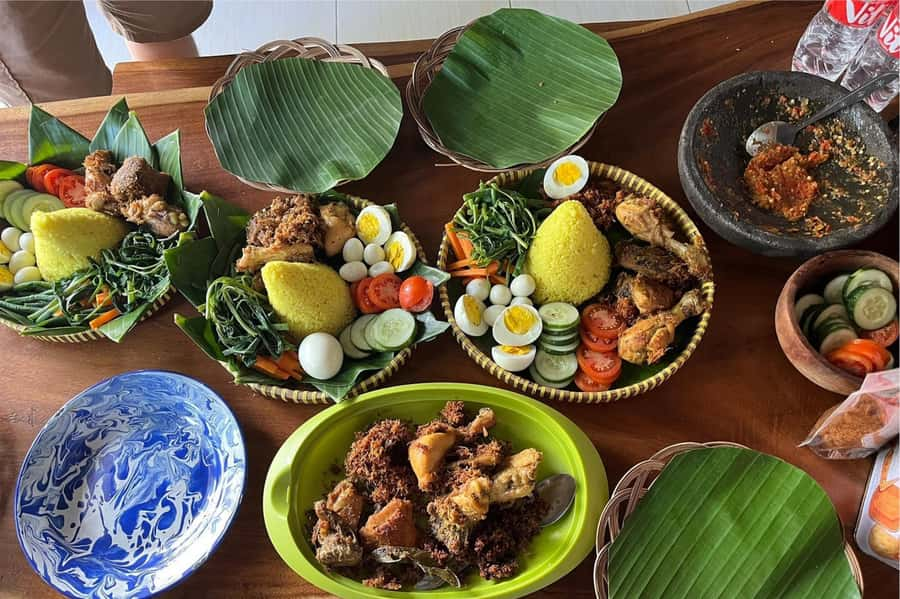
After the market, you head to a private home kitchen where the cooking happens. This is the core of the experience. You’re not watching someone cook from a safe distance—you’re working with your hands, prepping, learning techniques, and putting together dishes from scratch.
The cooking time is typically 3 to 4 hours, which is long enough to do real work and not just a quick taste. In some sessions, groups cook a 3-course meal; in other sessions, the class covers up to six different dishes. Either way, you’ll usually leave with more than one recipe, so you can recreate flavors later.
What you actually learn in the kitchen
The class focuses on both ingredients and method. You get tips on how local cooks think about flavors—often through the use of herbs, spices, and fresh produce—and you practice the steps needed to make the dishes work.
Also, because it’s a home kitchen, the vibe tends to feel warm and patient. People in the group often mention how helpful the instructors are, and how they explain things in a way that makes even picky eaters want to try everything.
Time to eat: enjoy the food hot and then sit together
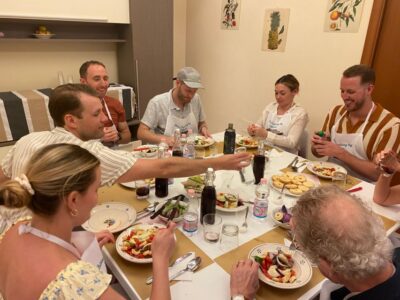
You’ll savor what you make while it’s still fresh. Then you typically end with a shared meal, dining together as a group in a friendly, family-like atmosphere. It’s a nice change from tours where you eat quickly and vanish.
Cycling through Yogyakarta countryside on quieter village roads
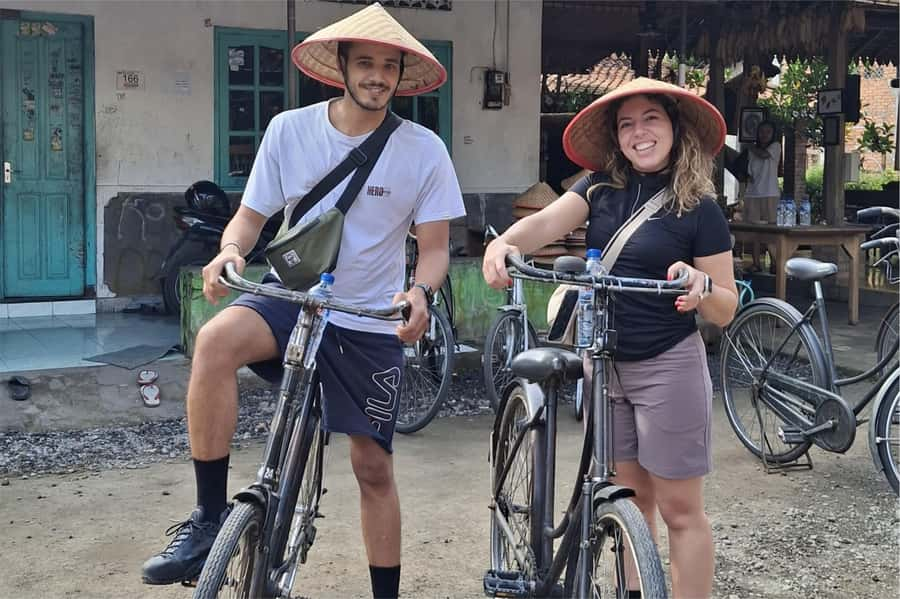
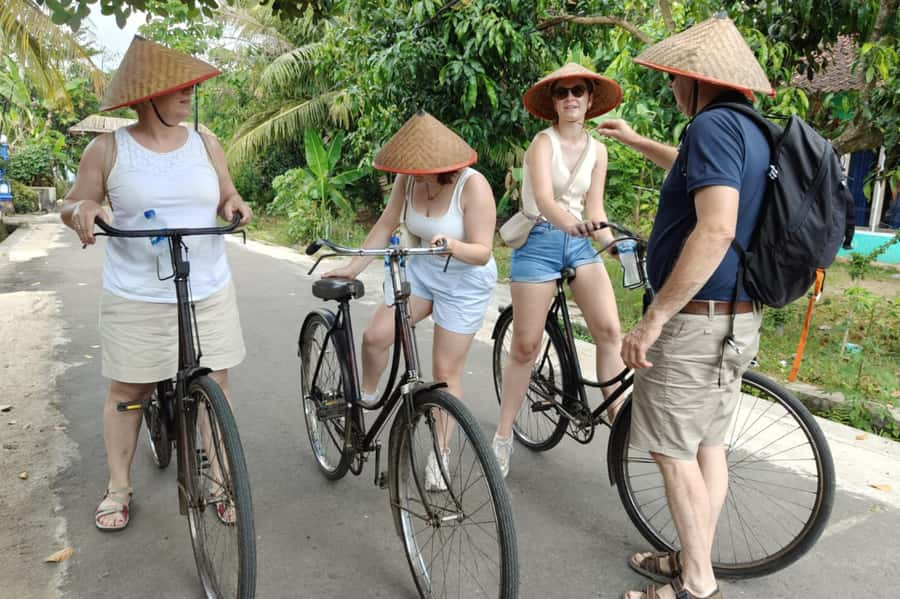
Once cooking is done, you head out by bike. The route is designed to feel peaceful—think village lanes, local homes, and open areas where you can see farmland. People often describe it as safe and calm, especially compared to the more chaotic feel of big-city traffic.
A key detail: some bikes are older-style, which adds to the charm. It also means the ride feels more traditional and less like a modern rental-bicycle production line.
How the ride feels in real life
The countryside biking part is often where you get your “real day in Jogja” feeling. You may pass rice fields and stop near local spots, and you might even get involved in small activities—one example from a past day included helping with rice planting.
That said, pacing can vary. One experience noted that the guide sometimes biked ahead and the group explanations became hard to hear. So if you value narration, position yourself where you can keep eyes on the guide and still talk to others in your group.
Tempe, traditional crackers, and food culture stops you can watch
Some versions of the route include cultural food stops beyond the cooking class. You might visit a tempe factory where you can see how traditional soybean fermentation connects to everyday Indonesian eating. You might also watch traditional cracker production at a separate home setting.
These moments are valuable because they explain the “behind-the-scenes” side of food. Cooking teaches what’s on the plate; factory and production stops teach how ingredients become snacks and pantry staples. It’s not just sightseeing—it’s food literacy.
If you’re the kind of person who likes to understand how meals are built, these extra stops are the kind of detail that make the day feel complete.
Meet the people behind the day: guides named Maxi, Desy, and Sari
The day often runs through a team, and that matters. Maxi is commonly the friendly pickup and early-day driver/host. Desy is frequently the market guide and the cooking instructor in the family kitchen. Sari is often connected to the biking portion and helps guide the group along the route.
When you meet different people for different parts of the day, you get more than facts. You get a sense of how community knowledge is shared—one person explains ingredients, another teaches cooking steps, and another helps you connect to the village ride.
It also helps the day feel personal. Instead of a single scripted guide doing everything, you experience different personalities and different styles of teaching.
Food & drinks: what’s included, and what that means for your budget
Food and drinks are included. That’s a big deal for value, because it removes the usual “will I spend extra cash on lunch?” stress.
You also benefit because your meal is linked to what you learned earlier. You cook, eat together, then walk away with recipes. It’s a full-circle kind of experience: ingredients → technique → finished dishes → family-style meal.
If you’re thinking about vegetarian or dietary needs, the data you provided doesn’t specify options. What I can say is that the class uses locally available ingredients like vegetables, rice, herbs, and spices, so you can expect a mix—but you should confirm any dietary requirements directly with the operator before booking.
Small group size and English guidance: why it changes the experience
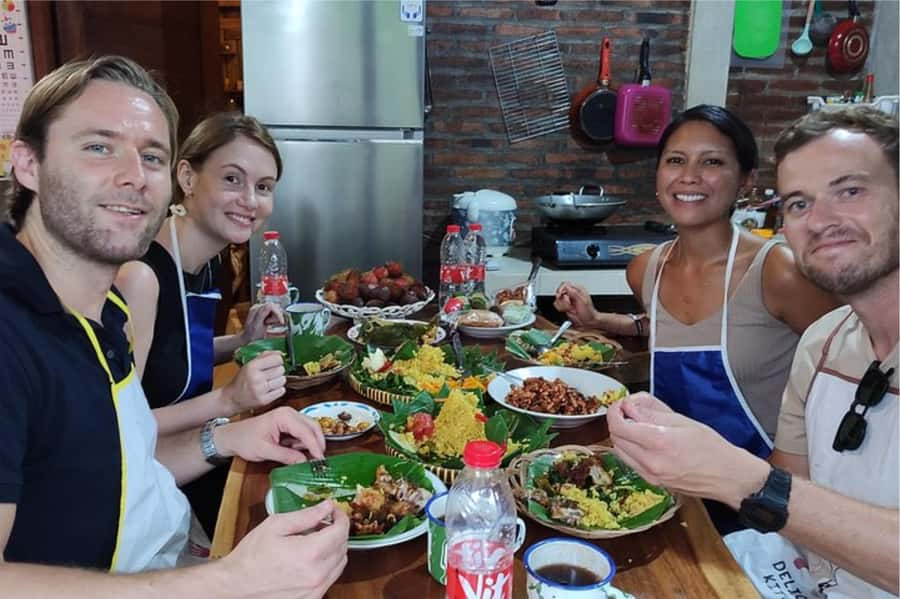
The group is limited to 8 participants, and the guide speaks English. That small size usually means you can ask questions without feeling like you’re in a large crowd.
In a cooking class, that’s especially important. More space for hands-on work means you spend less time waiting and more time learning. During the market walk and bike stops, it also makes it easier to keep everyone together.
If you prefer slower, more conversational tours, small group days like this tend to deliver. If you’re the type who wants lots of pace and zero waiting, the market-to-kitchen rhythm can still feel satisfying, because each step has a job.
Price and value: is $41 for 8–10 hours actually fair?
At $41 per person for 8 to 10 hours, this is priced in the “you’re not just paying for entertainment” category. You’re getting:
- A cycling tour
- A cooking class with ingredients
- Food & drinks
- English live guide
- Hotel pickup and drop-off if selected
- Small group attention (max 8)
Most day tours in popular destinations charge a similar amount for driving and a couple of short stops. Here, a major part of your time is spent creating meals and eating what you make, with ingredient-based instruction and recipes you can take home. That recipe handoff alone is where the value starts to feel real—because you can repeat the experience later without paying again.
Timing: what an 8–10 hour day feels like on the ground
The duration is listed as 8 to 10 hours, and starting times depend on availability. That means your exact schedule can vary, but the structure stays recognizable: pickup → market → cooking (3–4 hours) → bike ride → shared meal.
For your comfort, plan for a long day. You’ll be walking in the market, cooking with active steps, and cycling for at least part of the afternoon. Keep water in mind even though food/drinks are included—heat and humidity can sneak up fast on Java.
What to wear and bring (so you don’t regret it later)
The data doesn’t give a strict packing list, so I’ll stick to what you can reasonably infer from biking + market + cooking.
Bring:
- Comfortable shoes for market walking
- Light layers (kitchens can feel warm)
- A small towel or cloth if you’re easily bothered by food smells on hands
- Sun protection if you get exposed during the countryside ride
Wear:
- Clothes you don’t mind getting a little dusty or food-scented
- Something breathable for cycling
If you’re worried about rain, you might find yourself planning around weather since countryside cycling outdoors depends on conditions.
Who should book this, and who might want something else
This tour suits you if:
- You want real local food skills, not just a single tasting
- You enjoy meeting people and asking ingredient questions
- You like countryside walking and biking at a relaxed, village pace
- You want recipes you can actually use later
You might skip this if:
- You hate cycling or you’re sensitive to pace and want very detailed narration the whole time
- You expect a purely scenic bike ride with no food culture stops
- You want a totally rigid schedule with no variation in stops
The best match is a person who’s curious and flexible—someone who’s happy to shop, cook, and then ride through the everyday places where food life happens.
Should you book Jogja countryside cycling and cooking?
Yes, I’d book it if your priority is hands-on cooking plus a genuine countryside feel. The combination works because it links three things that usually stay separate on tours: ingredients, cooking, and the landscape (and people) that make those ingredients worth learning.
It’s also a strong value choice for $41, especially since it includes hotel transfers (when selected), ingredients, food, drinks, and a small-group English guide.
My final piece of advice: if hearing the guide matters to you, position yourself well during the bike portion. And if you’re picky about dietary needs, message the operator before you go—so the kitchen can handle you comfortably.
FAQ
What is the duration of the Yogyakarta countryside cycling and cooking class?
The experience runs for 8 to 10 hours, depending on the starting time and availability.
How many people are in the group?
It’s a small group limited to 8 participants.
Is there an English-speaking guide?
Yes. A live tour guide speaks English.
Is hotel pickup and drop-off included?
Hotel pickup and drop-off are included if you select that option.
What happens during the cooking class?
You cook local dishes with ingredients provided, learning about vegetables, rice, herbs, and spices. The cooking time is typically 3 to 4 hours, and you eat what you prepare together.
Are food and drinks included?
Yes. Food & drinks are included.
Will I receive recipes to take home?
Yes. You can take the recipes with you so you can recreate the dishes later.
Can I cancel for a refund?
Free cancellation is available up to 24 hours in advance for a full refund.
Is there pay later available?
Yes. You can reserve now and pay later (pay nothing today).