REVIEW · MONTEPULCIANO
Tuscan Cooking Class -Traditional Pasta Menu
Book on Viator →Operated by Tuscan Cooking Classes by Le Caggiole · Bookable on Viator
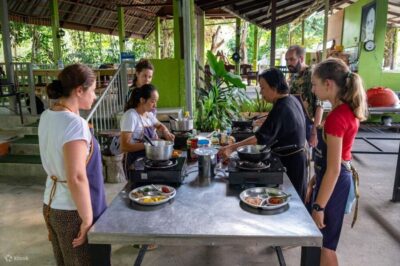
Fresh pasta lessons feel like cheating the clock. In a small group (max 8), you’ll cook with Giacomo and Cristiana at Farmhouse Le Caggiole, learning traditional, family-style methods instead of memorizing a recipe and hoping for the best. I love how hands-on the class is, from rolling and shaping pasta through making tiramisù by hand. I also like the way the food and wine lesson sticks: you’ll taste what you make, and each savory dish is paired with a selected local wine for a real sensory match.
One thing to consider: the experience is hands-on and you’ll be on your feet during preparations, so plan for comfortable shoes and simple jewelry-free cooking clothes.
In This Review
- Key Things You’ll Care About
- Where Le Caggiole Fits Into a Tuscan Day
- Your Menu: What You’ll Make (And Why It’s a Great Mix)
- Giacomo’s Teaching Style: Technique, Not Magic
- Wine Pairing That Actually Helps You Choose
- Farmhouse Vibes at Le Caggiole: What the Setting Changes
- Practical Timing, Group Size, and What to Wear
- Value Check: Is $212.85 Worth It?
- Who This Class Fits Best
- Should You Book This Tuscan Pasta Class?
- FAQ
- How long is the Tuscan Cooking Class?
- Where does the class start in Montepulciano?
- What time does the class begin?
- What language is the class offered in?
- How many people are in the group?
- What do I eat during the class?
- Is wine included?
- Are transfers or shuttles included?
- Can the menu be changed for allergies or intolerances?
- Can I cancel for a refund?
Key Things You’ll Care About
- Small group teaching: up to 8 people, so you get real guidance while you cook.
- By-hand skills: two fresh pasta types plus tiramisu, not just a watch-and-eat demo.
- Wine pairing built into the meal: 3 local wines tasted, with pairings for each main (dessert is just dessert).
- Farmhouse setting at Le Caggiole: relaxed countryside vibe near Montepulciano.
- No recordings during cooking: photos/video won’t be part of the prep, which keeps it calm.
- Terrace finishing view: you’ll enjoy tiramisù on the terrace while taking in the scenery.
Where Le Caggiole Fits Into a Tuscan Day
This class is set up as a morning experience that turns Montral-style “food tourism” into real kitchen time. You start at the meeting point on Traversa di Montepulciano (12, 53045), with the class beginning at 9:30am and ending back at the same place. You’re not bouncing between three stops just to check boxes. Instead, the day’s focus stays in one place: Farmhouse Le Caggiole.
The setting matters. Cooking here is more than entertainment because it’s grounded in how Tuscan families actually cook: pick good ingredients, use solid technique, then let the meal become the reward. If you want your Tuscan trip to include something that changes how you cook at home, this is the kind of activity that teaches you the logic behind the food.
And yes, Montepulciano is a nice backdrop. You’ll be dealing with local wines and local food, then finishing on a terrace with views while you eat dessert.
You can also read our reviews of more tours and experiences in Montepulciano.
Your Menu: What You’ll Make (And Why It’s a Great Mix)
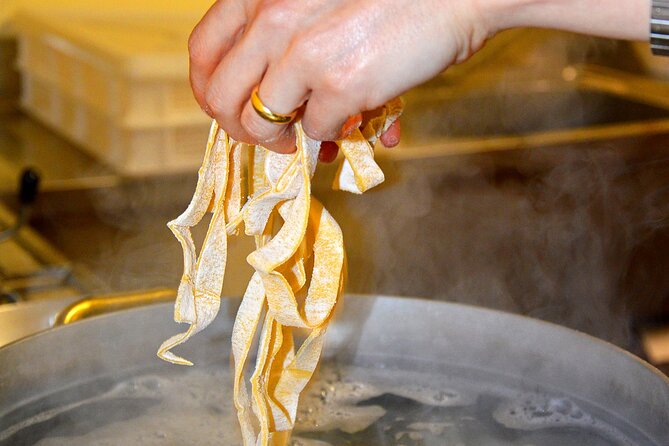
You’re going to sit down to a full 4-course menu, and every part (except the dessert) comes with a specific wine pairing. Here’s what you’ll make:
- Traditional Tuscan bruschette (your starter)
This is a good warm-up dish because it’s simple but not casual. You’ll practice how traditional Tuscan flavors build: bread, toppings, and seasoning done with confidence rather than clutter.
- Pici with a traditional sauce
Pici is a classic Tuscan pasta shape, and learning it by hand forces you to understand texture. It’s also a great choice for a class because it’s different from the more universally known pastas you might have at home.
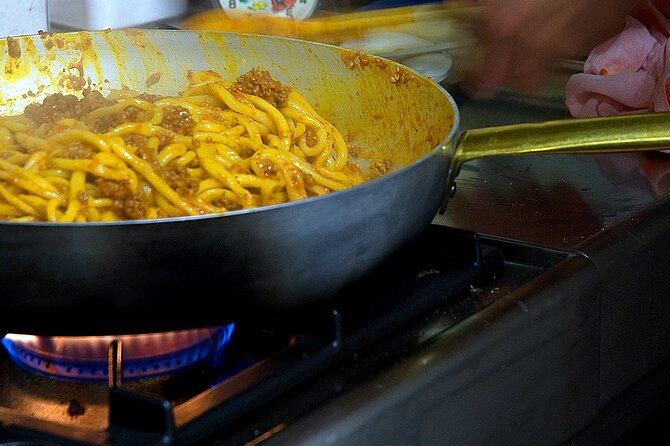
- Pappardelle with Tuscan meat ragù
This is the comfort-food centerpiece. You’ll work with pappardelle and a meat ragù, using Cinta Senese pork as part of the experience. Cinta Senese is tied to Tuscany, so this isn’t “generic Italian.” It’s local and specific.
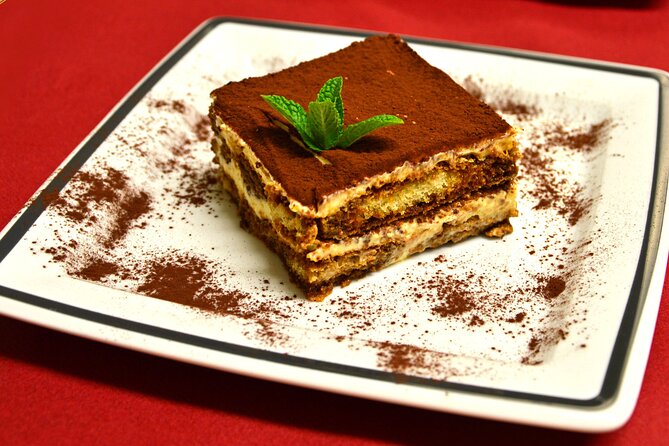
- Tiramisù from a family recipe
You’ll make tiramisù by hand. No “assembly line” vibe here. It’s also where you’ll slow down at the end, because you’ll eat it relaxed on the terrace.
Why this menu works: it moves from savory starter to pasta technique to hearty sauce craft, then ends with dessert. You’ll learn methods you can repeat later, not just one-off steps.
Giacomo’s Teaching Style: Technique, Not Magic
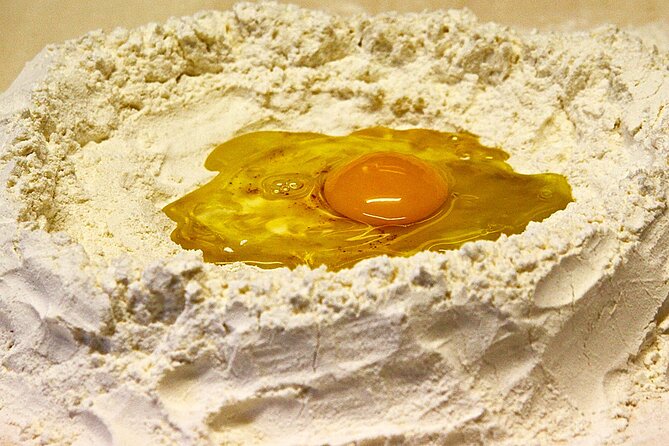
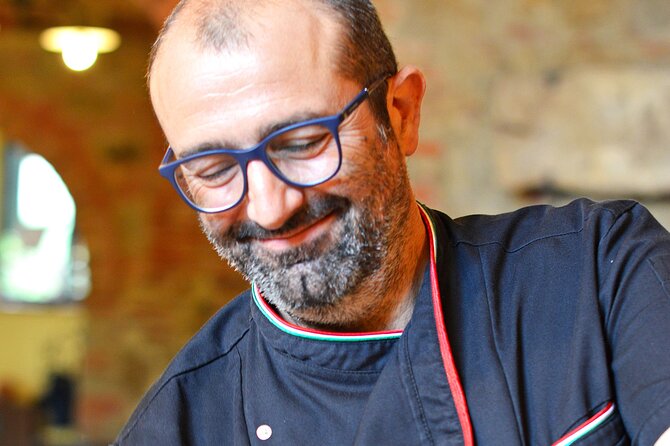
The class is led by Giacomo, who’s described as both the chef and a graded sommelier. That combo matters because your cooking isn’t treated like a separate hobby from your wine education. You learn how to build a dish, then learn how to think about pairing.
The teaching approach is structured but relaxed. The pace is described as dynamic, with practical cooking, food tasting, wine tasting, and time to connect with the other classmates in a friendly, funny social way. In a small group, that social part doesn’t feel forced. It just makes the morning move faster, and it helps you feel comfortable asking questions when your pasta isn’t cooperating.
From the way the experience is described and the kind of feedback it consistently earns, the emphasis isn’t only on what to do, but on how to do it. People tend to leave talking about techniques and a better mental model for cooking with fresh ingredients rather than picking a recipe and following it blindly. That’s what you want from a Tuscan cooking class: transferable skills.
Wine Pairing That Actually Helps You Choose
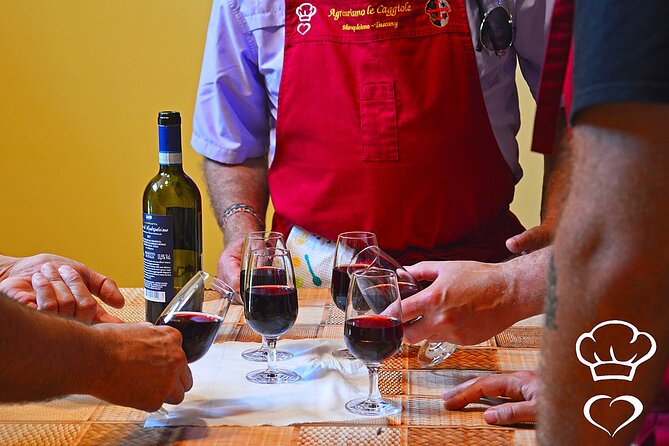
Food in Italy is never just food. Wine is part of the conversation. In this experience, you taste three selected wines and get pairing guidance that’s tied directly to what’s on your table.
Each dish (with dessert being the exception) is paired with a specific selected local wine, creating a hands-on sensory path: you taste, you compare, and you start to understand why certain flavors work together. The pairing isn’t presented like a rule you must memorize. It’s more like training your senses so you can make better choices later.
I also appreciate that the wines are treated as an educational component. One of the lessons you’re working toward is knowing what ingredients to choose and having the basic tools to choose the right wines for your pairings. That’s a practical souvenir you can use long after you leave Montepulciano.
Farmhouse Vibes at Le Caggiole: What the Setting Changes
The main stop is Farmhouse Le Caggiole. A farmhouse setting changes the whole feel of a class. You’re not squeezed into a studio with fluorescent lighting where everything feels rehearsed. Here, cooking is connected to place, and the relaxed environment keeps the learning from turning stressful.
You’ll also spend time around a large table at the end to taste your full menu. Then dessert gets its own moment on the terrace. That’s a small detail, but it matters. It gives you a clean finish: you put in the work, you sit down together, and you enjoy the views while you eat the last course.
Also: the experience notes that no rings, large bracelets, or artificial nails are allowed during the preparations for hygiene. If you wear jewelry, plan to leave it at home or keep it minimal for the class.
Practical Timing, Group Size, and What to Wear
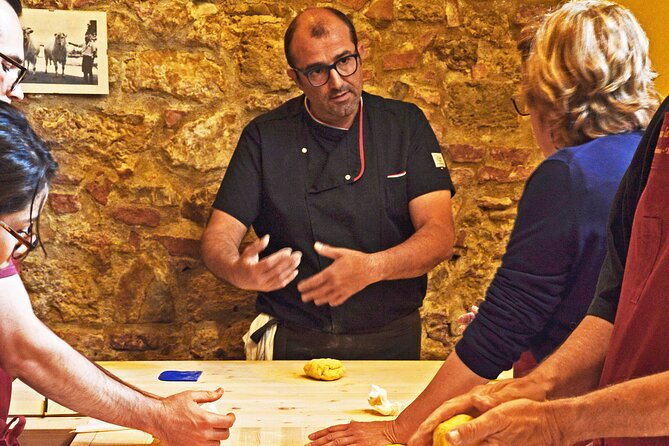
This runs about 4 hours in total, starting at 9:30am. It’s a morning format, so do yourself a favor and eat a good breakfast beforehand. You’ll still have a full meal included, but you don’t want to start hungry while you’re learning dough and sauce.
Group size is capped at 8 travelers, which is part of why the instruction stays personal. You’re not just part of a crowd. You get attention while you shape pasta and work through steps.
Dress for hands-on work:
- Comfortable clothes and shoes
- Expect to stay standing during preparations
- Avoid jewelry that the class asks you to remove (rings, large bracelets)
- Also note the rule: no video or any other records during preparations
On request, you can bring pencil and block notes. If you like to remember technique details, this is the time to jot down what you want to repeat later at home.
Value Check: Is $212.85 Worth It?
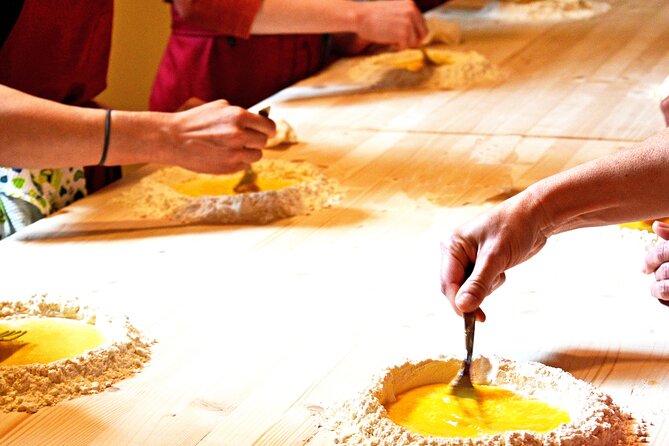
At $212.85 per person for roughly 4 hours, this isn’t a “cheap activity.” But it can be strong value because you’re getting several things packed together:
- Real hands-on instruction (not just tasting)
- Multiple cooking outputs: bruschette, pici, pappardelle ragù, and tiramisù
- A structured tasting session with food pairing
- Wine included, with tasting of 3 selected wines
- A small group with chef-led teaching from Giacomo and family support from Cristiana
- Tools and aprons, plus ingredients supplied
If you compare it to the cost of taking a cooking class plus paying separately for a guided wine experience and a sit-down meal, it starts to look more reasonable. You also get practical learning: how to choose ingredients, how to think about wine pairings, and how to handle fresh pasta technique.
So I’d call it a good value if your goal is to learn, not just snack.
Who This Class Fits Best
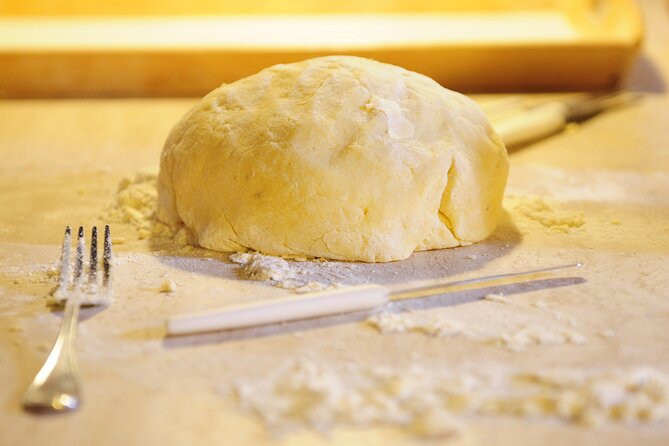
This works especially well if you:
- want to learn traditional fresh pasta technique by hand
- like the idea of combining cooking with wine pairing
- prefer a relaxed, small-group vibe rather than a big tour bus feel
- enjoy making a meal and then eating it at the end, ideally with the same people you cooked with
It may be less ideal if you hate being on your feet, strongly dislike wine, or need a very hands-off experience. Also, if you have allergies or dietary intolerance, you need to inform the organizers before booking so they can evaluate menu changes. After booking, menu changes aren’t considered.
Should You Book This Tuscan Pasta Class?
If you’re looking for a Tuscany experience that teaches more than it entertains, I think this is an easy yes. The mix of hands-on pasta making, a real family-recipe tiramisù, and the fact that Giacomo is also a sommelier makes it feel purposeful. You’re not only tasting local food and wine. You’re learning how to connect them.
Book it if you can stand comfortably for the cooking portion and you’re ready for a jewelry-free morning. Skip it if you want lots of filming and photo moments, since recording isn’t allowed during preparations.
For solo travelers: if you’re traveling alone, you’ll be asked to contact before booking so you can be placed into an already scheduled small group, which is a nice touch.
FAQ
How long is the Tuscan Cooking Class?
The class lasts about 4 hours.
Where does the class start in Montepulciano?
The meeting point is Traversa di Montepulciano 12, 53045 Montepulciano SI, Italy.
What time does the class begin?
It starts at 9:30am.
What language is the class offered in?
The class is offered in English.
How many people are in the group?
The activity has a maximum of 8 travelers.
What do I eat during the class?
You’ll taste and prepare a 4-course menu: traditional Tuscan bruschette, pici with a traditional sauce, pappardelle with Tuscan meat ragù, and tiramisù.
Is wine included?
Yes. You’ll taste 3 selected wines for food pairing, and each savory dish (except the dessert) is paired with a specific local wine.
Are transfers or shuttles included?
No. The class does not offer transfer or shuttle service.
Can the menu be changed for allergies or intolerances?
You need to inform the organizers before booking so they can evaluate possible changes. After booking, menu changes can’t be taken into consideration.
Can I cancel for a refund?
Yes. You can cancel up to 24 hours in advance for a full refund.