REVIEW · MONTEPULCIANO
Cooking class at the farm in Tuscany
Book on Viator →Operated by Valdichiana Living · Bookable on Viator
If you like food with a story, this class delivers. You’ll learn classic Tuscan home-style cooking with fresh local ingredients and a relaxed farm setting.
I especially like that it’s genuinely hands-on, not a show-and-tell. I also like that the evening (or mealtime) part is built in—your work becomes your lunch or dinner with wine. One thing to consider: there’s no guaranteed transportation, so plan how you’ll get to and from Montepulciano if you’re driving back after dark.
This is set up for small groups, with a max of 15 people, so you get real attention while you cook. You’ll start with a welcome drink, then head into an appetizer, fresh handmade pasta with its traditional sauce, and a Tuscan dessert. Menu details can shift with seasonal availability, so expect variety rather than a rigid script.
In This Review
- Key points I’d plan around
- A Tuscan farm cooking class near Montepulciano
- What you’ll actually cook: appetizer, handmade pasta, Tuscan dessert
- The pasta part: where the real skill lives
- Dessert: the sweet finish you’ll actually understand
- The teaching style: small group attention, patient coaching, real communication
- From prep to plate: your meal, wine, and the outdoor patio moment
- Why sitting down matters
- Price and value: why $174.60 isn’t just paying for food
- Booking timing: plan ahead
- Location and logistics: where to start and how to plan your drive
- A practical tip
- Who should book this cooking class (and who might not love it)
- Should you book? My take for Montepulciano food lovers
- FAQ
- How long is the cooking class?
- Is the class offered in English?
- What dishes will I make?
- What’s included in the price?
- Is transportation included?
- What if I need to cancel?
Key points I’d plan around
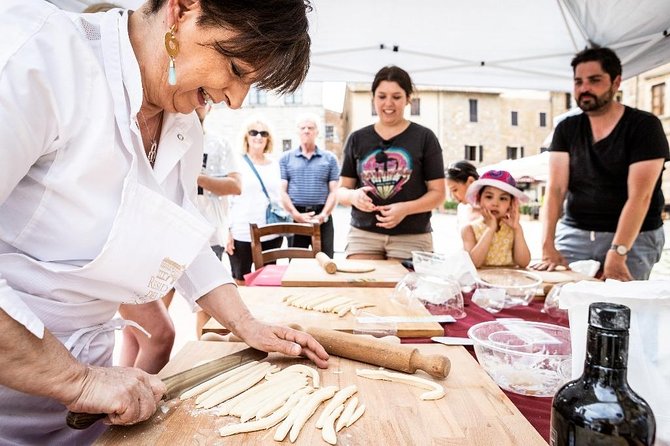
- Small group size (up to 15) helps you get coaching, not just instructions.
- Hands-on menu: appetizer, fresh pasta, and dessert, followed by what you cook.
- Farm views and a calm pace make the 3 hours feel like a real break, not a rushed activity.
- Local wine with your meal turns the class into a proper sit-down experience.
- English is supported, and communication tends to work even if you need a little help.
- Seasonal flexibility means you’ll still learn the core Tuscan techniques, even when ingredients change.
A Tuscan farm cooking class near Montepulciano
Montepulciano is a great base for Tuscany. It sits in a wine-and-vineyard world, with golden light and a slow rhythm. This cooking class at the farm (with operator Valdichiana Living) fits that vibe perfectly. You’re not just tasting Tuscany—you’re making food the way people do at home.
The whole experience runs about 3 hours. That matters because you can fit it into a day without losing half your vacation. It also means you’ll be cooking in a steady flow: welcome drink, prep, hands-on instruction, then you sit down and eat what you made.
One more practical detail I appreciate: the class is in English. It’s offered in English, and that makes a difference when you’re trying to understand steps like dough consistency, sauce timing, or plating.
You can also read our reviews of more tours and experiences in Montepulciano.

What you’ll actually cook: appetizer, handmade pasta, Tuscan dessert
The menu follows a classic Tuscan structure, even though exact ingredients can vary a bit with the seasons.
You’ll make three things:
- a starter based on typical local products
- fresh handmade pasta with its traditional sauce
- a Tuscan dessert
That “typical” wording is important. It means you’re not chasing a rare ingredient list. You’re learning recognizable techniques that you could reasonably recreate later. And it keeps the class grounded in what’s available on the farm and in the region.
The pasta part: where the real skill lives
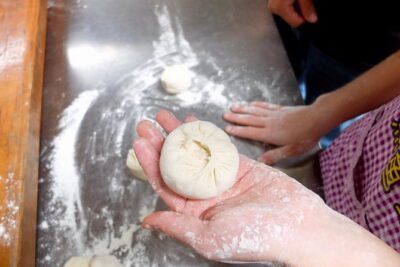
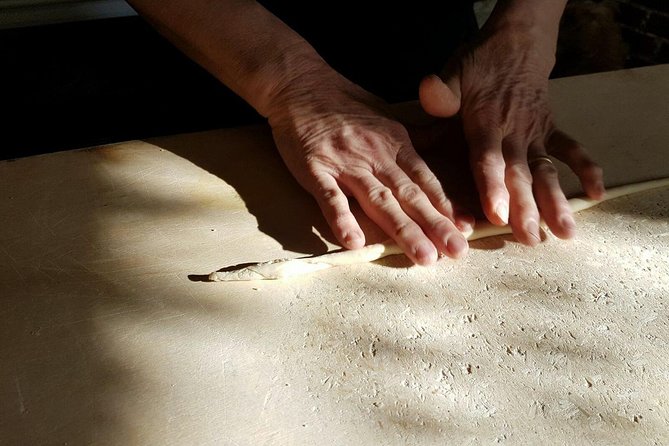
If you’ve ever tried making pasta at home, you know it’s not about magic—it’s about feel. In this class, that’s the main focus. You’ll learn to work with the dough and shape the pasta, then pair it with a sauce that fits the Tuscan style you’re practicing.
This is also where an instructor who’s patient helps a lot. One class is described as being taught by Laura, who was praised for being very helpful and extremely patient, especially when people didn’t have strong culinary skills. That’s the kind of support you want in a class like this.
Dessert: the sweet finish you’ll actually understand
Desserts in cooking classes can turn into a rushed afterthought. Here, dessert is part of the planned flow, not an optional add-on. You’ll make a typical Tuscan dessert, then you’ll eat it with the lunch or dinner you prepared.
The teaching style: small group attention, patient coaching, real communication
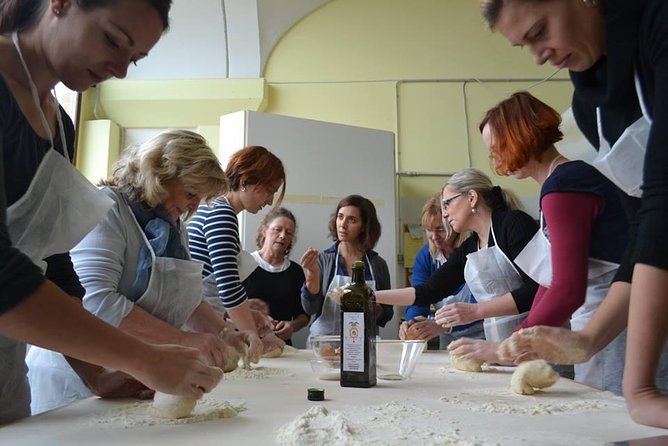
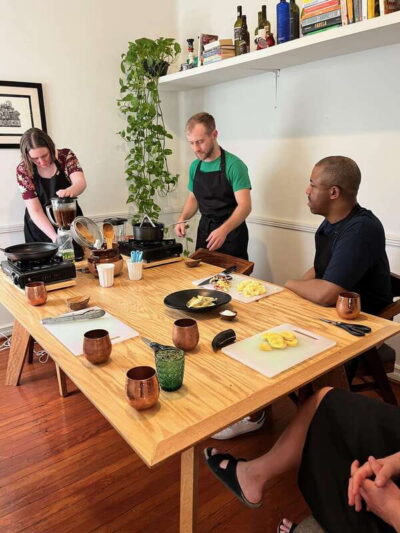
With a maximum of 15 travelers, you’re likely to get more than generic pointers. You should expect questions to be welcomed and steps to be explained in a way that makes sense in the moment.
English is offered, and the communication experience seems to work well even for people who aren’t fluent. In one case, an instructor’s English was described as a bit hard to understand, but the group still got by using a translation app for the trickier parts. That’s good to know. If you’re concerned about comprehension, bringing a translation app can be a simple insurance policy.
Also, cooking classes work best when the teacher is flexible enough to handle different paces. The vibe here, based on how people describe the instruction, leans patient and practical—more “let’s fix it together” than “figure it out yourself.”
From prep to plate: your meal, wine, and the outdoor patio moment
Here’s the big reason this class is more fun than many others: it ends with what you cook.
At the end of the class, you’ll enjoy your lunch or dinner in a relaxed, convivial setting. You’ll also get a glass of local wine. In reviews, the wine gets positive mentions, and the meal format gets called out as especially enjoyable.
One detail worth looking forward to: you may get a break and then have the meal served by the hosts’ wait staff in a lovely setting, including an outside patio. Even if the weather changes the exact setup, the point remains the same—you’re not left standing over a counter while your pasta turns cold.
Why sitting down matters
Cooking classes can sometimes feel like worksheets: do steps, take photos, leave. This format turns it into an actual meal experience. You’ll get to taste how your pasta and sauce come together, and you’ll likely understand why the techniques matter—because you’re eating the results right away.
Price and value: why $174.60 isn’t just paying for food
At $174.60 per person, this isn’t a bargain-basement cooking experience. But you’re paying for a complete package.
Here’s what’s included:
- welcome drink
- the Tuscan cooking class
- lunch or dinner with a glass of wine
- “Valdichiana Living” apron
For a 3-hour activity, the value comes from combining instruction + ingredients + meal + wine in one setting. You’re not just buying a restaurant dinner and hoping the cooking part happens. You’re getting structured teaching and then a full table experience tied to what you made.
The small group size also supports the value. When there are fewer people, the class tends to feel more personal, and you’re less likely to get “watch from the back” energy.
Booking timing: plan ahead
On average, this is booked about 38 days in advance. That’s not a last-minute sprint. If you’re traveling in peak season or on popular days, you’ll want to book earlier so you can pick a time that fits your Montepulciano itinerary.
Location and logistics: where to start and how to plan your drive
The class starts at 53045 Montepulciano, Province of Siena, Italy. The activity ends back at the meeting point. That “ends where it started” detail is underrated—it reduces stress when you’re trying to keep your evening simple.
You should also note: transportation isn’t included, though a service may be available on request. That matters in Tuscany, where parking and driving at night can be the real hassle, not the cooking part.
One review specifically mentioned concern about driving home after sunset. The reassurance was that it wasn’t difficult. Still, I’d treat that as a tip to plan your return timing, especially if you’re staying outside the immediate center.
A practical tip
If you’re renting a car and the start time is later in the day, check that you’ll still be comfortable driving back in the dark. Not because it’s dangerous—because it’s Tuscany, roads and timing vary, and you’ll enjoy the class more if you’re not tense about the drive.
Who should book this cooking class (and who might not love it)
This is a great fit if you:
- want a hands-on Tuscany activity (not just a tasting)
- enjoy learning by doing—especially pasta and sauce basics
- like sitting down together to eat what you made with wine
- prefer small group experiences where English instruction is supported
It may be less ideal if you:
- hate cooking tasks in general (even though the steps are taught)
- need included transportation from your hotel
- want a very fixed menu with no seasonal variation
If you’re traveling with someone who’s less interested in cooking, this still works because you end with a full meal and a social setting. For couples especially, the “another couple” vibe shows up in how the class is experienced—calm, friendly, and not chaotic.
Should you book? My take for Montepulciano food lovers
I’d book this if you want a practical Tuscany souvenir: skills you can reuse and a meal you actually enjoy right after cooking it. The combination of fresh handmade pasta, a structured menu (starter, pasta, dessert), and a sit-down lunch or dinner with local wine makes it feel like real value, not just a paid pass-through experience.
I’d also consider booking if you’re nervous about the cooking level. The instruction is described as helpful and patient, including by an instructor named Laura, and the class format is small enough that you’re not lost in the crowd.
Skip it only if transportation is a dealbreaker for you or if you’d rather spend your money on a separate guided tour plus a restaurant dinner. For many people in Montepulciano, though, this is one of the most satisfying ways to spend a 3-hour window.
FAQ
How long is the cooking class?
It lasts about 3 hours.
Is the class offered in English?
Yes, the class is offered in English.
What dishes will I make?
You’ll prepare a typical appetizer, fresh handmade pasta with its traditional sauce, and a Tuscan dessert. The exact menu can vary slightly based on seasonal availability.
What’s included in the price?
You get a welcome drink, the Tuscan cooking class, lunch or dinner with a glass of local wine, and a Valdichiana Living apron.
Is transportation included?
No transportation service is included. A transportation service may be available on request.
What if I need to cancel?
You can cancel for free up to 24 hours before the experience’s start time for a full refund.