REVIEW · CHENNAI
Traditional Cooking Class in Chennai in a Local Home with Sundari
Book on Viator →Operated by Traveling Spoon · Bookable on Viator
Banana leaves and Brahmin home cooking in Chennai. This 3-hour Chennai cooking class with Sundari is interesting because it’s taught in a real converted in-laws’ home, then ends with the meal the way South Indians eat—often on banana leaves. I really like the hands-on format, and I also like the strict Tamil Brahmin vegetarian focus that turns everyday ingredients into a full, traditional spread.
One thing to consider: this is vegetarian Tamil Brahmin cooking only, and the menu can vary by season, so it’s best if you’re flexible and can share any allergies or dietary needs ahead of time.
In This Review
- Key highlights worth your attention
- Sundari’s Chennai Home: Converted In-Laws House Meets Fruit Trees
- What You Cook: Tamil Brahmin Vegetarian Dishes, 4–5 Plates of Flavor
- Hands-On Kitchen Time (and Why It Beats Just Eating Out)
- Lunch or Dinner on Banana Leaves: How the Meal Actually Works
- Timing, Location, and How the 3 Hours Usually Flow in Adyar
- Price and Value at $78: When a Home Class Makes Sense
- Who This Works Best For (and Who Might Want to Skip It)
- Tips to Get the Most Out of Your Cooking Class with Sundari
- Should You Book This Chennai Cooking Class with Sundari?
- FAQ
- What type of food will I learn to cook?
- Is this cooking class in a local home?
- Do I choose lunch or dinner?
- Are nonalcoholic beverages included?
- What happens during the 3-hour session?
- What if I have allergies or dietary restrictions?
Key highlights worth your attention
- Tamil Brahmin vegetarian menu: you’ll learn a traditional South Indian style with no non-vegetarian dishes involved
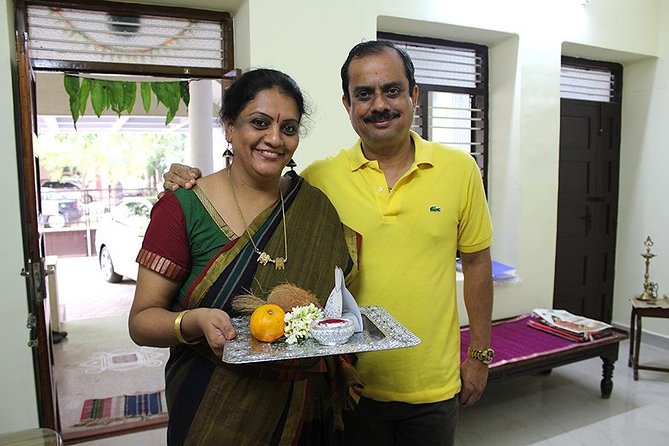
- Sundari’s home setup: a warm, cheerful host in a beautifully converted in-laws’ house with traditional art and fruit trees
- 4–5 dishes in one session: often includes items like sambar, rasam, vegetable curry, and dosas (varies)
- Banana-leaf dining option: eat in the traditional way using your hands, on stainless steel or banana leaves
- Private, your-group experience: it’s not a big group shuffle—only your group participates
Sundari’s Chennai Home: Converted In-Laws House Meets Fruit Trees
This experience starts in Adyar, Chennai, at a meeting point with Traveling Spoon, then you head to Sundari’s home. The place itself is part of the story: her converted in-laws’ house is described as beautifully done, with traditional décor and lush fruit trees around it. If you want Chennai beyond the usual restaurant loop, this is a strong way in.
Sundari is warm and cheerful, and she’s been passionate about cooking since she was eight years old. That matters more than you’d think. In a good cooking class, you don’t just follow steps—you learn how a cook thinks about timing, taste, and texture. Sundari’s enthusiasm comes through in the way she introduces the dishes you’ll make, before you get your hands working.
You can also read our reviews of more tours and experiences in Chennai.
What You Cook: Tamil Brahmin Vegetarian Dishes, 4–5 Plates of Flavor
The core promise here is Tamil Brahmin vegetarian fare. Sundari prepares and serves vegetarian food according to her family tradition, so the meal you make stays true to that culinary identity. Expect a South Indian spread made from multiple components, not just one dish and a recipe card.
You’ll cook 4–5 dishes, and the menu may include classics like:
- vegetable curry
- sambar
- rasam
- dosas
The exact list can shift with the season, so don’t book this expecting the same set every day. I actually think that’s a plus. South Indian cooking changes with what’s best and freshest, and learning how the dishes fit together matters more than memorizing one version.
Also, you get dinner or lunch options. That affects the overall vibe: dinner can feel more conversational and relaxed, especially because you may meet Sundari’s husband, Krishna, if you’re doing a dinner or weekend session. He’s described as a true foodie who enjoys meeting new people and adding lively conversation.
Hands-On Kitchen Time (and Why It Beats Just Eating Out)
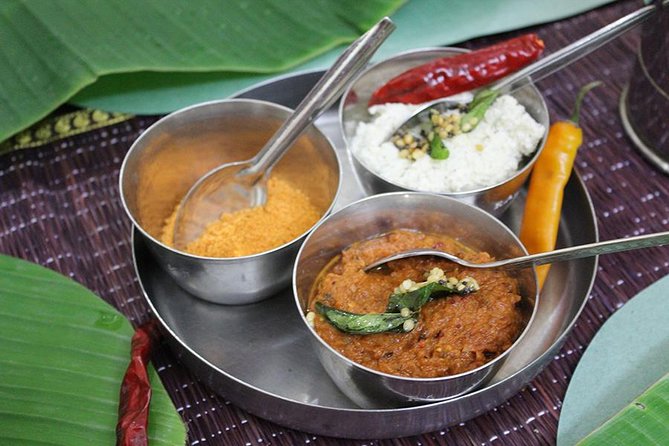
This is a lesson with real cooking time. After a home tour where Sundari introduces the dishes, you move into the kitchen and cook alongside her. You’re not watching from the sidelines—you’re learning through action, from prep steps to cooking the components that become your meal.
There are a few reasons this kind of class tends to land well in Chennai:
- You learn structure, not just recipes. South Indian meals often work as a set: you don’t eat everything the same way or for the same reason.
- You learn technique by doing it. When you’re standing at the stove, it becomes obvious how adjustments happen mid-cook.
- You see the cultural rhythm of how food is served and eaten, not just plated for photos.
One practical note: the class includes nonalcoholic beverages, so you won’t be hustled into finding something to drink mid-session. That’s a small detail, but it helps the flow stay comfortable.
If you have allergies or dietary restrictions, tell the provider at booking. The experience info is clear that you should advise them ahead of time, which is exactly what you want for something this food-focused.
Lunch or Dinner on Banana Leaves: How the Meal Actually Works
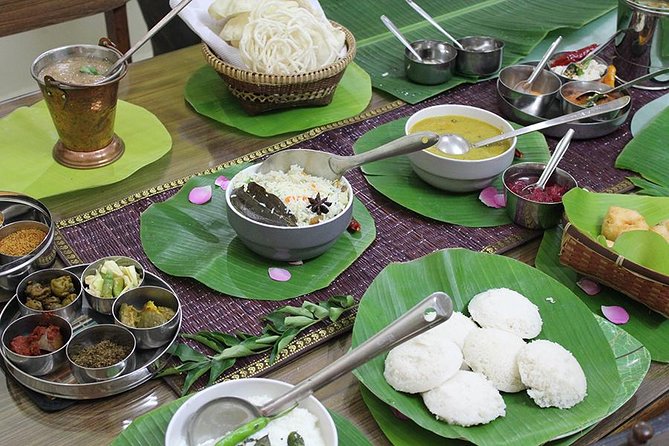
The most memorable part for many people is not the cooking—it’s the eating. After you cook, you sit down with your group and enjoy the meal in a traditional way. The setup uses stainless steel plates or fresh banana leaves, depending on how the meal is served that day.
Eating with your hands is part of the authentic experience. I like this for a simple reason: it forces you to pay attention to how the food is meant to be combined. You’re not just tasting a single dish in isolation. You’re mixing flavors and textures like locals do.
And yes, banana leaves are a big deal here. They change the whole feeling of the meal. Even if you’re not a banana-leaf loyalist at home, the contrast is real: you go from “cooking class” to “this is how people eat every day.”
If you choose dinner or a weekend session, the experience may include meeting Krishna. That adds a human layer—food talk, friendly conversation, and a chance to see how the family frames what they cook. You get context, not just instructions.
Timing, Location, and How the 3 Hours Usually Flow in Adyar
You’re looking at about 3 hours total. The day starts at the meeting point in Adyar (Traveling Spoon), and you’ll end back there. That “back to start” format is useful in a city where traffic and distances can make plans messy.
Here’s the way the time tends to be structured:
- Meet up at Traveling Spoon in Adyar
- Travel to Sundari’s home
- Tour the home and get the dish rundown
- Hands-on cooking for 4–5 dishes
- Nonalcoholic beverages during the experience
- Sit down together and eat your meal traditionally
- Return to the meeting point
Because the session is private for your group, you don’t have to worry about being held back by a large crowd. Private also makes questions easier. If something feels confusing during cooking—like how to approach a step—this setup gives you more time to clarify.
You’ll receive a mobile ticket, which is handy if you’re trying to keep Chennai logistics light.
Price and Value at $78: When a Home Class Makes Sense
At $78 per person for roughly 3 hours, you’re paying for more than a recipe lesson. You’re paying for access: a local home, a family-style approach, and a cook who shares Tamil Brahmin vegetarian tradition firsthand.
Here’s how I judge value on experiences like this:
- Instruction quality: Sundari is passionate and long-practiced, cooking since childhood. That usually means better explanations and smoother hands-on guidance.
- Food outcome: you don’t just sample a bite. You cook multiple dishes and then eat them in the traditional way.
- Cultural setting: the meal on banana leaves and the home environment are included, not “extras.”
- Group format: private, only your group participating is a real quality-of-time boost.
If your goal is to eat a few South Indian dishes and move on, a restaurant may be cheaper. But if your goal is to understand how the meal is built—what works together and why—this home class can feel like better value fast.
Who This Works Best For (and Who Might Want to Skip It)
This class fits best if you want authentic, practical South Indian cooking in a real home setting. It’s especially good for:
- people who love vegetarian cooking and want a Tamil Brahmin perspective
- travelers who enjoy hands-on learning more than observation
- couples or small groups who want a calmer, private experience in Chennai
It may not be the best match if:
- you’re looking for non-vegetarian dishes (this is exclusively vegetarian Tamil Brahmin fare)
- you have strict dietary needs and haven’t planned to communicate them at booking
- you prefer very quick, casual “snack” meals rather than a full multi-dish session
If you’re excited by the idea of eating with your hands and learning the meal format, you’ll probably find this right in your lane.
Tips to Get the Most Out of Your Cooking Class with Sundari
You’ll have a better time if you treat this like a collaboration, not a performance. A few practical things to do before and during:
- Share dietary restrictions early so the menu and prep can work for your needs.
- Go in curious about how sambar/rasam and dosa-style components fit together.
- Be ready for hands-on work in the kitchen. Cooking classes aren’t just photo opportunities.
- Plan for a full meal afterward. You’ll likely leave satisfied because you’re eating what you cook.
Also, be open to seasonal variation. If the menu shifts, that usually means you’ll learn what’s most appropriate to that time of year, which is a real part of local cooking.
Should You Book This Chennai Cooking Class with Sundari?
I’d book it if you want more than a meal—you want an actual slice of Chennai food culture inside a local home. The big win is the combination of Tamil Brahmin vegetarian teaching, Sundari’s approachable style, and the traditional way the meal is served with banana leaves and hands-on eating.
Skip it only if vegetarian Tamil Brahmin cooking doesn’t match your food goals, or if you need very specific dishes that aren’t guaranteed because the menu can vary by season. If you’re flexible and you like learning by doing, this is the kind of experience you’ll remember for the way it felt at the table as much as for what you cooked.
FAQ
What type of food will I learn to cook?
You’ll learn Tamil Brahmin vegetarian dishes. You’ll cook 4–5 dishes, which may include vegetable curry, sambar, rasam, and dosas.
Is this cooking class in a local home?
Yes. The class is hosted by Sundari in her Chennai home, described as a converted in-laws’ house with traditional décor.
Do I choose lunch or dinner?
Yes. You can choose a dinner or lunch option, and dinner or weekend sessions may include meeting her husband, Krishna.
Are nonalcoholic beverages included?
Yes. Nonalcoholic beverages are included as part of the experience.
What happens during the 3-hour session?
You’ll meet at Traveling Spoon in Adyar, tour the home and dishes, cook 4–5 items hands-on in the kitchen, and then eat your meal traditionally. The experience ends back at the meeting point.
What if I have allergies or dietary restrictions?
You should advise the provider at booking. The information specifically asks you to share allergies, dietary restrictions, or cooking preferences ahead of time. Confirmation is subject to availability.
![Traditional Indian Cooking Class in Goa, Anjuna [vegetarian] - The 5-dish vegetarian menu: what you can expect to make](https://b.cookingtravelguide.com/wp-content/uploads/traditional-indian-cooking-class-in-goa-anjuna-vegetarian-400x267.jpg)