REVIEW · SORRENTO
Sorrento : Cooking class & Wine Pairing with Sommelier by the Sea
Book on Viator →Bookable on Viator
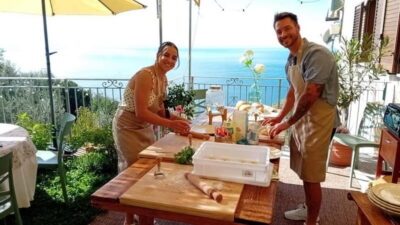
Pasta with the sea in view. This Sorrento cooking class takes place in Vittoria’s family villa built in 1800, so you cook with olive trees and Gulf-of-Naples views as your backdrop. I love the hands-on teaching for tagliatelle, ricotta-spinach ravioli, and tiramisu, plus the real wine pairing guided by Vittoria, who’s a sommelier. One drawback to note: it’s not recommended if you have a gluten allergy, and the alcohol is only for guests age 18+.
You’ll spend about 3 hours total with a small group (max 12), in English. You start with a welcome sparkling wine and local bites, then shift into the kitchen with Chef Anna, who keeps the steps clear and practical. If weather pushes you inside, the lesson can still run in the villa setup rather than only outdoors.
In This Review
- Cooking at an 1800s sea-view villa (not a big, loud school)
- How the welcome works: sparkling wine, cheese, and olive oil tasting
- Making tagliatelle and spinach-ricotta ravioli from scratch
- The tiramisu lesson: a dessert you can plan around
- Wine pairing with Vittoria the sommelier (and how to taste like you mean it)
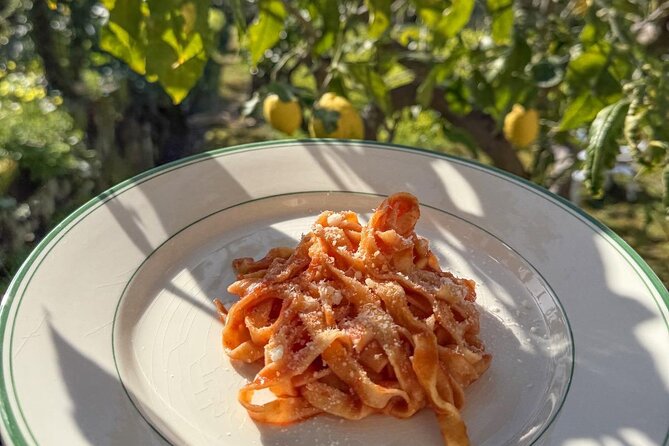
- Garden dining in the shade of lemons and olive trees
- Price and value: what $156.19 buys you (and why it can be worth it)
- Getting there smoothly: Capo di Sorrento meet points and pickup options
- Who this Sorrento class suits best (and who might skip it)
- Should you book the sea-view pasta and wine pairing in Sorrento?
Cooking at an 1800s sea-view villa (not a big, loud school)
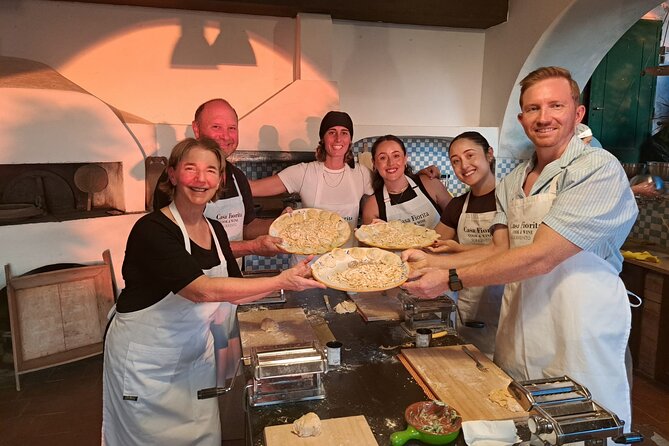
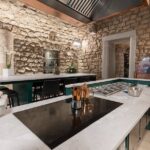
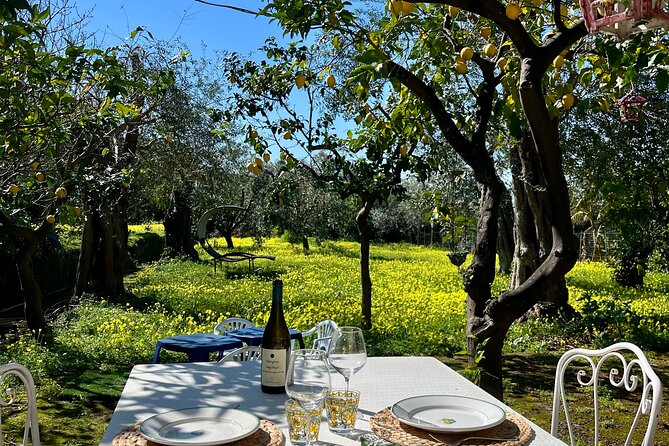
This isn’t the usual cooking-class-in-a-strip-mall vibe. The lesson happens at Casa Fiorita, an ancient villa around the Sorrento hills, with lemon trees and olive trees all around and the sea in sight. That setting does more than look good in photos—it makes the whole meal feel like an event, not just a checklist.
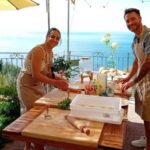
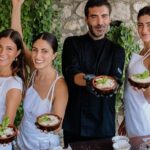
The hosts keep things personal. Vittoria is the welcoming face and the sommelier for the wine portion, while Chef Anna leads the cooking. In a group of up to 12, you get enough attention to make the pasta without feeling rushed.
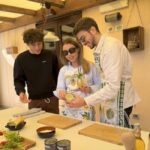
The style is relaxed but focused. You’ll do real technique work—dough, filling, shaping—then eat what you made with wine pairings. You’re not just watching someone else cook while you hold a fork.
How the welcome works: sparkling wine, cheese, and olive oil tasting
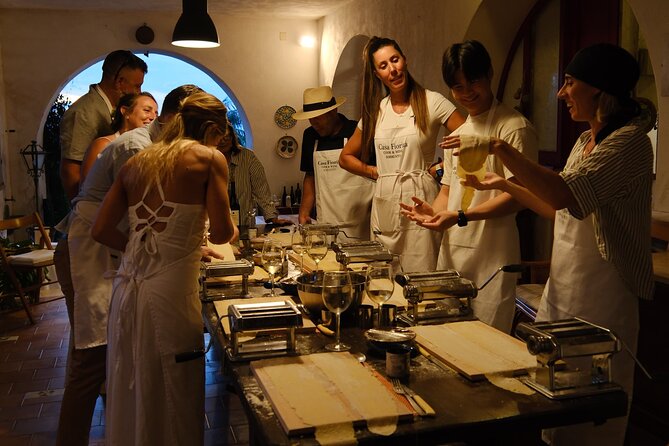
Before you touch pasta dough, you start with a proper appetizer rhythm. You’re greeted with a glass of sparkling wine, and the table includes local products like cheeses. The experience leans into Sorrento flavors early, not late.
Then you move into an extra virgin olive oil tasting. This oil is produced from the villa’s own olive trees, and it’s served with local bread. I like this part because it trains your palate before the heavier, more comforting dishes arrive.
If you’re the kind of traveler who gets cranky when the food starts 60 minutes after arrival, you’ll appreciate the pace here. The meal starts rolling quickly, and the cooking steps feel planned rather than chaotic.
You can also read our reviews of more tours and experiences in Sorrento.


Making tagliatelle and spinach-ricotta ravioli from scratch
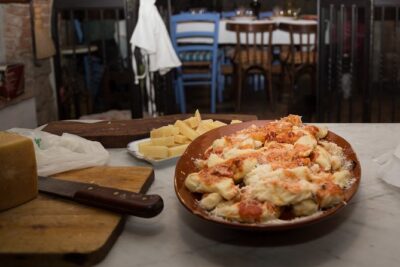
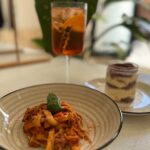
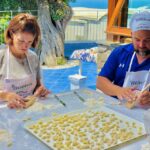
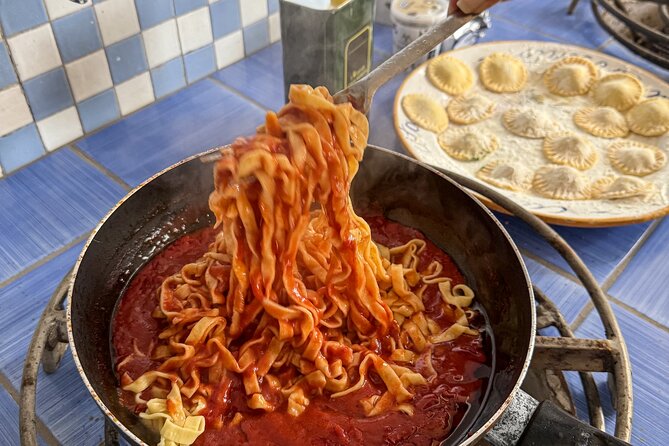
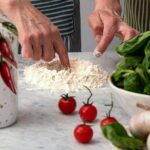
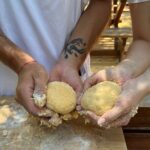
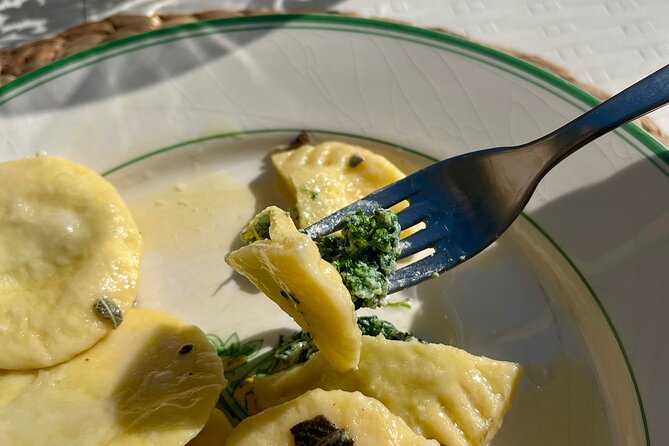
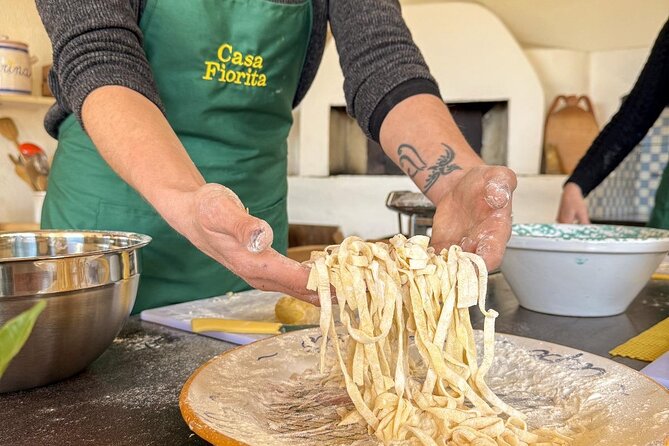
The main event is pasta, and you’ll make fresh pasta dough and shapes yourself. Expect to learn tagliatelle and also ravioli stuffed with ricotta and spinach. The ravioli filling is a classic combo for this coast, and it’s a good way to learn how to handle moist fillings without ruining the dough.
The sauce approach is simple and very Italian: tomato puree with fresh basil and butter plus sage for the pasta course. That matters for your real-world cooking later, because you can recreate it at home without needing special ingredients that you can only find in one shop.
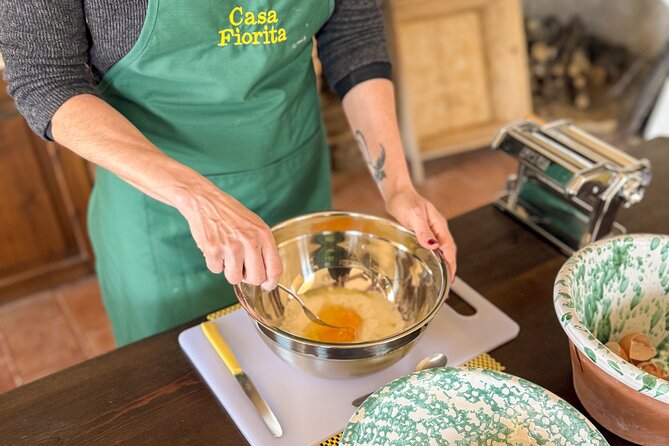
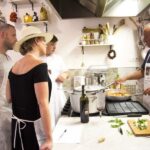
Chef Anna’s teaching style comes through in how the class flows. She’s set up with ingredients and tools so you can get hands-on without waiting around. When the dough stage is your turn, you’ll have guidance for consistency—so you don’t end up with pasta that’s too soft or too stiff.
A practical tip: go into this with comfortable clothes and a towel-ready mindset. You’re working dough, and even if you’re careful, flour happens. It’s part of the charm.
The tiramisu lesson: a dessert you can plan around
You also make tiramisu from scratch. One thing I appreciate is that tiramisu is both hands-on and forgiving. You’re learning assembly and timing, and it’s not just a “dump ingredients in a bowl” task.
The menu pairs tiramisu with a sweet red wine. That pairing is a smart match because the dessert has enough intensity to stand up to wine without tasting flat. It also keeps the dessert from feeling like an afterthought; it’s built into the tasting sequence.
If you’re trying to decide whether this class is more cooking or more eating, tiramisu tells you which side you’re on. You do real work, but you also get to relax and enjoy it once everything lands on the table.
Wine pairing with Vittoria the sommelier (and how to taste like you mean it)
Vittoria guides the wine portion as a sommelier, and the tasting is built around the courses you just made. You’ll learn what you’re drinking, why it works, and how to taste it properly instead of just sipping and guessing.
You start with sparkling wine, then you move into pairings with the meal. The key concept here is alignment: the wines are chosen to complement the pasta, the herbs, the cheese notes, and then the dessert sweetness.
In practice, the pairing part feels educational without turning into a lecture. You’ll taste multiple wines over the course of the experience, and you’ll get pointers on sampling so you can pick up flavors more clearly.
If you’re a wine fan, you’ll likely enjoy this extra layer. If you’re not, it’s still a nice way to understand what you’re eating, since Italian wine culture is part of the meal experience.
Garden dining in the shade of lemons and olive trees
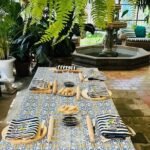
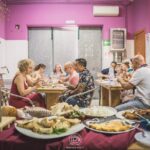
After cooking, you eat outdoors or in a villa setting depending on the season. In warmer weather, the class and meal can happen on terrace areas with the view. In colder months, it can be inside while still feeling connected to the property.
You’ll taste what you prepared, plus other typical Sorrento items. The welcome spread can include things like bruschetta with seasonal vegetables and caciocavallo, a cheese typical to the area. It’s a good way to round out the meal beyond the three main dishes you cook.
What makes this part worthwhile isn’t only the view. It’s the pacing: you don’t get whisked away to a restaurant after a short lesson. You cook, you taste, you slow down in a setting that feels like a home base.

Price and value: what $156.19 buys you (and why it can be worth it)
At $156.19 per person for about 3 hours, this isn’t a budget activity. But it’s also not priced like a generic demo class. You’re paying for a small group limit (max 12), a family-villa setting, hands-on instruction, and structured wine pairing with a sommelier.
Here’s the value math that matters:
- You make multiple dishes (fresh pasta plus dessert), not just one.
- You get local food tastings like cheeses and olive oil, not only wine.
- You receive recipes, so you can cook it again later instead of only remembering it.
- You may also have the option to sample and buy items like family wines and olive oil, which turns the experience into something you can take home.
If you’re comparing this to a dinner plus a separate activity, the difference is that you get both food and education in one block of time. You also get the atmosphere that’s hard to manufacture elsewhere.
I’d book it when you want a “real Italy night,” where you eat well and learn skills you’ll actually use.
Getting there smoothly: Capo di Sorrento meet points and pickup options
Location can make or break an experience like this, so plan carefully. The meeting is set near the Capo di Sorrento Bagni della Regina Giovanna bus stop area, in front of Alimentari Capo, with the Post Office nearby. There’s also a mention of being near the Verdemare pizzeria.
If you’re coming from Sorrento by bus, you can take the EAV or SITA bus via Massa and get off in Capo di Sorrento. That’s a straightforward route if you don’t want to wrangle parking.
Pickup is offered, and in real-world use, hosts have helped guests connect from nearby lodging. If you don’t have a car, that flexibility is a plus. If you do, expect the property area to feel rural and quiet rather than town-center convenient.
My advice: message ahead if you’re unsure of the exact meeting spot. You can also contact the team on WhatsApp using the number provided. A five-minute clarification now saves ten minutes of stress later.
Who this Sorrento class suits best (and who might skip it)
This experience fits travelers who want hands-on cooking, local ingredients, and a wine component that’s taught rather than thrown at you. If you enjoy learning how Italian dishes are assembled—especially fresh pasta—Chef Anna’s instruction is the reason to go.
It’s also a great pick for couples and small groups, thanks to the limited size and relaxed pace. If you’re traveling with friends, it’s easy to enjoy the social side because everyone is working together at the same stations.
It might not be the best fit if:
- You have a gluten allergy (it’s not recommended).
- You dislike alcohol-based pairings and don’t want a wine program. Note that alcoholic beverages are only served to guests 18+, and minors get soft drinks instead.
For most other food lovers, it’s a satisfying balance: skills in the kitchen, then a full meal with thoughtful pairing.
Should you book the sea-view pasta and wine pairing in Sorrento?
If you want one night that feels more personal than a restaurant meal, I think this is a strong choice. The combination of an 1800s villa, hands-on cooking with Chef Anna, and wine pairing guided by Vittoria the sommelier is exactly the kind of experience that turns travel memories into real skills and flavors.
Book it if you’re comfortable with gluten-containing ingredients (for pasta and tiramisu) and you’re at least open to wine tasting as part of lunch or dinner. Skip it if you need gluten-free accommodations, because that’s specifically called out as not recommended.
If you’re on the fence, use this quick check: do you want to cook in Italy, not just eat? If yes, reserve your spot early and plan to enjoy the view while you do the work.