REVIEW · YEREVAN
Private Cooking Class in Yerevan with Transfers
Book on Viator →Operated by Traveling Spoon · Bookable on Viator
This is food tourism with real people at the center, in a home kitchen where Armenian recipes come from family memory. You’ll cook together with Manya, then sit down to share what you made, with the option to add a market stop and hotel transfers to keep it low-stress.
I like that the class is hands-on and structured: you’ll make a starter or side, a main, and a dessert in one go. I also like the personal side—Manya’s parents, Saharuni and Larisa, join in when they’re available, so the evening feels like culture, not a performance.
One possible consideration: the house is on the outskirts and the outside may look a bit rustic because the family is still finishing details, so if you’re expecting a polished tourist setting, plan for something more lived-in.
In This Review
- What makes this private class special
- A family kitchen outside Yerevan, with Mount Ararat in view
- Hotel pickup and transfers that keep your day simple
- Market tour option: where ingredients get personal
- The hands-on cooking class: how your 3 hours actually flow
- What it feels like in the kitchen
- The menu you’ll cook: brduj, khashlama, khorovats, harissa, and more
- Starter / appetizer: brduj with fresh herbs and cheese
- Main dish choices: choose one of the classic routes
- Side dish: eggs with tomatoes and pepper, or barbecued vegetables
- Dessert: fruit, jam, and pahlava
- Sharing the meal with Manya’s family: the part you’ll remember
- English-friendly and private: practical for most visitors
- Price and value: $82 for cooking, eating, and getting there
- Who should book this private Armenian cooking class?
- Should you book it?
- FAQ
- Where does pickup happen?
- How long is the cooking class?
- Is the market tour included?
- What will I cook?
- Is it private?
- Is it offered in English, and are service animals allowed?
What makes this private class special
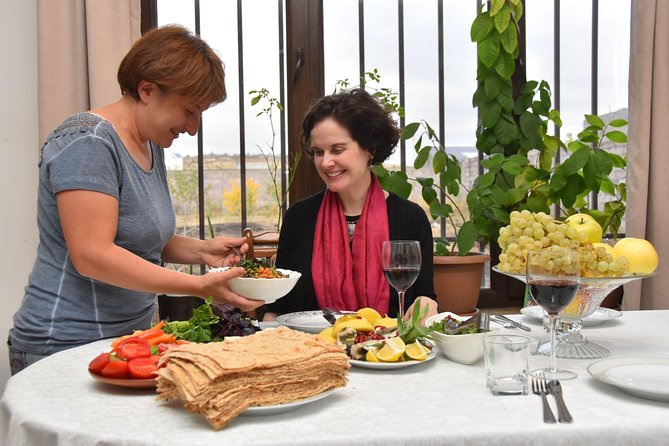
- Family recipes, not printed scripts: you’ll cook dishes rooted in how this household makes them.
- A clear, all-in menu format: starter/side, main, and dessert so you leave with a full meal’s worth of technique.
- Optional market time: you can add shopping context before cooking, which changes how you understand the ingredients.
- Mount Ararat views from the outskirts: part of the experience is the setting around the home.
- Small, private group experience: it’s only your group, with a pickup plan that’s easy to follow.
A family kitchen outside Yerevan, with Mount Ararat in view
The experience starts with the shift in scenery. Instead of staying inside the usual city loop, you head to a home on the outskirts of Yerevan where the family is building and refining their space. The construction is finished, but the finishing touches are still in progress, so the outside may feel a bit rustic. Inside, though, the focus is warm and practical: a working kitchen where you’ll cook for real.
What you get here is something hard to recreate on your own: you’re learning Armenian cooking as a lived routine. You’re not just collecting recipes. You’re learning how families put together flavors, how they decide what’s a good accompaniment, and what they serve as a complete meal.
And yes, the location comes with a nice bonus. The family plans a garden in the backyard and has grown fruit trees like apricot, peach, plum, apple, and sour cherry. Even if you don’t linger long, you’ll feel that this is where everyday life happens, not just where tours stop.
You can also read our reviews of more tours and experiences in Yerevan.
Hotel pickup and transfers that keep your day simple
The tour handles the hardest part of a home experience: getting there without hassle. Your host picks you up from the concierge desk of your Yerevan hotel and drops you off at the end of the meal.
That matters because it gives you time to focus on the food. You’re not budgeting mental energy for navigation, taxis, or finding the right door. Also, since this is a private activity, you’re traveling as your group rather than packing into a larger shared ride.
Time-wise, plan for about 3 hours total. The hands-on cooking itself is about one hour, followed by sitting down with the family to eat. If you’re the type who likes to watch first and then try, you’ll still get time to participate—just expect a focused, active format rather than a long cooking seminar.
Market tour option: where ingredients get personal
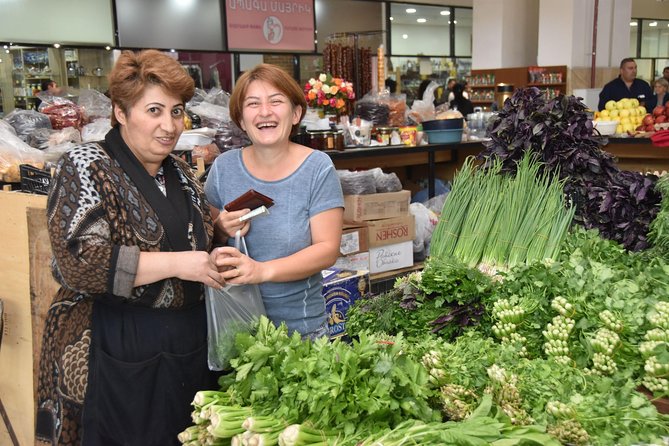
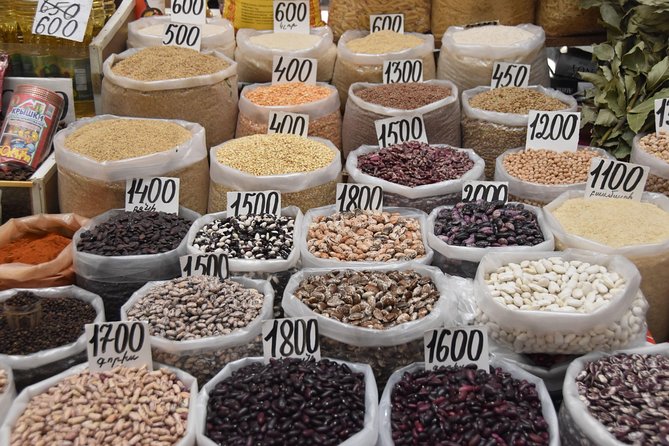
You can choose to include a market tour. If you do, this is where the day starts to feel more like understanding Armenia instead of just consuming it.
A quick market stop changes everything in a cooking class. You see ingredients before they become dishes. You also get a sense of what’s normal in local kitchens—what people pick regularly, what looks fresh, and what pairs naturally.
It’s especially useful here because the menu includes both meat dishes and Armenian-style breads and herbs. When you have context for what those ingredients look like locally, you’ll cook with more confidence and enjoy the flavors more when you sit down to eat.
If you’d rather skip extra walking, you can still get the full cooking and meal portion without the market. Either way, the core value is learning from Manya and then eating the result.
The hands-on cooking class: how your 3 hours actually flow
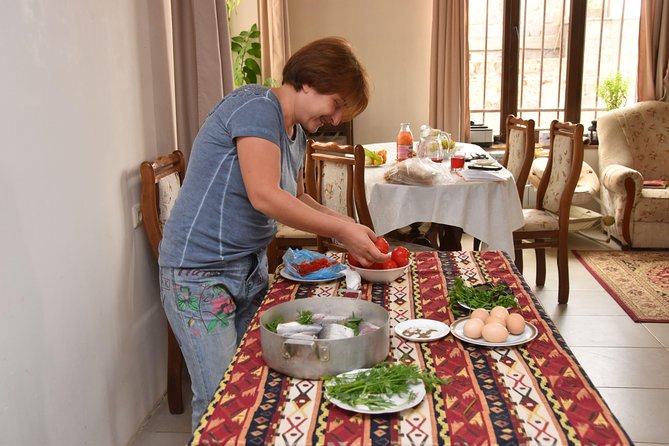
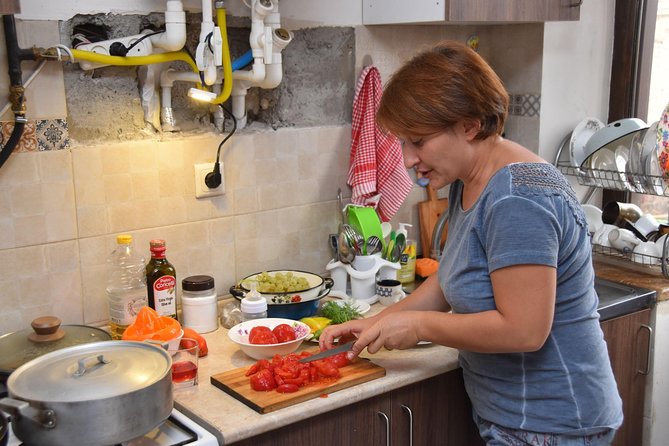
Your time is built around an easy rhythm: you’ll join Manya in her kitchen and work hands-on for about an hour. The format is straightforward and that’s a good thing when you’re learning at home.
You’ll make:
- a salad or side dish (your starter-adjacent part)
- a main dish
- a dessert
You’re not just chopping randomly. The plan leads you through a full Armenian meal so you can taste the whole idea of how courses fit together. Then you eat with the family—so the last step isn’t theoretical.
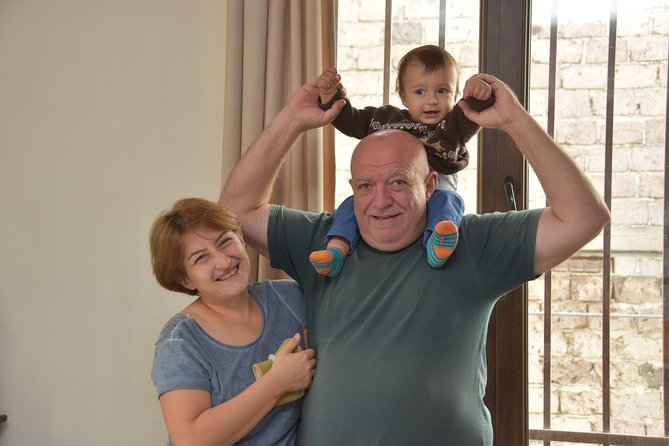
Also, this experience includes family presence when available. Manya lives with her husband, Eduard, and their infant son, Vazgen. Manya’s parents, Saharuni and Larisa, join when they’re in town, which adds a second layer to the cultural exchange. It can feel like you’re invited into a real household conversation.
What it feels like in the kitchen
Expect an atmosphere that’s practical. You’ll be focused on doing the work: mixing, preparing, assembling. This isn’t a demo where you only watch and take notes. The class is designed so that you can take part and leave knowing what you touched and why it matters.
And because the menu is structured, you’ll understand how to build an Armenian plate rather than memorizing a single recipe and forgetting the rest.
The menu you’ll cook: brduj, khashlama, khorovats, harissa, and more
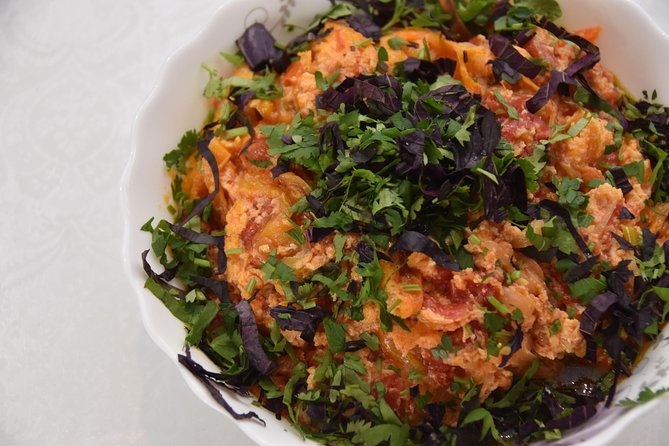
One of the best parts is that the menu gives you a real range: herbs and cheese wrapped in lavash, hearty stews and grilled meat options, and a dessert that balances sweetness with fruit and pastry.
Here’s what the sample menu looks like, with the choices you may see for mains:
Starter / appetizer: brduj with fresh herbs and cheese
You’ll start with a simple but iconic idea: brduj, which is home-made cheese and fresh herbs rolled into lavash. This matters because it teaches a key Armenian cooking approach—use fresh herbs and dairy as flavor anchors, and keep textures simple and satisfying.
You’ll get a taste of how Armenian meals often begin: not with complicated sauces, but with clean flavors and comfort.
Main dish choices: choose one of the classic routes
For the main course, you’ll cook one option from:
- khashlama (lamb stew)
- khorovats (a barbecued Armenian meat kebab)
- harissa (wheat mixed with meat and seasoned)
This is a great menu for understanding Armenian cooking variety. Stew teaches slow-building comfort. Grilled kebab teaches how meat flavor carries with fewer distractions. Harissa brings grains and meat together into a hearty, seasoned bowl.
Even if you have only one main in the class, the other options give you a sense of what Armenia does with comfort food.
Side dish: eggs with tomatoes and pepper, or barbecued vegetables
You’ll also make a side, which can be:
- fried eggs with tomatoes and pepper
- or barbecued vegetables
Sides are where a meal feels complete. This side section teaches you how Armenians often build freshness or smoky flavor alongside heavier mains. If you pick eggs with tomatoes and pepper, you’ll learn a quick, bright component that balances richer dishes.
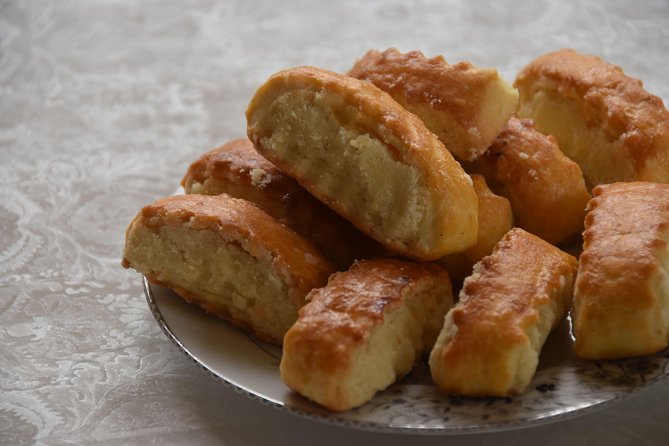
Dessert: fruit, jam, and pahlava
Dessert follows with a practical Armenian sweetness lineup:
- fresh or dried fruits
- home-made jam
- and pahlava (local puff pastry)
This is a satisfying ending because it’s not only sugar. It’s fruit + jam + pastry textures, which makes the dessert feel like part of the local pantry rather than a generic finale.
Sharing the meal with Manya’s family: the part you’ll remember
The best meals from travel aren’t just delicious—they feel like you were trusted. After cooking, you join Manya and the family to share what you prepared.
This is where the experience becomes more than a class. Eduard and the family’s household rhythm give you a feeling for what Armenian hospitality looks like in a real home. And when Saharuni and Larisa are available, it adds another layer of family stories and presence.
It’s also worth noting: an infant is part of the home. That can make the setting feel even more genuine. It’s not polished, and it’s not staged. It’s a living household, and that’s part of why the evening works.
If you’re the kind of traveler who likes conversations around food—how people eat, why they serve certain dishes, what’s special about family recipes—this is exactly your style.
English-friendly and private: practical for most visitors
The class is offered in English, so you won’t need Armenian cooking vocabulary just to participate. And since it’s a private activity, only your group participates.
Private usually means you can ask more questions and move at your pace. It also means you’re less likely to get rushed if your group needs a slower start, or wants more time to understand what’s happening in each step.
For couples, this can be a great choice because it feels personal without being awkward. For friends, it’s a fun shared task. If you’re traveling solo, a private setup can still feel friendly because the interaction stays directed at your group rather than a crowd.
Price and value: $82 for cooking, eating, and getting there
At $82 per person for about 3 hours, this isn’t just a cheap snack class. It’s a package that covers the major “day plan” pieces:
- hotel pickup and drop-off
- travel in a private vehicle
- a hands-on cooking session (about one hour)
- the meal you cook and share with the family
- an optional market tour, if you want that added ingredient context
For me, the value is in the combination. Many cooking experiences either give you cooking with no transfer help, or they give you transfers but no real home-table component. Here, you get the full arc: shop or not, cook together, then eat together.
Also, the menu is designed to cover multiple dish types, including meat mains and a dessert with pastry elements. That means you don’t leave with just one recipe—you leave with the idea of a full Armenian plate.
If you’re hoping to cook just one quick dish and bounce, you may feel it’s priced more like a full experience. But if you want a complete, structured, home-based meal, this is the kind of class that justifies the cost.
Who should book this private Armenian cooking class?
This fits best if you:
- want a home-based cooking experience, not a classroom performance
- enjoy learning via doing—chopping, mixing, assembling
- like your food travel with stories and family context
- want an English-friendly format with hotel pickup and drop-off
It’s also a strong pick if you’re visiting Yerevan and want one evening where you’re not only sightseeing—you’re participating.
If your priority is a long cooking workshop with lots of spare time, you might find the one-hour hands-on window a bit tight. But for most people, that structure is exactly what makes the day manageable and fun.
Should you book it?
Yes, I think you should—especially if you want something that feels personal and specific to Armenian family cooking. The setup is practical (pickup, transfers, English), and the meal arc is satisfying (starter/side, main, dessert, then you eat it together).
Book it if you’re excited about classics like brduj, stew or grilled meat mains (khashlama, khorovats, or harissa), and the pastry-and-fruit finish with pahlava. Skip it only if you strongly prefer a polished venue look and lots of extra free time. For real-home food culture in Yerevan, this one is hard to beat.
FAQ
Where does pickup happen?
Your host picks you up from the concierge desk of your Yerevan hotel, then drops you off at the end of the experience.
How long is the cooking class?
The total experience is about 3 hours. The hands-on cooking class portion is about one hour.
Is the market tour included?
The market tour is optional. You can choose to include it as part of the experience.
What will I cook?
You’ll cook a starter or side dish, a main dish, and a dessert. The sample menu includes brduj, one of khashlama or khorovats or harissa, a side like fried eggs with tomatoes and pepper (or barbecued vegetables), and fruit/jam with pahlava.
Is it private?
Yes. It’s a private tour/activity, and only your group participates.
Is it offered in English, and are service animals allowed?
The experience is offered in English. Service animals are allowed.