REVIEW · PARIS
Paris Cooking Class: Learn How to Make Macarons
Book on Viator →Operated by Le Foodist · Bookable on Viator
Macarons are tricky. This class makes them feel possible. In central Paris at Le Foodist, you’ll learn meringue macaron shells and fill them with buttercream, then end with tea or coffee as you talk about why macarons matter in French food culture. The best part: this is a hands-on small-group baking session.
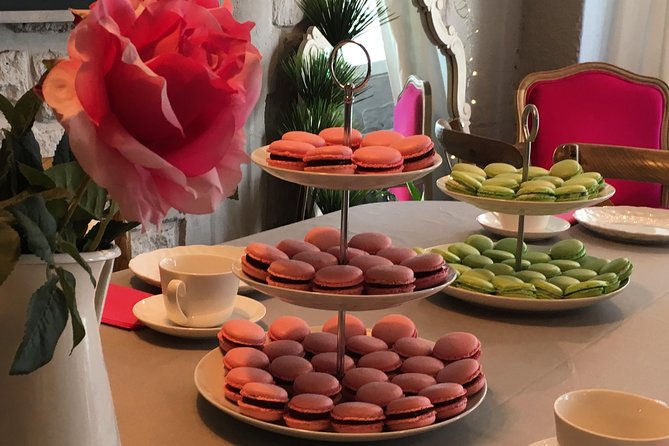
I especially like that you can choose the shell colors and learn the piping basics with step-by-step coaching from instructors like Chef Stéphane, Chef Luc, and Chef Paulo. Another big plus is the payoff at the end: you leave with a box of 20 to 30 macarons to share (or quietly hide in your room).
One thing to consider: macarons are delicate and your take-home box may not survive rough travel. If you’re flying, plan how you’ll transport them, because one past student flagged that the box felt flimsy for the trip home.
In This Review
- Key Highlights You’ll Care About
- A Small-Group Macaron Workshop at Le Foodist
- What You’ll Learn: Meringue Shells, Color Choices, and Buttercream Piping
- The Afternoon Flow: Welcome Drink, Baking Steps, and Tea or Coffee Tasting
- Meet the Instructors: Why Their Style Matters for Your Results
- Price and Value: Turning a $156 Ticket Into 20 to 30 Macarons
- Getting There and What to Wear: Central Paris Without Stress
- Should You Book This Paris Macaron Class (or Skip It)?
- FAQ
- How long is the Paris macaron class?
- Where does the class take place?
- What time does the class start?
- How many people are in the group?
- Is the class offered in English?
- What will I take home?
- What is the cancellation and refund policy?
Key Highlights You’ll Care About
- Max 4 people means you get real attention, not crowd control
- Shells from scratch with color choices and guided piping
- Buttercream assembly taught in clear, practical steps
- Tea or coffee tasting with an explanation of macaron tradition
- Take-home box (20 to 30) so the class doesn’t end with “maybe next time”
A Small-Group Macaron Workshop at Le Foodist
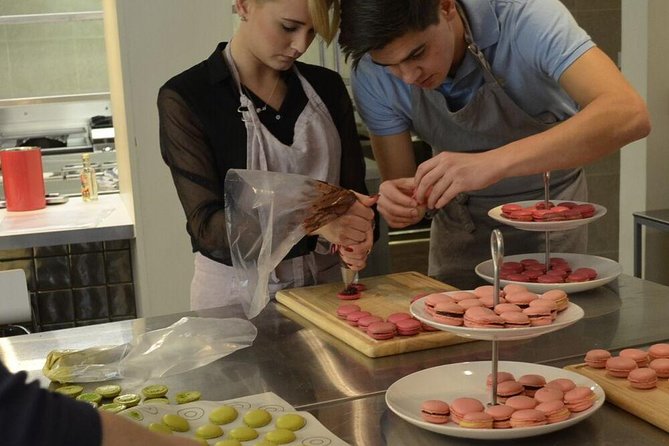
If you’ve ever tried to make macarons at home, you know the heartbreak: they look right, then they don’t. Here, the goal is to help you avoid the usual mess by teaching the process in real time, with enough time and attention for you to actually practice. Le Foodist runs this experience in English and keeps the group size tight, with a maximum of four travelers, which is a huge difference from big “watch and hope” cooking tours.
The setting matters too. The meeting point is at Le Foodist, 59 Rue du Cardinal Lemoine, 75005 Paris, a central Paris address that’s also near public transportation. You start at 3:00 pm, and the class ends back at the meeting point—so you’re not stranded across town with a box of delicate cookies.
This is also one of those Paris activities that feels like a break from sightseeing stress. You’ll trade the walking pace for mixing, piping, and learning why macaron batter behaves the way it does. And since you’re going in the afternoon, you can still plan a morning of museums or neighborhoods before class.
You can also read our reviews of more tours and experiences in Paris.
What You’ll Learn: Meringue Shells, Color Choices, and Buttercream Piping
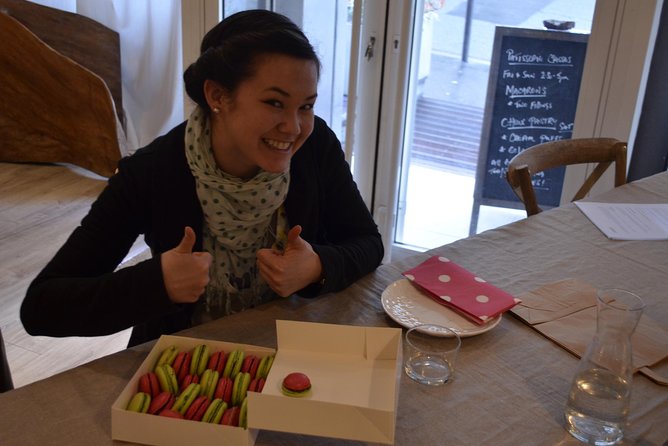
The core of the class is straightforward: you make macarons, not just eat them. You’ll learn how to create the meringue macaron shells from scratch and then pipe the filling. That “from scratch” part is key for value—most food tours give you a bite and a story. This one gives you technique.
You’ll also get to choose the shell colors. That’s more than just a fun detail. Color choice helps you pay attention to the batter and mixing stage, because it nudges you to follow the instructor’s timing and mixing guidance instead of rushing. It turns macaron making into something you can steer, instead of something that happens to you.
On the filling side, the class focuses on piping buttercream. Reviews repeatedly highlight instructors correcting technique and helping you succeed even if you’ve never piped before. One student specifically mentioned learning tips geared toward fail-safe macarons, which tells me the teaching isn’t just “do these steps once.” It’s more like: here’s how to shape and pipe so your shells and filling come together cleanly.
If you upgrade to the advanced macarons class option, you’ll add extra macarons subtleties. The data doesn’t spell out the exact advanced topics, but the intent is clear: you’re going deeper than the basics and refining the details that separate good macarons from great ones.
The Afternoon Flow: Welcome Drink, Baking Steps, and Tea or Coffee Tasting
Plan on about three hours total. The rhythm starts before you even touch equipment. You head to the cookery school in central Paris, then you meet your instructor over a refreshing drink before the class begins. That welcome drink isn’t just polite—it’s time to settle in, ask questions, and get comfortable with the way your instructor explains things.
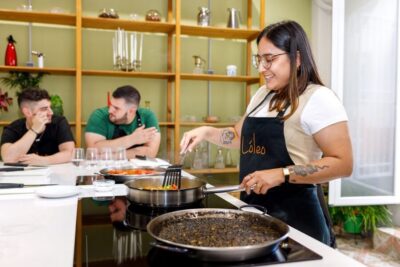
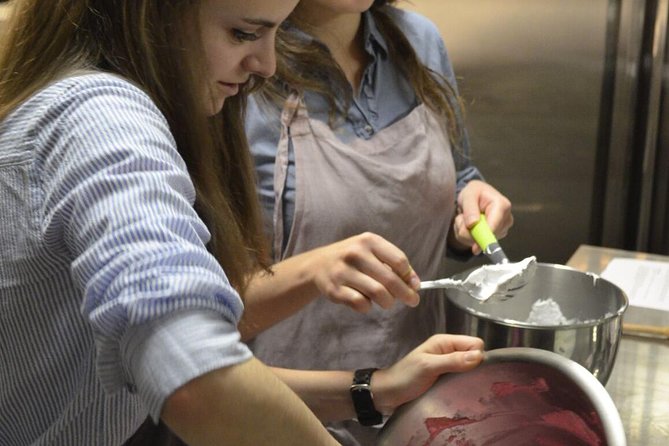
From there, the class becomes hands-on. You follow step-by-step guidance while you make the meringue shells in the colors you choose. Then you learn how to pipe the buttercream filling. The process can feel intimidating, mostly because macarons demand patience and accuracy. What makes the experience work is that the instructor keeps the steps clear and practical, and the small group size means you’re not waiting for a turn while something crucial sets up.
At the end, you taste what you made with tea or coffee. You’ll also hear your host talk about the macaron’s place in French culture and tradition. I like this part because it connects the technique to the real-world reason you care about it. Macarons aren’t just trendy cookies; they’re part of how people share celebrations in France, and that context makes the whole class feel less random.
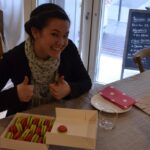
When your macarons are ready, you take your box of 20 to 30 macarons and head outside to conclude the class. The takeaway is both literal (cookies) and practical (confidence and technique you can repeat later).
Meet the Instructors: Why Their Style Matters for Your Results
With a class this technical, instructor style isn’t a “nice-to-have.” It changes how fast you learn and how calm you stay when things get delicate. The instructors named in the course feedback include Chef Stéphane, Chef Luc, Chef Paulo, Chef Ann, Chef Fanny, and Chef Florence. Across those different personalities, the pattern is the same: clear coaching plus humor plus real assistance when you need it.
Chef Stéphane shows up in multiple accounts as energetic and entertaining, with a step-by-step approach that reduces intimidation. Chef Luc is described as friendly and able to keep things fun while still giving detailed instruction. Chef Paulo is praised for patient teaching and a sense of humor that makes the mechanics feel easier to manage. Even when students mention teenagers or adults with different skill levels, the class approach still seems to work because guidance stays hands-on and personalized.
One review also highlights that an instructor went further than teaching by sharing food recommendations around Paris. That doesn’t replace a good guidebook, but it’s a practical bonus: you’re getting one person’s best guess about where to eat and what to try—based on what you like.
If you care about learning the “why” behind technique, you’ll probably enjoy this teaching style. More than one student mentioned instructors sharing tips and tricks while you wait for mixing or baking steps, which turns downtime into useful micro-lessons instead of dead time.
Price and Value: Turning a $156 Ticket Into 20 to 30 Macarons
At $156 per person, this class sits in the middle of the “worth it” range for Paris experiences. It’s not cheap, but you’re not just paying for a snack. You’re paying for a small-group, instructor-led workshop that includes materials, time, and a take-home yield.
Here’s where the value lands for me:
- You leave with 20 to 30 macarons (per included details), which is a real tangible outcome.
- The class includes a welcome drink, plus coffee or tea at the end.
- You also get use of required equipment and attire, meaning you’re not showing up to DIY a kitchen you don’t have access to.
- The instruction is in English, and the group max is four, which lowers the “waiting for help” problem.
Price comparisons in Paris are tricky because everything can be expensive. But this one avoids a common trap: you’re not paying for a passive demo. You participate in the creation process. That’s why the class keeps getting strong recommendations.
Also, it’s booked ahead often. The experience is listed as averaging 57 days in advance, which is a sign this isn’t the kind of activity you should leave until the last second if macarons are on your Paris must-do list.

Getting There and What to Wear: Central Paris Without Stress
You meet at Le Foodist, 59 Rue du Cardinal Lemoine, 75005 Paris, with class starting at 3:00 pm. Since it’s near public transportation, you can plan it as part of a broader afternoon route instead of turning it into a logistical problem. The meeting point being the same as the end point also helps: you don’t need to figure out your next move with sticky hands and a box of cookies.
You’ll likely want to dress for a baking workshop. You can assume they provide required equipment and attire, so you’re not responsible for bringing an apron or specialty tools. That said, comfortable clothes are still smart. You’ll be doing hands-on work for about three hours, and you’ll feel better if you’re not dressed like you’re headed to a formal dinner.
If you’re flying home soon, one practical note from feedback: a student felt the take-home box didn’t hold up well for travel. I’d treat that as a hint, not a guarantee. If you’re sensitive about how fragile things handle in transit, consider eating some the same day and keeping the rest protected during travel.
One more “small but helpful” point: the tour is suitable for people with gluten allergies. That’s a big deal for planning, but it’s still smart to speak up about your needs when you arrive, since baking involves shared equipment and ingredient handling in most kitchens.
Should You Book This Paris Macaron Class (or Skip It)?
Book it if you want a hands-on Paris food experience that actually teaches you something. This class is ideal for pastry lovers, curious beginners, and anyone who’s fascinated by what makes French macarons so different from other cookies. I also think it’s a great “Paris break” from constant museum stops because you get a new skill plus a tasty reset.
If you’re traveling with family, it’s worth noting the course has a minimum age of 12 and doesn’t accept unaccompanied children. So it’s not the kind of activity that works for very young kids, but it can work well with teens who are genuinely interested in cooking.
Skip it only if you’re hoping for a casual, low-effort tasting. This is a real baking class with meringue shells and piping. It’s structured, and it asks you to participate.
Finally, if macarons are your only dessert goal in Paris, this is a strong bet because the experience ends with a take-home box of 20 to 30 macarons, not just a small sample. If you want to build confidence for making them later at home, look at the advanced option too, since it’s designed to cover extra macarons subtleties.
FAQ
How long is the Paris macaron class?
The class runs for about 3 hours.
Where does the class take place?
You meet at Le Foodist at 59 Rue du Cardinal Lemoine, 75005 Paris, France, and the activity ends back at the same meeting point.
What time does the class start?
The start time is 3:00 pm.
How many people are in the group?
The class has a maximum of 4 travelers.
Is the class offered in English?
Yes, the experience is offered in English.
What will I take home?
You receive a box of about 20 to 30 macarons to take home after the class.
What is the cancellation and refund policy?
You can cancel up to 6 days in advance for a full refund. Cancel 2–6 days in advance for a 50% refund. If you cancel less than 2 days before the experience, you won’t receive a refund.