A cook class in Mykonos beats another beach plan. You get a hands-on run at classic Greek food, done outdoors with sea views and a real focus on technique. It lasts about 3 hours, and you leave with recipes you can actually repeat at home.
I love that the menu covers both starters and mains: tzatziki, cheese and spinach pies, dolmades, and then the bigger project, gyros meat plus baking your own pita. I also like the teaching tone. Names that come up in the class include Chef Nico and Chef Nikolas, and the vibe is friendly enough that you can ask questions without feeling rushed.
One thing to consider is transport cost transparency. Transfers are included for most hotels, but some far-flung spots may require an extra cash payment to the driver, and one bad experience tied to this issue has shown up in the feedback.
In This Review
- Key things to know before you go
- A hilltop kitchen with Mykonos views (and why that matters)
- The Mykonos menu: tzatziki, pies, dolmades, and gyros pita
- Chef Nico and the teaching style that keeps you cooking
- What happens during the 3 hours (your likely flow)
- Lunch, ingredients, and the real point: you’ll eat what you make
- Price and value: what $143.79 buys you
- Getting there: transfers included, but remote areas may cost extra cash
- Who this Mykonos cooking class fits best
- Should you book this Mykonos cooking class?
- FAQ
- Where does the class start?
- How long is the cooking class?
- Is the class offered in English?
- What dishes will I learn to make?
- What’s included in the price?
- Is transportation included?
- Which areas may require extra transport fees?
- Is this a private group experience?
- Do I need a paper ticket?
- Can I cancel and still get a refund?
Key things to know before you go
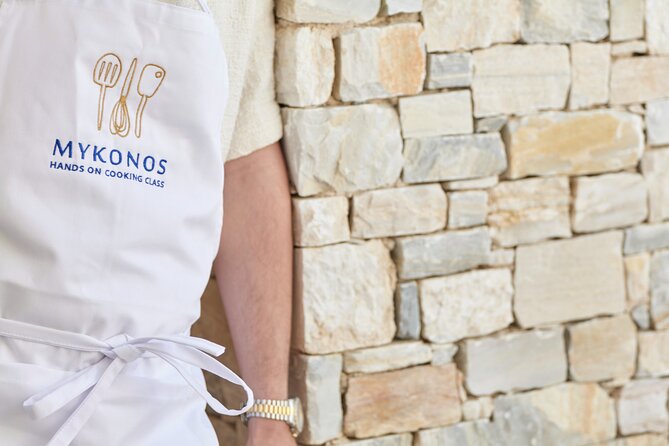
Hands-on cooking, not just watching: you work the recipes, not sit behind glass.
A full spread in 3 hours: you’ll make multiple dishes, then eat together at the end.
Sea-and-bay views from the cooking area: the kitchen is outdoors on a hilltop, so the setting is part of the experience.
Chef-led, easy-to-follow instruction: people name Chef Nico/Nikolas and point to step-by-step guidance plus humor.
Transfers are included, with remote-area exceptions: most pickups are covered, but some locations can mean extra cash to the driver.
A hilltop kitchen with Mykonos views (and why that matters)
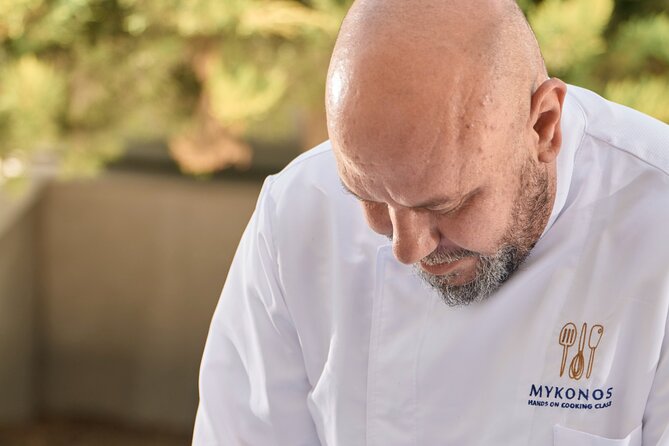
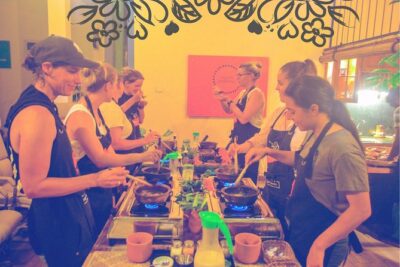
This is a cooking class that feels like a small break from the usual Mykonos script. The kitchen setup is outdoors, up on a hill, with views out over the bay. That alone changes the mood. You’re not just cooking; you’re doing it in a place that makes you pause between steps.
The hill location also explains the pace. When you’re working with dough, herbs, and hot tools, you want a class that keeps things moving and organized. People consistently mention the timing and how much food you get through in the allotted time, which is what you should watch for if you’re comparing classes.
One practical note: because the kitchen is outside, good weather matters. If conditions aren’t right, the experience may be rescheduled or refunded, so plan to keep your schedule flexible if you can.
You can also read our reviews of more tours and experiences in Mykonos.

The Mykonos menu: tzatziki, pies, dolmades, and gyros pita
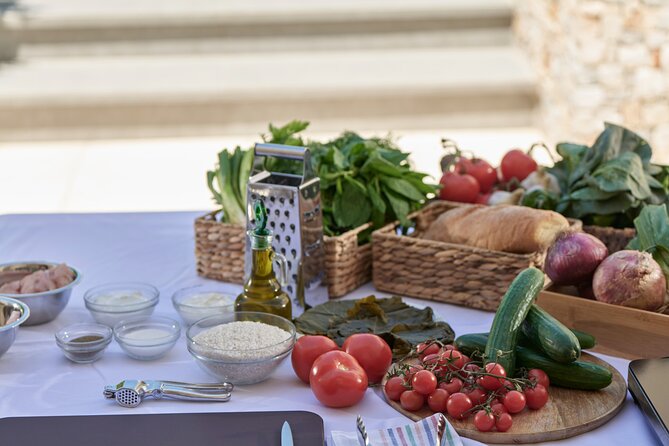
The class is built around classic Greek hits, with a mix of cold, warm, and dough work. Here’s what’s on the menu based on what the class teaches:
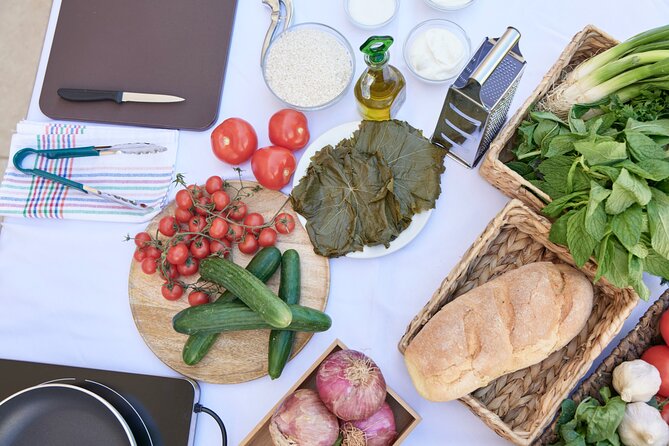
- Tzatziki: you’ll learn how to put the base together and how to make it taste balanced, not flat.
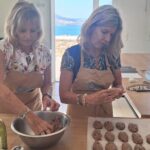
- Cheese pies and spinach pies: you get hands-on with dough and filling logic, which is where most home cooks struggle.
- Dolmades: rolling and stuffing make this feel special, even if it’s just “one more dish” in a longer cooking day.
- Gyros meat and pita bread: this is the main storyline. You’ll work on the meat component and also bake your own pita.
Several people also mention extra meat dishes like meatballs and chicken or pork souvlaki-style cooking as part of what they made. You can treat that as a bonus that may show up depending on the session, but the gyros + pita plus the pies and tzatziki are the core.
Why this menu is a smart use of your time: it covers the main Greek cooking skill set. You get cold sauce work (tzatziki), baked dough (pies and pita), and a “hands-on labor” item (dolmades). When you leave, you’re not just repeating flavors; you’re repeating the techniques.
Chef Nico and the teaching style that keeps you cooking
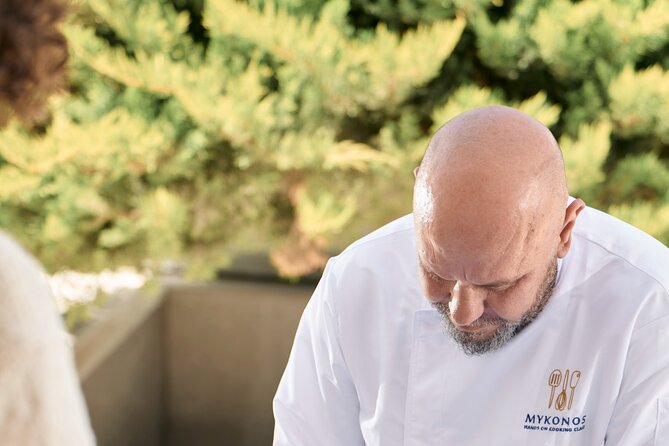
The instructors are a big part of why people rate this class so highly. Names that show up in feedback include Chef Nico and Chef Nikolas. Across those comments, the same pattern shows up: the chef breaks steps into doable chunks, keeps the energy light, and offers tips when things get messy.
Cooking classes can go two ways. They either feel like a lecture, or they feel chaotic. The better ones strike a middle ground. This one seems to do that: clear steps, plenty of hands-on time, and enough humor to keep the room relaxed when you inevitably mis-measure something.
If you’re a beginner, this is the kind of class that helps because it focuses on process over perfection. If you’re a more confident cook, you’ll still get value from the small tricks: how to build flavor, how to manage dough, and how to time what goes in when so you’re not waiting forever.
What happens during the 3 hours (your likely flow)
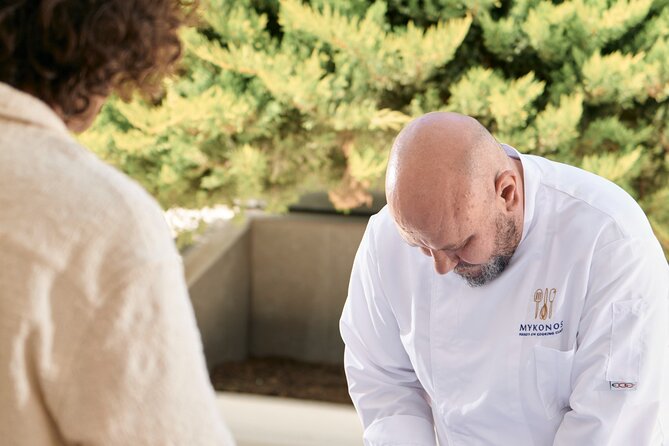
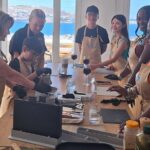
You’re starting and ending back at the meeting point, and the whole experience runs about 3 hours. The class is hands-on throughout, which means the “schedule” isn’t a sightseeing bus loop. It’s more like rotating stations and tasks.
A typical flow you can expect:
1) Arrive and get oriented at the class location
2) Start with prep-heavy dishes (things like sauces and fillings)
3) Move into dough work for pies and pita
4) Cook and finish the hot items while you keep learning steps
5) Sit down for lunch together with what you made
That structure is valuable because it prevents the classic cooking-class problem: learning one recipe while the best part (the food) happens too late. Here, the class is paced so you taste and eat within the session, not hours later.
Also, meals come with a sense of “we made a lot.” Multiple people point to portions that feel like a feast, and a few mention having extra food afterward. Even if you don’t count on take-home food, you should count on leaving full.
Lunch, ingredients, and the real point: you’ll eat what you make
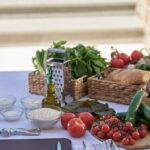
Lunch is included, along with the equipment you need for cooking. The ingredients are described as fresh, which matters more than people think. In Greece, when the ingredients are good, the dishes taste right even when you’re still learning.
This matters for your takeaway. If you buy ingredients later but the original class used average product, your home results can fall flat. The overall feedback leans toward solid ingredient quality, which makes the recipes more repeatable.
One extra detail that shows up in feedback: some sessions include wine during the cooking or meal. You should treat that as a bonus, not a guarantee, but it helps explain why the tone is often described as fun and social. If you do drink, keep it light. You’re still cooking, and you’ll want steady hands for dough.

Price and value: what $143.79 buys you
At $143.79 per person, you’re paying for three things at once: instruction, ingredients/equipment, and a full lunch meal. My rule of thumb for cooking classes is simple: if you leave hungry and without a clear set of techniques, it’s overpriced. If you leave fed and confident, it’s usually fair.
This class scores well on value because you cover multiple recipes and you actually cook them. Many classes do one hero dish and pad the rest with watching. Here, the emphasis is hands-on, and the menu spans different Greek skills, which raises the odds you’ll use what you learn later.
Now, here’s the caution flag: transport costs. The base price may include transfers from many hotels, but there are exceptions for remote areas. If you end up paying extra on top, the perceived value drops fast. So if you’re staying outside the usual hotel zones, budget a little cushion and confirm pickup rules in advance.
Getting there: transfers included, but remote areas may cost extra cash
Logistics in Mykonos can be tricky, and this class works through a transfer partner called Transfers In Mykonos. Transportation is included from/to all hotels and most areas, but there are specific remote exceptions:
Elia, Kalafatis, Agrari, Panormos, Super Paradise, Paradise, Kanalia, plus remote villas/apartments/houses. For those, the driver may require extra payment in cash on the spot.
That’s the main practical consideration for your planning. If you’re choosing between hotels based on a cooking class, it can be worth staying in an area that clearly falls under standard pickup. If you’re not sure, message ahead and ask which pickup points apply to you.
Also, the meeting point is:
MYKONOS COOKING CLASS, ΜΥΚΟΝΟΥ-ΑΝΩ ΜΕΡΑΣ 46, ΜΥΚΟΝΟΣ, Klouvas 846 00, Greece.
Since it’s near public transportation, you have a backup if transfers get complicated, but you’ll want to follow the class instructions for the smoothest arrival.
Who this Mykonos cooking class fits best
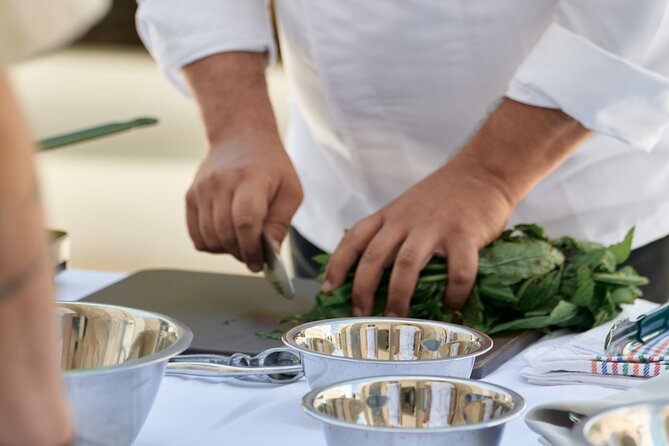
This works best if you want more than photos. You’re doing a hands-on activity that gives you a usable skill kit: sauces, dough, rolling, and timing for a full meal.
It’s also a good match for:
- Food-first travelers who want a real meal plan, not just a snack stop
- Families and teens, since people describe the chef’s approach as patient and fun
- Beginners who want step-by-step guidance without feeling judged
- Cooks who like structure, because you’ll repeat technique instead of copying a vague recipe
One more fit note: it’s listed as a private tour/activity, meaning only your group participates. That tends to make Q&A easier and keeps the teaching style calmer.
Should you book this Mykonos cooking class?
Yes—if you want hands-on Greek cooking with a big payoff in food, views, and technique. The strongest reasons to book are the same themes that show up again and again: you cook multiple dishes, the chefs teach clearly, and you eat a proper lunch afterward in a great setting.
Don’t book blindly if transport could be an issue. Before you pay, check whether your hotel or villa falls under the included transfer zone. If you’re in one of the remote areas (Elia, Kalafatis, Agrari, Panormos, Super Paradise, Paradise, Kanalia) you should expect possible extra cash to the driver.
Also, keep your schedule flexible for weather. Since the class is outdoors, you’ll want a backup day if your travel plan is tight.
FAQ
Where does the class start?
The class starts at MYKONOS COOKING CLASS, ΜΥΚΟΝΟΥ-ΑΝΩ ΜΕΡΑΣ 46, ΜΥΚΟΝΟΣ, Klouvas 846 00, Greece. The activity ends back at the meeting point.
How long is the cooking class?
It’s about 3 hours (approx.).
Is the class offered in English?
Yes, the in-person guide speaks English.
What dishes will I learn to make?
The class covers tzatziki, cheese pies, spinach pies, dolmades, and preparing gyros meat plus baking pita bread.
What’s included in the price?
The price includes kitchen equipment, lunch, and an in-person English guide.
Is transportation included?
Transportation is included for many areas and hotels through Transfers In Mykonos. For remote places listed by the operator, extra payment in cash on the spot may be required.
Which areas may require extra transport fees?
Remote areas listed include Elia, Kalafatis, Agrari, Panormos, Super Paradise, Paradise, and Kanalia, plus remote villas/apartments/houses.
Is this a private group experience?
Yes. It’s a private tour/activity, so only your group participates.
Do I need a paper ticket?
You’ll receive a mobile ticket, and confirmation is received at booking.
Can I cancel and still get a refund?
Yes, you can cancel for a full refund up to 24 hours before the experience starts. The experience may also be rescheduled or refunded if weather conditions aren’t suitable or if a minimum number of travelers isn’t met.