REVIEW · HOI AN
Cooking class for lunch start at 12:00-3:00pm cooking yourself
Book on Viator →Operated by Gioan Cooking Class · Bookable on Viator
Hoi An turns lunch into a mini adventure. This hands-on class has you shop with your host first, then cook and eat a full Vietnamese meal, with Vina keeping things fun. You’ll like the private-style attention (small groups) and the chance to learn real ingredient choices, not just follow a script.
One thing to plan for: the experience starts mid-day and includes a market walk in the open air, so hot weather or rain can make the day feel less comfortable.
In This Review
- Key Things That Make This Class Worth Your Afternoon
- Your Midday Plan in Hoi An: Cook Lunch, Then Eat It
- Entering Gioan Cookery School: Meet Point, Feel, and Group Size
- Before You Cook: Water Puppets, Ancient Town, and Getting Oriented
- The Market Walk (30–45 Minutes): How to Pick Flavor Before You Cook
- Cooking Time With the Main Chef: Step-by-Step, Hands-On, No Guesswork
- Eating Like a Local: Enjoying Your Food the Vietnamese Way
- Value in Plain Terms: Is $50 Worth It?
- Who This Class Fits Best (and Who Might Want Something Else)
- Practical Tips That Make the Day Easier
- Booking Decision: Should You Go?
- FAQ
- FAQ
- What time does the cooking class start?
- How long is the experience?
- How much does it cost?
- Is pickup offered?
- Where do I meet for the class?
- Is it a group class or private?
- Do I get recipes to take home?
- Do you go to a market during the experience?
- What happens during the cooking session?
- Is there anything about weather I should know?
Key Things That Make This Class Worth Your Afternoon
- Market walk with real ingredient decisions like fresh vegetables, meat, and seafood
- Small group energy with a maximum of 10 people for a more personal feel
- Hands-on cooking with step-by-step guidance from the main chef
- Recipes you can recreate at home, so this is more than a one-time meal
- Karaoke during the session, which sounds odd until it actually works
Your Midday Plan in Hoi An: Cook Lunch, Then Eat It
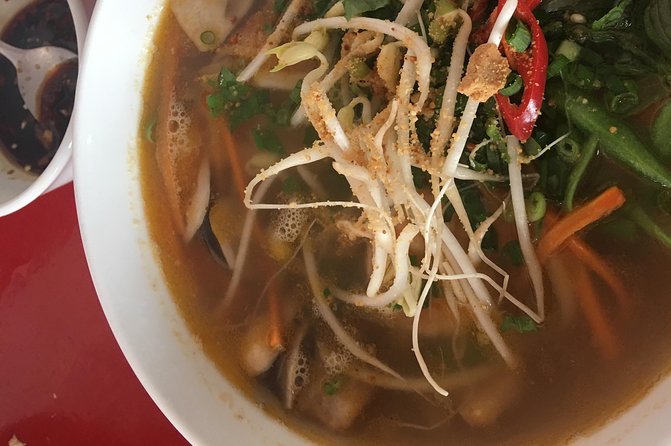
If you’ve ever watched someone cook and thought, I could do that, this is the version where you actually do it. In Hoi An, where food is everywhere, this class turns the city’s flavors into something you can reproduce later. You get a built-in structure: a warm welcome at Gioan Cookery School, ingredient scouting at the market, then a guided cooking session that ends with you eating what you made.
I like that it’s not just about the final plate. You start with buying and choosing ingredients, then you cook them in a way that makes sense. That’s the difference between a meal that tastes good today and dishes you can confidently repeat next month.
This also fits nicely into an afternoon rhythm. The cooking portion runs 12:00–3:00pm (about 3 hours total), which means you’re not stuck rushing around early in the morning. If you like a full, focused experience instead of a long day tour, this timing works well.
You can also read our reviews of more tours and experiences in Hoi An.
Entering Gioan Cookery School: Meet Point, Feel, and Group Size
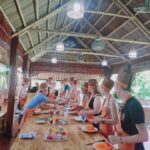
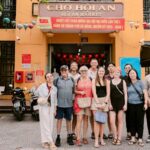
You’ll meet at Gioan Cookery School, 222/17 Lý Thường Kiệt, Sơn Phong ward, Quảng Nam. Reviews highlight a clean kitchen with air conditioning, which matters in Hoi An’s heat. Even if the market part warms you up, the cooking area should give you a breather.
The class is described as private with a more personalized experience, and the group limit is up to 10 travelers. Translation: you’re not fighting for attention at every step. You should still expect teaching to move along at a good pace, but you’ll have a better chance to ask questions when you’re not one face in a crowd.
Logistically, it’s also set up to be easy to reach. It’s noted as near public transportation, and pickup is offered. If you’re staying somewhere a bit away from the center, pickup can remove one more “what now?” moment from your day.
Before You Cook: Water Puppets, Ancient Town, and Getting Oriented
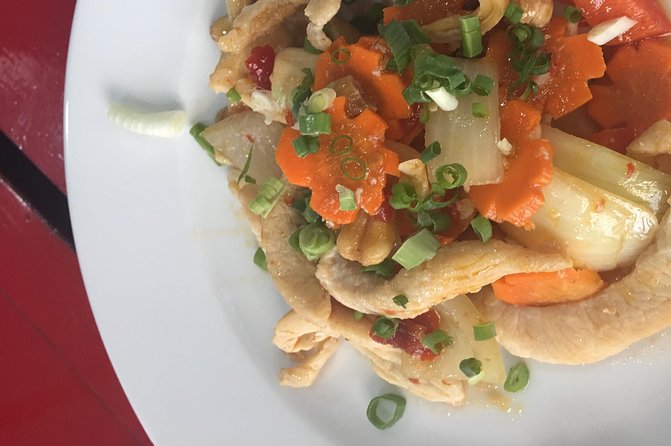
The day isn’t only kitchen time. The schedule includes Hoi An Water Puppet Show and time in Hoi An Ancient Town. Even if you mostly care about cooking, those stops help you connect what you’re eating with where you are.
A water puppet show is short enough to feel like a break, not a commitment. And Ancient Town time is useful because it gets you oriented fast—streets, atmosphere, and the sense that the area’s lived in, not staged.
Here’s the practical angle: when you do the market afterward (or alongside it), you’re already in the right mood. You’re not treating lunch like an errand. You’re treating it like part of the Hoi An story.
The Market Walk (30–45 Minutes): How to Pick Flavor Before You Cook
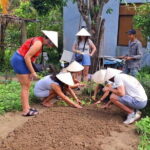
The market part is where this class becomes truly useful. Your instructor takes you out to shop for your next cooking lesson and shows you what to look for—down to basics you’d otherwise miss.
You’ll hear real questions like:
- what a vegetable is called
- how to select fresh produce
- how to judge meat and seafood before buying
That step matters more than people think. Vietnamese dishes often depend on the right herbs, the right fresh components, and the right balance of powders and aromatics. If you learn how to shop, you’ll have a much easier time recreating flavors at home.
The market route also includes food categories and tasting moments. You’ll look at noodles, meat, herbs, powders, and the fish market, and you’ll taste tropical fruits as part of the experience. Even if you don’t memorize everything on the spot, that sensory sampling teaches you what to expect from the ingredients once they hit the pan.
One more smart benefit: you’re learning the “why” in simple terms. Freshness and selection are teachable skills. You’ll walk away understanding what the instructor values, not just what you’re doing next.
Cooking Time With the Main Chef: Step-by-Step, Hands-On, No Guesswork
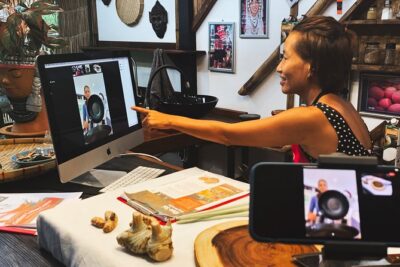
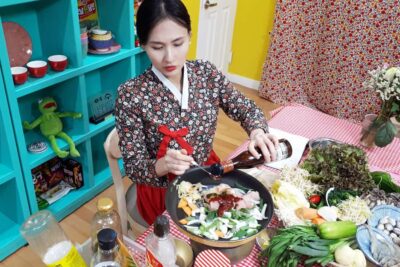
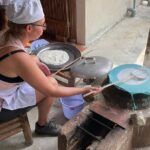
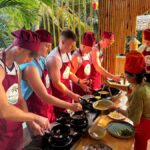
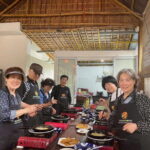
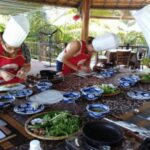
Then it’s time to get your hands dirty. The class is hands-on, and the main chef explains cooking step by step. If you worry you’re not “good at cooking,” this format is reassuring. You’re not expected to have Vietnamese techniques already in your head.
You’ll start cooking each dish while your instructor demonstrates how to do it and how to read the process as it happens. In a good cooking class, you shouldn’t just repeat moves—you should understand what the food should look and smell like at each stage. That’s what lets you reproduce it later, not just rewatch it.
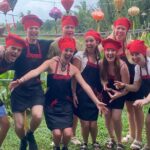
One of the most memorable elements, according to reviews, is Vina’s entertaining approach. She’s described as hilarious and super prepared, and the class includes karaoke during the session. It sounds like a gimmick. In practice, it keeps the room relaxed, so you don’t feel awkward asking questions or repeating a step.
The dishes aren’t limited to one item either. You’re creating an array of Vietnamese dishes from scratch, and you’ll cook the ones you want. That gives you variety in the meal and enough technique coverage that your at-home version won’t feel like “one great dish and a pile of leftovers.”

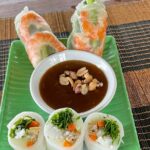
Eating Like a Local: Enjoying Your Food the Vietnamese Way
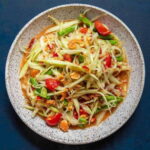
After cooking, you eat what you made. The instructor shows you how to enjoy the food in the Vietnamese way. That part is easy to overlook, but it’s often where flavor “clicks.”
Instead of just eating silently, you’ll learn how the dish is typically approached: how it’s served, how different components work together, and the habits that help the meal taste right as you eat. It’s also the payoff moment where your market shopping turns into something real on your plate.
This is also where the recipes become important. You’ll get instructions so you can recreate the dishes at home. Even without being a strict “I’ll cook this exactly” person, having a recipe means you can rebuild your memory later with less guesswork.
And since you’re not eating from a demo-only plate, you tend to pay closer attention. That’s the sneaky advantage of hands-on lunch. You’re present.
Value in Plain Terms: Is $50 Worth It?
At $50 per person for about 3 hours, the value depends on what you want from the afternoon.
If you just want a nice meal, $50 might feel high. But you’re not paying only for lunch. You’re paying for:
- market guidance for selecting ingredients
- step-by-step coaching while you cook
- a small-group setup (max 10) that supports questions
- recipes so you can recreate the dishes
- pickup offered (when needed)
In other words, you’re buying a learning experience. The recipe sheets and ingredient skills are the long tail value. Many cooking classes end with a full stomach and a “that was fun” memory. This one is designed to leave you with tools you can use again.
Also, the AC kitchen and clean setup aren’t small details in Hoi An. They affect comfort, which affects learning. When you’re not sweltering, you follow instructions better.
Who This Class Fits Best (and Who Might Want Something Else)
This workshop is a strong match if you:
- want an active food experience instead of just tasting
- enjoy learning how to shop for ingredients, not only how to cook
- like small-group or private-style attention
- want a souvenir that isn’t only photos
It also suits people who travel with family or friends and want a shared activity. The kitchen environment and guided steps make it easier to participate together.
You might want to think twice if you prefer a totally relaxed schedule. Midday heat plus a market walk can feel busy, even though the cooking portion is comfortable. And if you’re trying to follow an extremely tight itinerary, the 12:00–3:00pm block may be a challenge.
Practical Tips That Make the Day Easier
A few small things can make a big difference.
Wear light, breathable clothes for the market portion. You’ll be walking for about 30–45 minutes, and the cooking area is more comfortable than the streets, but you still want to start the day easy.
Bring a reusable water bottle if you have one. No water rules are listed, so just use common sense based on the fact that you’re outside before you’re inside.
If you’re the kind of person who loves replicating food at home, take a few notes during the recipe handover. The recipes are provided, so you won’t be starting from scratch later, but writing down any ingredient substitutions you prefer can help.
Also, ask questions during ingredient selection. That’s when the instructor can explain what matters. You’ll forget some names. The skill is remembering what to look for.
Booking Decision: Should You Go?
I’d book this class if you want more than a one-off meal. The market shopping, the step-by-step cooking, and the recipes are the trifecta that turns lunch into a skill you can take home. Add Vina’s energy (and the karaoke) and you get a day that feels lighter than “serious cooking school,” even while you learn a lot.
If you hate being out in the heat for even short stretches, you’ll want to be strategic about timing and weather. Still, the class is set up with a comfortable cooking space, and it’s only a few hours total.
My simple recommendation: if you’re excited to cook with an instructor, this is a high-value way to spend an afternoon in Hoi An.
FAQ
FAQ
What time does the cooking class start?
The cooking class starts at 12:00pm and runs until about 3:00pm.
How long is the experience?
It’s approximately 3 hours.
How much does it cost?
The price is $50.00 per person.
Is pickup offered?
Yes, pickup is offered.
Where do I meet for the class?
You meet at Gioan Cookery School, 222, 222/17 Lý Thường Kiệt, Sơn Phong, ward, Quảng Nam 560000, Vietnam.
Is it a group class or private?
It’s described as a private class, and there is a maximum of 10 travelers.
Do I get recipes to take home?
Yes. You will receive recipes so you can recreate the dishes at home.
Do you go to a market during the experience?
Yes. Your instructor takes you to the local market to shop for ingredients, and the market walk takes around 30–45 minutes.
What happens during the cooking session?
You cook hands-on Vietnamese dishes from scratch with step-by-step guidance, then you enjoy the dishes you make.
Is there anything about weather I should know?
The experience requires good weather. If it’s canceled due to poor weather, you’ll be offered a different date or a full refund.