REVIEW · BUSAN
Busan Local Food Cooking Class with Market Tour
Book on Viator →Operated by 부산쿠킹클래스 · Bookable on Viator
Food class beats souvenir hunting. This Busan experience pairs hands-on cooking with a local market walk and finishes with a Korean tea ceremony, so you’re not just watching Korean food culture—you’re using it. I like that the host, Heeyoung, explains what you’re doing in clear English and keeps things moving at a relaxed pace.
What I love most is the combo of making and understanding. You cook several typical Korean dishes in a studio, then you eat what you made, with local rice wine alongside, and you take recipes home. The second big win is the market portion at Bupyeong Kkangtong Market, where you get help translating and you learn how locals shop, pick ingredients, and think about food.
One possible drawback: this is food-forward, hands-on, and scheduled. If you have strong dietary restrictions or just don’t enjoy cooking, you might find it a bit challenging unless you check your comfort level beforehand with the operator.
In This Review
- Key highlights you’ll actually care about
- Cooking at Busan’s studio: where the class starts shaping your trip
- What you’ll cook and why it’s more than just dinner
- Korean tea ceremony: the palate reset you didn’t know you needed
- Bupyeong Kkangtong Market: translating the sights into real ingredient sense
- Price and value: what $109.58 buys you in a small-group format
- Timing, meeting point, and how to plan your day
- Who this Busan local food cooking class is best for
- A realistic look at the experience flow
- Should you book this Busan local food cooking class with market tour?
- FAQ
- What’s included in the Busan local food cooking class and market tour?
- How long does the experience take?
- Where does the tour start and what time does it begin?
- How big is the group?
- What happens at the cooking studio?
- What’s the market stop like?
- Is the tour weather-dependent?
Key highlights you’ll actually care about
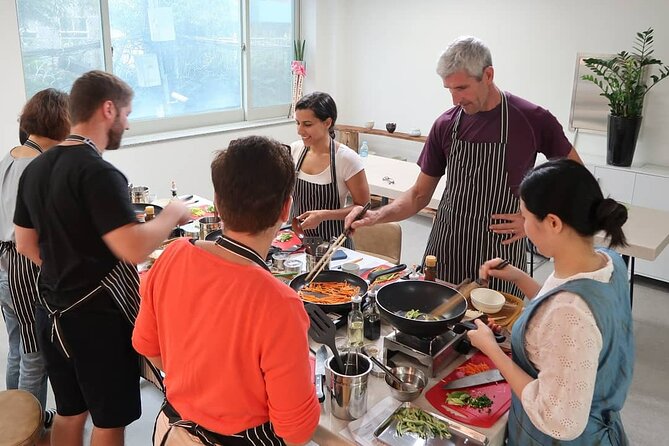
- English chef instruction with a calm, step-by-step teaching style from Heeyoung
- Hands-on cooking studio class where you make and eat multiple typical dishes
- Korean tea ceremony plus a short food culture lecture for context
- Bupyeong Kkangtong Market with guide support so you can shop with confidence
- Max 10 travelers for a small-group feel (your experience stays personal)
Cooking at Busan’s studio: where the class starts shaping your trip
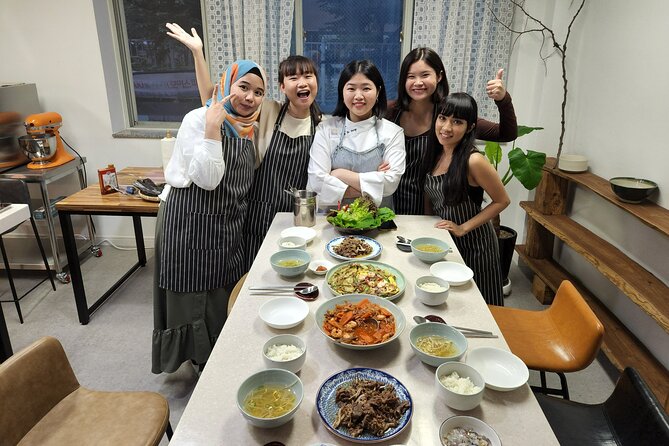
The day starts in the studio at Busan Cooking Class 2F, 15 Gudeok-ro 186beon-gil (Seo-gu). You meet at 10:00 am, and the whole experience runs about 4 hours. The setting matters here: you’re not crammed into a demo-only show. You’re in a real cooking space with tableware and ingredients provided, so you can focus on technique and flavors instead of logistics.
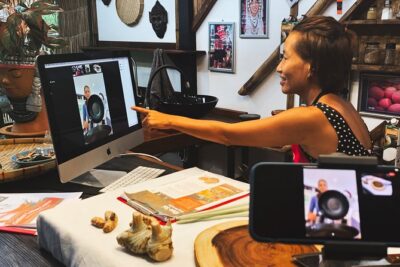
The host for this class is Heeyoung, and the thing that comes through is how clearly she guides the group. She explains what to do and what to watch for without rushing you through. That matters, because Korean cooking often has a feel to it—texture, timing, and how you balance salty, sweet, and savory. If you’re the type who likes to understand why something works, Heeyoung’s explanations give you that extra layer.
You’ll learn Korean cooking techniques while making several typical Korean dishes. The exact menu isn’t listed here, so don’t plan your grocery list in your head—but you can expect the kinds of dishes that represent Korean home cooking and local Busan preferences, especially seafood-focused choices. You also get recipes to take home, plus a Busan food recommendation list, which helps you turn what you learn in class into smart ordering later.
Two practical notes I appreciated: first, you’re given an apron and tableware, so you don’t arrive thinking about what you need. Second, the class includes a Korean food culture lecture. That’s not filler. It helps connect what you taste to the customs behind it—so the market part lands better.
You can also read our reviews of more tours and experiences in Busan.
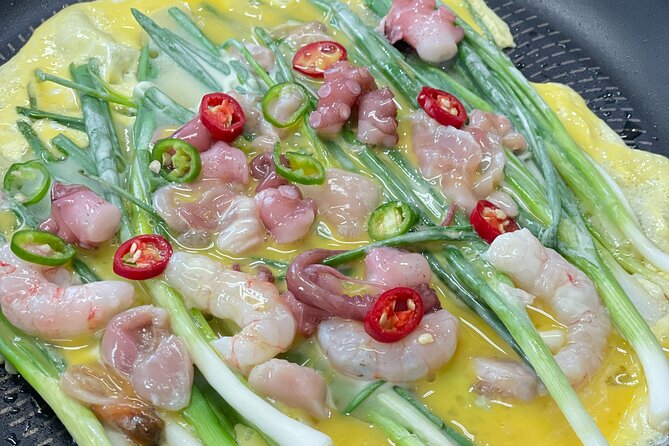
What you’ll cook and why it’s more than just dinner
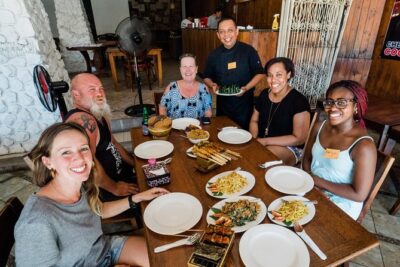
This is built as a cooking class, not a meal. You’ll follow your chef through making dishes, you’ll eat what you make, and you’ll get context for Korean cooking habits along the way. That combination is the real value: you’re learning technique, then tasting the result while it’s fresh.
The experience specifically emphasizes Busan local food and seafood. Busan is a port city, so seafood isn’t a theme—it’s the default. Even if you’ve eaten seafood in Korea before, cooking it yourself changes what you notice. You start paying attention to cuts, seasoning timing, and how ingredients react when heat hits them. That’s the kind of learning you can’t get from a restaurant meal.
Another smart part: your meal comes with local rice wine. Even if you’re not a heavy drinker, it adds to the cultural setting and makes the meal feel like part of the program rather than a quick stop. I’d treat it as a bonus atmosphere element, not a reason to force yourself into anything you don’t enjoy.
And you’re leaving with more than a full stomach. You’ll receive the recipes, plus Busan food rec lists. That means you can recreate the dishes at home and, just as importantly, use the learning to navigate Korean menus with more confidence.
Korean tea ceremony: the palate reset you didn’t know you needed
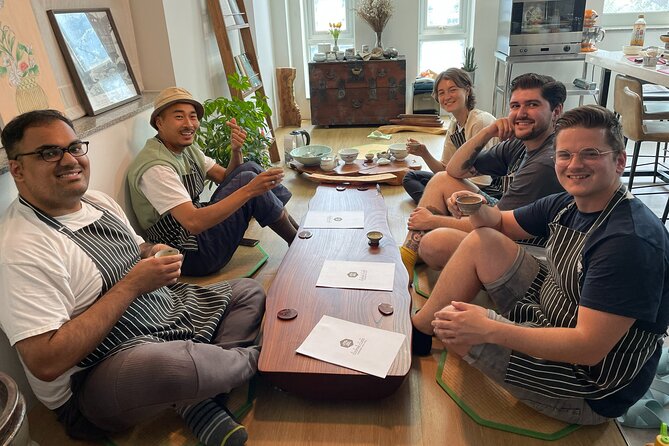
After cooking and eating, the schedule includes a Korean traditional tea ceremony. This is one of the best “slow” moments in a trip packed with food, and it serves a purpose: tea helps reset your taste after salty, savory cooking.
Even without knowing every step of the ceremony in advance, you should expect it to fit the theme of food culture. It’s not just a performance. It’s a way to show how Koreans think about food experiences across a whole evening, not only at the plate.
If you tend to rush through sightseeing, this tea ceremony is a nice counterweight. You’ll get a structured cultural moment that doesn’t require you to speak Korean or interpret signs. You can just watch, listen, and absorb.
Bupyeong Kkangtong Market: translating the sights into real ingredient sense
The last major stop is Bupyeong Kkangtong Market, described as a traditional market that’s over 100 years old. This is where the class starts paying off. In the studio, you learn how dishes come together. At the market, you see where those ingredients and flavor ideas originate.
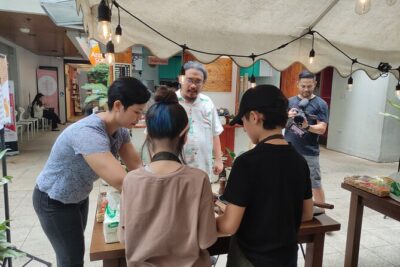
The guide helps with translation, which is huge. Markets move fast: people compare prices, point at items, and know what they want. If you walk in alone, you can still browse, but you’ll miss the meaning. With a guide, you get explanations about local food customs and what ingredients matter.
Think of the market tour as a set of practical skills. You learn how to identify key ingredients, how to ask better questions, and what locals treat as important. This helps you later when you’re eating out around Busan, because you’ll recognize the components behind the dish instead of only the final menu description.
One more reason this works: it closes the loop. After you cook and taste, you’re primed to look for the same flavor logic outside the studio. The market becomes less of a maze and more of a map.
Price and value: what $109.58 buys you in a small-group format
At $109.58 per person for about 4 hours, this sits in the “not cheap, but fair” zone for a specialized food experience. Here’s what you’re paying for, specifically:
- An English cooking class with an instructor who teaches in a clear, step-by-step way
- Ingredients, tableware, and the basic setup (so you’re not paying hidden extras to cook)
- A Korean food culture lecture
- A Korean tea ceremony
- A market tour with translation help at Bupyeong Kkangtong Market
- Recipes and Busan food rec lists to take home
The small-group size also matters. The tour caps at 10 travelers, which helps keep the energy from turning into a rushed conveyor belt. When a guide can actually interact with everyone, you get better explanations and more chances to ask what you’re tasting.
If you’re the kind of traveler who likes to learn by doing, you’ll feel this price more than you would for a quick tasting tour. If you only want to eat, you might prefer a straight restaurant crawl—but this class gives you tools you can keep using.
Timing, meeting point, and how to plan your day
It runs from 10:00 am to roughly 4 hours total, and it ends back at the meeting point. That makes it easier to build your schedule around it. You can plan a lunch option before you go, or keep lunch flexible since you’ll be eating during the experience.
It’s also near public transportation, which is useful in Busan where riding time can vary depending on where you’re staying. A mobile ticket is provided, so you’re not juggling paperwork.
One more planning tip: you’ll be cooking, eating, and walking a market. Wear shoes you don’t mind getting a little warm in. Bring a small bag if you like to carry water, and if you’re the type to shop at markets, keep room in your plan for ingredients or packaged snacks. (This tour is mainly educational and guided, so don’t expect it to be a free-for-all shopping spree.)
Who this Busan local food cooking class is best for
This is a strong fit for:
- Food lovers who want to learn cooking technique, not just sample dishes
- Travelers who like guided translation and hate fumbling through markets
- Anyone who wants a real cultural add-on with the tea ceremony, not only cooking
- People who prefer smaller groups (max 10) and clear English instruction
It’s less ideal for:
- People with very strict dietary needs, since dietary accommodations aren’t described here
- Folks who don’t enjoy hands-on activities and would rather observe
- Anyone on a super tight schedule, because this is a single, continuous 4-hour block
A realistic look at the experience flow
Here’s what the rhythm feels like, and why it works:
First you cook in the studio, following the chef and learning technique as you go. Then you eat the results, with local rice wine, while things are still fresh and warm. After that, the program shifts into tea ceremony mode—slower, calmer, more cultural. Finally, you head to Bupyeong Kkangtong Market where the guide points out ingredients and explains local customs. The result is a full loop from skills to taste to real-world shopping knowledge.
That loop is the main reason the experience tends to stick with you. You don’t just leave with photos—you leave with a mental list of what matters in Korean cooking.
Should you book this Busan local food cooking class with market tour?
If you want a food experience that teaches you how to think about Korean cuisine—especially seafood ingredients—this is a solid choice. The combination of hands-on cooking, English coaching by Heeyoung, a tea ceremony, and a guided market walk gives you more than a typical meal out.
I’d book it if you:
- plan to eat Korean food during the rest of your trip and want to order with confidence
- enjoy cooking class experiences
- like small-group attention rather than a big tour scramble
I’d hesitate if:
- cooking sounds like work to you
- you need specific dietary accommodations that you can’t confirm ahead of time
- you’re only chasing a quick, low-effort activity
FAQ
What’s included in the Busan local food cooking class and market tour?
You’ll get an English cooking class, Korean food culture lecture, Korean traditional tea ceremony, apron and tableware, all ingredients, and a recipe to take home. You’ll also get Busan food recommendation lists. The tour ends back at the meeting point.
How long does the experience take?
It runs for about 4 hours.
Where does the tour start and what time does it begin?
The meeting point is Busan Cooking Class 2F, 15 Gudeok-ro 186beon-gil, Seo-gu, Busan. The start time is 10:00 am.
How big is the group?
This activity has a maximum of 10 travelers.
What happens at the cooking studio?
You’ll make and eat several typical Korean dishes with a professional Korean food chef, learning Korean cooking techniques along the way. The meal is accompanied by local rice wine.
What’s the market stop like?
You’ll visit Bupyeong Kkangtong Market, a traditional market over 100 years old. Your instructor will guide you through it, point out ingredients, and explain local food customs, with help translating.
Is the tour weather-dependent?
Yes. If it’s canceled due to poor weather, you’ll be offered a different date or a full refund.