REVIEW · TBILISI
7-Day Georgian Wine and Culinary Private Tour with Cooking Class
Book on Viator →Operated by Traffic Travel LLC · Bookable on Viator
Wine and cooking lessons in Georgia, one week. I love the hands-on master cooking class, and I love how the tastings jump from wineries to family cellars in places like Khareba Winery and Twins Wine Cellar. One possible drawback: the tour includes tastings and selected meals, but extra food and drinks aren’t automatically covered, so you’ll want to budget for what you order beyond the included stops.
This is also a trip designed for real guidance. With a culinary expert guide plus local support, you’re not just looking at wine labels, you’re learning the food and wine logic behind what Georgia serves. And because it’s a private tour capped at 6 people, the pace feels controlled even when the schedule is full.
You’ll sleep 6 nights in 3-star hotels or guesthouses, travel in a climate-controlled minivan, and eat a mix of included breakfasts/dinners and meal breaks timed to tastings. If you’re the type who needs hours of free time every day, this one may feel tight.
In This Review
- Key highlights you’ll feel fast
- The value: what your $784.62 actually buys
- Tbilisi kickoff: Sarajishvili brandy, Chateau Mukhrani, and your first cooking steps
- Kakheti day 1: Telavi, Alaverdi and Gremi, Twins Wine Cellar, and Ikano
- Kakheti day 2: Khareba’s former bomb shelter, churchkhela, Teliani Valley, and Shumi
- Dinner in Tbilisi: Barbarestan and a feast with seasonal feel
- Kutaisi and beyond: family wine cellars, Uplistsikhe, Stalin’s museum, and Gelati
- Racha and Oni: Bugeuli, Ambrolauri’s family cellar, Barakoni Monastery, and wine in the north
- Shaori Lake, Nikortsminda Cathedral, Prometheus Caves, and a Kutaisi city tour
- Mtskheta and Jvari: Katshki Pillar, Svetitskhoveli Cathedral, and your final gala in Tbilisi
- How to pace the tastings (so you enjoy them, not just endure them)
- What’s included, what’s not, and what to budget for
- Who this tour fits best
- Should you book it?
- FAQ
- How long is the tour?
- Where does the tour start and when?
- Is this tour private?
- What kind of hotels or lodging are included?
- What meals are included?
- Are wine and food tastings included?
- Are additional food and drinks included?
- Is pickup and transport included?
- Can I cancel for a full refund?
Key highlights you’ll feel fast
- Cooking class that turns tastings into recipes with a culinary masterclass format
- Multi-region wine route from Kakheti through Kutaisi to Racha
- Winery settings you won’t forget, including Khareba’s former bomb-shelter setup
- Monasteries and cave towns that make the trip feel grounded in place
- Max 6 people in a private vehicle, so the guide can actually manage questions
The value: what your $784.62 actually buys
At $784.62 per person, this doesn’t feel like a cheap “drive-by tasting tour.” It’s more like a full-week food-and-wine curriculum, with hotels, transport, and guided visits folded in.
Here’s what you’re paying for that matters:
- Transportation in an air-conditioned minivan with round-trip private transfers and pickup/drop-off.
- Two-layer guidance: a local guide and a professional guide, plus a culinary expert leading the cooking side.
- Time-saving logistics across long distances. You’re not hopping between buses and timing your own drivers while trying to eat.
- A structured food-and-wine schedule, including multiple tastings and several meals (with bottled water included).
The main “gotcha” is simple: food and drinks aren’t included unless specified. That means the tastings are covered, but if you order additional bottles, cocktails, or extra restaurant items beyond what’s built into the plan, you’ll pay out of pocket. The good news is that you’ll know what’s coming next, so you can spend intentionally.
You can also read our reviews of more tours and experiences in Tbilisi.


Tbilisi kickoff: Sarajishvili brandy, Chateau Mukhrani, and your first cooking steps
The week starts in Tbilisi, with pickup and hotel-to-hotel travel handled for you. You begin with a first flavor of Georgia’s spirits world at the Sarajishvili brandy factory. Even if you’re not a spirits person, I like factory visits like this because they add context to what you’ll taste later in wine country.
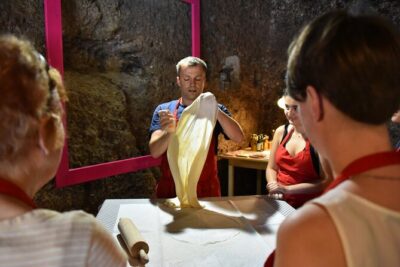
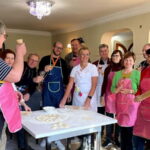
Then the tour pushes you into food mode. At Chateau Mukhrani, you eat at a restaurant tied to its own vineyard, which is a smart way to connect the meal to the land. After lunch, you shift from eating to doing with a master cooking class focused on Georgian dishes. This is one of the best design choices on the whole trip: once you’ve tasted Georgia, you get to learn what’s behind the flavors while it’s still fresh.
Practical note: a cooking class day is usually a “hands, heat, and time” day. Wear something comfortable that you won’t mind getting a little food-stink on. Also, you’ll likely be tasting on and off throughout, so drink water and keep your pace steady.
Kakheti day 1: Telavi, Alaverdi and Gremi, Twins Wine Cellar, and Ikano
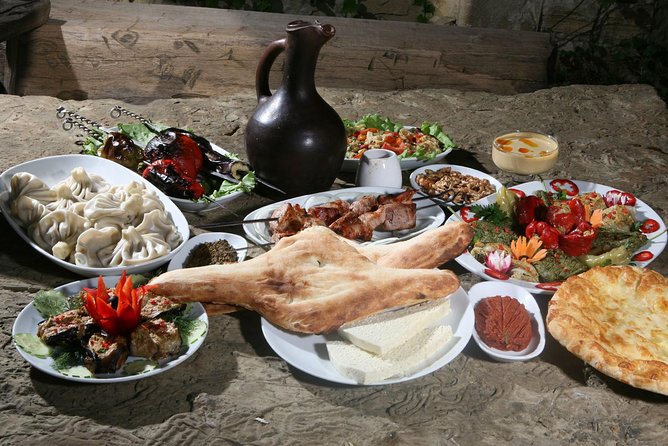
On the second day, you head into Kakheti, Georgia’s best-known wine region. Kakheti is the place where the trip becomes more than food tourism. It starts to feel like a route through working vineyards, family cellars, and old religious sites that still sit near the roads.
You begin with Telavi and the Alexander Chavchavadze Estate Museum, then move to two major monastery stops:
- Alaverdi Monastery
- Gremi Monastery
Those breaks matter because they slow the day down. You get wide views and a sense of how long people have lived here. After that, it’s back to tasting.
At Twins Wine Cellar in Napareuli, you’ll experience a more rustic, museum-style wine setting. It’s not only about drinking—it’s about seeing how wine is presented and preserved as part of local life. Then lunch takes you to Ikano Winery, where you’ll have another wine tasting. This combination works well: you don’t just jump from one winery to another, you get a fuller rhythm of eating plus tasting plus learning.
Kakheti day 2: Khareba’s former bomb shelter, churchkhela, Teliani Valley, and Shumi
The Kakheti sequence gets more unusual and memorable. First up is Khareba Winery, famous for being in a former bomb shelter. The tasting experience includes something extra: it takes place in an underground tunnel setting. That detail changes the whole feel of the tasting. Wine tastes different when the room is cool, the air is still, and you’re aware you’re drinking underground.
Next, the tour brings in a Georgian classic snack moment with churchkhela, a sweet made from grape juice. It’s a good break before another round of tastings.
At Teliani Valley Winery, you get a wine tasting. Then the schedule switches gears again with another hands-on element: a masterclass at Shumi Winery that builds on what you learned earlier. If you’re worried you’ll get “cooking class fatigue,” I think this pairing helps. You’re learning in one context, tasting in another, then cooking again when flavors are still in your head.
After Shumi, you continue into Signaghi, described as the red-roofed town at the heart of the wine region. You also stop at Pheasant’s Tears Winery, where you’ll experience interpretive modern cuisine alongside their wine selection. This is a nice contrast. Not every winery meal is traditional-only, and it gives you a fuller picture of what people eat alongside the wine scene now.
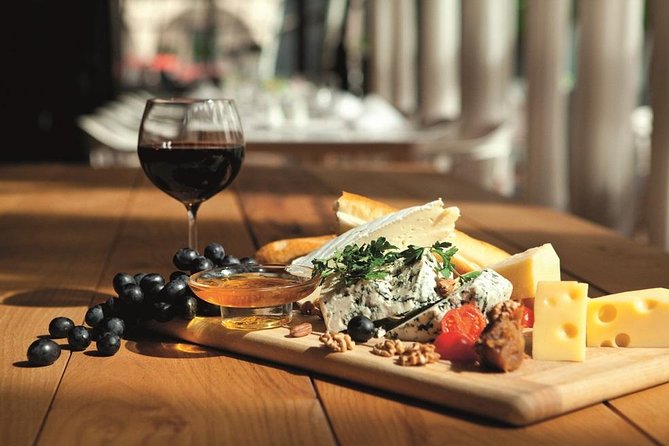
The day still includes simpler tastes too, like local bread and cheese before you head back toward Tbilisi.
Dinner in Tbilisi: Barbarestan and a feast with seasonal feel
Back in Tbilisi, you finish with a traditional Georgian feast at Barbarestan, described as home-style cooking with seasonal ingredients in a stylish district. This is a smart placement for the “big dinner” on the trip because you’ve already covered the wine route and the cooking lessons. You’re now in the phase where you can connect what you ate to what you learned.
If you love food travel, this is the kind of night that sticks. You’re not eating at a random restaurant—you’re in a setting that fits the tour theme.


Kutaisi and beyond: family wine cellars, Uplistsikhe, Stalin’s museum, and Gelati
On day four, you drive west to Kutaisi, and the tone shifts slightly: more ancient sites, more history breaks, and more variety in the tasting setup.
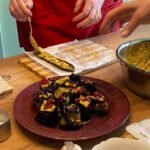
You start with a tasting in a family wine cellar. This is the “real-life” counterpart to the formal winery experiences. Family cellars help you understand how wine culture isn’t only industrial or brand-focused—it also lives in small-scale storage and local relationships.
Then you go to Uplistsikhe, described as an ancient cave town. Walking through cave-town spaces does something that a museum doesn’t always do: it gives you an immediate sense of how people shaped daily life into the environment.
You also visit Stalin’s museum. That stop is a left turn compared with monasteries and wineries, but it adds a layer of understanding about Georgia’s 20th-century story.
After that, there’s another afternoon wine tasting, and then you move to Gelati Monastery, noted as a striking medieval site. In other words: you’ll finish the day with a visual anchor after all the cellar-and-tasting stops.
You spend the night in Kutaisi, which helps keep your energy manageable.
Racha and Oni: Bugeuli, Ambrolauri’s family cellar, Barakoni Monastery, and wine in the north
Then you continue north into Racha, a region the tour frames as a wine area with its own pace. You’ll taste first at Bugeuli Winery, then later at a family wine cellar near Ambrolauri.
Between tastings, you stop at Barakoni Monastery, tucked between wild green mountains (as described). This is another place where the trip keeps you from burning out. You get mountains, quiet, and a pause from the repetitive cycle of “car to tasting to car.”
Overnight in Oni adds a nice change of atmosphere. The tour is still moving, but the town base gives you a chance to settle.
Shaori Lake, Nikortsminda Cathedral, Prometheus Caves, and a Kutaisi city tour
The day begins with nature and religious heritage at Shaori Lake, described as a clear body of water high in the mountains. After the lake, you visit Nikortsminda Cathedral, noted as an 11th-century stop, and then the tour includes Prometheus Caves.
Caves are great on a wine tour because you’re mixing sensory worlds. After tasting and cooking, it’s a relief to do something fully visual and physical. You’re also not stuck in another tasting room, which helps the week feel varied.
Then you return to Kutaisi for a city tour. I like that they use Kutaisi again instead of scattering you across new hotels every night. It reduces the feeling of constant packing.
Mtskheta and Jvari: Katshki Pillar, Svetitskhoveli Cathedral, and your final gala in Tbilisi
For the last day, you head back to Tbilisi via the scenic upper Imereti Road. Along the way, you stop at Katshki Pillar, a natural limestone formation with a church perched on top. It’s the kind of stop that doesn’t need a long explanation because it’s visually obvious why people stop and stare.
Next is Mtskheta, Georgia’s ancient capital. You’ll see Svetitskhoveli Cathedral, described as the second-largest church in the country, and then you visit Jvari Monastery on a cliff’s edge.
After returning to Tbilisi, you end with a gala dinner and a national folk show. This closing combo feels right after a week of craft, tastings, and historic sites. It’s entertainment, but it’s also a cultural finish that matches the rest of the tour’s theme.
How to pace the tastings (so you enjoy them, not just endure them)
This tour schedules multiple tastings across several days, including some high-drama settings like Khareba’s underground tunnel. That’s exciting, but you’ll have the best time if you pace yourself.
My practical advice:
- Use the bottled water and make it a habit, not an afterthought.
- If you want to buy souvenirs, do it after tastings, not during them. Otherwise your attention gets split.
- Don’t feel pressured to sip everything. Tastings are about comparing, not finishing.
- If you’re a light eater, prioritize the included meal breaks before tastings. Wine plus an empty stomach is a fast route to a sour mood.
And because it’s a private small group capped at 6, you can usually keep the flow comfortable. You’ll spend less time waiting and more time actually talking with your guide.
What’s included, what’s not, and what to budget for
Included in your package:
- 6 nights’ accommodation (3-star hotels or guesthouses)
- Breakfast and dinner
- Food and wine tastings
- Local guide and professional guide
- Round-trip transportation, including hotel pickup/drop-off
- Transport in an air-conditioned minivan
- Bottled water
- Some meals and activities matched to the itinerary
Not included:
- Food and drinks unless specified
So, plan on extra spending mainly for meals/drinks that are not explicitly covered by the package. The tastings are included, but if you want to add bottles or upgrade restaurant orders, that’s on you.
Who this tour fits best
You’ll likely love this if:
- You want a structured week focused on Georgian wine and cooking, not random stops.
- You like when history and food travel are mixed on purpose, not treated as side quests.
- You’re okay with driving days in exchange for hitting multiple regions.
You might want to skip or choose a lighter alternative if:
- You hate car travel and want lots of downtime daily.
- You’re not interested in cooking classes or multiple tastings.
- You have no flexibility for extra spending on drinks beyond the included tastings.
Should you book it?
I think this is a strong choice if you want a real “taste-and-learn” week, not just photos of vineyards. The best part is the way the trip repeats the cycle: you taste, you learn, then you cook. Add in unusual stops like Khareba Winery and cave-town Uplistsikhe, and you get more than a one-note food tour.
Book it if you’re excited to get hands-on and you’ll enjoy a busy itinerary with a small group. Skip it if you need lots of free time or you’re looking for food without alcohol-related tastings. If you’re middle of the road, this tour can still work—just pace your sips and follow the guide’s lead.
FAQ
How long is the tour?
It’s listed as 7 days (approx.), with 6 nights of accommodation included.
Where does the tour start and when?
It starts in Tbilisi, Tbilisi, with a start time of 9:00 pm.
Is this tour private?
Yes. It’s a private tour, with a maximum of 6 people per booking.
What kind of hotels or lodging are included?
The tour includes nightly accommodation in 3-star hotels or guesthouses.
What meals are included?
Breakfast and dinner are included, along with food tastings, wine tastings, and meals and activities that are part of the itinerary.
Are wine and food tastings included?
Yes. The package includes food tasting and wine tasting.
Are additional food and drinks included?
Food and drinks are not included unless specified by the tour.
Is pickup and transport included?
Yes. You get hotel pickup and drop-off, round-trip private transfer, and transport by air-conditioned minivan.
Can I cancel for a full refund?
Yes, free cancellation is available up to 24 hours in advance for a full refund.