REVIEW · ROPPONGI
TAKOYAKI Cooking Class with All-you-can-drink in Tokyo, Roppongi
Book on Viator →Operated by Japanese Calligraphy Experience at Shodo Cafe 7557 of Roppongi · Bookable on Viator
Takoyaki tastes better when you make it. In Roppongi, this hands-on class turns a street snack into a proper mini party, with all-you-can-drink keeping things relaxed.
I love how the takoyaki machine keeps the steps simple and un-rushed—dough, chopped octopus, then toppings in order. I also love the friendly guidance from Kana and Asami, who were patient with guests working through Japanese. The one thing to consider: in rough weather, the exact meeting spot can be a little tricky to spot quickly.
In This Review
- Key points before you go
- Roppongi Takoyaki: Why This Feels Like a Real Japanese Party
- What You Actually Cook: Dough, Octopus, Toppings (In Order)
- The Takoyaki Machine Makes It Approachable (No Time Pressure)
- From Cooking to Eating: Your Mini Takoyaki Party
- All-you-can-drink in the Mix (Including Lemon Sours)
- Meet Kana and Asami: Friendly Help for Your Japanese Level
- Where It Starts in Roppongi (And Why Rain Can Matter)
- Duration and Pace: About 1 Hour 10 Minutes
- Price and Value: What $57.23 Gets You
- Who This Takoyaki Class Is Best For
- Should You Book This TAKOYAKI Cooking Class?
- FAQ
- How long is the takoyaki cooking class?
- Where is the meeting point in Roppongi?
- What’s the group size for this experience?
- What will I learn to make?
- Is all-you-can-drink included?
- Are tools and ingredients included?
- Is private transportation included?
- Does it use a takoyaki machine?
- Is there a mobile ticket?
- Is free cancellation available?
- Are service animals allowed?
Key points before you go
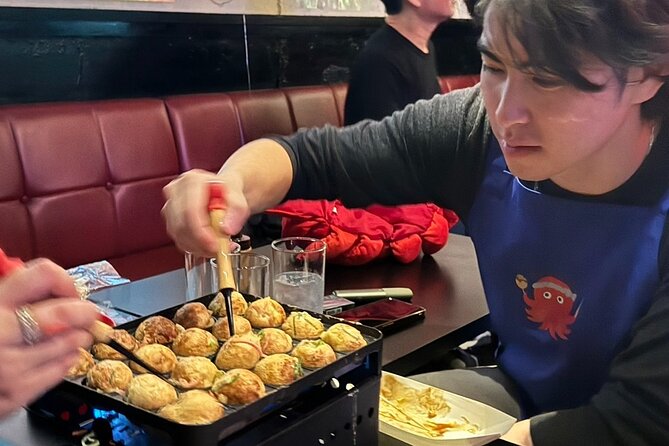
- Simple, structured cooking: dough first, then chopped octopus, then toppings (green onion → pickled ginger → bonito flakes)
- A no-rush pace: there’s no time pressure to finish your batch
- All-you-can-drink included: including alcoholic drinks and soft drinks, with lemon sours showing up in the review notes
- Small group (max 10): easy to ask questions without feeling lost in a crowd
- Talk Japanese culture while you eat: you’ll cook, then chat with the staff as you go
- Roppongi meeting point: near public transport, but still worth arriving early in bad weather
Roppongi Takoyaki: Why This Feels Like a Real Japanese Party
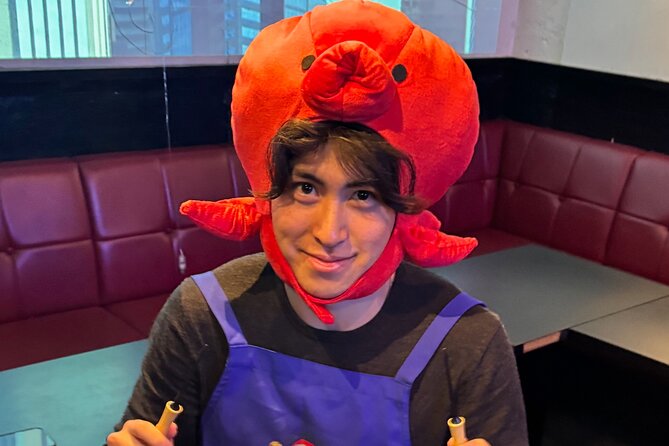
Takoyaki is one of those foods that looks simple and then proves it isn’t totally automatic until you’re on the griddle. This class is built to help you get past that first try. You’re not just watching. You’re making the snack in the classic way: you start with dough, add octopus, and finish with the toppings in the right order.
What makes it especially fun is the house-party angle. In Japan, takoyaki often shows up at home gatherings. The idea here is similar: you show up, you cook side by side, and you talk while food is actually happening. That social rhythm matters. It turns a quick lesson into a night you remember.
The setting is in Roppongi, so you also get that Tokyo energy nearby, without needing to build a whole itinerary around it. You can fit this into a day that already has sightseeing. Or you can use it as your scheduled warm-up when the weather is doing its own thing.
What You Actually Cook: Dough, Octopus, Toppings (In Order)
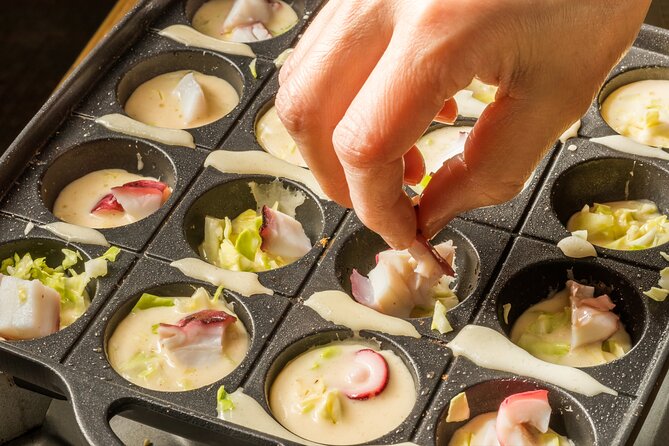
This is a three-part process, and I like that it’s clearly broken down. You’re dealing with:
1) Make the takoyaki dough
You’re not guessing your way through the base. The class walks you through it so you understand what you’re pouring onto the griddle.
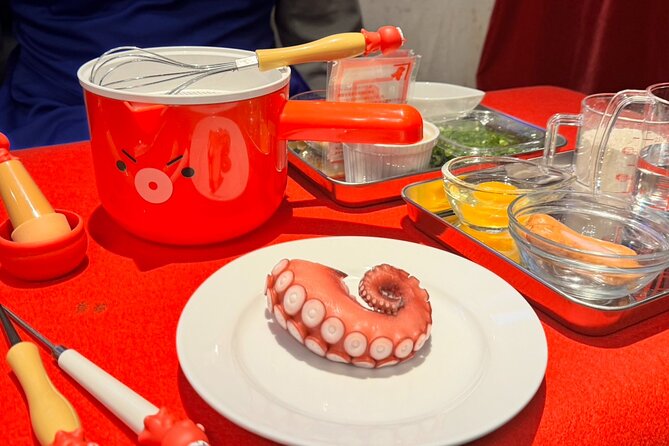
2) Cut and add the octopus
Takoyaki is built on chopped octopus mixed into the cooking. If you’re sensitive to seafood or just not into octopus, this is the point where you should think twice before booking.
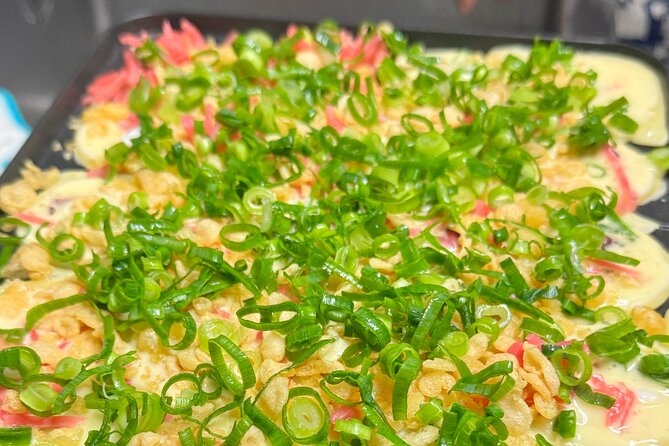
3) Top it correctly: green onion, pickled ginger, bonito flakes
The order is part of the flavor. Green onion goes first, then pickled ginger for the punchy tang, and then bonito flakes on top. That sequence is quick, but it helps you taste the structure of takoyaki instead of treating it like any random ball snack.
The class emphasizes that the steps are simple when you’re using the takoyaki machine. That matters for first-timers. You’ll spend your time learning how the dough cooks and how the toppings land—not stress about complicated technique.
The Takoyaki Machine Makes It Approachable (No Time Pressure)
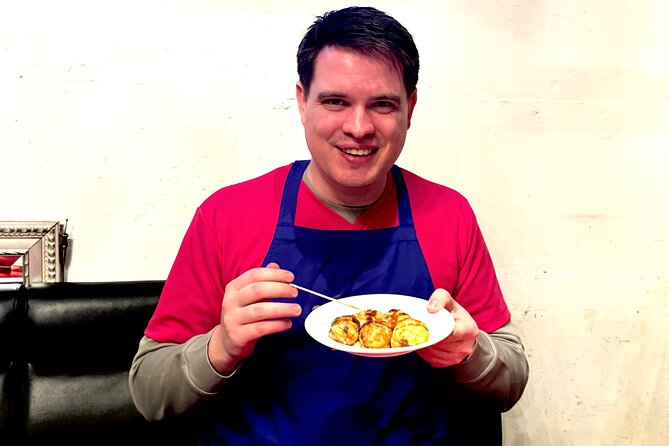
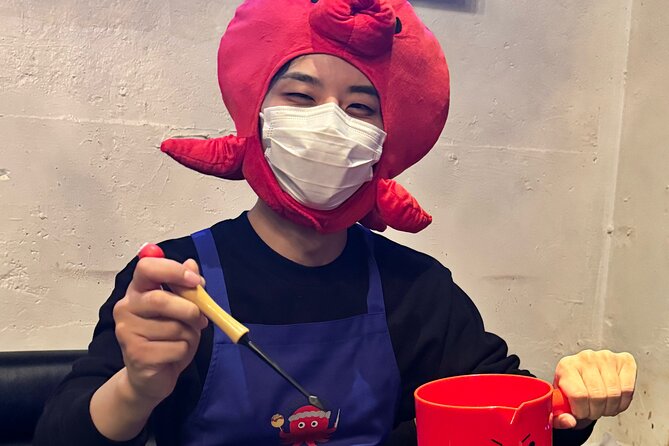
Takoyaki has a reputation for being tricky because the balls need to cook evenly and flip the right way. Here’s the good news: you’re using a specially shaped takoyaki griddle with a machine setup designed for this snack.
The session is described as very straightforward, and the cooking portion is about 20 minutes. That’s a great timing sweet spot. Long enough to learn your rhythm. Short enough that you don’t feel trapped if a batch needs a little extra attention.
Just as important: there is no time pressure to make takoyaki. That phrase sounds small, but it changes the whole vibe. You can focus on the process—dough consistency, spacing on the mold, and toppings—without the panic of a countdown.
If you’ve ever taken a hands-on class where you feel rushed, you’ll appreciate this one. Food cooking is much more fun when you have a moment to breathe.
From Cooking to Eating: Your Mini Takoyaki Party
You don’t just cook and then leave. You cook and eat with the staff. That’s a key difference between a lesson and an experience.
In practice, that means once your takoyaki is ready, you get to taste your batch immediately while you’re still in the flow of the session. You’re also able to compare what you did—how your dough held up, how the toppings sat on top, and how hot the inside felt.
There’s also a social component: you’ll talk about Japanese culture with the staff while you’re eating. It’s not presented as a lecture. It’s more like conversation that fits naturally around food. If you enjoy learning through small stories and everyday habits, this style usually hits the mark.
All-you-can-drink in the Mix (Including Lemon Sours)
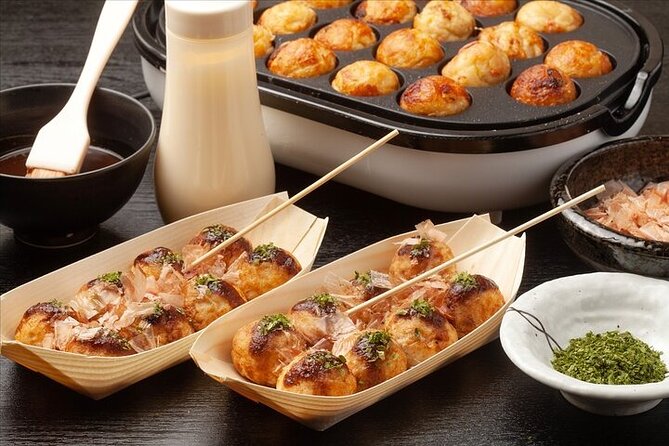
One of the biggest practical wins here is that all-you-can-drink is included. The class covers both alcoholic beverages and soft drinks. That matters because takoyaki parties in Japan are often paired with drinks, and this setup mirrors that.
In the review notes, lemon sours keep coming up—described as endless. I can’t guarantee the exact menu for every date, but the overall point is consistent: you’re not ordering separately for every drink.
This is also why the value works so well for the price. If you’ve ever paid Tokyo prices for a snack and then added drinks later, the math usually gets ugly fast. Here, you’re paying once and letting the evening run.
Quick consideration: if you don’t drink alcohol, you’ll still get soft drinks. And if you do drink, remember it’s a cooking class—so keep it fun, not sloppy. You’ll be standing and working around a hot griddle.
Meet Kana and Asami: Friendly Help for Your Japanese Level
I like when a class makes space for real people. Not everyone speaks Japanese perfectly. Here, that seems to be handled with patience.
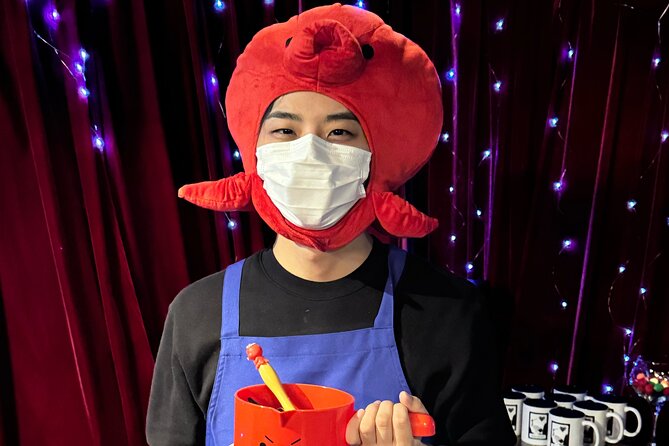
One review specifically called out hosts Kana and her friend Asami, praising their fun hosting and patience with guests who were working through Japanese. That’s the kind of detail that actually helps you decide. You can feel more confident showing up even if your Japanese is basic.
Since the class is small (max 10), you’re less likely to get stuck at the back wondering if you missed an instruction. Instead, you can ask questions while you’re working.
Also, because the steps are already broken into clear parts (dough, octopus, toppings), the language barrier gets smaller. Food is often a universal teacher—especially when the process is hands-on.
Where It Starts in Roppongi (And Why Rain Can Matter)
The meeting point is in Roppongi at 六本木7557, located at 7-chōme, in the Crest Roppongi area, on the 2nd floor. The address is Japan, 106-0032 Tokyo, Minato City, Roppongi, 7-chōme93 クレスト六本木 2階.
It’s near public transportation, which is a big plus in Tokyo. Still, one review mentioned trouble finding the location in a huge thunderstorm, followed by the feeling that it was a great way to escape the rain.
So here’s my practical advice: plan to arrive a bit early and be ready to use your phone map for the exact entrance. In Japan, businesses often share the same building space, so you want the correct stairwell or elevator bank, not just the general neighborhood.
Duration and Pace: About 1 Hour 10 Minutes
The class runs about 1 hour 10 minutes (approx.). That’s the kind of timeframe that fits between other plans without wrecking your schedule.
The cooking itself is described as around 20 minutes. After that, you get to eat and talk. So even if you’re not a fast cook, the timing is built to let you finish without rushing.
That’s helpful when you’re traveling with a mixed group—some people cook quickly, others take a moment to get comfortable. This one is structured to keep everyone moving at a reasonable pace.
Price and Value: What $57.23 Gets You
$57.23 per person is not a bargain snack price. In Tokyo, cooking classes and food experiences often cost more. So the question is whether this feels like good value, and for me it depends on what’s included—and here, there’s a lot.
Your price includes:
- the cooking tools
- snacks (your takoyaki)
- all-you-can-drink (alcoholic beverages and soft drinks)
- gratuities
That combination matters. You’re getting a hands-on lesson plus food plus drinks. If you were to try to recreate this on your own—buy ingredients, find the right setup, and then pay for drinks—you’d likely spend more and still not get the guidance.
The small group size (up to 10) also supports the value. When it’s not crowded, you get more real attention.
Not included is private transportation, which is normal for most Tokyo activities. But since the meeting point is near public transportation, you’re not forced into a taxi plan.
Who This Takoyaki Class Is Best For
This class is built for fun, and it’s stated as suitable for all ages. In practical terms, I think it fits best when you want:
- a hands-on activity that’s friendly for beginners
- a social plan for friends, couples, or mixed groups
- a break from long sightseeing days—something warm, cooked, and immediate
- a food experience that feels closer to Japanese home gatherings than a formal show
If you’re the type who loves street food but wants to understand how it’s actually made, you’ll likely enjoy this. You’ll leave knowing what goes into takoyaki and how toppings change the taste.
Should You Book This TAKOYAKI Cooking Class?
Book it if you want an easy, real cooking experience in Tokyo that ends with you eating what you made, with all-you-can-drink included. The no-time-pressure pace, the small group size, and the guidance from Kana and Asami make it especially appealing if you’re not confident in Japanese or cooking skills.
Skip it or think carefully if octopus isn’t your thing, because chopped octopus is part of the core method here. And if you’re traveling in stormy weather, arrive early and double-check the exact entrance so the rain doesn’t slow you down.
Overall, it’s a good use of a short window of time: quick cooking, clear steps, and a party feel that matches how takoyaki actually shows up in Japanese life.
FAQ
How long is the takoyaki cooking class?
It’s about 1 hour 10 minutes (approx.).
Where is the meeting point in Roppongi?
Start is at 六本木7557 in Roppongi (Crest Roppongi area), on the 2nd floor: Japan, 106-0032 Tokyo, Minato City, Roppongi, 7-chōme93 クレスト六本木 2階.
What’s the group size for this experience?
It has a maximum of 10 travelers.
What will I learn to make?
You’ll make takoyaki from scratch, including making the dough, adding chopped octopus, and topping it with green onion, pickled ginger, and bonito flakes in order.
Is all-you-can-drink included?
Yes. All-you-can-drink is included, with alcoholic beverages and soft drinks.
Are tools and ingredients included?
Yes. The tools for the cooking are included, and takoyaki snacks are included.
Is private transportation included?
No, private transportation is not included.
Does it use a takoyaki machine?
Yes. The steps are described as simple using a takoyaki machine.
Is there a mobile ticket?
Yes, this activity includes a mobile ticket.
Is free cancellation available?
Yes. You can cancel up to 24 hours in advance for a full refund.
Are service animals allowed?
Yes, service animals are allowed.