REVIEW · SA PA
Cooking Class in Sa Pa With Local Chef
Book on GetYourGuide →Operated by Saigonese Trekking House · Bookable on GetYourGuide
A class that mixes food and mountain views is a winner. You get a hands-on cooking session in Sa Pa with spring rolls and a tangy tofu dish, plus a market walk that feels like how locals actually plan dinner. I also love that the group stays small, so you can ask questions while you cook instead of watching from the sidelines. One thing to think about: the spring rolls can involve meat fillings, so if you’re strictly vegetarian, check what options you can choose ahead of time.
Here’s what makes this experience feel practical and real: you start by talking through the dishes, then you head to a nearby market to pick ingredients, and you finish by cooking together and eating a relaxed dinner with local wine. In at least some sessions, the market part is led by an English-speaking guide named Sisi, and that kind of on-the-spot help is a big part of why it works. Plan for a 4-hour block at the listed start time (14:00 is shown), with sessions limited to 10 people so it doesn’t turn into a big production.
In This Review
- Key highlights you’ll care about
- Cooking class in Dong Bac: why Sa Pa feels different from the usual food tour
- From 14:00 to dinner: how the 4-hour flow really works
- The market stop in Dong Bac: what you gain by shopping like locals
- A practical caution for your shopping mindset
- Spring rolls in Vietnam: technique + the ingredient logic behind it
- One thing to consider
- Tofu in tomato sauce: why this simple dish lands so well
- Sunrise viewpoint and panoramic mountain views: the part that makes it memorable
- Dinner with local wine: what to expect from the shared meal
- Small-group size makes the dinner better
- Price and value at $30 for a 4-hour small-group class
- Who should book this Sa Pa cooking class, and who might skip it
- Should you book this Sa Pa cooking class?
- FAQ
- Where does the cooking class take place?
- How much does it cost, and how long is it?
- What time does the class start, and is instruction in English?
- What dishes will we cook?
- Is there market shopping and mountain scenery?
- Is local wine included with dinner?
- Is it suitable for older adults, and can I get a refund?
Key highlights you’ll care about
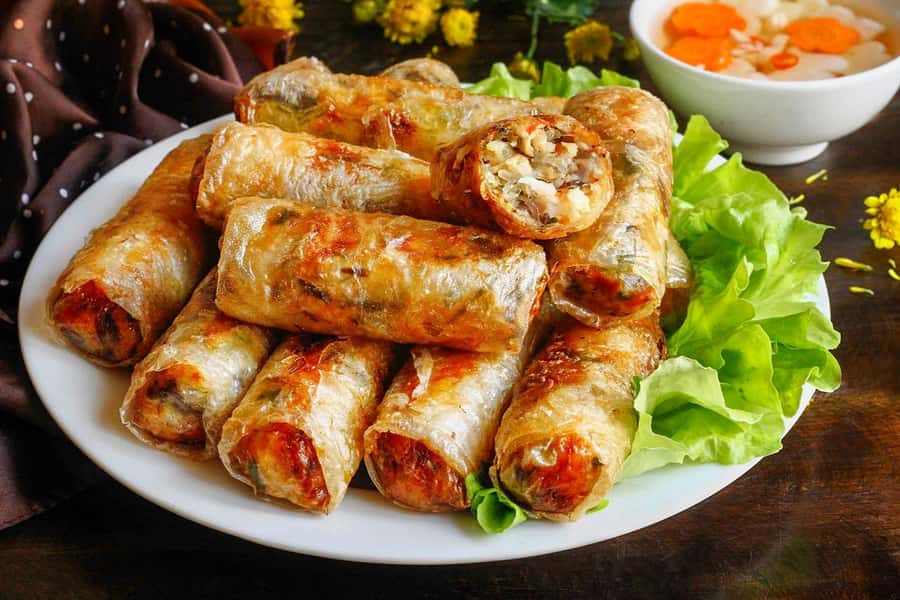
- Dong Bac market shopping first, so the cooking starts with real ingredients and real choices
- Spring roll technique with classic Vietnamese fillings like vermicelli noodles, leafy greens, pork, carrot, onion, and bean sprouts
- Tofu in tomato sauce that’s simple, tangy, and explicitly positioned as an easy vegan comfort dish
- A shared dinner with local wine, so the meal feels complete, not just a cooking demo
- Mountain views and a sunrise viewpoint, plus a stop with the wow-factor of being at the top of Vietnam
- Small group size (max 10), which keeps the English instruction useful instead of rushed
Cooking class in Dong Bac: why Sa Pa feels different from the usual food tour
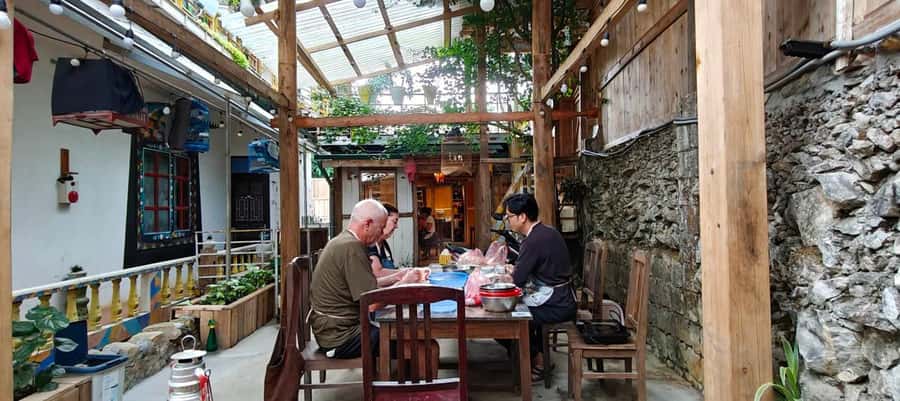
Sa Pa already has a special vibe: misty hills, layered views, and a slower rhythm than big-city tourism. This class adds a second layer—food you make yourself, using ingredients you pick with your own hands. That combo is why it’s more than a single meal or a quick cooking show.
I like that the focus is on healthy Vietnamese home cooking rather than fancy plating. You’re learning dishes you can realistically repeat later, not just techniques that look good once.
You’re also not stuck in one room the whole time. The experience builds in an outdoor viewpoint moment—bright morning air, big mountain views, and the feeling of going beyond the standard “eat and run” tourist script.
From 14:00 to dinner: how the 4-hour flow really works
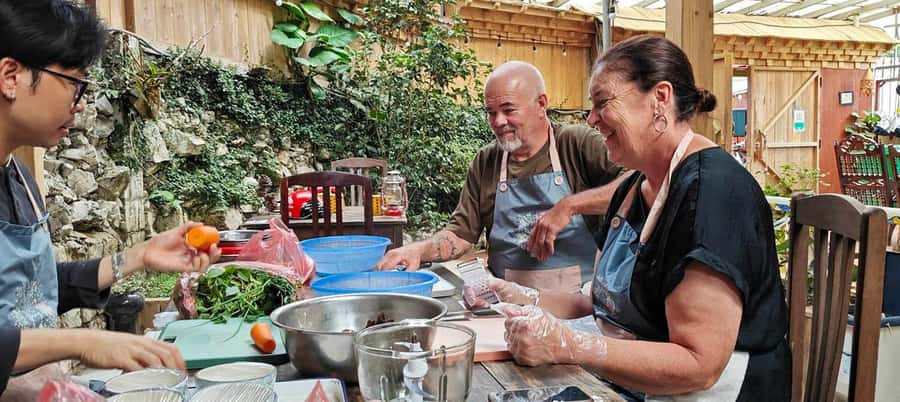
The class is scheduled for 4 hours, and the listed start time is 14:00. Starting times can vary, but the structure stays consistent: plan the menu, shop for ingredients, cook together, then sit down for a relaxed meal.
Think of the timing like this:
1) Choose what to cook and talk through the cuisine
2) Grab fresh ingredients at a nearby local market
3) Return to the cooking place and work as a group
4) Enjoy dinner together with local wine
This pacing matters. If you’ve ever taken a cooking class where everything happens too fast, you know how that feels. Here, the market stop gives you a reason for what you’ll do at the stove. It turns recipes into a living workflow.
The market stop in Dong Bac: what you gain by shopping like locals
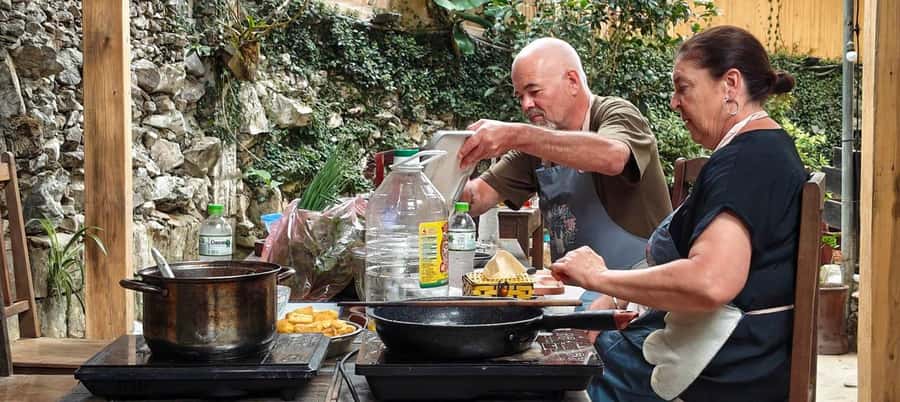
The market portion is one of the best parts to pay attention to. You’re not just grabbing ingredients—you’re walking through choices and understanding what makes Vietnamese meals taste right.
In the course format, you discuss what type of traditional local cuisine you want to savor, then you gather fresh produce and other ingredients at the market. It’s a small detail, but it changes your whole relationship with cooking. You start noticing textures, colors, and the role of each ingredient instead of following a list blindly.
The class is also taught in English, and the pacing is set up for small groups (10 people max). That means you can ask practical questions like what’s used for spring rolls, what to look for in greens and noodles, and how to balance flavors when you’re cooking a sauce.
A practical caution for your shopping mindset
Personal expenses aren’t included, so it’s smart to bring a little extra cash/card for any items that might fall outside what’s covered for the class dishes. Also, if you have strong dietary rules (like avoiding pork), ask early how the spring roll fillings are handled.
Spring rolls in Vietnam: technique + the ingredient logic behind it
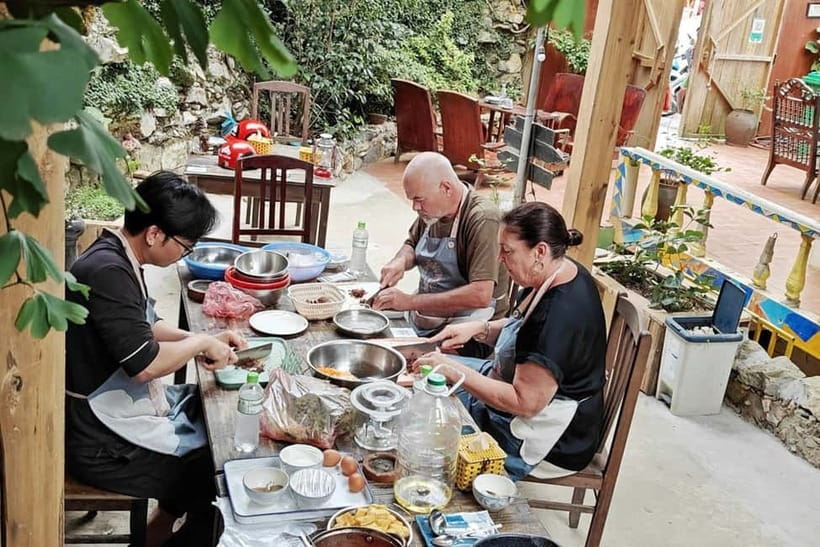
Vietnamese spring rolls are deceptively simple. They look like wrapping. They’re really about balance: crisp with fresh, soft with chewy, and salty with bright.
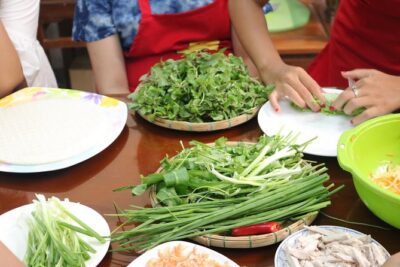
The menu here is classic: you learn to make spring rolls and you can expect fillings that commonly include vermicelli noodles, leafy greens, onion, pork, carrot, and bean sprouts. That mix matters. Vermicelli brings chew. Greens add crunch. Pork adds savory depth. The rest supports the texture and sweetness.
When the group cooks together, you get steps explained so you’re not guessing. That step-by-step help is exactly what you want if you’re serious about cooking, not just tasting.
Here’s the payoff you’ll feel: once you understand how the fillings work together, you can swap ingredients later and still keep the flavor right.
One thing to consider
Spring rolls can include pork depending on the filling choices. The tour’s tofu dish is presented as vegan-friendly, but spring rolls can be meat-based. If you’re strict vegetarian, confirm what fillings you’ll use before you commit.
Tofu in tomato sauce: why this simple dish lands so well
The other dish is tofu mixed with tomatoes, cooked as a tangy Vietnamese sauce. The class calls it a comforting, easy-to-make dish, and that description fits real-world cooking logic: tomato adds acidity, tofu holds it like a sponge, and the result feels like a warm bowl even when the rest of the meal is lighter.
You’ll learn this dish in the context of making healthy Vietnamese food. The key is you’re not just watching a sauce boil—you’re cooking it with guidance as the ingredients come together.
If you’re looking for something repeatable at home, this one is a good bet. It’s flexible, it doesn’t require rare ingredients, and you don’t need fancy equipment to get it right.
Sunrise viewpoint and panoramic mountain views: the part that makes it memorable
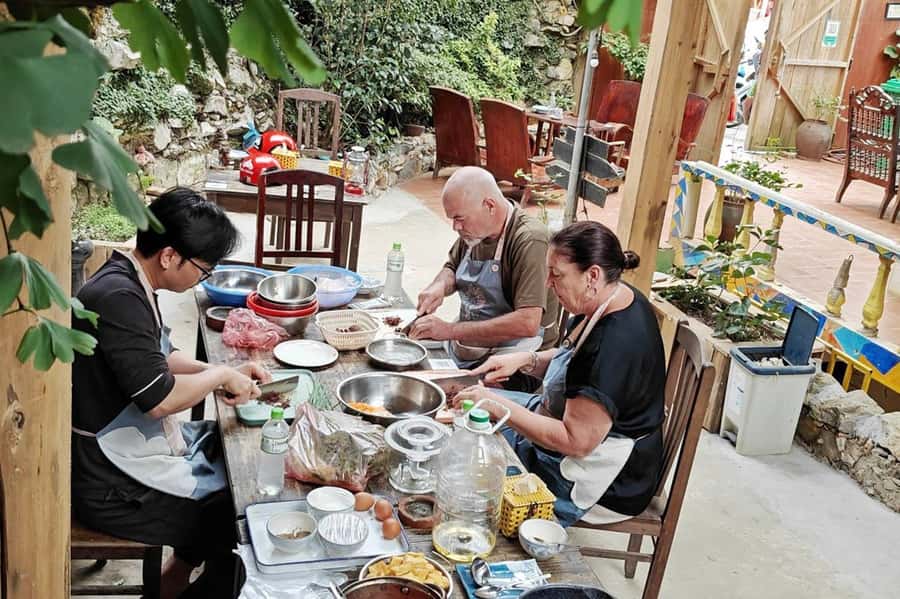
Sa Pa is built for views. This experience uses that setting on purpose. The highlights mention watching the sunrise over the mountains, plus panoramic views, and a stop where you stand at the top of Vietnam.
Because the class can start at different times (14:00 is listed), the sunrise moment depends on the session schedule. But the viewpoint component is part of the plan. Expect time outdoors for big angles, fresh air, and that “this place is real” feeling that you don’t get from a restaurant meal alone.
There’s also a sense of payoff here: you’re not just learning to cook; you’re doing it after a scenic build-up, and then you return to sit down and eat what you made.
In a place like Sa Pa, that order matters. Your appetite changes when you’ve been outside looking at the mountains for a bit.
Dinner with local wine: what to expect from the shared meal
Cooking is only half the story. The other half is eating together, and here the dinner includes local wine.
The menu you finish with is tied to what you made: the spring rolls and the tofu in tomato sauce. The idea is that you learn the process, then you taste the result in a relaxed meal setting.
If you like classes that end in a proper sit-down dinner, this format fits. It’s not a snack. It’s a meal that connects the cooking steps to the final flavors.
Small-group size makes the dinner better
With a maximum of 10 participants, you’re more likely to have an actual conversation with your English-speaking instructor. You can ask about why the flavors work, how to adjust seasoning, and what to do if your roll comes out too soft or too tight.
Price and value at $30 for a 4-hour small-group class
$30 for 4 hours in a small group is not a bad deal when you look at what you’re getting.
You’re paying for:
- Two featured dishes you cook yourself (spring rolls, tofu in tomato sauce)
- Market ingredient shopping as part of the program
- English instruction and hands-on guidance for the cooking
- A shared dinner experience with local wine
- Time spent outdoors for panoramic mountain views and the sunrise viewpoint concept
You’re also not paying for everything. Personal expenses aren’t included, so if there’s anything outside what’s covered for the class dishes, you’ll need to handle it yourself.
For me, the value angle comes down to this: you’re not paying just to taste Vietnamese food. You’re paying to learn how to make it, then eat it the same way the recipe was built.
That makes the class feel like a skill-building experience, not a one-off activity.
Who should book this Sa Pa cooking class, and who might skip it
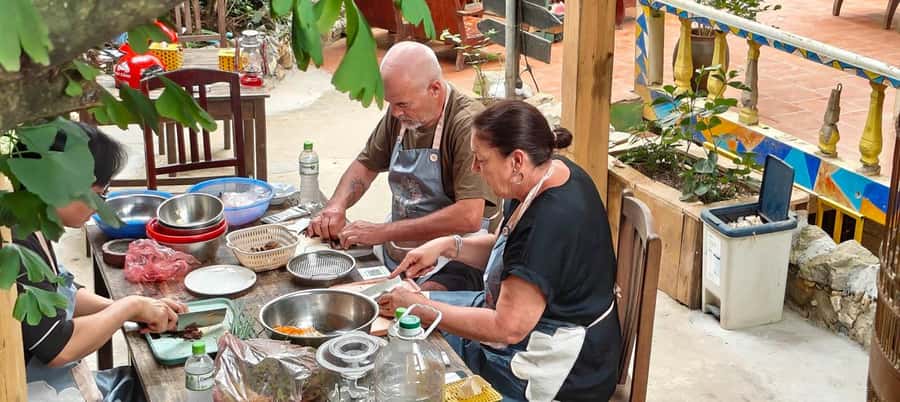
This is a strong pick if you’re:
- A serious home cook who wants hands-on Vietnamese technique
- Traveling as a couple or small group and want a break from classic sightseeing
- Interested in traditional Vietnamese dishes you can reproduce later
- Happy to spend a chunk of time (4 hours) cooking and eating together
It may be less ideal if you:
- Need fully vegetarian spring rolls without any possibility of meat in fillings
- Prefer very short, low-effort activities with no market shopping
- Want an activity that’s easy walking all the way through, since there’s a viewpoint portion built in
Also, it’s not suitable for people over 70 years, so if that applies, look for another Sa Pa option.
Should you book this Sa Pa cooking class?
If you like your travel with a practical result—something you’ll remember in your kitchen—book it. The combination of market-to-stove cooking, spring rolls plus tofu you actually make, and a dinner with local wine creates a full arc for the time you spend.
I’d book it especially if you’re the type who enjoys learning how local meals are assembled, not just copying recipes. The viewpoint stop and mountain views are a nice bonus that keeps it from feeling like a single indoor activity.
If you’re strict about diet or you’re sensitive to outdoor time, confirm details first. But for most food-focused travelers in Sa Pa, this is a satisfying, skill-building way to spend an afternoon.
FAQ
Where does the cooking class take place?
The cooking class runs in Dong Bac, Vietnam, in the Sa Pa area.
How much does it cost, and how long is it?
It costs $30 per person and lasts about 4 hours.
What time does the class start, and is instruction in English?
The listed start time is 14:00, and the instructor speaks English.
What dishes will we cook?
The class includes making spring rolls and tofu mixed with tomatoes (a tangy Vietnamese tofu in tomato sauce).
Is there market shopping and mountain scenery?
Yes. The program includes gathering fresh ingredients at a nearby local market, and it also includes mountain views, including a sunrise viewpoint concept.
Is local wine included with dinner?
Yes. After cooking, you enjoy a relaxing dinner with local wine.
Is it suitable for older adults, and can I get a refund?
It is not suitable for people over 70 years. Free cancellation is available up to 24 hours in advance for a full refund. You can also reserve now and pay later.