REVIEW · RABAT
Rabat Restaurant Cooking Class
Book on Viator →Operated by Moroccan Food Tour · Bookable on Viator
A cooking class in Rabat beats eating out on autopilot. You start with a chef-led walk to the souk, then move into a real kitchen lesson to make a three-course Moroccan lunch. I like that it’s chef-driven (not just a demo), and I also like that a guide handles the tricky parts like explaining what you’re buying and why. One thing to consider: since there’s no transportation included, you’ll want to be ready to get yourself to the meeting point on time.
The warm, human side matters here. Reviews point to a sense of hospitality that feels more like being welcomed into a home than dropped into a scripted activity, with stories shared around Moroccan cooking—especially tagine cooking on the stove top. The main drawback is timing: it’s only about 3 hours, so you won’t get a slow, step-by-step cooking marathon.
Even so, this is one of the best “food culture” experiences you can do in Rabat because you’ll taste your own work right away. And you’ll leave with practical take-home confidence, not just photos and spice crumbs.
In This Review
- Key things to know before you go
- Rabat’s chef-led cooking class: what makes it feel worth your time
- Meeting at Station Tramway Bab Chellah (and why the location is handy)
- Souk shopping with a guide: learning what chefs actually look for
- The kitchen lesson: how you turn ingredients into a 3-course Moroccan lunch
- Moroccan cooking customs: more than recipes, it’s how the food is handled
- Tasting your own lunch, then tea time with coffee or mint tea and cookies
- Price and value: what $69.30 buys you (and what you should plan for)
- Who this Rabat class is best for (and who might want a different plan)
- Should you book the Rabat Restaurant Cooking Class?
- FAQ
- What time does the Rabat Restaurant Cooking Class start?
- How long is the experience?
- Where do I meet for the tour?
- Does the tour include lunch?
- Is tea or coffee included?
- Are snacks and water included?
- Is transportation included?
- Is alcohol included?
- Is this a private tour?
- What is the cancellation policy?
Key things to know before you go
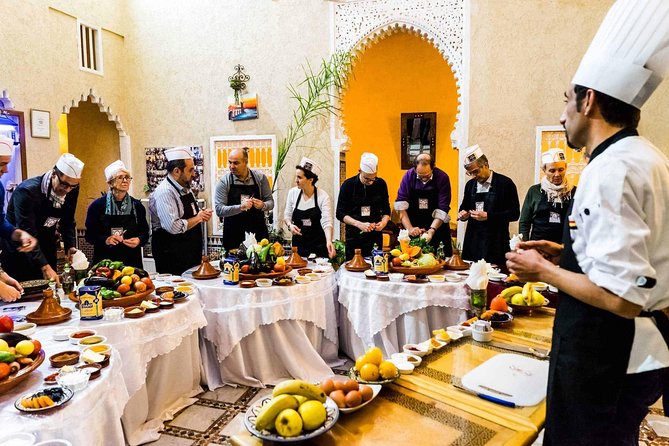
- Souk ingredient shopping with a guide so you don’t waste time guessing what to buy
- A restaurant chef teaches your 3-course lunch, with hands-on participation and time for questions
- You cook what you shop for, then eat it immediately as a proper meal
- Tasting and tea time are built in, with coffee or Moroccan mint tea and cookies afterward
- A private tour format means your group learns together at a comfortable pace
Rabat’s chef-led cooking class: what makes it feel worth your time
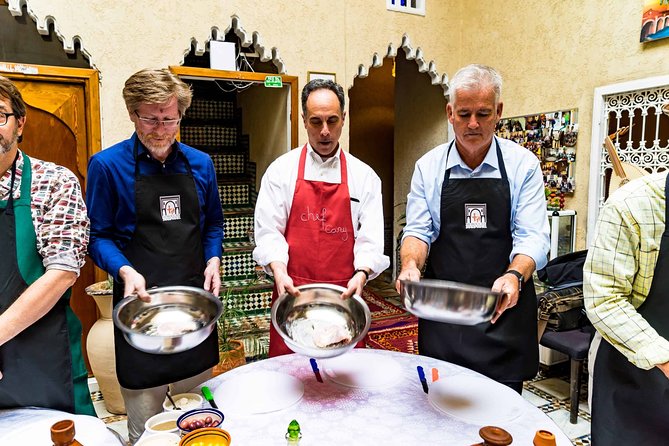
If you like Moroccan food, this kind of class gives you something restaurants rarely do: a clear path from ingredients to technique. I like experiences where the learning isn’t theoretical. Here, you shop, cook, taste, and ask questions while the food is still hot and your hands are already doing the work.
The other big win is the chef connection. You’re learning from a professional restaurant chef from Dar El Medina in Rabat, and that matters because you get practical kitchen habits—how to handle ingredients, how to think about timing, and how flavors are built in stages. A guide is there too, which means you’re not stuck translating or figuring out what’s happening step-by-step.
The experience is also structured around a complete meal, not a snack-making workshop. You’re making a three-course Moroccan lunch, then sitting down to enjoy it. That flow is exactly why it feels like food culture instead of a cooking stunt.
You can also read our reviews of more tours and experiences in Rabat.

Meeting at Station Tramway Bab Chellah (and why the location is handy)
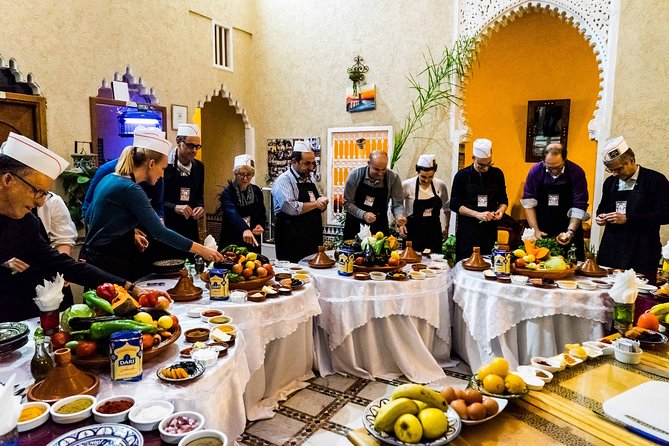
You start at Station Tramway Bab Chellah, Avenue Hassan II, Rabat, at 11:00 am. The tour ends back at the meeting point, so you don’t have to worry about getting stranded after cooking and tea.
For practical planning, this is a smart time slot. A late morning start lines up well with a lunch meal, and a roughly 3-hour duration keeps the rest of your day open for Rabat sightseeing. If you like to pack your itinerary tightly, this one fits without crushing your schedule.
One more practical note: the class uses a mobile ticket, so it’s worth double-checking you’ll have your phone charged and accessible. Also, transportation isn’t included—so plan your route to Bab Chellah accordingly.
Souk shopping with a guide: learning what chefs actually look for
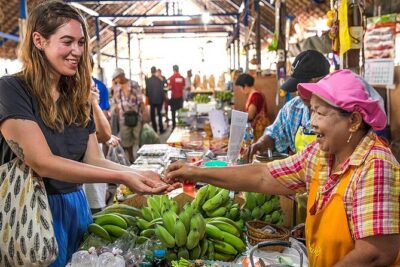
Your session starts with a tour in the old local market. In plain terms, you’re there to see how Moroccan vendors shop daily for fresh products, then pick up everything you need for the cooking session.
This is the part that can be hardest to do on your own. Markets are sensory overload, and if you don’t know what you’re trying to buy, you can end up with a bag full of random spices and no clear plan. The guide and chef approach turns the souk into a lesson: you learn what matters, what to choose, and how ingredients connect to what you’ll cook later.
You’ll also take home everything needed for the lunch (at least what’s required for the class workflow). That means you’re not just watching or sampling—you’re participating in the ingredient choices that shape the final result.
And yes, this is also where the experience becomes memorable in a very real way. Rabat’s markets are the kind of place you remember because you’re moving through them with purpose, talking about ingredients, and getting explanations you can’t easily recreate later.
The kitchen lesson: how you turn ingredients into a 3-course Moroccan lunch
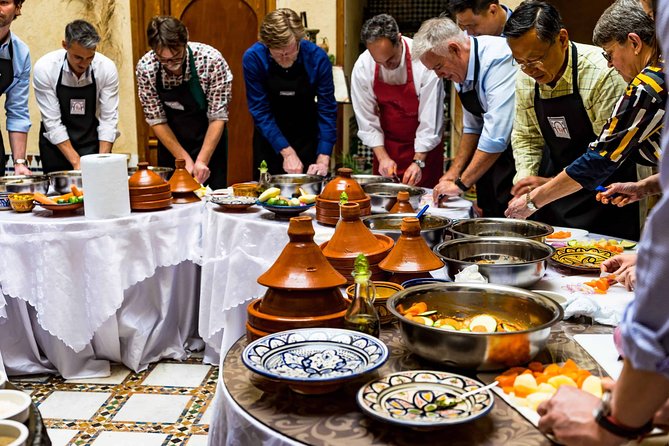
Once you’ve shopped, you move into cooking with help from the chef. The teaching style here is hands-on: you’re not just standing by while someone else works. You’ll get guidance as you prepare the dishes, and you’ll have time for questions.
The three-course structure is a big deal. Moroccan lunches often feel layered, not random. A three-course format helps you understand how flavors and textures can shift from one stage to the next, instead of treating the meal as one long simmer and call it done.
You’ll also understand the rhythm of Moroccan cooking, because you’re making decisions in real time—how to build flavor early, how to adjust as you go, and how to time things so everything lands on the table together. That’s the kind of practical knowledge that transfers to your home cooking.
From the vibe described in reviews, this is also where the experience becomes personal. One reviewer mentioned stories about preparing tagine on a stove top, and praised how food was served in a tagine at the table—moist, flavorful, and something they wanted to replicate at home. Even if you’re not aiming to recreate the exact same dishes, you can still borrow the thinking behind the technique.
Moroccan cooking customs: more than recipes, it’s how the food is handled
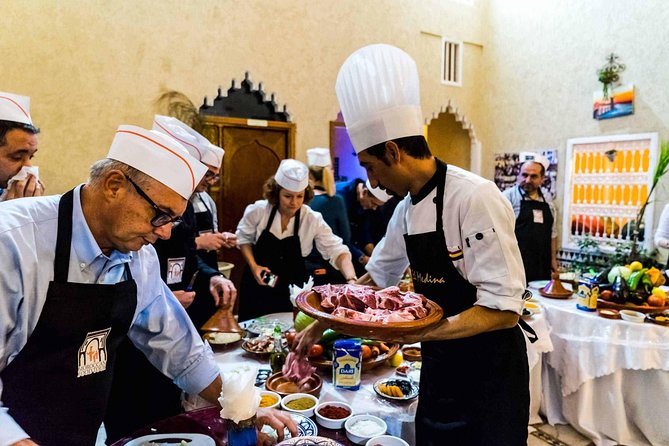
Cooking Moroccan food well is partly technique, partly culture. That’s why the guide isn’t just there to translate. You’ll get explanations about culinary customs and the way Moroccan cooks work through ingredients and meal flow.
I like that this class frames customs as something you’ll use, not just something you’ll hear about. When someone explains why a spice gets used at a particular stage, or what you should pay attention to as you cook, it stops being trivia. It becomes a shortcut for getting better results.
This is also where tagine shows up in a very understandable way. One review specifically called out tagine on the stove top and the comfort of cooking in a way that feels doable, not intimidating. That’s a huge confidence-builder if you’re the type who wants real-world skills, not just an exotic meal.
If you’re a curious eater, you’ll likely spot patterns quickly: how ingredients are paired, how sauces are built, and how a finished dish looks different from its raw components. You’ll come away with more than a menu—you’ll have a sense of how Moroccan cooking organizes flavor.

Tasting your own lunch, then tea time with coffee or mint tea and cookies
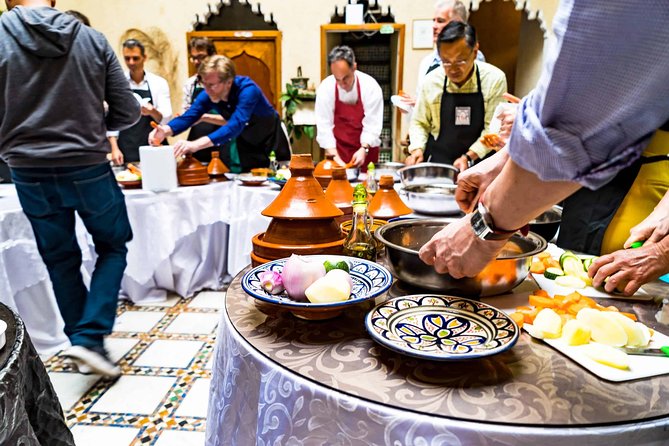
The best part arrives fast: tasting. After the dishes are cooked, you sit down to enjoy what you made. This matters because it turns learning into satisfaction. You’re not guessing if your technique worked—you can taste immediately and connect your decisions to the outcome.
Then you get tea time. You’ll be able to choose between coffee or Moroccan mint tea, and you’ll have some cookies along with it. That’s a classic Moroccan close to a meal, and it also gives you a low-pressure moment to relax, ask last questions, and talk with your group and hosts without the rush of the cooking stage.
If you’ve ever taken a cooking class where you cook and then leave, this one is better. The tasting and tea time make the experience feel complete, like you actually shared a meal—not just performed one.
Price and value: what $69.30 buys you (and what you should plan for)
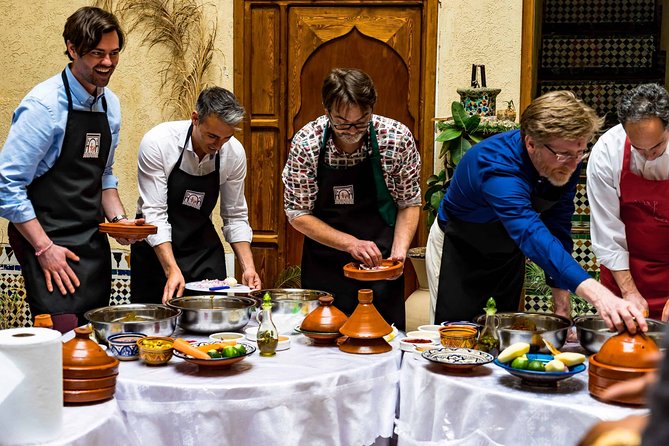
At $69.30 per person, this class sits in the “you’re paying for expertise” category. You’re not just paying for lunch. You’re paying for a chef from Dar El Medina, guided souk shopping, hands-on instruction, and a full three-course meal plus tea/coffee and snacks.
Here’s what’s included:
- Lunch (your three-course Moroccan meal)
- Coffee and/or tea
- Snacks
- Bottled water
- All fees and taxes
Not included:
- Alcoholic drinks
- Transportation
So the value question becomes: are you getting enough learning and enough food for the price? In this case, you are. You leave fed, with a technique-based understanding of how Moroccan dishes come together. You also leave with the souk ingredient shopping experience, which is hard to DIY efficiently.
My practical tip: budget for getting to Bab Chellah on your own. Once you’re there, the rest of the experience is handled.
Who this Rabat class is best for (and who might want a different plan)
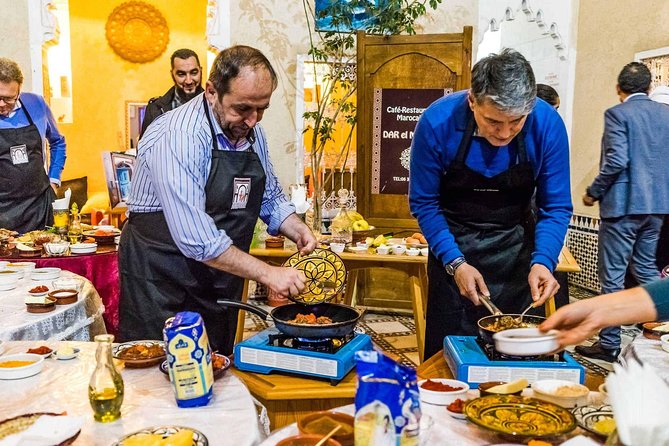
This experience is a great fit if you:
- Want a hands-on food experience rather than a passive tour
- Like learning technique you can repeat at home
- Enjoy markets and want help navigating them without wasting time
- Prefer a structured, time-friendly activity that still feels authentic
It may not be ideal if you:
- Want a very long cooking session (this one is about 3 hours)
- Need transportation provided end-to-end (transport isn’t included)
Because it’s private and centered on your group, it’s also a strong option if you want a calmer learning pace. A private format usually means fewer awkward bottlenecks and more chance to ask questions that actually matter to your own cooking style.
Should you book the Rabat Restaurant Cooking Class?
I’d book it if you’re after a true “learn, cook, eat” experience in Rabat—one where the souk shopping and the chef instruction are both part of the same story. The value is in the combination: a professional chef, guided market buying, hands-on cooking, and then immediate tasting with Moroccan tea and cookies.
Skip it only if you hate markets, need transportation included, or you’re expecting a tour that lasts much longer than a short lunch session. If your goal is to come away with practical skills and a meal you can’t get by ordering off a menu, this is a solid choice.
FAQ
What time does the Rabat Restaurant Cooking Class start?
It starts at 11:00 am in Rabat.
How long is the experience?
The duration is approximately 3 hours.
Where do I meet for the tour?
The meeting point is Station Tramway Bab Chellah, Avenue Hassan II, Rabat, Morocco.
Does the tour include lunch?
Yes. Lunch is included.
Is tea or coffee included?
Yes. You’ll have coffee and/or Moroccan mint tea, and cookies are included as part of the tea time.
Are snacks and water included?
Yes. Snacks and bottled water are included.
Is transportation included?
No. Transportation is not included.
Is alcohol included?
No. Alcoholic drinks are not included.
Is this a private tour?
Yes. It’s listed as a private tour/activity, with only your group participating.
What is the cancellation policy?
Free cancellation is available up to 24 hours in advance for a full refund. If you cancel less than 24 hours before the start time, the amount paid isn’t refunded. If the experience is canceled because the minimum number of travelers isn’t met, you’ll be offered a different date/experience or a full refund.