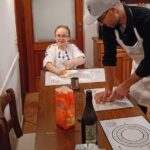
REVIEW · NAPLES
Pizza Cooking Class: Make Dough & San Marzano Tomato Sauce
Book on GetYourGuide →Operated by Naples bay tour · Bookable on GetYourGuide
Flour on your hands, Naples in your head. This 1.5-hour class has you learning Neapolitan dough by hand and then topping it for a proper Margherita bake in a professional pizza oven—all guided by local chef Maurizio in a family-friendly setting.
What I like most is how step-by-step the dough lesson is, and how quickly you go from mixing to baking.
One thing to consider: you’ll want clothes that can get messy, because kneading dough is hands-on and flour has its own plans.
In This Review
- Key Pizza Class Takeaways
- Neapolitan Margherita Starts With Dough Texture, Not Vibes
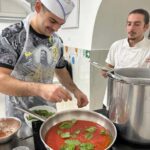
- Making San Marzano Tomato Sauce the Neapolitan Way
- Shaping Your Base and Building a Classic Margherita
- Baking in a Professional Pizza Oven Changes Everything
- The Meal Moment: Olive Oil Bread, Plus Possible Extras
- Why the $48 Price Makes Sense in Naples
- Language and Family-Friendliness (A Practical Win)
- What to Wear and How to Prepare So You Don’t Stress
- Should You Book This Neapolitan Pizza Cooking Class?
- FAQ
- How long is the pizza cooking class?
- Do I need cooking experience?
- What languages are offered?
- What will I make during the class?
- What’s included in the price?
- Is there a refund if I cancel?
Key Pizza Class Takeaways
- Hand-kneaded dough lessons that focus on texture, not shortcuts
- San Marzano tomato sauce made with a keep-it-simple approach
- Professional oven baking so your pizza cooks like a Neapolitan pie
- A shared meal format that works for kids, couples, and groups
- Recipe with a QR code so you can recreate it at home
Neapolitan Margherita Starts With Dough Texture, Not Vibes
If you’ve ever had a great Neapolitan pizza, you already know it’s not just about toppings. The real magic begins with dough—how it feels, how it stretches, and how it behaves once it hits serious heat. In this class, you’re taught to make pizza dough completely from scratch, using simple ingredients and traditional technique.
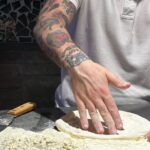
Expect the chef to walk you through hand-kneading and to pay close attention to the dough’s texture. That matters because Neapolitan dough is meant to be elastic enough to shape, but not so heavy that it turns dense. You’ll learn what the right dough consistency looks like, and you’ll understand why “almost right” dough still ruins the final result.
Also, the teaching style is part of the value. One participant highlighted how thorough the instruction was, especially around the dough. That kind of clarity is what turns pizza-making from a fun activity into an actual skill you can repeat.
You can also read our reviews of more tours and experiences in Naples.
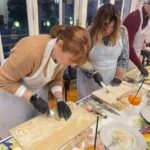
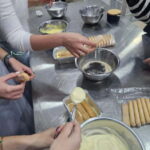
Making San Marzano Tomato Sauce the Neapolitan Way
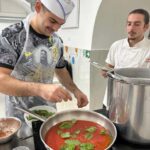
A lot of pizza classes throw sauce together like it’s an afterthought. Here, you make a fresh tomato sauce as its own lesson. The focus is on balance and simplicity—because in classic Neapolitan-style pizza, the flavor comes from quality ingredients and restraint.
You’ll work with carefully selected ingredients and learn what each one contributes. The chef explains the logic behind the sauce instead of just listing steps. That’s the difference between copying a recipe and understanding how to season and build flavor correctly.
And if you care about authenticity, pay attention here: Neapolitan pizza culture treats sauce as a small, confident role in the overall pie. It shouldn’t overpower. It should support the mozzarella and basil while staying true to the tomato’s taste.
Shaping Your Base and Building a Classic Margherita
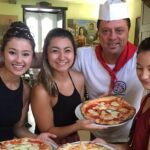
Once the dough is ready, you shape it into the classic round base. The point isn’t just to make it look neat—it’s to learn how the dough is handled. Neapolitan pizza dough has a certain attitude: it stretches when it’s right, and it fights back when it’s not.
Then comes the topping stage. Your pizza is finished in traditional Margherita style with mozzarella and fresh basil. This is where you get a real sense of what makes the Margherita iconic: it’s the minimal combination that demands good technique. If your dough is off or your sauce is too heavy, it shows immediately.
For families, this is often the fun part. Kids usually love pressing, tearing, and placing toppings, and adults like getting hands-on without needing to invent a weird gourmet twist. It’s one of the reasons this class works well across ages—there’s a structure, but there’s room for you to participate.
Baking in a Professional Pizza Oven Changes Everything
After the prep, your pizza goes into a professional pizza oven. This is a key moment because it’s where theory becomes the real-world result—crust, bubbles, aroma, timing, all of it.
You’ll watch your creation bake until it’s hot, fragrant, and ready to eat. That immediate transformation is a big part of why people recommend taking the class rather than just buying a finished pizza. The oven experience teaches you how quickly this style cooks and why Neapolitan dough needs the right texture to handle that heat.
One review specifically called out how fascinating it was to see the pizzas made by the class get baked. I get that. It’s one thing to form dough at a table; it’s another to see it perform in a real oven.
The Meal Moment: Olive Oil Bread, Plus Possible Extras
This isn’t just a workshop where you leave with a recipe. You sit down and enjoy what you make in a friendly atmosphere.
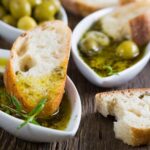
Included with the experience is a premium olive oil served on freshly baked bread. That’s a classic Italian welcome: simple, high-quality, and a good warm-up for what you’re about to eat.
One participant also mentioned an appetizer setup with bruschetta and fior di latte as a nice touch. The class data confirms olive oil and bread are included, so treat the extra appetizer as a possible bonus rather than a guaranteed course. Either way, the shared food break is built into the experience, not tacked on.


Why the $48 Price Makes Sense in Naples
At $48 per person for 1.5 hours, you’re paying for more than ingredients. You’re paying for:
- A local chef guiding the entire process
- Time with the professional oven (not just a home bake)
- All ingredients, plus apron use
- A recipe with a QR code so you can reproduce what you learned
For a city like Naples, pizza is culture, not a souvenir. Classes like this are valuable because you’re learning technique—especially the dough portion—that you can’t easily get from a casual meal. If your goal is to leave Naples with an edible memory and a repeatable skill, the price is pretty fair.
If you’re expecting a long multi-course cooking marathon, this may feel short. But at 1.5 hours, it stays focused: you learn the fundamentals and then you eat the result.
Language and Family-Friendliness (A Practical Win)
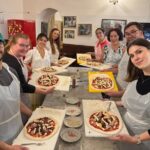
This class is designed for families, couples, and groups. No prior cooking experience is required, which is huge if you’re traveling with kids or if you just don’t want to feel awkward at a prep counter.
The instruction is available in English, French, Italian, and Spanish, so you should be able to follow along without guessing. And because the steps are structured—dough, sauce, topping, bake—it’s hard to get lost, even if your kitchen skills are limited.
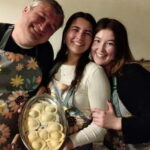
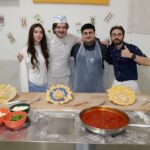
One review described the environment as warm and family-like, and that kids enjoyed getting hands-on making their pizzas. If you want an activity that feels social and not overly formal, this fits that tone.
What to Wear and How to Prepare So You Don’t Stress
The biggest practical tip: wear comfortable clothes you don’t mind getting dirty. Kneading dough involves flour and sticky moments. Even if you’re careful, that’s part of the experience.
Beyond clothing, come with an open mindset. The most successful participants treat this like learning a craft, not just entertainment. When the chef corrects dough texture or shaping technique, that feedback is where your future homemade pizza will improve.
And if you’re the type who likes to take notes, you’ll appreciate the recipe with a QR code. It helps you remember key steps later without trying to write a full cookbook in real time.
Should You Book This Neapolitan Pizza Cooking Class?
Book it if you want Naples through its most famous food, but you’d rather learn how to make it than just watch from the sidelines. This class is especially worth it if:
- You care about authentic technique—especially dough texture
- You want to bake your own pizza in a real professional oven
- You’re traveling with kids and want a hands-on activity that keeps things fun
- You like structured teaching with a local chef (chef Maurizio is known for step-by-step guidance)
Skip it if your main goal is a deep, long cooking session, because the class is only 1.5 hours and stays focused on the essentials.
If you want a memorable, practical souvenir from Naples—one you can recreate—this is a solid choice.
FAQ
How long is the pizza cooking class?
The class lasts 1.5 hours.
Do I need cooking experience?
No. The experience is set up so you can participate without prior cooking experience.
What languages are offered?
Instruction is available in English, French, Italian, and Spanish.
What will I make during the class?
You’ll make Neapolitan pizza dough, prepare a fresh tomato sauce using San Marzano tomatoes, and top and bake a traditional Neapolitan Margherita pizza.
What’s included in the price?
Included items are the olive oil served on freshly baked bread, the ingredients used during the experience, use of an apron, and a recipe with a QR code, plus a local chef host.
Is there a refund if I cancel?
Yes. You can cancel up to 24 hours in advance for a full refund.