REVIEW · JODHPUR
Jodhpur Private Cooking Class With Family
Book on Viator →Operated by Blue city wonders · Bookable on Viator
One word: family. This private Jodhpur cooking class has you learning North Indian vegetarian dishes with Reena and Ram in their home, plus a full meal you can actually recreate later. I like the hands-on feel (you are not just watching) and the focus on doable recipes that turn into a real souvenir, not a blurry photo. One possible drawback: if you want an ultra-fast, fully structured cooking show with zero chatting, this may feel more warm-and-personal than you expect.
If you’re curious about Jodhpur food beyond the menu, you’ll like the clean setup and clear instruction. You also get a full lunch or dinner built around what you cook, including masala chai and staples like roasted papadam, Jodhpuri jeera rice, and roti/chapati. My only caution is that the experience is weather dependent, so you should be ready for a reschedule if conditions are rough.
In This Review
- Key things to know before you go
- A Private Vegetarian Meal in a Real Jodhpur Home
- What You Cook: chai, papadam, jeera rice, veg curries, dal, and roti
- Inside the 2 hours 15 minutes: the class flow that actually works
- Why the family table time is the real highlight
- Price and value in Jodhpur: what you actually get for about $28
- Who this fits best (and who might want a different option)
- Practical tips for a smoother cooking session
- Should you book this Jodhpur private cooking class?
- FAQ
- Is this cooking class private?
- What dishes will I learn to cook?
- How long is the class?
- Where does the class start?
- What meals are included?
- Do I need prior cooking experience?
- What happens if the weather is bad?
- Is there free cancellation?
Key things to know before you go
- A private, at-home class: it’s only your group, in a local family setting
- Masala chai + papadam + jeera rice: you learn the common North Indian building blocks
- Two different vegetable main courses plus lentils (dal) and Indian cheese (like paneer)
- Beginner-friendly: you do not need skills going in; they help you step by step
- You eat what you make: lunch or dinner is part of the experience
- Good hygiene and a tidy kitchen setup: you can cook without feeling uneasy
A Private Vegetarian Meal in a Real Jodhpur Home
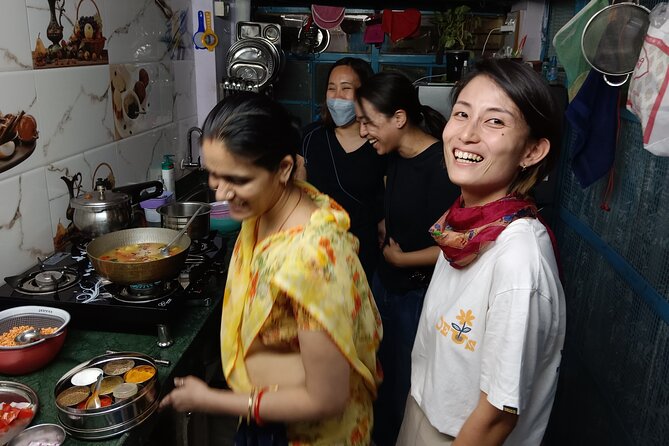
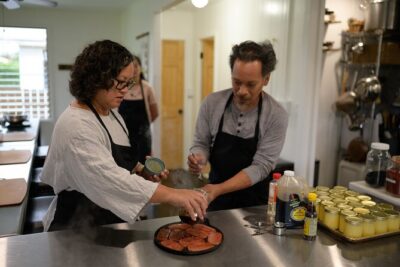
This is the kind of Jodhpur experience you book when you want more than a sightseeing stamp. You come to a family home, and you cook with Reena and Ram, learning a traditional North Indian vegetarian menu from scratch. The setting matters here. Cooking in a home kitchen gives you context you simply do not get in a classroom.
Two things I appreciate: first, the meal is built around basics you can repeat at home. You learn tea, rice, lentils, bread, and vegetable curries. Second, the family tone makes the class feel relaxed. People talk, laugh, and ask questions as you cook, which keeps the lesson from turning stiff or overly formal.
One small consideration: the class style can lean more personal and conversation-friendly than a strict, stopwatch-driven schedule. If you prefer silent precision, you might find the chatter part of the deal. For most people, that’s exactly the point.
You can also read our reviews of more tours and experiences in Jodhpur.
What You Cook: chai, papadam, jeera rice, veg curries, dal, and roti
The best part of any cooking class is whether the food translates to your home kitchen later. This one is focused and vegetarian, with a menu designed around common ingredients and techniques.
Here’s what you can expect to learn during the session:
- Masala chai (Indian spiced tea): you learn the method, not just the ingredients
- Roasted papadam: a crunchy starter that shows how Indian meals balance texture
- Jodhpuri jeera rice: a traditional style rice with cumin character
- Two vegetable main dishes: you practice how to build and season curries
- Lentils (dal): the comforting backbone of many North Indian meals
- Indian cheese (often paneer): you learn how cheese fits into the menu
- Indian roti / chapati (bread): the bread you eat alongside the curries
Even if you are not an expert cook, this menu is smart. It mixes a few simpler items (chai, papadam, roti) with more “real meal” components (dal and curries). That balance means you leave with both confidence and flavor memory.
And yes, the “perfect souvenir” angle is not just marketing talk. When you can recreate chai, jeera rice, and the curries you cooked, you have a repeatable story. That’s the kind of souvenir that keeps paying off.
Inside the 2 hours 15 minutes: the class flow that actually works
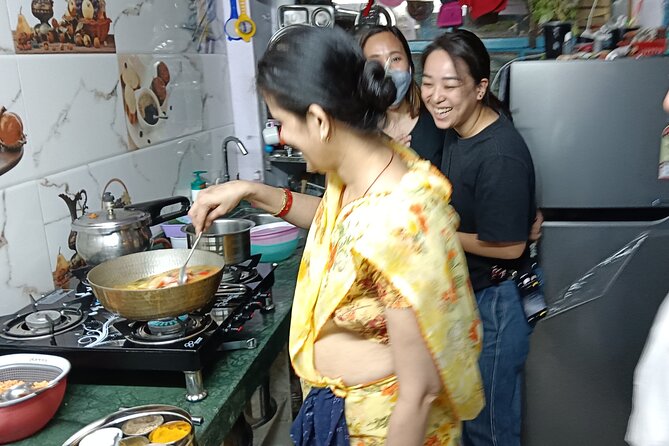
The class runs about 2 hours 15 minutes, so it moves at a lively pace. The format you’ll experience is a steady rhythm: prep steps, cooking steps, then eating together. This isn’t a half-day kitchen marathon.
A typical flow looks like this:
1) Start with masala chai and snacks
You begin with tea, plus small items along the way. It sets the tempo and helps you understand spices and taste right from the start.
2) Roasted papadam
This is quick and satisfying. It’s also a helpful warm-up because it reminds you that Indian meals often stack crunch, softness, and sauce.
3) Jodhpuri jeera rice
Rice can be the difference between a meal that tastes “almost right” and one that tastes right. Learning jeera rice means you get the scent and flavor logic of cumin-forward rice.
4) Two vegetable main courses + lentils and paneer
This is where the class earns its keep. You practice how spices go in stages and how curries come together. If you came worried about cooking skills, this is where Reena and Ram’s teaching style helps. They guide you through what to do next instead of throwing you into a kitchen with zero support.
5) Roti / chapati
Bread is hands-on and requires a little patience. You learn the basics so you can serve your own curry at home with confidence.
6) You sit down and eat
Lunch or dinner is included, so you’re not stuck with the awkward wait of “maybe food later.” You get to enjoy what you cooked while it’s fresh.
A practical note: because the class is private, you can ask questions as you go. That makes the teaching more useful, especially if you want to understand why something works instead of memorizing steps.
Why the family table time is the real highlight
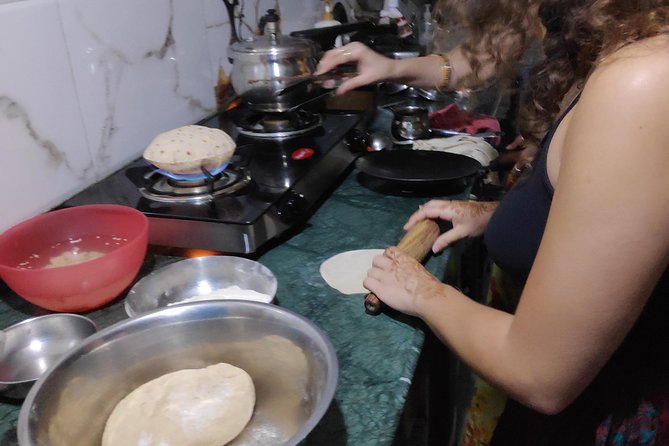
Cooking is one part. The other part is what happens when you stop chopping and start talking. This class is designed around family hospitality, and it shows in the way Reena, Ram, and the household share the space with you.
From the vibe in the class, you can expect:
- Warm welcome and relaxed conversation as you get oriented
- Teaching that feels friendly, not like a test
- Humor and laughter while cooking
- A chance to understand daily vegetarian life, not just recipes
That matters because Indian food has layers: spice choices, cooking order, how things are portioned, and what gets served with what. When you’re at a family meal table, those small details click faster. You also tend to remember the lesson better because it happened in a real moment, not a staged demo.
If you’re cooking for the first time in India, you’ll likely feel that the hosts translate the steps into something you can repeat. If you already cook, you’ll still enjoy seeing how they organize flavor and timing.
Price and value in Jodhpur: what you actually get for about $28
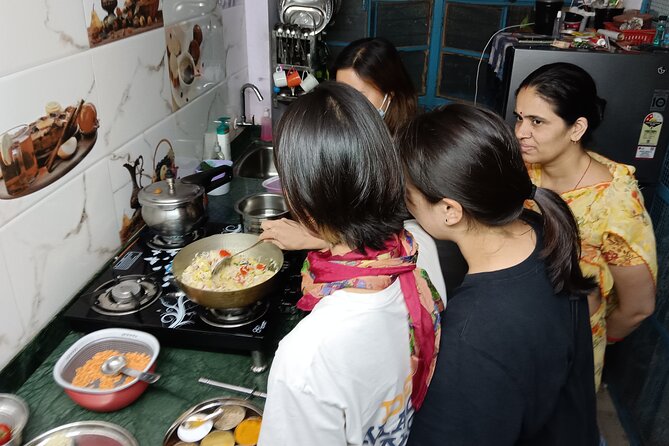
At $27.96 per person for about 2 hours 15 minutes, this is priced like an accessible, hands-on workshop, not a luxury experience. What makes it good value is the combination of things you normally pay separately for: instruction, ingredients used during the class, and a full meal at the end.
Also, it’s a private activity. Only your group participates, which means you get more attention than you would in a larger shared class. That’s where the cost makes sense. You are not competing for a turn at the stove.
You should also factor in the “home cooking” outcome. If you leave with a reproducible menu—chai, jeera rice, papadam, two vegetable curries, lentils, paneer, and roti—your cost-per-meal back home becomes easier to justify. This is the kind of booking that can pay off for months, not just for the day you took the class.
One more practical value point: you get a mobile ticket, so there’s less hassle day-of. And the class is vegetarian-focused, so you’ll be comfortable if you want a clear match to what you eat.

Who this fits best (and who might want a different option)
This class fits best if you want:
- A vegetarian North Indian meal you can recreate
- A private, small-group feel with real conversation
- Beginner support if you do not know cooking techniques
- A full lunch or dinner, cooked and shared
It’s especially good for:
- Couples and small groups who want a quieter, more local activity
- Solo travelers who like structured learning but also want warmth
- People who love Indian food and want the logic behind the flavors
It may not be ideal if:
- You dislike home settings or prefer very formal, commercial kitchens
- You want a strictly timed, hands-only format with minimal chatting
- You need a class that runs perfectly regardless of weather (it is weather dependent)
Practical tips for a smoother cooking session
Here are a few things that make your experience easier and more enjoyable, based on what matters for any home-kitchen cooking class.
Arrive ready to cook. Wear comfortable clothes you don’t mind getting slightly spicy-smelling or stained. A cooking class teaches you with your hands, so plan like you’ll be kneading and stirring.
Ask questions while things are still fresh. If you want to recreate the food later, ask how they balance spices and how they decide when to stop cooking. The best answers are usually given while you’re cooking, not after the meal.
Treat the tea as a technique lesson. Masala chai is not just a drink; it’s a spice method. If you get that right, you’ll feel more confident cooking other spiced dishes.
Take notes on what matters. You might not remember spice amounts after a day of travel. Even simple notes like spice order and timing help a lot.
Plan around weather. The activity depends on good weather. If you’re in Jodhpur for a tight schedule, keep some flexibility.
Should you book this Jodhpur private cooking class?
I’d book it if you want a real Jodhpur kitchen experience with a family atmosphere and a clear, vegetarian menu you can repeat at home. You’re paying for instruction plus a full meal, and the private format means you get more attention. If you care about learning the steps behind the flavors, this is a smart use of time.
I’d think twice if you’re picky about the style: this is not a silent, high-speed culinary boot camp. It’s friendly, home-based, and teaching-focused. For the right mindset, it’s a memorable day.
If you’re after one Jodhpur activity that gives you both food skills and a genuine local connection, this one fits the bill.
FAQ
Is this cooking class private?
Yes. It is a private tour/activity, and only your group participates.
What dishes will I learn to cook?
You’ll learn to prepare masala chai, roasted papadam, Jodhpuri jeera rice, two vegetable main courses, lentils, Indian bread (roti/chapati), and Indian cheese.
How long is the class?
The cooking class is about 2 hours 15 minutes.
Where does the class start?
You’ll start at Khichiyon ka nohra, Bagar Chowk, Gulab Sagar, Jodhpur, Rajasthan 342001, India.
What meals are included?
Coffee and/or tea, snacks, lunch, and dinner are included.
Do I need prior cooking experience?
No. If you do not know any cooking skill, the hosts will help you and teach you.
What happens if the weather is bad?
This experience requires good weather. If it’s canceled due to poor weather, you’ll be offered a different date or a full refund.
Is there free cancellation?
Yes, you can cancel for a full refund up to 24 hours in advance of the experience’s start time. If you cancel less than 24 hours before, the amount paid is not refunded.