REVIEW · HOI AN
Hoi An: Local Family Cooking Class
Book on GetYourGuide →Operated by Hiep Hoi An Travel · Bookable on GetYourGuide
This class is small, personal, and seriously tasty. What makes it interesting is the home-cooking setup and the chance to learn Hoi An dishes in the exact rhythm a local family uses. I love that you don’t just watch—you cook, then sit down to eat as a family. I also like the practical menu mix (rice milk, pancakes, spring rolls, papaya salad, plus a hot plate with chicken or a substitute). One thing to consider: it’s a group experience (split into small groups), so you won’t get 1-on-1 attention the whole time.
You start with hotel pickup in Hoi An Ancient Town area, then you’re taken straight to the family home. You get a welcome drink, a bit of time to relax, and then the real work begins—hands-on cooking with an English-speaking guide.
At the end, the tour guide returns you to your hotel, or you can ask to be dropped off in Hoi An Old Town. If you have allergies or strict preferences, tell them ahead of time, because they do adapt ingredients based on what you need.
In This Review
- Key highlights worth your time
- Why cooking in a local Hoi An home beats a restaurant class
- Timing and pickup: getting you from Hoi An Old Town to the kitchen fast
- From rice milk to pancakes: what you actually learn in the kitchen
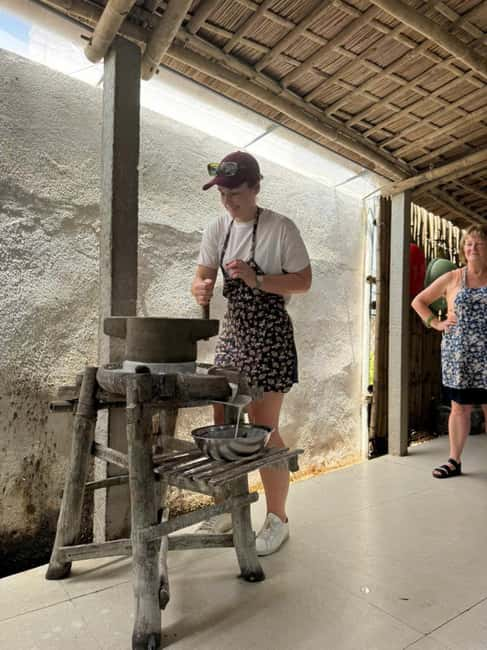
- Rice milk using a stone grinder
- Hoi An pancake (with rice milk, pork, shrimp, beansprout)
- Hoi An spring roll (mushroom, carrot, spring onion, taro, pork)
- Papaya salad: the balancing lesson (papaya, carrot, onion, banana flowers)
- Sautéed chicken (or a swap) plus a vegetable side
- Lunch or dinner, the way the family eats: what your meal is like
- How to bring Hoi An flavors home (without needing a Vietnamese pantry)
- Vegan, vegetarian, gluten-free, and allergies: tell them early
- Group size reality: you’ll have fun, but expect a lively flow
- What to bring (and what can trip you up)
- Who this class fits best (and who should think twice)
- Price and value: why $27 feels fair here
- Should you book this Hoi An family cooking class?
- FAQ
- What time does the Hoi An Local Family Cooking Class run?
- How long is the cooking class?
- Is pickup included, and where does it pick up from?
- Is there a vegan or vegetarian option?
- What dishes are on the menu?
- Can the class accommodate allergies or food restrictions?
- What is included in the price?
- Are there any special rules for children?
Key highlights worth your time
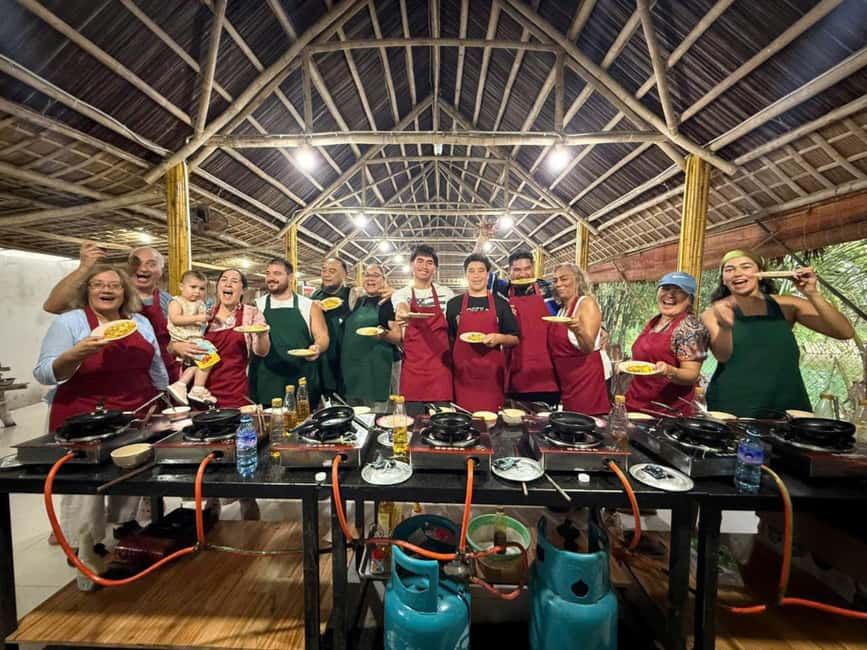
- Stone-ground rice milk: learn the traditional method using a unique stone grinder
- Hoi An classics, not tourist shortcuts: pancake, spring roll, and papaya salad all show up on the menu
- You cook, then you eat: your lunch (or dinner) comes from your own finished dishes
- Diet options are built into the class: vegan/vegetarian options available, with swaps for chicken
- Small groups: split into groups of around 12 participants, keeping it lively but manageable
Why cooking in a local Hoi An home beats a restaurant class
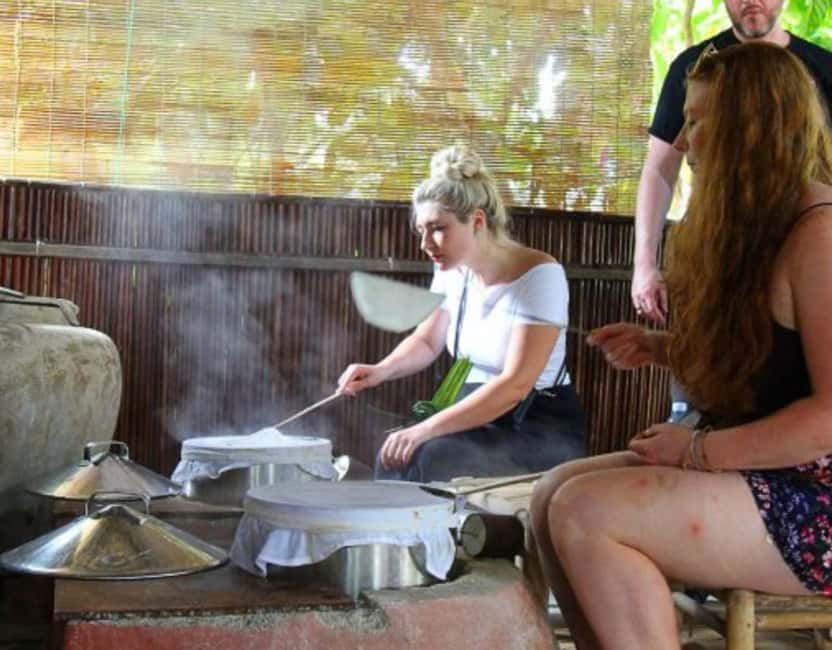
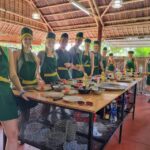
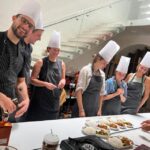
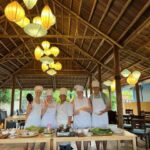
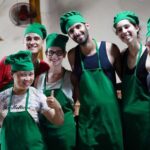
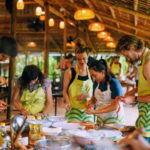
A restaurant class can feel like a show. This one feels more like you’re joining a real kitchen for a couple of hours. The big difference is that you’re cooking in a family home with local people, not in a demo studio. That changes the vibe right away: you’re guided through the steps, then you eat the results with the same group that helped make them.
I also like how the menu teaches you technique, not just recipes. Rice milk isn’t just an ingredient here—it’s something you learn to make in the traditional way, with a stone grinder. That one detail alone helps you understand why Vietnamese flavors taste the way they do. And when you move on to dishes like Hoi An pancake and spring rolls, you’re already “thinking” like a cook in that style.
The only real drawback is mental, not physical: you’ll be focused the entire time. If you want a relaxed sightseeing day with light activity, this isn’t that. But if you want your hands busy and your stomach happy, it’s a great match.
You can also read our reviews of more tours and experiences in Hoi An.
Timing and pickup: getting you from Hoi An Old Town to the kitchen fast
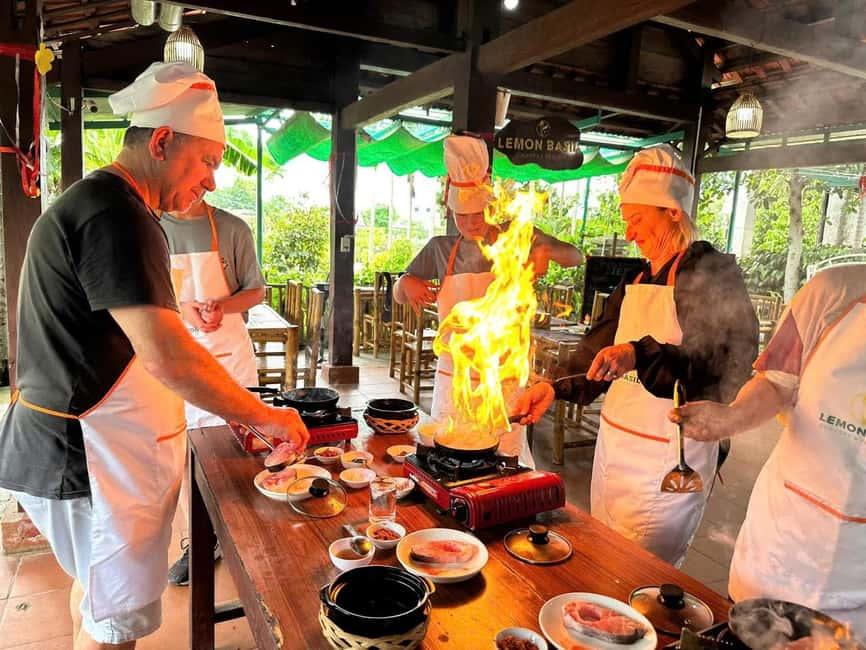
There are two time windows. The morning class runs 10:00am to 12:30pm, and the afternoon class runs 3:45pm to 6:30pm. Both are about 150 minutes, which is a nice sweet spot—long enough to learn and cook multiple dishes, not so long you feel cooked yourself.
Pickup is part of the value. A family driver picks you up at the hotel lobby in Hoi An Ancient Town, then takes you straight to their home. You’ll start with a welcome drink and a short chance to settle in before cooking starts. That small buffer matters if you arrive hot, tired, or just distracted from travel.
At the end, you’re brought back to your hotel. You can also request a drop-off in Hoi An Old Town by car, which is handy if you want to keep exploring afterward (and not spend extra time catching transport).
If your hotel isn’t within the selected pickup area, pickup from Da Nang city or outside Hoi An city center costs 300,000 VND (about $12.50) one way for 2–3 pax sharing. That fee is clearly stated, so you can plan around it.
From rice milk to pancakes: what you actually learn in the kitchen
This class is built around a sequence of dishes that teach you different parts of Vietnamese cooking: making a base, assembling savory items, and balancing fresh herbs and acidity. Here’s the menu you’ll work with, with what each dish is really teaching you.
Rice milk using a stone grinder
You start with rice milk (traditional method). They use a stone grinder, which is the sort of detail you’d never learn from a recipe alone. Watching and doing the process helps you understand texture and consistency. For you, that means you can better recreate the role rice milk plays in the next dishes, especially the Hoi An pancake.
Practical tip: this part is hands-on and slightly messy in a real kitchen way. Wear shoes you don’t mind getting near food prep areas.
Hoi An pancake (with rice milk, pork, shrimp, beansprout)
Next is Hoi An pancake, made with rice milk, pork, shrimp, and beansprout. The pancake teaches you how batter and fillings work together—how to build flavor without it tasting heavy. You’ll likely get a clearer sense for what makes these pancakes distinct from generic crepes or savory pancakes.
They also note vegetarian and vegan flexibility, so ingredient choices can shift based on your needs (more on that later).
Hoi An spring roll (mushroom, carrot, spring onion, taro, pork)
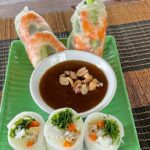
Then comes Hoi An spring roll, with mushroom, carrot, spring onion, taro, and pork. Spring roll-making is where you learn assembly discipline: filling amount, wrapping control, and the idea that small differences change the final bite. If you’ve ever tried to make spring rolls at home and had them split or turn chewy, this is the type of step-by-step class that helps you correct the approach.
Papaya salad: the balancing lesson (papaya, carrot, onion, banana flowers)
Hoi An papaya salad is often where the flavors click. You’ll work with papaya, carrot, onion, and banana flowers. This dish teaches balance: freshness, crunch, and tang working together. Even if you don’t plan to master the exact same texture at home, you’ll understand what directions the flavors should go.
You can think of it as Vietnam’s “flavor math.” Get one element wrong and the whole salad feels off. Get it right and it’s bright and satisfying.
Sautéed chicken (or a swap) plus a vegetable side
After the prep and assembly dishes, you’ll cook a hot dish: sautéed chicken with chicken, onion, garlic, black pepper, spring onion, mushroom, plus steamed rice. Black pepper shows up clearly here, so you get that warm savory kick that makes the meal feel complete.
They also note vegan/vegetarian acceptability, and that chicken can be changed to dishes like Pho (rice noodle with beef), Hoian Cao Lau, Mi Quang (Quang noodle), or fishes. That’s not just a “no meat” swap. It’s an option menu designed to keep you eating something Vietnamese that still feels like the core class.
The vegetable side is morning glory or okra fried with garlic and black pepper, again paired with steamed rice. That simple garlic-black pepper combo is a great thing to remember when you’re cooking later at home.
Lunch or dinner, the way the family eats: what your meal is like
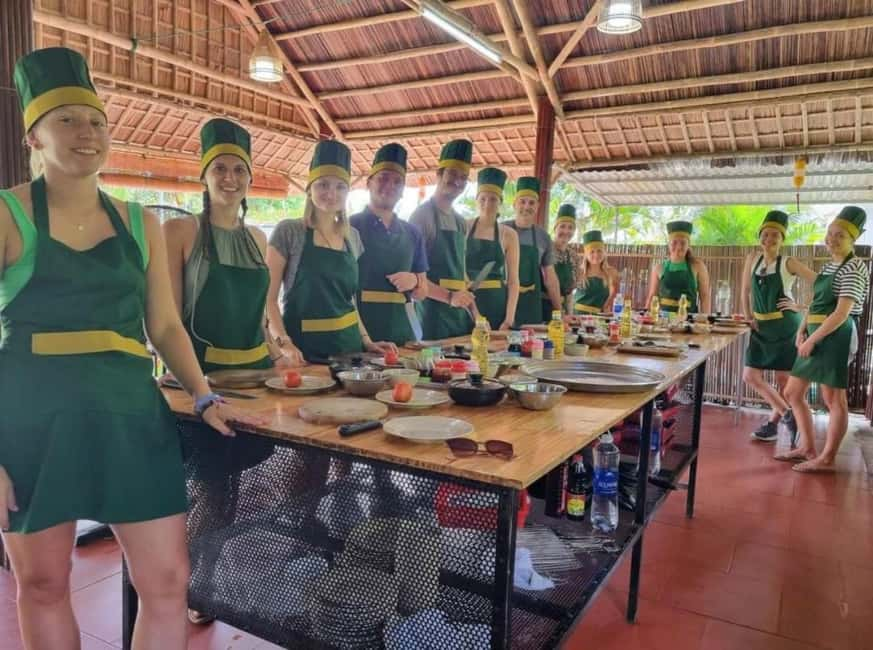
After the lesson, you eat what you cooked. That sounds obvious, but it’s actually a big reason this type of class works. When you taste your own papaya salad or spring roll, you understand the recipe in a new way. You’re not just consuming. You’re evaluating texture, salt level, and balance while the experience is still fresh.
The class includes the meal—traditional lunch for the morning tour and dinner for the afternoon tour. Either way, you’ll leave with a full, satisfying plate, not a tiny portion that makes you hungry again two hours later.
Also, you’re not eating in a rush. You’ll have time to enjoy it with the family and the group. A welcome drink starts the experience, and the meal ends it. That flow is part of what people love about it.
How to bring Hoi An flavors home (without needing a Vietnamese pantry)
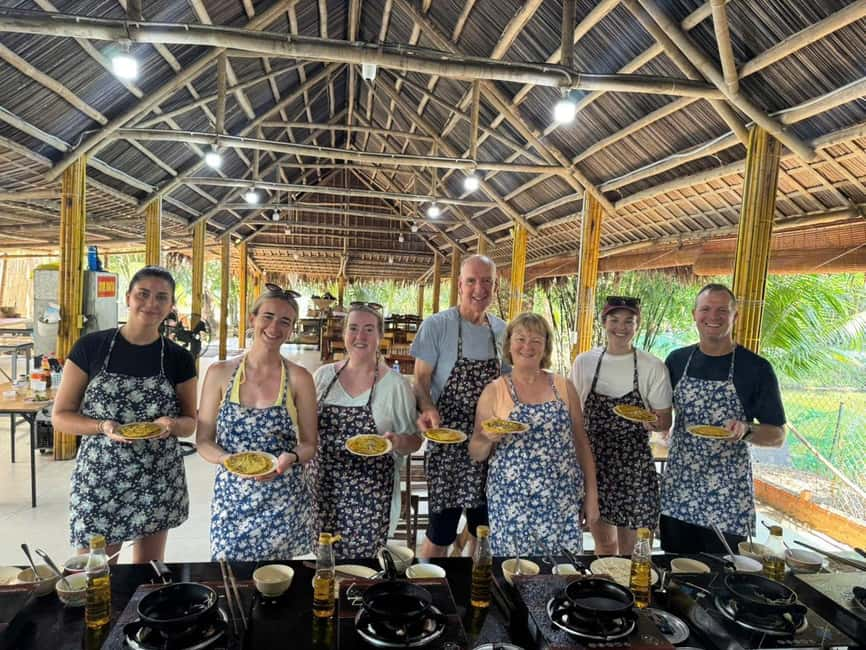
I like cooking classes that give you something you can repeat. This one gives you two repeatable wins.
First, you learn how rice milk is made traditionally with the stone grinder. Even if you won’t use a stone tool at home, the process teaches you the right idea: how it should feel and behave as an ingredient.
Second, you get a recipe set built from Hoi An staples: pancake, spring rolls, papaya salad, and a hot sauté with a peppery vegetable side. Those dishes share techniques and flavor logic, so practicing one helps the next.
If you want to recreate it at home, your best plan is to start with one dish and treat the rest as “learning steps.” For most people, the easiest first repeat is the papaya salad flavor profile. It’s also the one dish most likely to teach you balance even if your exact textures differ.
And if you want to go further, pick the one you enjoyed most in the class and redo that. You’ll remember the taste faster than you’ll remember the steps.
Vegan, vegetarian, gluten-free, and allergies: tell them early
This class explicitly supports vegan/vegetarian options, and they say ingredients can be adapted depending on your needs. They also request that you let them know about food restrictions or allergies.
That matters because the menu includes clear meat and seafood components (pork, shrimp, chicken), but they’re prepared to swap those pieces. The notes say vegans are acceptable and chicken can be changed into Vietnamese alternatives like Pho, Hoian Cao Lau, Mi Quang, or fish.
They also mention adapting for gluten-free preferences. The practical takeaway: send your needs ahead of time, not at the start. The clearer your message, the easier it is for them to adjust ingredient choices so you still get the same class experience.
If you’re traveling with picky eaters, this is one of the better options in Hoi An because the class doesn’t force you into a “just watch” role.
Group size reality: you’ll have fun, but expect a lively flow
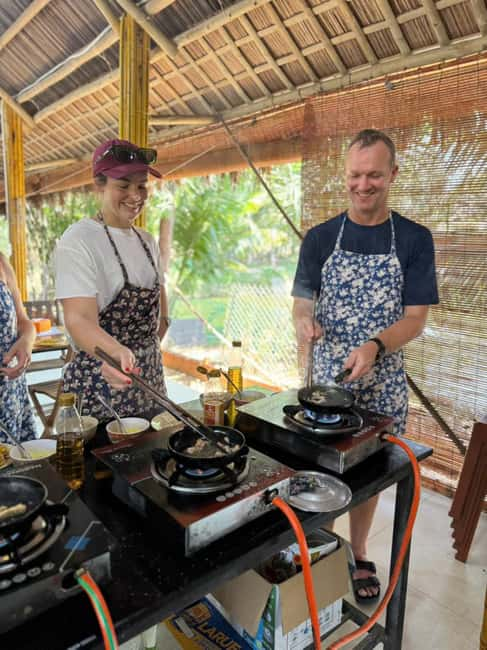
This is a group tour, but it’s managed. You’ll be split into small groups of around 12 participants. That’s a good size for cooking because you’re not standing around waiting the entire time, yet it’s small enough for the guide to keep things moving.
Just keep expectations realistic: you’ll be part of a shared kitchen rhythm. Some stations may run faster than others, and you might not cook every single tiny step at your own perfect pace. The upside is you’ll learn by watching others too, and you’ll leave with a full meal built from multiple skills.
What to bring (and what can trip you up)
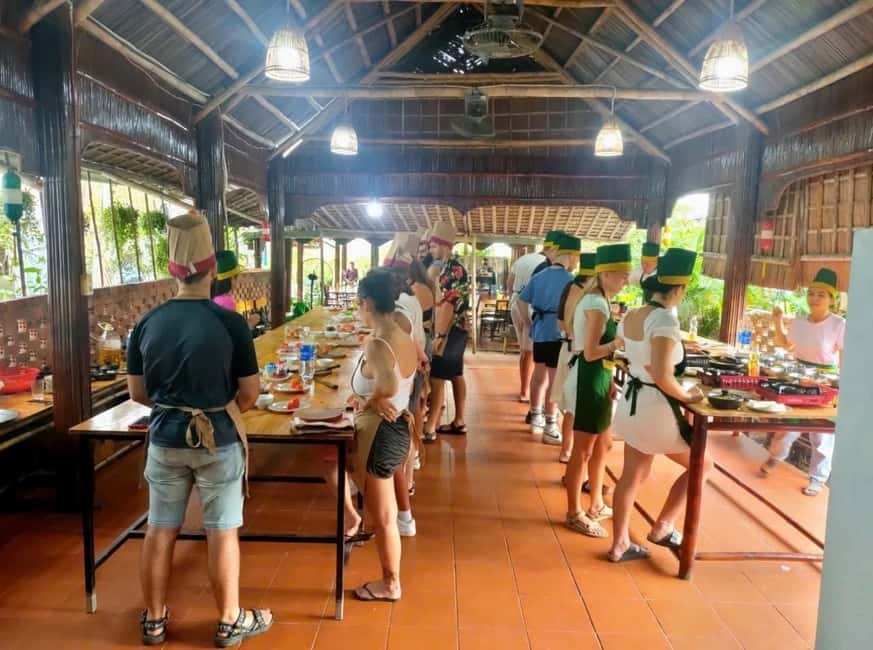
This class is in a real home kitchen, so dress for comfort. They recommend:
- Comfortable shoes
- Sun hat
- Camera
- Sports shoes
- Cash
- Outdoor clothing
You’ll also be standing, moving, and likely leaning into prep work. If you normally avoid strong smells or don’t like handling ingredients, this may feel more involved than you expect. But most people find that once you’re doing it, the time flies.
One more note: the tour includes pick up and drop off from selected hotels in central Hoi An, plus bottles of water. That helps you avoid the usual “what do I buy on the way” problem.
Who this class fits best (and who should think twice)
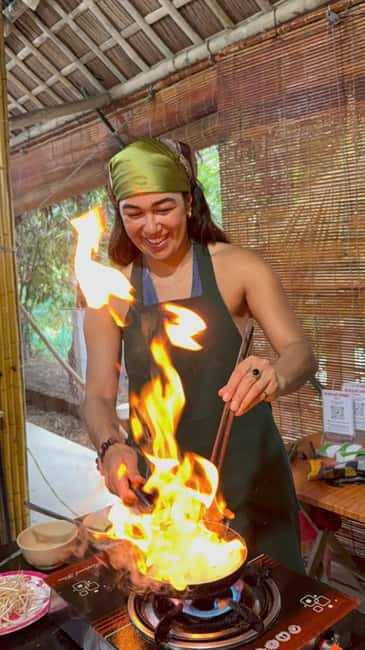
This experience is a good match if you want:
- real local food in a local setting
- hands-on cooking skills
- an English-speaking guide
- a meal that’s included, not an add-on
It’s not a good match if you have limitations. The tour notes it’s not suitable for people with heart problems, people with pre-existing medical conditions, and people over 95 years. If any of that applies, you should choose something gentler.
Also, remember it’s an activity day. You’ll start with pickup, then cooking, then eating. If you’re planning a long walk tour right after the class, you might want the drop-off in Hoi An Old Town so you can pace yourself.
Price and value: why $27 feels fair here
At $27 per person for about 150 minutes, the value comes from what’s included, not just the cooking. You’re getting:
- hotel pick-up and drop-off
- an English-speaking tour guide
- bottles of water
- entrance fee tickets
- and the big one: lunch or dinner based on your session
In other words, you’re not paying only for “instructions.” You’re paying for transport, guided learning, and a full meal built from multiple dishes. For many travelers, that adds up to a better deal than booking a cooking class and then buying a separate dinner afterward.
The only extra cost you might face is transportation if you’re not within the selected pickup zone in Hoi An—like pickup from Da Nang or outside the city center—where there’s that stated 300,000 VND one-way fee (for 2–3 pax sharing).
Should you book this Hoi An family cooking class?
Yes, if you want a practical food experience and you care about learning the “how,” not only the “what.” The best reason to book is the combination: traditional rice milk, Hoi An classics, and a meal you personally made in a real family home.
Skip it if you prefer quiet attractions, need very limited standing time, or have medical concerns noted by the tour. Also, if you’re extremely sensitive to strong cooking aromas or mess, this may be more hands-on than you want.
If you’re still deciding, choose the time that fits your energy. Morning suits people who want to front-load the day. Afternoon suits people who want to explore Hoi An first, then slow down with cooking.
FAQ
What time does the Hoi An Local Family Cooking Class run?
The morning session runs from 10:00am to 12:30pm, and the afternoon session runs from 3:45pm to 6:30pm.
How long is the cooking class?
The experience duration is listed as 150 minutes.
Is pickup included, and where does it pick up from?
Yes. Pickup is included from selected hotels in Hoi An city center. You meet the family driver at the hotel lobby.
Is there a vegan or vegetarian option?
Yes. Vegan/vegetarian options are available, and ingredients can be adapted based on your needs. Vegans are acceptable, and chicken can be changed to alternatives like Pho, Hoian Cao Lau, Mi Quang, or fishes.
What dishes are on the menu?
The class menu includes rice milk (traditional stone-ground method), Hoi An pancake, Hoi An spring roll, Hoi An papaya salad, sautéed chicken (or a substitute), and morning glory or okra fried with garlic and black pepper, served with steamed rice.
Can the class accommodate allergies or food restrictions?
They ask you to let them know about food restrictions or allergies. Ingredients can be adapted depending on your preferences and needs, including gluten-free preferences.
What is included in the price?
Included are the traditional lunch (morning) or dinner (afternoon), bottles of water, an English-speaking tour guide, pick up and drop off, and entrance fee tickets.
Are there any special rules for children?
Children under 3 years old are free of charge. They will not join in the cooking and will share services with their parents.