REVIEW · VERONA
Cooking Class Verona,Cooking in a Crystal Kitchen
Book on Viator →Bookable on Viator
Crystal Kitchen cooking makes lunch feel like a project. In a real ancient house outside Verona, you’ll learn two traditional handmade pastas and cook them in the same place—then eat what you make with wine. What I like most is the hands-on dough work (you don’t just watch) and the fact that the meal stays grounded in the flavors you learn to build.
One thing to plan for: there’s no private transportation included, so you’ll need to get yourself to the meeting point.
This is also not a restaurant, not a cooking school in name only, and not a B&B. You’re welcomed into an old home with a breathtaking view over hills, woods, and rooftops, and the class runs in a small group (up to 8) with English offered.
In This Review
- Key things you should know before you go
- The ancient house experience in Avesa (not a tourist set-up)
- Aperitivo first: the morning flow (and what’s worth upgrading)
- Making two traditional pastas: fettuccine and bigoli from scratch
- Two sauces that teach the logic of Italian flavor
- Spaghetti-style tomatoes sauce (for the fettuccine/spaghetti portion)
- Bigoli sauce: evo oil, garlic, anchovy
- Eating your work: lunch in the downstairs kitchen
- Group size, English support, and Anna’s teaching pace
- Price and value: what $138.03 buys you in real terms
- Getting there: meeting point and how to plan your morning
- Should you book this Verona cooking class?
- FAQ
- What pasta will I learn to make?
- What’s included with lunch?
- Is the class in English?
- How long is the cooking class and when does it start?
- Does the price include transportation?
- Can I cancel and get a full refund?
Key things you should know before you go
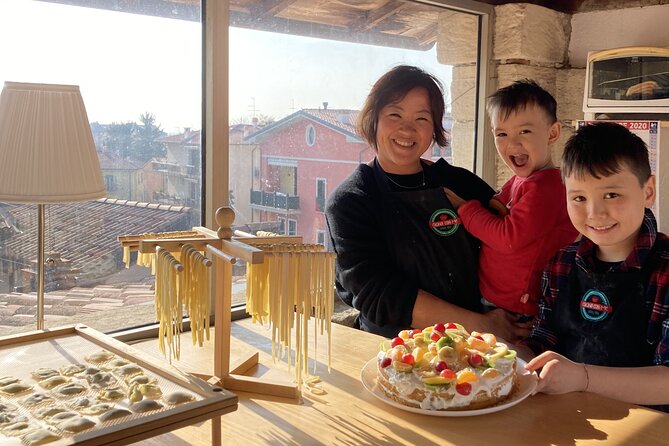
- Two pastas, two sauces: fettuccine plus bigoli, paired with tomato-garlic-basil and an evo oil/garlic/anchovy sauce
- Aperitivo to start, lunch to finish with your own pasta and a glass of white or red wine
- Hands-on teaching from Anna in a family atmosphere, with lots of guidance on dough texture
- The setting matters: work in an ancient home with a downstairs kitchen and a top-floor view
- Small group pace means more personal attention and time to get your dough right
The ancient house experience in Avesa (not a tourist set-up)
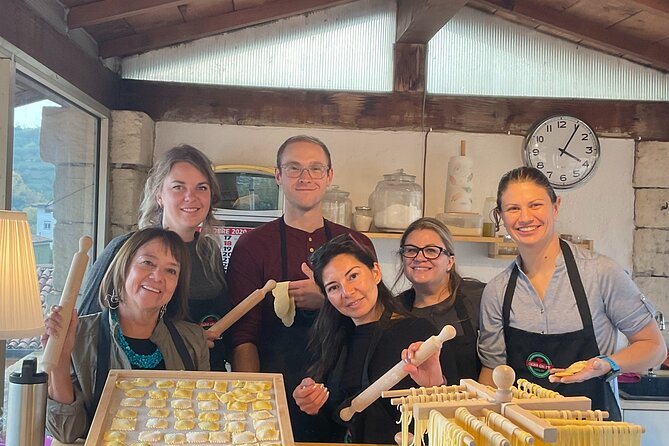
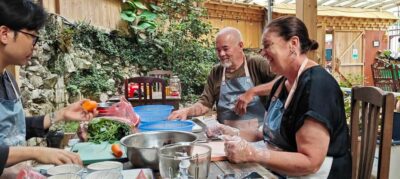
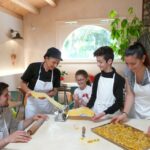
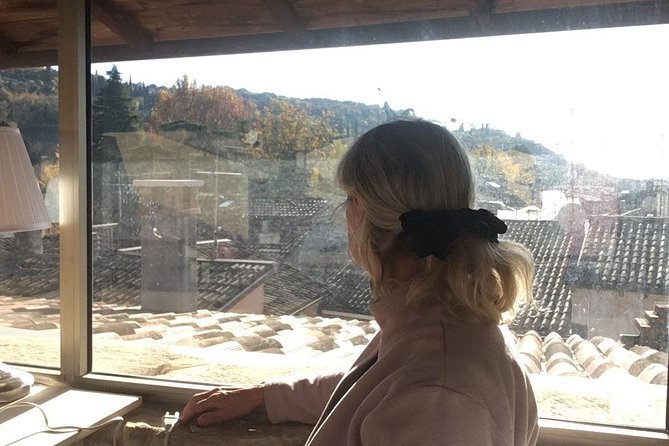
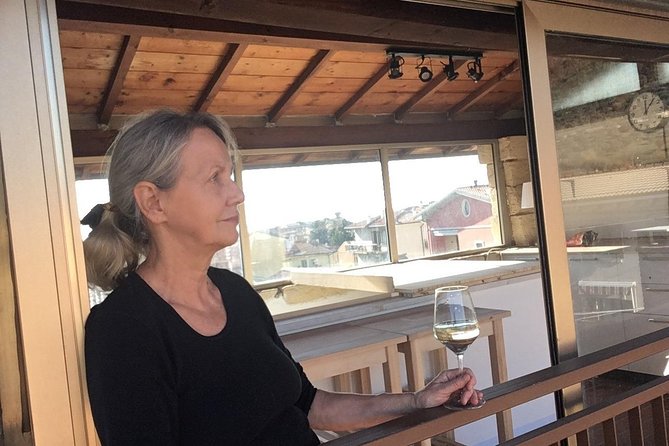
The best part of this class is that it doesn’t feel staged. You’re not herded into a studio. You’re welcomed into an ancient house where the morning starts with the view—hills, woods, and rooftops stretching out below you—and ends with lunch in the kitchen downstairs, like a family meal that happens to teach you how to cook.
It’s also refreshingly clear what it is. This isn’t positioned like a restaurant meal where you order and wait. This isn’t a big cooking-school production where you’re one of many. Instead, you work together with your instructor, learning traditional technique and local flavors in a setting that feels like someone’s home (just with more flour on your hands).
And because the group is capped at 8, you get that practical benefit: you’re not lost in the crowd. When dough needs adjusting, it’s easier for the instructor to notice and help you fix it right away.
You can also read our reviews of more tours and experiences in Verona.
Aperitivo first: the morning flow (and what’s worth upgrading)
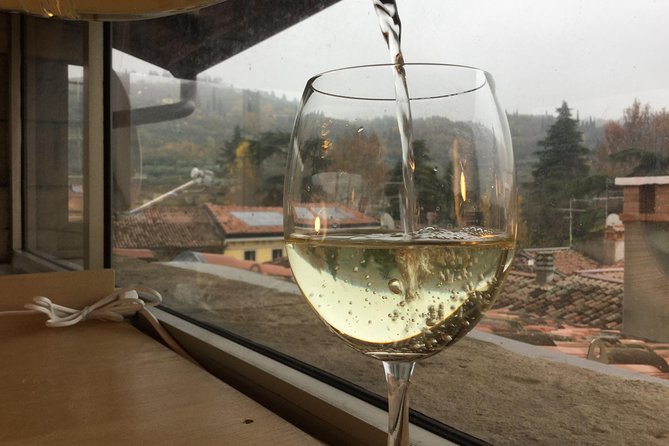
The class is designed to move in a simple arc: aperitivo first, then pasta work, then lunch. Even before you touch dough, you’re building the mood. You get a drink with the group, and you settle into the day without the pressure of racing straight into cooking.
There’s a note that’s worth paying attention to: if you book directly through veronacookingclass.it, there’s an upgrade that adds an aperitivo with Prosecco Aperol Spritz. If you enjoy starting your Italian day with something light and celebratory, that upgrade is a straightforward way to make the experience feel a bit more special.
After the first drink, the class shifts from social to hands-on. You’ll cook your way through two pasta types and two sauces, then sit down to eat lunch featuring what you prepared. It’s the kind of structure that works well if you’ve never made pasta before—you get enough time to learn, and you still get to eat.
Making two traditional pastas: fettuccine and bigoli from scratch
You’ll make two handmade pastas: fettuccine and bigoli. Fettuccine is the classic, wide noodle shape, and it gives you a clear way to practice rolling and cutting. Bigoli is the local twist—think of it as a typical Veronese spaghetti style—and it’s a big part of why this class feels rooted in the region instead of generic Italian cooking.
The instructor, Anna, teaches in a way that focuses on what your hands are doing. The feedback you’ll hear repeatedly is about dough texture—how it should feel, how it should stretch, and how to get it to become smooth and flexible. One of the nice details I noticed from her teaching style is that she doesn’t just say what to do; she watches your dough and gives quick corrections so you can fix the problem in the moment.
In practical terms, you should expect to:
- work the dough (kneading matters)
- learn the steps for shaping your pasta
- cook the pasta later in the ancient kitchen downstairs
Even if pasta feels intimidating, you’re not being thrown into a complicated technique without help. This class is set up so that you can actually leave knowing what you did—because you’ll taste it, eat it, and remember it.
Two sauces that teach the logic of Italian flavor
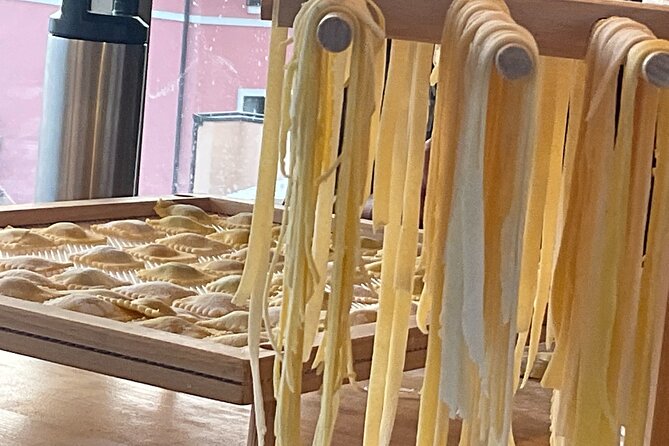
You don’t just learn pasta shapes. You learn how to build sauce that matches each pasta.
Spaghetti-style tomatoes sauce (for the fettuccine/spaghetti portion)
For the tomato-based sauce, you’ll work with ingredients like garlic and basil, plus tomatoes and oil. Depending on the part of the menu you’re served, you may also taste chili in the mix, which gives the sauce a little lift without turning it into something unfamiliar. The goal here is a classic, straightforward tomato-garlic-herb base that clings well to fresh pasta.
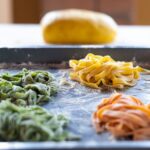
Bigoli sauce: evo oil, garlic, anchovy
For bigoli, the sauce is all about evo oil, garlic, and anchovy. It’s savory and deeply Italian, and it teaches you an important lesson: anchovy doesn’t have to taste fishy to be useful. In hot oil with garlic, it becomes a background backbone flavor that makes the sauce taste fuller.
In the sample menu, the bigoli sauce also shows up with onions and parsley, and you may see it described as bigoli in salsa. The takeaway for you is that this sauce isn’t just a single ingredient—it’s a small system of flavors that you learn by making it.
If you’re the type who usually orders marinara and calls it a day, this is a good chance to broaden what you think Italian pasta sauce can be.
Eating your work: lunch in the downstairs kitchen
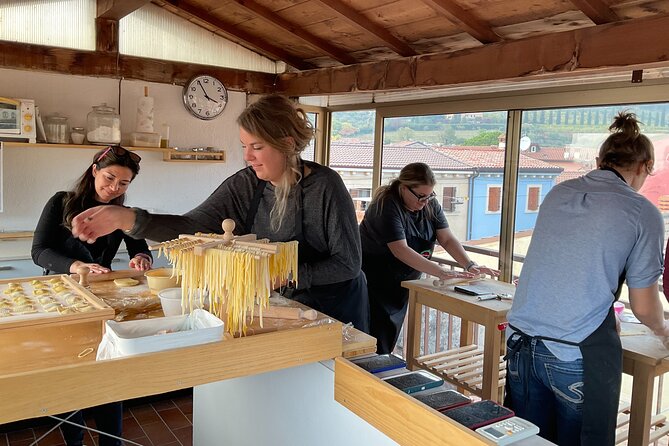
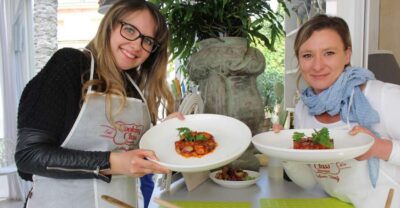
Here’s the best payoff: after you cook, you eat. You’ll have lunch that features the pasta and sauces from your session, served in a family atmosphere in the ancient kitchen downstairs.
The sample menu is built around two mains:
- spaghetti with tomatoes sauce, oil, chili, garlic, and basil
- bigoli with typical anchovies, onions, and oil sauce, plus bigoli in salsa style with evo oil, garlic, anchovy, and parsley
You’ll also get a glass of white or red wine, plus water. That matters because it makes the meal feel like the capstone of the lesson instead of a separate thing you do afterward.
Also, you’ll likely appreciate the pacing. It’s not “eat fast and leave.” The day is structured so you get time to finish cooking, sit down, and actually enjoy what you made—rather than rushing to beat the clock.
Group size, English support, and Anna’s teaching pace
The class is offered in English, and the setting stays relaxed. Small groups are not just a comfort feature—they make a difference in learning. With up to 8 people, Anna can step in and help with specific dough adjustments rather than giving a one-size-fits-all explanation.
From the way the class is described and the consistent feedback around her style, what stands out is how professional and caring her instruction feels. You can expect clear guidance, plus attention to the practical stuff like kneading and achieving the right dough feel. Several people highlight how quickly they learned and how the end result was delicious, which is exactly what you want from a first-time pasta class.
If you speak a second language, that can help too. Anna is noted as speaking English and also having good German, so you might find the communication even smoother than you expect.
Price and value: what $138.03 buys you in real terms
At $138.03 per person for about 3 hours, the pricing makes sense when you look at what’s included.
You’re paying for:
- an instructor-led, small-group pasta lesson
- ingredients and tools
- an apron and the cooking tools you need
- lunch made from your own pasta
- red or white wine, plus water
A lot of cooking experiences fall into two camps: either you pay for a meal that happens to include a show, or you pay for a class where you don’t get to fully enjoy what you made. This one does both in a balanced way: you cook, then you sit down and eat the results.
The optional upgrade (Prosecco Aperol Spritz when booking directly) is also a clear “add-on” choice rather than something hidden. If you want that extra aperitivo energy, you can plan for it. If you don’t, you still get the basic aperitivo start.
Getting there: meeting point and how to plan your morning
The class starts at 9:30 am and runs for about 3 hours. The meeting point is Via Podgora, 25, 37127 Avesa VR, Italy, and the activity ends back at the same meeting point.
Private transportation is not included, so plan to arrive under your own steam. The location is near public transportation, which helps if you’re moving around Verona without a car. If you’re staying in the center and you prefer not to deal with logistics, you’ll want to factor in time for transit so you’re not arriving out of breath.
This is also the kind of experience where arriving on time matters. Pasta is temperature- and timing-sensitive, and the whole flow (aperitivo, then dough, then cooking and lunch) relies on everyone being ready when the group starts.
Should you book this Verona cooking class?
You should book if you want a hands-on, small-group pasta class with real instruction, a memorable setting, and a lunch you actually get to enjoy right after cooking.
You’ll especially like it if:
- you want to learn two kinds of pasta, not just one
- you care about local Veronese flavors like bigoli with anchovy sauce
- you enjoy an atmosphere that feels family-like rather than factory-like
- you want a morning activity that finishes with a full meal and wine
You might skip it if you strongly prefer classes that include transportation from central Verona, because this experience doesn’t provide private pickup. Also, if you’re only looking for a casual, low-effort meal, this is still a lesson—expect to get involved with dough.
If you want pasta skills you can use later, plus a lunch that tastes like the work you did, this is a smart choice.
FAQ
What pasta will I learn to make?
You’ll learn two kinds of traditional handmade pasta: fettuccine and bigoli (a typical local spaghetti). You’ll also cook them with two different sauces.
What’s included with lunch?
Lunch is included, along with red or white wine and water. You’ll also receive an apron and the tools you need to cook.
Is the class in English?
Yes, the experience is offered in English.
How long is the cooking class and when does it start?
It runs for about 3 hours and starts at 9:30 am.
Does the price include transportation?
No. Private transportation is not included.
Can I cancel and get a full refund?
Yes. You can cancel up to 24 hours in advance for a full refund. If you cancel less than 24 hours before the start time, the amount paid is not refunded.