REVIEW · SIEM REAP
Cambodian Cooking Class from Siem Reap
Book on GetYourGuide →Operated by Beyond. Unique Escapes · Bookable on GetYourGuide
A short walk and a few herbs can change your trip. This Cambodian Cooking Class from Siem Reap mixes a real village visit with a 100% hands-on cook-at-your-station meal, taught by local chefs and guides. In many sessions you’ll also hear familiar names like Sophia Lauren in the guide team.
I especially like two parts: the ingredient shopping (you see and smell what Khmer home cooks use) and the way the food feels practical. You’re not just watching—you’re learning how to build dishes like Fish Amok and curry so you can recreate the flavors later.
One thing to plan for: the village portion happens outdoors. Bring a hat and comfortable shoes, because you’ll be walking on uneven ground and it can get hot in the daytime.
In This Review
- Key things you’ll notice
- Tuk-tuk to the countryside: your first taste of Khmer daily life
- Market walking: how you learn Cambodian ingredients by seeing them
- Home visit and garden time: what Khmer kitchens actually look like
- The outdoor pavilion by the pond: your hands-on cooking station
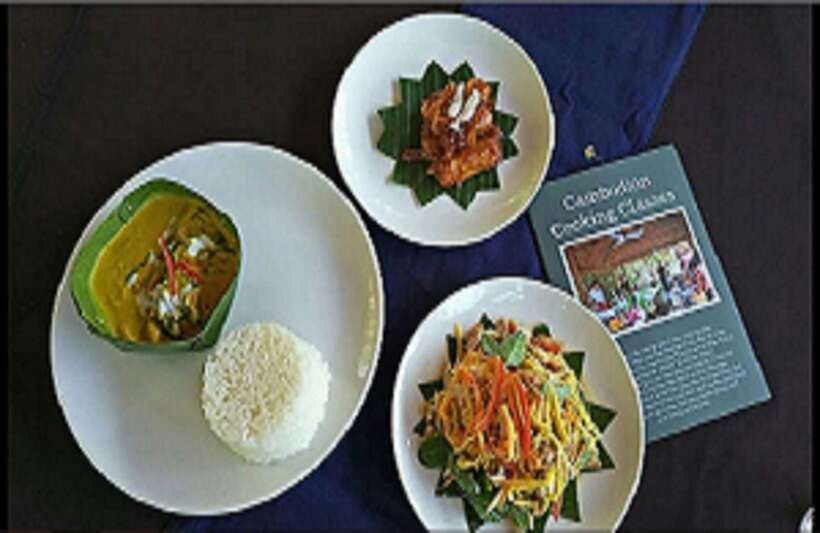
- What you cook: Khmer dishes you’ll actually want to repeat
- Morning menu highlights
- Afternoon menu highlights
- Lunch served one by one: relaxing with your own work
- Price and value: is $32 a good deal in Siem Reap?
- Best fit: who should book this cooking class
- A quick reality check before you go
- Should you book this Cambodian Cooking Class in Siem Reap?
- FAQ
- How long is the Cambodian Cooking Class?
- Where do they pick you up and drop you off?
- What’s included in the price?
- Do I visit a market before cooking?
- What dishes will I cook?
- Is the food very spicy?
- Can children join the class?
Key things you’ll notice
- Tuk-tuk pickup plus rural backroads: You leave Siem Reap fast, then trade city noise for countryside pace.
- Market stop for herbs, spices, and produce: You learn what’s used daily in Khmer cooking and how to shop smarter.
- Visit a Khmer home and kitchen routine: You see how families prep food, and you may visit a vegetable garden.
- Small group size (max 6): Your station time stays real, not rushed.
- Outdoor pavilion meal by a pond: After cooking, you eat in a calm setting and dishes come out one by one.
- Recipe support that travels with you: You’ll get a recipe card/book so the class doesn’t end when you leave.
Tuk-tuk to the countryside: your first taste of Khmer daily life
The day starts with hotel pickup and a tuk-tuk ride out of central Siem Reap. Even though it’s only a short trip, it matters. The change in scenery (rice fields, trees, and village life) sets the tone for the rest of the class: this isn’t a stage show. It’s about how food fits into everyday Khmer routines.
From the moment you arrive, you’ll notice the setup is built for learning. You’re not squeezed into one space. You’ll move through the sequence: local market/produce focus, a home visit, then cooking in an outdoor pavilion area. That flow is useful because it teaches the “why” behind ingredients, not just the “how.”
A small-group format helps a lot here. With up to 6 people, the chef and English-speaking guide can check in with your technique at the station. That’s a big deal with Khmer cooking, where timing and texture matter—especially for dishes like amok-style curry.
You can also read our reviews of more tours and experiences in Siem Reap.
Market walking: how you learn Cambodian ingredients by seeing them
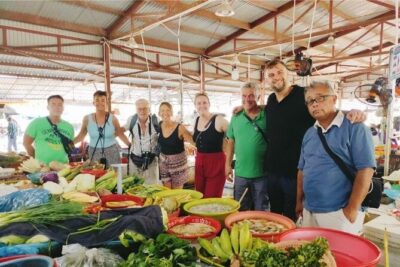
A major reason this class feels authentic is the ingredient market stop (part of the experience before you start cooking). You’ll walk with your guide, identify herbs and vegetables, and learn how locals think about flavors.
This part sticks with me for one simple reason: you start connecting the menu to real ingredients. When you later chop, crush, and mix, it makes sense because you already saw what those items look like in Cambodia.
You’ll also get “practical swaps” ideas—like what to use if a specific leaf or ingredient is hard to find at home. In past classes, the guide team explains alternatives clearly, which is exactly what you want if you plan to cook again after your trip.
Two extra details that show up in real-world experiences:
- People often use the market walk to try small local treats along the way.
- You may get chances to smell leaves and spices up close, which makes the cooking terms easier to remember.
If you’re a first-time visitor to Siem Reap, this market segment is a helpful contrast to the temples. It helps you understand Cambodian food culture with your own eyes and nose, not just through a restaurant menu.
Home visit and garden time: what Khmer kitchens actually look like
After the market focus, the experience shifts to a visit with a local family. You’ll see the home and learn how food prep fits into Khmer domestic life. In many versions of the class, you’ll also get time around a vegetable garden—where herbs and produce are grown that end up on dinner tables.
This isn’t just “cultural sightseeing.” It’s setup for better cooking. When you understand where ingredients come from and how they’re handled, your cooking decisions get easier later. You stop guessing.
You’ll also hear about typical preparation in a Khmer home kitchen. One of the clever parts of the day is that it changes your frame. Instead of thinking of Cambodian food as a restaurant dish, you start seeing it as repeatable household cooking.
From real class moments, families and hosts are often welcoming, and some groups bring small appreciation gifts (like rice) as a respectful gesture. If you want to do something like that, ask the guide how they prefer it—don’t just show up with a random item and hope it works.
Tip for this portion: wear shoes you don’t mind getting dusty and bring a hat. The ground can be uneven, and you’ll want to stay comfortable for the walking.
The outdoor pavilion by the pond: your hands-on cooking station
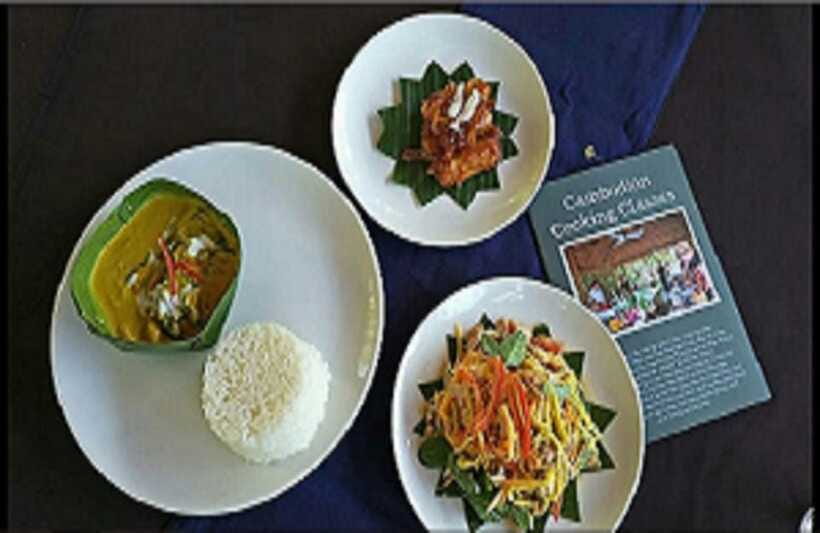
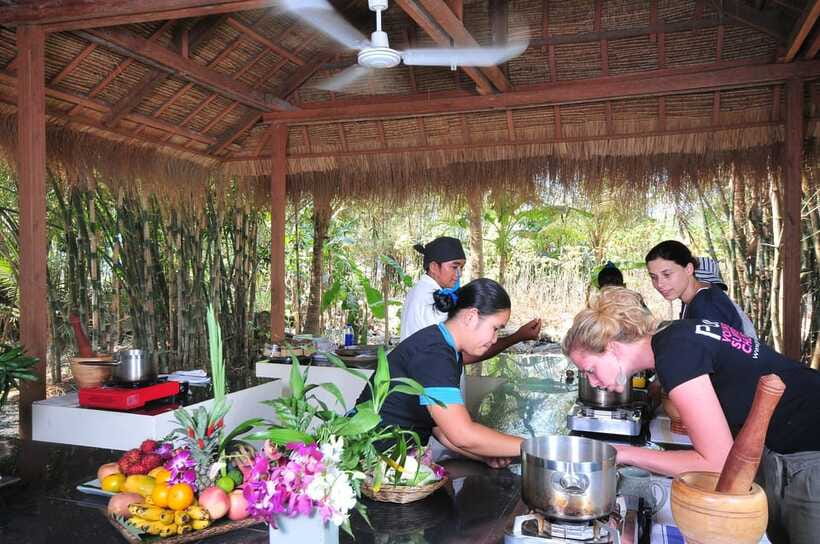
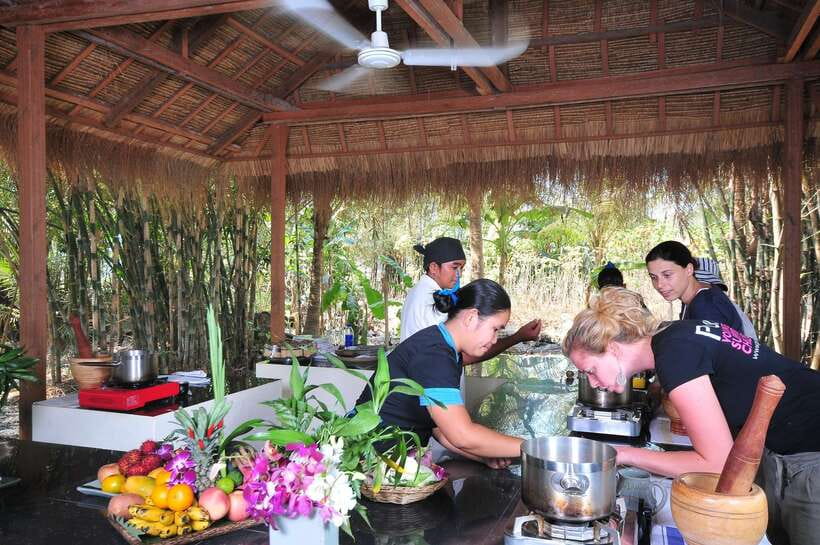
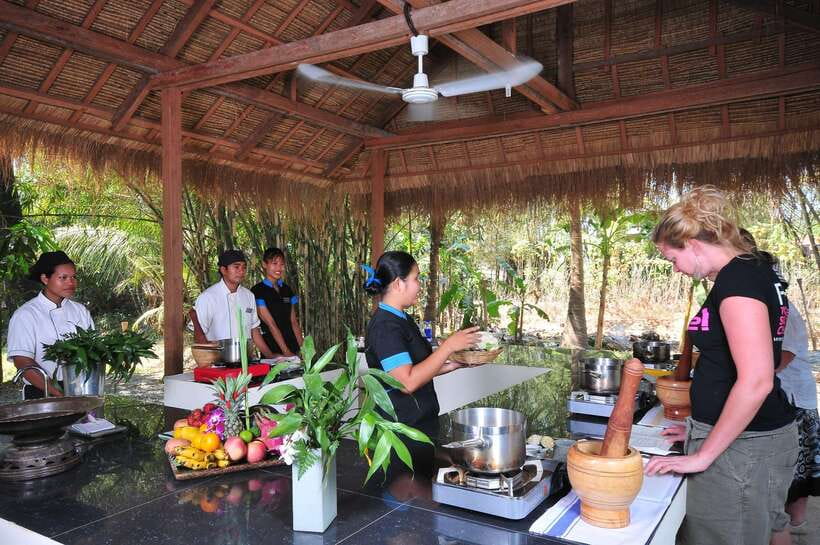
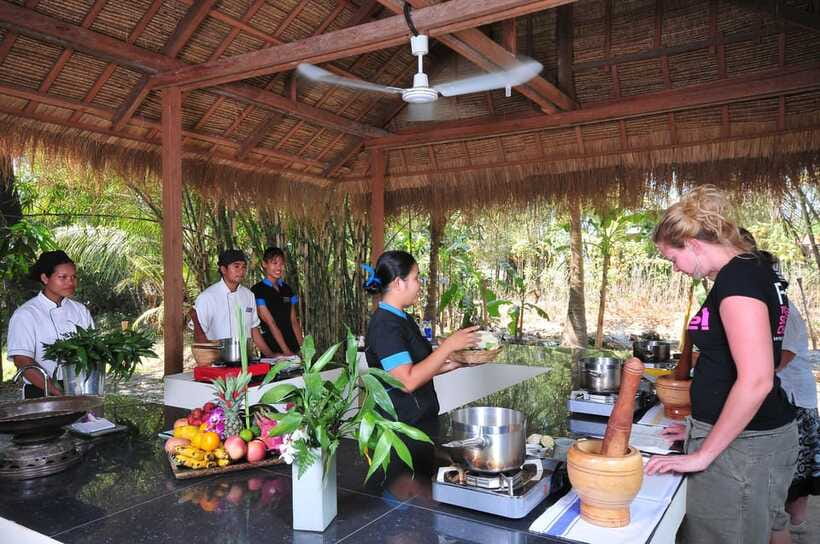
Once you’ve met the family and understand the ingredients, you move to the cooking area—a pavilion in a scenic outdoor setting over/near a pond. This is where the class becomes truly hands-on.
Everyone has their own station and equipment. That’s the core value of this experience: you learn by doing. You’ll likely use tools like mortar and pestle-style grinding for curry paste textures, and you’ll follow guided steps with your chef and guide at your side.
You’ll cook a set of Khmer dishes, and you’ll get recipe support to take home. The menu changes depending on whether you’re in a morning or afternoon class, but the learning approach stays consistent: make the components, understand the ingredients, then assemble.
Also, the setting is practical for photos but more importantly it’s practical for cooking. The pavilion is designed for a group, and the meal service area is calm. Some classes are described as very clean and well organized, with clear instruction and patient support—especially when your chopping skills aren’t perfect yet.
A small extra detail that comes up in the setting: in some sessions, people mention turtles swimming in the pond. Either way, the water view makes the waiting time between cooking steps feel restful rather than dull.
What you cook: Khmer dishes you’ll actually want to repeat
Your menu depends on the time slot. Here are the standout dish options you should expect to see across the morning and afternoon classes.
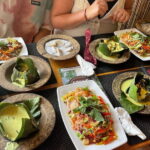
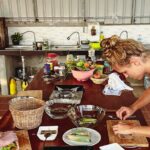
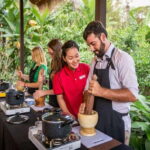
Morning menu highlights
- Cambodian Mango Salad
Fresh, light, and built on balance. If you’ve only had mango salad versions abroad, this one helps you understand the Khmer approach to sweet-sour flavors.
- Fish Amok
The headline dish for many people. Amok is cooked in young coconut and ends up as a smooth, fragrant curry-style result. You’ll learn how the coconut and spice base work together, and why the texture matters.
- Sticky Rice Balls with Palm Sugar and Grated Young Coconut
Dessert that fits the meal instead of feeling like an afterthought. It also gives you a Khmer sweet profile to remember later.
Afternoon menu highlights
- Prahet Chien (minced fish on sugar cane)
Another Khmer signature. It’s a dish that helps you understand how local ingredients and flavor forms pair in Cambodian cooking.
- Cambodian Curry
This is where you’ll learn a key regional difference. Cambodian food isn’t typically built around the same level of heat you might expect from nearby Thailand. The focus is more layered spice fragrance than burn.
- Nom Tong Noun (Khmer brandy snaps)
Slightly sweet and snack-like, a satisfying finish after savory dishes.
One practical note: even if you don’t cook every dish perfectly, the guide’s role is to teach you what to look for—taste targets, texture cues, and how to adjust. In real sessions, people mention the chefs give clear explanations and even suggest ingredient alternatives if you can’t find an exact component later.
If you have dietary needs, the class has been reported as able to accommodate different dietary requirements. If that matters to you, tell the operator ahead of time so the team can guide you safely and responsibly.
Lunch served one by one: relaxing with your own work
After cooking, you sit down in the wooden pavilion setting and the meal is served. Dishes often arrive one by one, which changes the whole pace of lunch. You’re not rushed out; you get time to compare flavors as you eat.
You’ll also get a complimentary drink with the meal—soft drink, bottled water, or beer. It’s included in the experience format, but it’s still smart to confirm which option you’ll receive when you check in.
Some classes have been mentioned as generous with food quantity, and there may be options for leftovers to go. If you’re visiting with family or you just know you’ll want to taste again later, ask your guide during the class how leftovers are handled.
This is the quiet “reward” part of the day. You’ve done the chopping and mixing. Now you can taste with confidence and understand what worked.
Price and value: is $32 a good deal in Siem Reap?
At $32 per person for a roughly 3.5-hour experience, the value is strong—mostly because the cost isn’t just “a cooking lesson.” You’re also paying for:
- Hotel tuk-tuk pickup and return
- An English-speaking chef and guide
- A market walk plus a local family home visit
- Cooking stations and equipment
- A recipe card/book
- A full lunch (what you cook)
- A complimentary drink
In other words, you’re getting a mini-food education day plus a meal—without needing to plan transport, entrance fees, or ingredient procurement yourself.
Where value can vary is in what you personally want from the day:
- If you love hands-on food learning, it feels like a bargain.
- If you only want a quick meal in an air-conditioned setting, this will feel like “too much effort.”
But for the right person, it’s one of the more practical cultural experiences you can do in Siem Reap.
Best fit: who should book this cooking class
This class is a great match if you:
- Want a real Cambodian village experience without committing to a full-day tour
- Like learning by doing at your own station (not watching someone else cook)
- Enjoy markets, herbs, and the ingredient side of cooking
- Want a menu that gives you recognizable Khmer signatures like Fish Amok
- Prefer small groups where your guide can answer questions
It’s also a solid family option if the child is old enough. The class is for kids above 12, and private classes can be arranged for families upon request.
If you’re sensitive to heat or don’t like outdoor walking, you can still go—but wear well-supported shoes and use a hat. Plan your day so you aren’t rushing from a temple trek straight into this.
A quick reality check before you go
This is an active half-day. You’ll walk, you’ll stand at a cooking station, and you’ll spend time outdoors in the pavilion area. The schedule is designed to feel relaxed, but it’s not a sit-and-snack activity.
Also, Khmer cuisine is full of spices, but it’s generally not as spicy as neighboring-country cooking. Still, your personal spice tolerance matters. If you need your food mild, talk with the chef at the start of class.
If you want the best results back home, pay attention during the ingredient explanations. That’s where the secret “home cooking success” comes from.
Should you book this Cambodian Cooking Class in Siem Reap?
Yes, if you want more than a meal. Booking this makes sense because you get a complete loop: ingredients (market), household context (home and garden), technique (hands-on cooking), and payoff (lunch you made).
It’s also good value at $32 since transport, lunch, drinks, and recipes are part of the package, not add-ons.
Don’t book it only if you dislike outdoor walking or you’re looking for a short, passive activity. For everyone else, it’s one of the most practical ways to learn Khmer flavors you can actually cook again.
FAQ
How long is the Cambodian Cooking Class?
The class runs for about 3.5 hours.
Where do they pick you up and drop you off?
They include tuk-tuk pickup from your hotel and return you to the centrally located tour office at the end.
What’s included in the price?
You get the chef and guide, village walking tour, a market/family visit portion, complimentary drinks, the recipe booklet, and lunch (what you cook).
Do I visit a market before cooking?
Yes. You start with an ingredient visit where you learn about herbs and produce used in Khmer cooking.
What dishes will I cook?
You may cook several Khmer dishes depending on the time slot. Options include Cambodian Mango Salad, Fish Amok, Sticky Rice Balls with palm sugar, Prahet Chien, Cambodian Curry, and Nom Tong Noun.
Is the food very spicy?
Cambodian cuisine includes spices, but it is generally not as spicy as food from neighboring countries.
Can children join the class?
Only children above 12 can join the cooking class, but private classes can be arranged for families upon request.