REVIEW · SICILY
3 Hour Sicilian Cooking Class on Fresh Pasta in Catania
Book on Viator →Operated by Futuro e Lavoro · Bookable on Viator
Fresh pasta in Catania feels hands-on. I loved the fresh pasta by hand part, then the payoff of a full sit-down tasting with limoncello and Sicilian red wine. You get to learn classic sauces that actually define Sicilian cooking, not just generic pasta tricks.
One thing to think about: the class can feel a bit timing-heavy early on, and the pasta-dough start may be less slow-and-steady than you’d expect. If you’re someone who needs lots of step-by-step coaching from the first minute, plan to ask questions quickly.
In This Review
- Key things I’d bet you’ll notice fast
- Making Fresh Pasta in Catania: what this class really is
- The 3-hour flow: dough first, then ragù, Norma, pesto, then tasting
- 1) Starting off: pasta dough and shaping
- 2) Condiments: ragù, Norma, and Sicilian pesto
- 3) The chef finishes cooking so you can eat
- Ragù, Norma, and pesto: what you’re actually learning
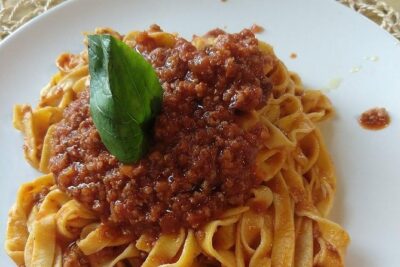
- Ragù: the slow-satisfying backbone
- Norma: a Sicilian identity move
- Sicilian pesto: not just pesto-as-usual
- Your meal at the end: wine, limoncello, and the sit-down payoff
- Where the kitchen value comes from: equipment and local ingredients
- Price check: is $119.21 worth it?
- Who should book this class, and who might skip it
- Practical tips so your 3 hours go smoothly
- Plan around timing and ask early
- Give yourself a buffer for the meeting point
- Think about alcohol service rules
- If you have allergies, speak up in advance
- Should you book this 3-hour Sicilian pasta class?
- FAQ
- FAQ
- How long is the Sicilian cooking class in Catania?
- What will I make during the class?
- Is lunch or dinner included?
- Is wine included, and what about limoncello?
- Is the class taught in English?
- How big is the group?
- Where do I meet in Catania?
- What if I have a food allergy or intolerance?
- What happens if the weather is bad?
- Is there a cancellation deadline?
Key things I’d bet you’ll notice fast
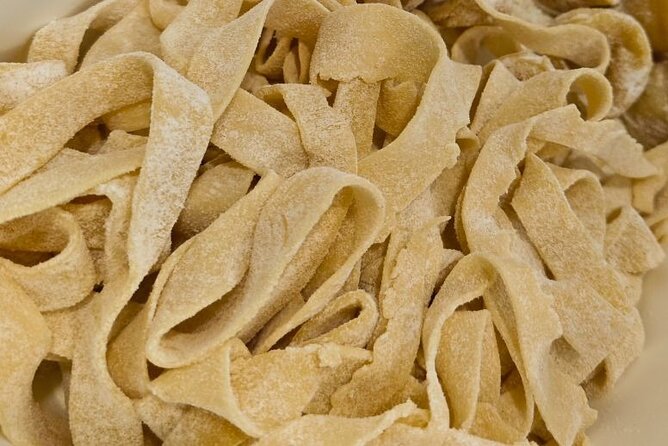
- Fresh pasta dough with your hands: you make it yourself, then learn how the shapes come together.
- A sauce lineup you can use later: ragù, Norma, and Sicilian pesto are all part of the lesson.
- Chef-finished cooking, then you eat: the chef completes the cooking so you can sit down right away.
- Wine and limoncello are part of the meal: Sicilian wine with the tasting, plus limoncello.
- Small group by design: capped at 14, so it doesn’t feel like you’re stuck watching from the sidelines.
Making Fresh Pasta in Catania: what this class really is
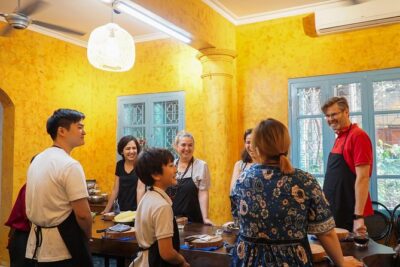
This is a practical cooking class where you actively make fresh pasta, then you move right into the sauces that make Sicilian pasta taste like a place, not a recipe card. It’s also built around a relaxed rhythm: you work, you learn, and then the chef steps in to finish so you can eat what you made.
Location matters here. The meeting point is Via Cervignano 42, in Catania, a short walk from subway stops GALATEA and ITALIA. That’s a big deal in a city with layered streets and lots of stop-and-start walking. If you’re pairing this class with other plans, the transit access makes it easier to stay on schedule.
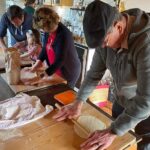
One more detail I like: the class runs as a group experience, but not a giant one. With a maximum of 14 people, you’re far more likely to get guidance and follow along with what’s happening at your station, not just in the room.
You can also read our reviews of more tours and experiences in Sicily.
The 3-hour flow: dough first, then ragù, Norma, pesto, then tasting
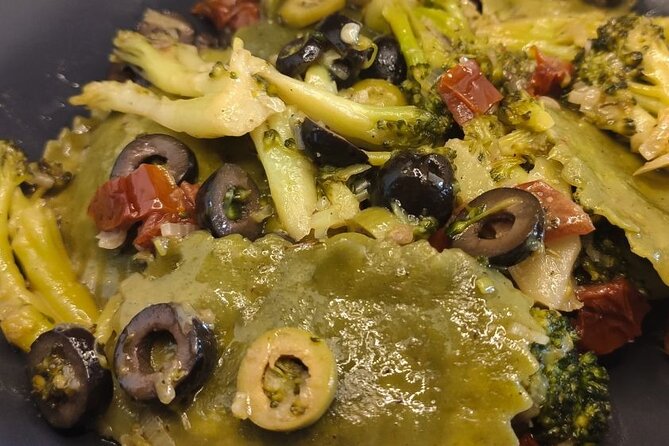
The lesson is organized in phases, and the pacing is clear. It’s not just watch-and-copy. The workshop starts with the hands-on pasta work, then shifts into condiments, and ends with a full tasting where the chef finishes the final steps.
1) Starting off: pasta dough and shaping
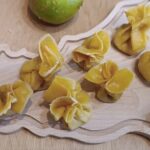
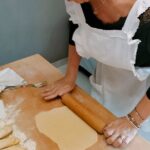
In the first part, you work the dough yourself. The goal is that you leave with muscle memory, not just a theory you forget by the next day. You’ll learn the basics of working the dough and shaping pasta by hand, then you’ll move on from there.
Here’s what to expect in real life terms: the beginning sets the foundation fast, so you need to pay attention right away. One review note pointed out that early instructions felt a little rushed and could be more detailed or hands-on. If you’re the type who learns best when someone slows things down and shows the technique repeatedly, make a point to ask clarifying questions before you get too far.
2) Condiments: ragù, Norma, and Sicilian pesto
Once the pasta is made, you start building the sauces. You’ll learn to make:
- Ragù
- Norma
- Sicilian pesto
These aren’t “optional add-ons.” They’re the main learning targets of the second phase. And that matters for value: a lot of pasta classes teach you dough but stop there. This one treats sauce-making as a real skill, because Sicilian pasta is often about what’s on top.
You’ll also be using typical Sicilian foods and products, which is where the taste comes from. Even if you’re a confident cook, it’s useful to see how local ingredients are treated in a kitchen rhythm that makes sense for Catania.
3) The chef finishes cooking so you can eat
After you’ve done the hands-on prep and sauce work, the chef completes the cooking. This is one of the smartest parts of the plan. You don’t end the class standing at a stove trying to time everything perfectly. Instead, you sit down to taste the pasta and sauces you worked on.
That shift—from production to tasting—makes the class feel like a meal, not a chore. It also keeps the total experience within the approximate 3-hour window without turning it into a long, exhausting kitchen shift.

Ragù, Norma, and pesto: what you’re actually learning
This is a “three-sauce” class, and each sauce teaches you a different kind of thinking.
Ragù: the slow-satisfying backbone
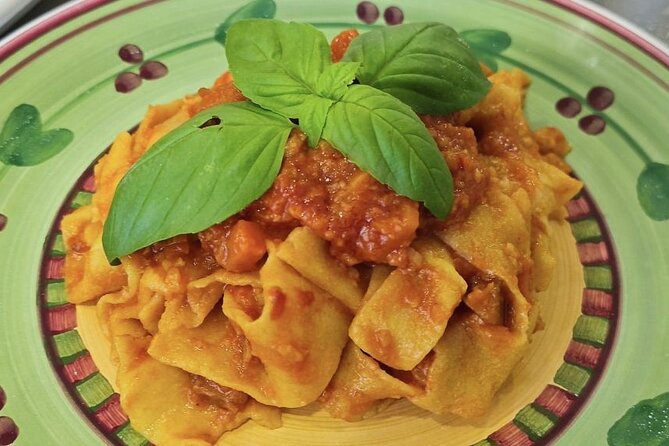
Ragù is a classic. In Sicilian cooking, it’s usually about the right balance of richness and depth, not just simmering something “until it smells good.” In this class, the value is that you’re not only tasting ragù—you’re making it as part of the workflow after your pasta dough is shaped.
Norma: a Sicilian identity move
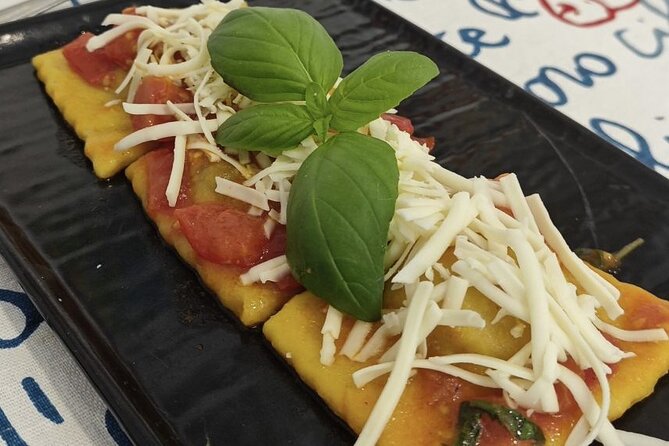
Norma is one of those dishes that sounds like a name, but it’s really a signature flavor category. Here, you learn how to make Norma as part of the sauce lineup, then you taste it with your own fresh pasta. That pairing is where the lesson clicks: you see how the sauce’s character changes when it meets the texture of fresh pasta.
Sicilian pesto: not just pesto-as-usual
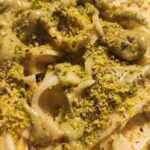
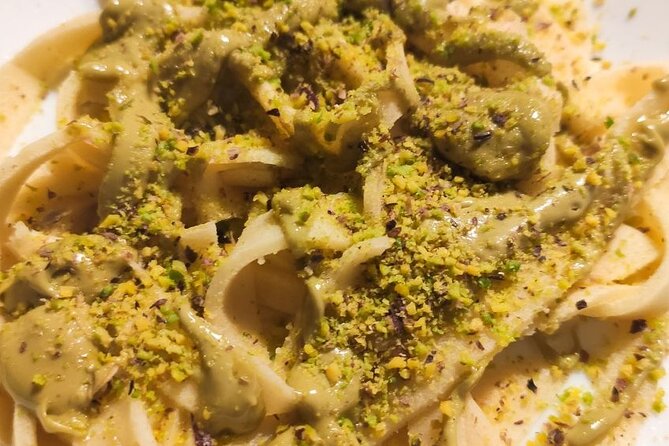
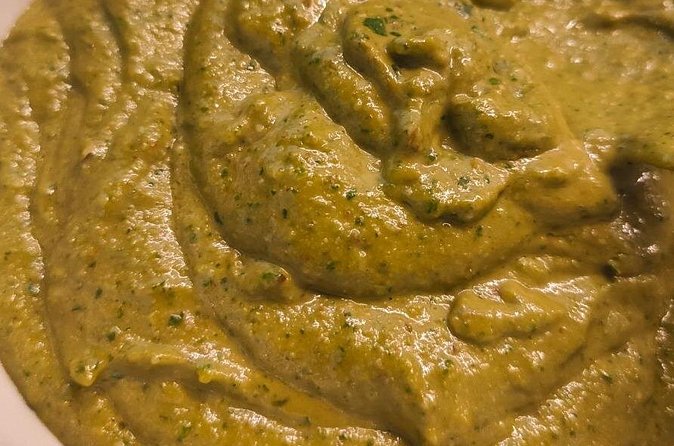
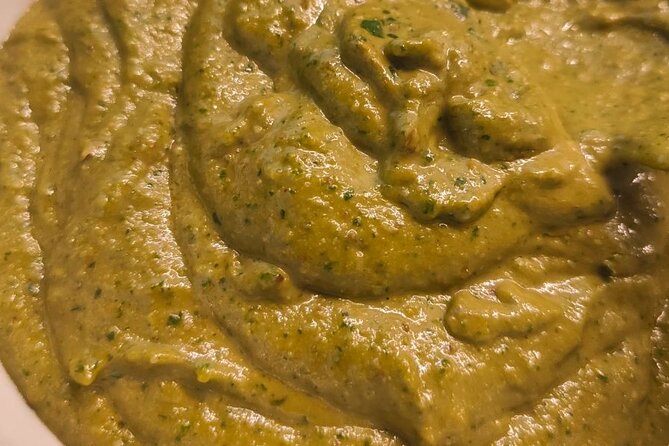
The class also includes Sicilian pesto. Even if you’ve had pesto before, this is worth experiencing because it’s treated as a distinct local condiment, not a generic green sauce. You’ll learn it as part of the tasting set, which means you’ll remember it in context: pasta dough texture + sauce + the way it’s finished in the kitchen.
Your meal at the end: wine, limoncello, and the sit-down payoff
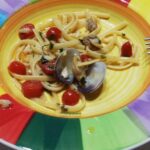
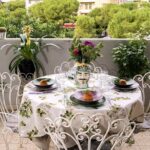
The tasting is a real highlight, because you don’t just eat one small plate. You sit down and enjoy what’s been prepared, with Sicilian wine and limoncello included as part of the meal.
The sample setup includes a bottle of Sicilian red wine. The included info also notes light lunch or dinner, with Sicilian wine and limoncello. That combination is part of what makes the class feel like something closer to a hosted meal than a training session.
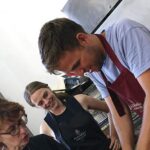
A review mentioned homemade limoncello as a standout, with the chef/host Simone playing a key role in that experience. While not every class will feel identical, that’s the kind of detail that tells you the host takes finishing touches seriously.
One practical note: if you’re under Italy’s legal drinking age of 18, you won’t be served alcoholic beverages. The class still runs, but alcohol service is restricted by age, so if you’re planning as a group with mixed ages, that’s a point to keep in mind.
Where the kitchen value comes from: equipment and local ingredients
This class isn’t taught in a classroom corner. It includes use of professional kitchen equipment in an equipped laboratory. That matters because your hands-on work is supported by tools that make the difference between a cool demo and a workable technique.
You’ll also use typical Sicilian foods and products for the dishes. When local ingredients are part of the process, the results tend to taste like the region. It’s not only about learning what to do; it’s about learning what to use.
And the small-group size helps here again. In a room capped at 14 people, you’re less likely to get stuck waiting for someone to notice you. You get more time at your station and more chance to ask questions as you go.
Price check: is $119.21 worth it?
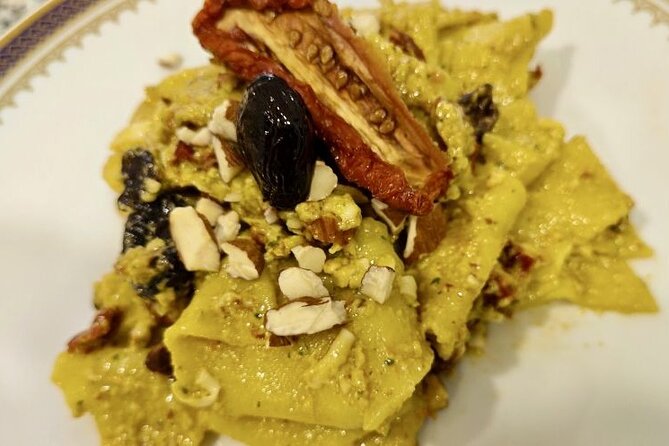
At $119.21 per person for roughly 3 hours, this class lands in the mid-to-higher range for cooking tours. But I think it can be solid value for a few reasons.
First, you’re not just tasting. You’re making fresh pasta and learning multiple sauces—ragù, Norma, and Sicilian pesto—then eating a meal that includes Sicilian red wine and limoncello. That’s a lot of food and drink for the time.
Second, the class uses professional kitchen equipment and includes typical Sicilian ingredients. Ingredient costs and kitchen setup are real expenses that don’t show up in cheaper “cook at home” formats.
Third, the class stays relatively short. At around 3 hours, it fits into a day in Catania without chewing up your whole afternoon. In travel terms, that scheduling efficiency often matters as much as the menu.
If you’re the kind of person who just wants to eat well, you might find a restaurant meal cheaper. But if you want skills you can repeat later—fresh pasta plus real Sicilian condiments—this price starts to make sense.
Who should book this class, and who might skip it
I’d point you toward this class if you:
- want a hands-on cooking experience in Catania, not just a food walk
- like the idea of learning sauces you can recognize and cook again at home
- enjoy a sit-down meal with wine and limoncello as part of the event
- appreciate small-group instruction (max 14)
You might skip it if:
- you’re very sensitive to rushed instruction at the beginning and need slower pacing to feel confident with dough
- you’re mainly interested in tasting rather than learning technique (because the class is built around cooking, not only eating)
Practical tips so your 3 hours go smoothly
Here are the things that will help most people get the best experience.
Plan around timing and ask early
If the first part feels fast for you, don’t wait. Ask questions at the start of the pasta dough phase so you don’t spend the rest of the lesson guessing.
Give yourself a buffer for the meeting point
The location is near public transit, with subway stops GALATEA and ITALIA nearby, which is great. Still, Catania’s street layout can make “a few minutes” turn into “ten.” Build in a cushion so you’re not starting the class rushed.
Think about alcohol service rules
Alcohol is included, but service follows Italy’s legal drinking age. If you’re traveling with anyone under 18, plan on that upfront so there are no surprises.
If you have allergies, speak up in advance
The class says you should list food allergies or intolerances. Do that when you book, so the provider can plan as best as possible for your needs.
Should you book this 3-hour Sicilian pasta class?
I’d book it if you want a structured, hands-on Sicilian cooking experience in Catania that ends with a meal you actually earned. The combination of fresh pasta by hand, three named sauces (ragù, Norma, Sicilian pesto), and a tasting with Sicilian red wine and limoncello makes it more than a novelty workshop.
I’d think twice if you need very slow, highly detailed pacing during the earliest dough steps. If that’s you, arrive ready to ask questions quickly and don’t hesitate to request help.
If you’re on the fence, ask yourself this: do you want to leave with recipes you can recreate? If yes, this class fits. If you only want to eat something great, you may prefer a restaurant meal and spend your time elsewhere.
FAQ
FAQ
How long is the Sicilian cooking class in Catania?
The class runs for about 3 hours.
What will I make during the class?
You make fresh pasta and learn how to make ragù, Norma, and Sicilian pesto.
Is lunch or dinner included?
Yes. You’ll have a light lunch or dinner with the dishes you prepare, including Sicilian wine and limoncello.
Is wine included, and what about limoncello?
Yes. Sicilian red wine is included, and limoncello is included as part of the meal.
Is the class taught in English?
Yes, the class is offered in English.
How big is the group?
The maximum group size is 14 travelers.
Where do I meet in Catania?
You meet at Via Cervignano, 42, 95129 Catania CT, Italy, and the tour ends back at the meeting point.
What if I have a food allergy or intolerance?
You should list any food allergies or intolerances when booking, so the provider can account for them.
What happens if the weather is bad?
The experience requires good weather. If it’s canceled due to poor weather, you’ll be offered a different date or a full refund.
Is there a cancellation deadline?
Yes. You can cancel up to 24 hours in advance for a full refund.