REVIEW · THESSALONIKI
Thessaloniki: Greek Cooking Class, Market visit and Lunch
Book on Viator →Operated by Active Thess Holidays · Bookable on Viator
Two markets, one great lunch lesson.
This Thessaloniki Greek cooking class pairs the sights and smells of the Kapani (Vlali) and Modiano markets with real hands-on cooking. I like that you learn by doing, especially techniques for Gemista, and you get to make crowd-pleasers like Dolmadakia instead of just watching.
One thing to keep in mind: the experience needs good weather, and you’ll be on your feet moving between market areas before you sit down to cook.
In This Review
- Key points before you go
- Why this cooking class starts in Thessaloniki markets
- Kapani (Vlali) Market: ingredients you can picture at the stove
- Modiano Market: a second look that makes the meal smarter
- The cooking part: tzatziki, dolmadakia, Greek salad, and gemista
- Starter focus: tzatziki
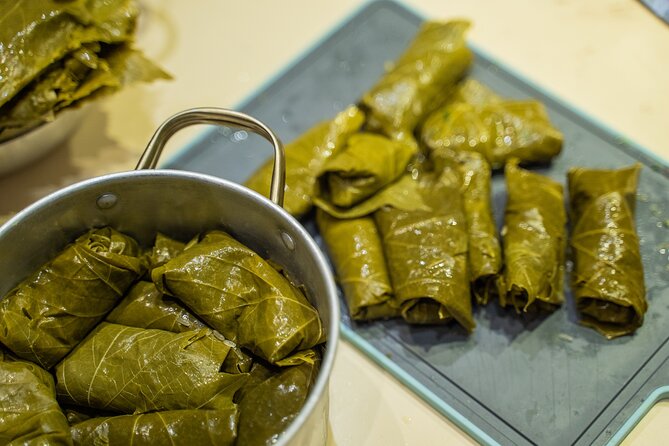
- Starter focus: dolmadakia
- The salad reset: Greek salad
- Main dish practice: gemista
- Dessert lesson: chocolate salami (kormos)
- What guides like Maria, Dinha, Thelis, and Kostas add
- Price and value: what $110.54 buys you in real terms
- Timing, meeting point, and how to plan your day
- Who should book this Thessaloniki cooking class
- Should you book it?
- FAQ
- Where does the tour start?
- What time does it begin?
- How long is the experience?
- What markets will we visit?
- What dishes are included in the menu?
- Is this class for beginners?
- How big is the group?
- Is the tour offered in English?
- What happens if weather is poor?
Key points before you go
- Two open-air markets: Kapani (Vlali) plus Modiano, so you shop with purpose and compare ingredients
- Chef-led cooking: you cook in a local taverna setting, guided by the instructor/chef
- Hands-on dishes: tzatziki, dolmadakia, Greek salad, gemista, and the dessert kormos (chocolate salami)
- Small group size: up to 16 people, which keeps questions flowing
- Guides add context: names you may meet include Maria, Dinha, Thelis, and Kostas, with food tied to local stories
Why this cooking class starts in Thessaloniki markets
A Greek cooking class is never only about recipes. Here, the lesson starts with the shopping—so you see where the flavor comes from before you mix, stuff, chop, and bake.
The big payoff for you is connection. When you pick out ingredients in the Kapani (Vlali) and Modiano markets and then use them at lunch, you start understanding Greek cooking as something practical and seasonal, not just a list of dishes. And because the group is capped at 16, you’re not stuck as a spectator.
You’ll also get a clearer sense of what matters. For instance, the menus here focus on staples: yogurt for tzatziki, herbs and rice for dolmadakia and gemista, and tomatoes, cucumber, onion, olives, and feta for Greek salad. That’s a great base if you want to cook Greek food later at home without guessing.
Kapani (Vlali) Market: ingredients you can picture at the stove
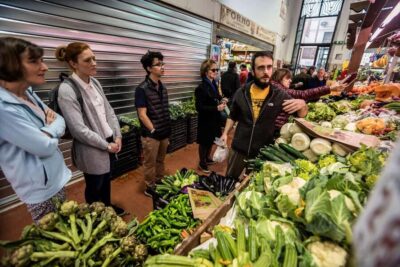
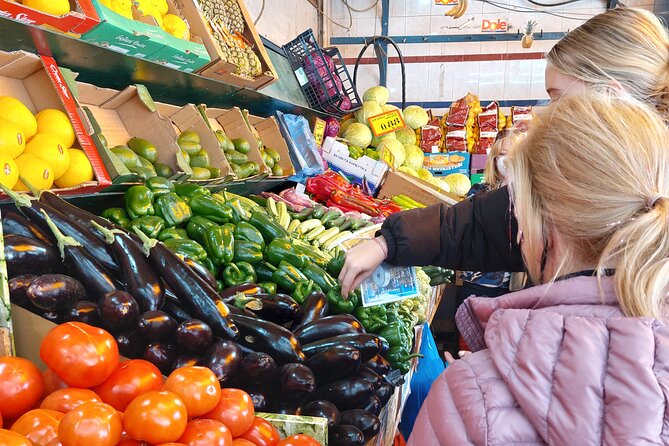
Kapani (Vlali) Market is the first stop, and it sets the tone. This is where you get oriented fast: it feels like a working market, with vendors and shoppers moving with intent. The goal isn’t to study every stall like a detective. It’s to understand which ingredients are essential for the dishes you’ll cook next.
In practical terms, you’ll be thinking in ingredients:
- Fresh herbs for stuffed dishes and salads
- Yogurt and cucumbers for tzatziki-style mezze
- Tomatoes and other salad components for the lunch spread
From the experience details and the emphasis on cooking results, you can expect a market guide to connect what you’re seeing to what you’ll make later. One review also highlighted how guides tied food to local area influence, so don’t be surprised if you hear quick context while you browse.
Possible drawback: markets can mean uneven ground and time spent standing. Wear shoes you can trust, especially if you plan to linger for a snack or an extra look around afterward.
Modiano Market: a second look that makes the meal smarter
Then you head to Modiano Market, the second stop. Doing two markets instead of one is a smart move because it helps you spot patterns. You start noticing the same ingredients showing up in different forms, and you learn what you can’t fake with a substitute.
This stop also gives the day a rhythm. You move from one market atmosphere to another, then you pivot from shopping to cooking. That makes the class easier to remember later, because your brain links each dish to a specific moment of ingredient shopping.
If you’re the type who likes to ask why something is done a certain way, this is where guides tend to earn their keep. Reviews mention guides such as Kostas and Thelis explaining how the neighborhood’s history shaped the cuisine. Even when those stories are short, they add meaning to basic steps like stuffing, seasoning, and baking.
The cooking part: tzatziki, dolmadakia, Greek salad, and gemista
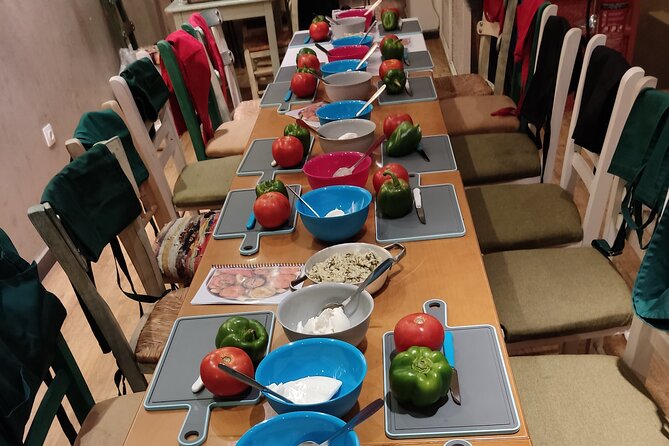
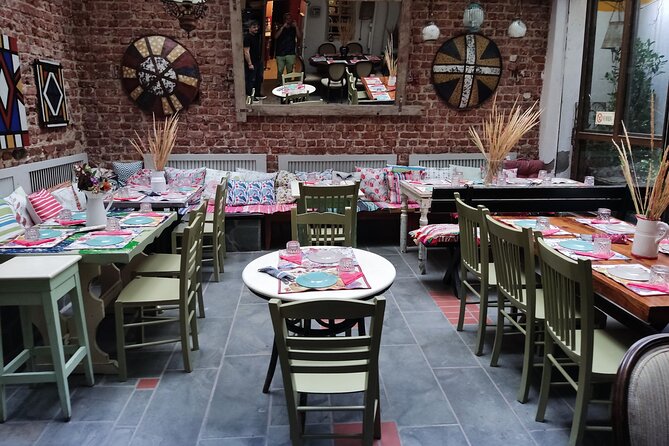
After the market time, you switch gears into the kitchen. According to reviews, the cooking happens at a taverna where the instructor is the chef and owner, which matters. It’s not a staged demo kitchen; it feels like a real local place where food is taken seriously.
Starter focus: tzatziki
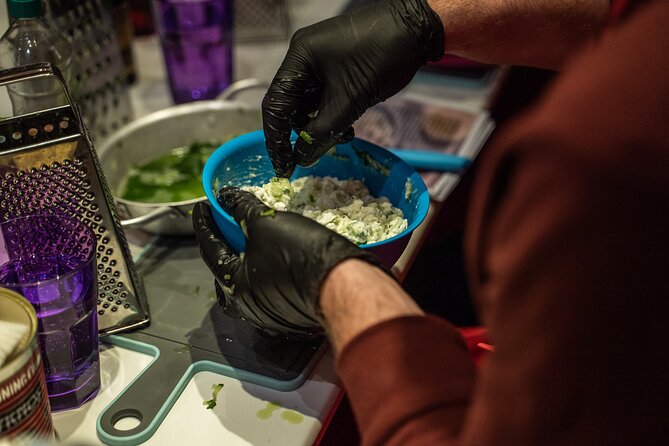
You’ll make tzatziki, served as a cold mezze. The core idea is simple and learnable: you’re building a sauce by mixing yogurt with flavor boosters like cucumber and garlic (plus herbs and seasoning). You’ll get a feel for consistency too, because tzatziki isn’t just about taste—it’s about texture that stands up on a table.
Starter focus: dolmadakia
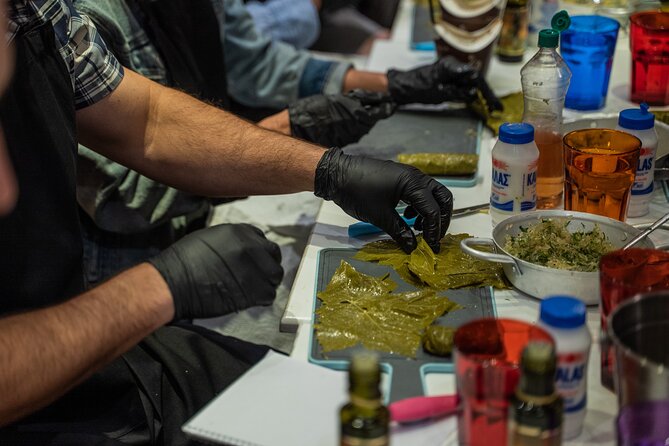
Then comes dolmadakia, stuffed grape leaves. This is the dish that turns a lot of people into learners fast, because it’s technical even when the ingredients are humble. Expect guidance on how to handle the leaves and how to shape the filling so it cooks evenly. Reviews specifically call out how people learned this for the first time, which makes me think the class is set up to be beginner-friendly without being boring.
The salad reset: Greek salad
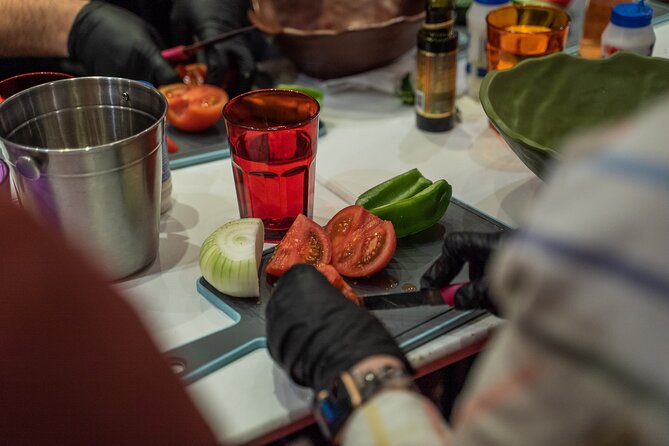
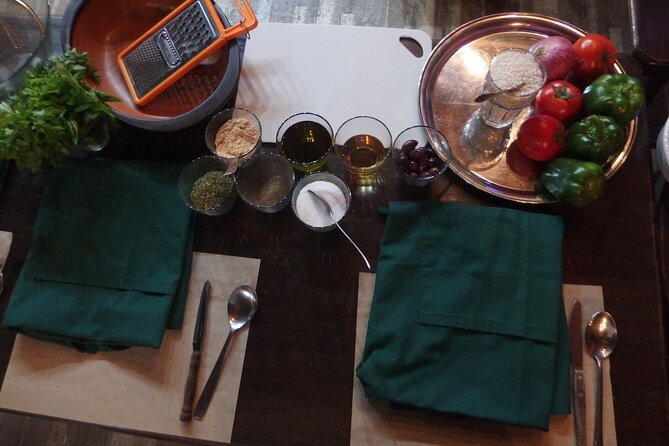
Next is Greek salad, built from fresh tomatoes, cucumber, red onion, olives, and feta with a herby dressing. The trick is that Greek salad tastes best when it stays fresh and balanced. In class, you’re not just assembling—you’re practicing proportion and cuts so it eats well alongside hot dishes.
Main dish practice: gemista
Finally, you hit the main star: gemista—traditional Greek stuffed vegetables filled with rice and herbs, baked with potatoes and tomato sauce.
This is where reviews get excited, and you’ll likely feel the same. People highlight learning new techniques for gemista, especially stuffing and baking. The class approach matters here: stuffed dishes can feel intimidating, but step-by-step help makes it realistic.
Dessert lesson: chocolate salami (kormos)
You also finish with kormos, sometimes called chocolate salami. The Greek name matters: kormos means tree log, named for the shape.
This dessert is a fun capstone because it’s a break from the savory-heavy cooking and gives you something visual. You learn how the components come together into that log shape, and you’ll leave with an idea for a dessert that feels Greek and playful at the same time.
What guides like Maria, Dinha, Thelis, and Kostas add
The day isn’t just recipes. The biggest reason this class lands a 5/5 reputation is how the guides show the food has a story.
Names you might run into include Maria, Dinha, Thelis, and Kostas. Reviews also mention a guide like Konstantina. Even if you don’t get the exact same guide as someone else, you can expect:
- market context as you shop
- cooking tips that connect to what you’re making
- encouragement to ask questions, especially around the hands-on steps
This kind of teaching is practical. It helps you avoid the two common mistakes in cooking classes: getting too much theory and not enough confidence.
Price and value: what $110.54 buys you in real terms
At $110.54 per person for about 3 hours 30 minutes, this isn’t a cheap snack class. It’s better seen as a food experience package: two guided market stops + a chef-led cooking session + lunch you help prepare.
Here’s why the value makes sense for you:
- You’re not paying only for instruction. You’re paying for guided shopping that sets you up to cook smarter.
- Lunch is included and tied to the work you do—tzatziki, dolmadakia, Greek salad, gemista, plus dessert.
- Small group size (max 16) increases the chance you get real help, not just clapping at the end.
If you love food but don’t want to spend your day piecing together a market visit plus a separate cooking class, this one-stop flow is a win.
Timing, meeting point, and how to plan your day
The class runs starting at 11:30 am and ends back at the meeting point, which makes it easy to keep your schedule clean. The meetup is at Electra Palace Thessaloniki, Aristotélous 9.
A start time like this is ideal if you want lunch as the highlight rather than scrambling for a late meal. It also means you’ll be doing market walking in the earlier part of the day.
One more practical note: the experience requires good weather. If weather shifts, you’ll be offered another date or a full refund. That’s worth keeping in mind if you’re planning a tight itinerary and already booked other activities for the same afternoon.
Who should book this Thessaloniki cooking class
Book it if you’re one of these types:
- You want Greek cooking skills you can reproduce at home, not just a meal
- You like markets and enjoy learning by choosing ingredients yourself
- You travel with family or a mixed-age group and want something structured but friendly
It also fits well if you’re new to Greek food. The menu hits classic dishes across categories—cold mezze, stuffed starters, a fresh salad, a baked main, and a shaped dessert—so you get a well-rounded sampler.
If you hate kitchens or you want zero standing and zero walking, you might find the market time less comfortable. But if you’re okay with some time on your feet, this is a very logical way to spend a half-day.
Should you book it?
Yes, if you want a practical, hands-on Thessaloniki food day. The strongest reason to book is the combo: two markets that feed directly into a chef-led lunch with dishes like gemista and dolmadakia. That’s how you leave with both stories and skills.
Skip it only if your priority is purely sightseeing with minimal food focus, or if you can’t work around the good weather requirement.
If you’re excited by the idea of buying ingredients and then using them to cook a real Greek meal, this is a high-value way to spend your time in Thessaloniki.
FAQ
Where does the tour start?
The tour starts at Electra Palace Thessaloniki, Aristotélous 9, Thessaloniki 546 24, Greece.
What time does it begin?
It starts at 11:30 am.
How long is the experience?
The duration is about 3 hours 30 minutes.
What markets will we visit?
You’ll visit Kapani (Vlali) Market and Modiano Market.
What dishes are included in the menu?
The menu includes tzatziki, dolmadakia, Greek salad, gemista, and chocolate salami (kormos) for dessert.
Is this class for beginners?
The information provided doesn’t state a level, but the menu includes dishes that you’ll cook as part of a guided class, and reviews highlight first-time success with dolmadakia.
How big is the group?
The maximum group size is 16 travelers.
Is the tour offered in English?
Yes, it’s offered in English, and you’ll receive confirmation at booking.
What happens if weather is poor?
This experience requires good weather. If it’s canceled due to poor weather, you’ll be offered a different date or a full refund.