REVIEW · KRABI
Penny Thai Cooking Class Krabi
Book on Viator →Operated by Siam Scape Journeys · Bookable on Viator
Thai cooking starts fast. This Krabi class is a hands-on way to learn what makes Thai flavors work, with a small group and real chef coaching. You’ll plan out five dishes plus one dessert, including a mango sticky rice-style sweet, then sit down and enjoy your own results.
Two things I really like: the class is small (max 12), so you get steady help, and the chef explains ingredients in a practical way you can use again after you get home. One thing to consider: the experience needs at least 2 participants to run, so if you’re booking solo you may want to check timing and the solo transfer add-on.
You can also shape the heat level and ingredients to fit your needs, including options for vegetarian or vegan cooking. That flexibility is great in a place where menus often assume everyone eats the same way.
In This Review
- Quick reasons to go
- Getting from Ao Nang and Krabi Town without losing time
- Penny Thai Cookery School: a 4-hour class that stays hands-on
- The cooking plan: five Thai dishes plus a dessert you can repeat
- Curry paste from scratch: the skill that makes Thai cooking click
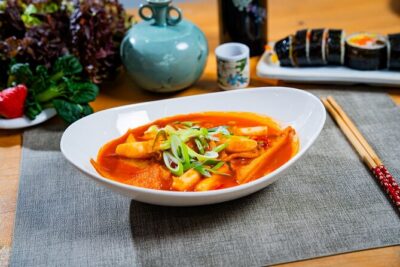
- Your meal at the end: eat what you make (and take more home)
- Dietary needs and spice level control, without extra fuss
- Class timing, night market plans, and why the schedule matters
- Price and value: what $56.97 buys in real terms
- Who should book Penny Thai Cooking Class in Krabi
- Should you book Penny Thai Cooking Class in Krabi?
- FAQ
- Where does the Penny Thai Cooking Class start?
- How long is the cooking class?
- What dishes are you cooking?
- Is pickup included?
- Can the class be adapted for vegetarian or vegan diets?
- What is the group size?
- Do solo visitors have an extra transfer cost?
- What do you take home?
- Can you cancel and get a refund?
Quick reasons to go
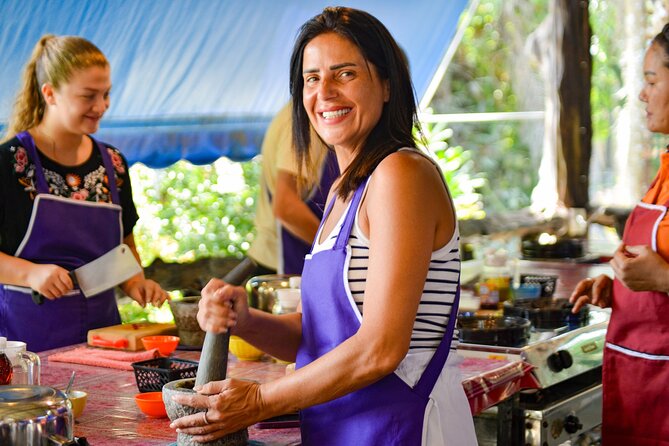
- Small group support: max 12 people, with personalized guidance while you cook.
- Curry paste from scratch: you’ll make it, not just sprinkle it on later.
- Five savory dishes + one dessert: you leave with full, satisfying meal variety.
- Taste-and-teach ingredient breakdowns: herbs and spices are explained as flavor tools.
- Take-home extras: recipe book, certificate, and the food you prepared.
- Easy Krabi logistics: round-trip transfer from Ao Nang, Krabi Town, and nearby areas (with a minimum of 2 guests).
Getting from Ao Nang and Krabi Town without losing time
One of the biggest practical wins here is the pickup. Your class includes round-trip transfers from Ao Nang, Krabi Town, and nearby areas (it requires a minimum of 2 guests to start the class). That matters in Krabi, because “where’s the school again?” can quickly turn into wasted minutes—especially if you’re trying to fit cooking into an already packed day.
If you’re staying in a nearby area, the transfer setup is designed to keep things simple. You’ll meet at Penny Thai Cookery School in Ao Nang (312 Soi Khlongiladpattana 1, Tambon Sai Thai, Amphoe Mueang Krabi, Chang Wat Krabi 81000). The day ends back at the same meeting point.
For solo visitors, there’s an added transfer cost listed by origin: 400 THB from Krabi Town, 600 THB from Ao Nang, and 800 THB from Klong Muang/Tub Kaek. If you’re comparing options, that’s an important detail because it can change the real “all-in” price versus the headline amount.
You can also read our reviews of more tours and experiences in Krabi.
Penny Thai Cookery School: a 4-hour class that stays hands-on
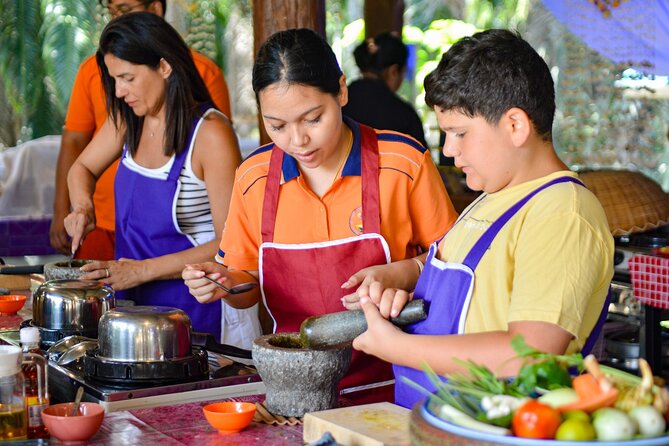
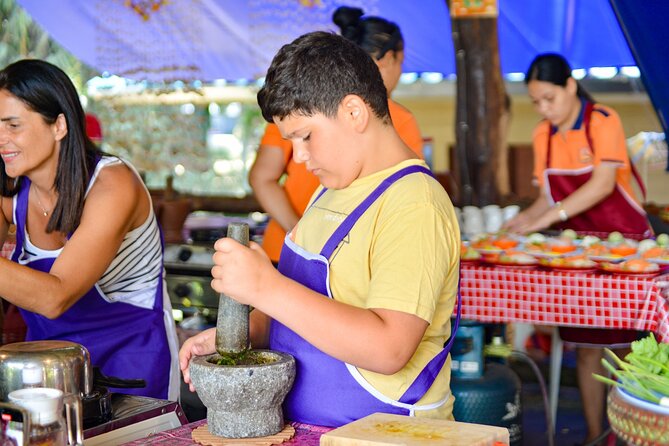
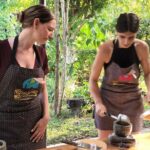
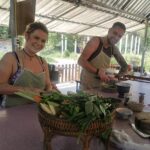
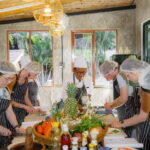
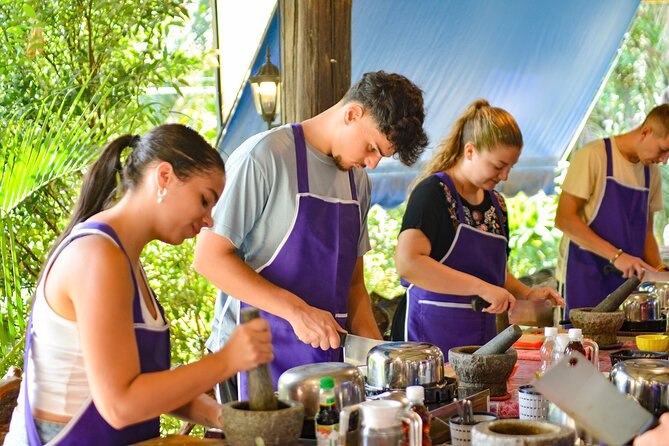
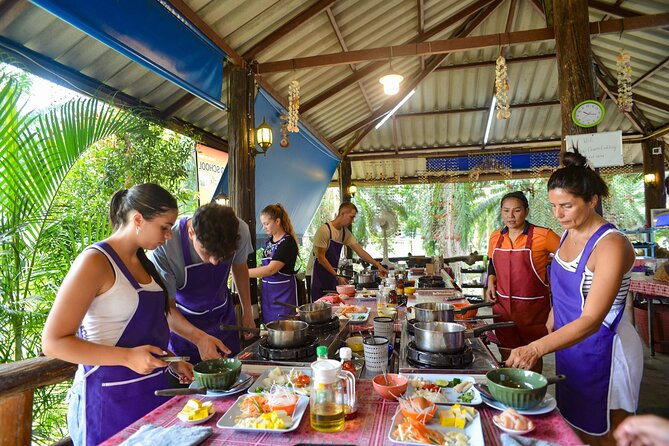
This isn’t a demo where you watch someone else cook. It’s built around you working at your station with clean tools and fresh ingredients ready to go. The class runs about 4 hours, and the structure is designed to keep things moving: choose what you’ll cook, learn the key techniques, then cook enough to eat what you make.
The group size helps a lot. With up to 12 participants, you’re not stuck waiting for the chef to notice you. Your Thai cooking instructor is there to guide you, answer questions as you work, and make sure the basics are correct—especially for steps like curry paste and balancing seasoning.
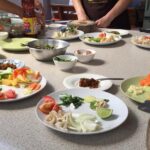
Another small but meaningful detail: the class includes prepared food and fruits. That usually means you’re not only tasting finished dishes; you’re also getting ingredient components that help you understand what goes where and why. It also helps keep the meal satisfying even if you’re a beginner.
The cooking plan: five Thai dishes plus a dessert you can repeat
The heart of the experience is straightforward: you’ll prepare five authentic Thai dishes and one dessert. The dessert mentioned is mango sticky rice, which is a classic you’ll see around Thailand for a reason—it’s a perfect sweet finish and it teaches you how Thai desserts are built.
What I like about this mix is that you don’t just cook “Thai food.” You cook a spread of flavors and textures. Savory dishes teach salty, sour, sweet, and spicy balance. A dessert teaches the sugar-salt balance and the texture side of Thai cooking. You also get to choose from a morning, afternoon, or evening class, so it’s easier to fit into your schedule in Krabi.
Here’s what your cooking time feels like in practice:
- Planning and recipe choice at the start, so you’re not surprised by what’s coming.
- Technique teaching as you work, with the instructor staying close.
- Cooking in parallel, where everyone is making their own food rather than sharing one pot.
- Eating the results at the end, so you get a real payoff instead of just taking ingredients home.
If you’re the type who likes learning by doing—chopping, stirring, tasting—that format makes the 4 hours feel well used.
Curry paste from scratch: the skill that makes Thai cooking click
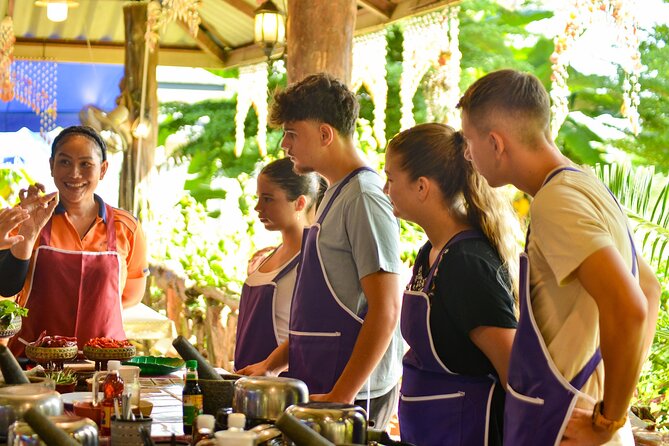
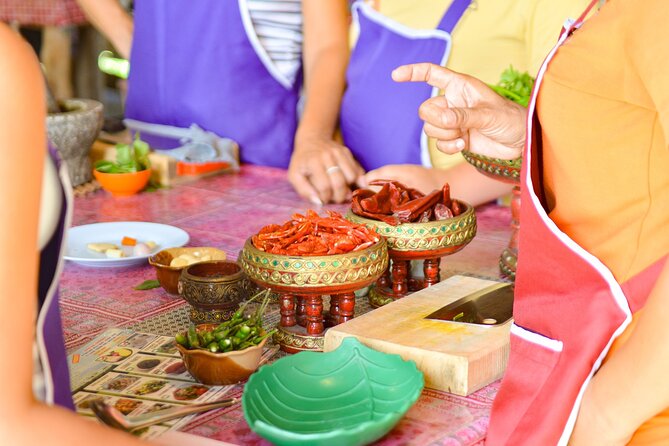
The biggest technique highlight is that you’ll learn to make curry paste from scratch. This is where Thai cooking stops being “seasoning magic” and becomes something you can actually repeat.
Curry paste is the flavor engine. Once you understand the paste—what’s ground, what’s aromatic, and how the taste changes as you mix—you’ll start noticing the logic behind Thai dishes. That matters because many visitors can follow a recipe, but fewer people understand the foundation.
Even if you’ve never cooked Thai food before, curry paste is teachable because the chef can show:
- how herbs and spices change flavor when crushed and blended,
- how you can adjust the paste toward your preferred heat level,
- and how paste quality affects the final curry.
There’s also a useful learning angle: you’re not only memorizing steps. You’re building a mental map of flavors. That’s what turns a cooking class into real skill.
Your meal at the end: eat what you make (and take more home)
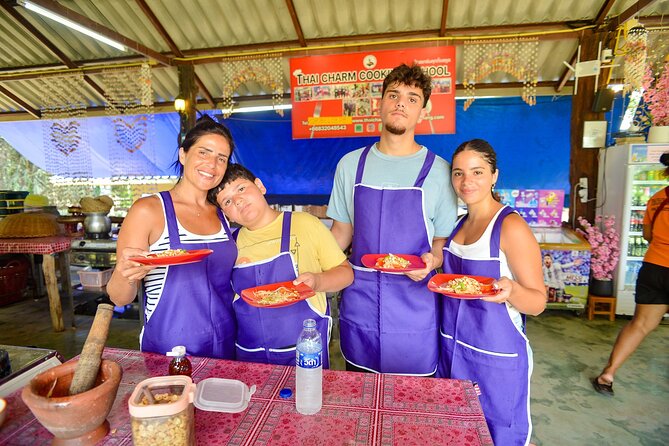
At the wrap-up, you’ll feast on your own creations. That’s a big deal for motivation. Cooking classes often end with a pile of food you never really enjoy, or a take-home box that feels like homework. Here, you get a meal first—so your hard work becomes lunch or dinner immediately.
On top of eating, you also get take-home items:
- a recipe book
- a certificate
- and the food you prepared to share
The take-home food is practical for families or groups. If you’re with someone who doesn’t want to stop for a long meal, you can still bring the results back to your room or the shared dinner table.
Cleanliness is part of the value too. The experience includes clean tools and fresh ingredients, and the setup is described as tidy in past feedback—important if you’re trying to avoid the “chaos cooking” feeling and focus on learning.

Dietary needs and spice level control, without extra fuss
One of the most useful things on the schedule is that all dishes can be prepared vegetarian, vegan, spicy, or mild to fit your personal taste. Thai food can be flexible, but not every cooking class handles it well. This one does—meaning you can ask for adjustments rather than forcing yourself to cook around the menu.
If you want to cook spicy, you’ll learn how heat is part of Thai flavor, not just an afterthought. If you want mild, you still get the aromatic base—so the dish doesn’t turn into bland compromise.
This is also a great option for couples with different preferences. You can often end up feeling like one person gets the “real” spicy food while the other does the mild version. With this kind of adjustment built into the class, both people can get a version they genuinely enjoy.
Class timing, night market plans, and why the schedule matters
You can choose a morning, afternoon, or evening session. In Krabi, that choice affects more than comfort—it affects how your day flows.
After the class, you can choose to be dropped near the Krabi Night Market to keep your evening going. That’s handy because cooking classes can be a natural anchor activity: you do something meaningful in the late afternoon, then spend the evening wandering food stalls and browsing.
From a traveler’s point of view, the tight coupling between cooking and food culture is a good match. Thai cooking is hands-on; Thai night markets are the same idea in public form—small bites, lots of variety, and constant tasting.
If you’re doing other tours that day, the lesson’s 4-hour length gives you a clear block to plan around.
Price and value: what $56.97 buys in real terms
At $56.97 per person, this class can look like a splurge—until you break down what’s included.
You’re getting:
- round-trip transfers from Ao Nang, Krabi Town, and nearby areas (minimum 2 guests required to start)
- prepared food and fruits
- clean tools and fresh ingredients
- professional guidance from the Thai cooking instructor
- a recipe book and certificate for every course
- the dishes you make, plus time to eat them during the class
So you’re not paying only for a seat. You’re paying for ingredients, instruction, and the full meal outcome. For a 4-hour cooking session, that’s a strong value—especially if you’d otherwise spend money on a restaurant meal and miss the skills.
Solo visitors should do one quick math step: solo transfer add-ons are listed by pickup area (400 THB, 600 THB, or 800 THB depending on where you start). If you’re comparing costs with other cooking options, include that extra transfer line in your budget.
Who should book Penny Thai Cooking Class in Krabi
This experience fits best if you want more than food photos. If you like learning by doing, and you want to leave with a practical skill—like making curry paste from scratch—you’ll likely enjoy it.
It’s especially good for:
- couples who want a shared activity that still feels structured,
- friends traveling together (small group size makes it social without being chaotic),
- families who want a guided, safe-feeling food activity with ingredient clarity,
- solo people willing to pay the solo transfer add-on to get the full experience.
A possible consideration: because there’s a minimum of 2 guests needed for the class to run, last-minute solo booking can be riskier. If you’re traveling with flexibility, you’ll have an easier time picking a session that actually operates.
Also, if your biggest priority is speed or sightseeing, cooking takes focus. You won’t treat this as a quick side stop. Plan on it being the main event.
Should you book Penny Thai Cooking Class in Krabi?
If you want a real, repeatable Thai cooking skill and you like the idea of cooking five dishes plus mango sticky rice-style dessert, I’d book it. The class structure, the small group size, and the inclusion of transfers turn it into a low-stress activity with a clear payoff: you eat what you make and you take home instructions.
Book it sooner if you can, since it’s typically booked about 9 days in advance on average. And if you’re solo, double-check the solo transfer add-on in your area so the final price feels fair.
If you’re the kind of person who learns best by chopping, tasting, and adjusting, this is the type of Krabi activity that actually changes how you cook back home.
FAQ
Where does the Penny Thai Cooking Class start?
The meeting point is Penny Thai Cookery School in Ao Nang, Krabi, at 312 Soi Khlongiladpattana 1, Tambon Sai Thai, Amphoe Mueang Krabi, Chang Wat Krabi 81000, Thailand.
How long is the cooking class?
The experience lasts about 4 hours.
What dishes are you cooking?
You’ll cook five Thai dishes plus one dessert (mango sticky rice is mentioned).
Is pickup included?
Yes. Round-trip transfers are included from Ao Nang, Krabi Town, and nearby areas, with a note that a minimum of 2 guests is required to start.
Can the class be adapted for vegetarian or vegan diets?
Yes. All dishes can be prepared vegetarian, vegan, spicy, or mild to match your preferences.
What is the group size?
The class has a maximum of 12 participants, which is designed for more personalized attention.
Do solo visitors have an extra transfer cost?
Yes. Solo travelers have a listed additional transfer cost depending on pickup area: 400 THB (Krabi Town), 600 THB (Ao Nang), 800 THB (Klong Muang/Tub Kaek).
What do you take home?
You’ll receive a recipe book and a certificate, and you can take home the food you prepared.
Can you cancel and get a refund?
Yes. Free cancellation is available if you cancel at least 24 hours before the experience starts.