REVIEW · KRABI
Krabi: Evening Thai Cooking Class at Ya’s Cookery
Book on GetYourGuide →Operated by Ya Thai Cookery School · Bookable on GetYourGuide
A great evening can taste like Thailand. Ya’s Cookery in Ao Nang turns your night in Krabi into a hands-on Thai cooking class, with round-trip pickup from Ao Nang and Ao Nam Mao and a real focus on how Thai flavors get built. I especially liked starting with fresh ingredients and learning the full curry process, including curry paste from scratch. One thing to consider: this is a warm, active kitchen, so plan on getting a bit messy and bring shoes that can handle it.
You’ll spend about 3 hours cooking and then eat what you make. The class is built around choosing four dishes from a set menu, so you’re not stuck cooking just one thing. The biggest practical win is that you leave with English recipes and instructions, not just a meal.
If you’re short on time, or you hate heat and chopping, this may not be your style. But if you want an authentic Thai meal that you can actually repeat at home, this is a strong pick.
In This Review
- Key takeaways from Ya’s Cookery in Ao Nang
- Ao Nang pickup to a no-fuss evening plan
- Starting with fresh ingredients at Ya’s Thai Cookery School
- The curry paste moment in a stone mortar
- Choose 4 dishes, then cook like you mean it
- Cooking stations: curries, noodles, spicy salads, and sticky mango rice
- Curries (including green curry and coconut milk chicken)
- Noodles (fried Thai noodles)
- Stir-fries (holy basil, morning glory, and more)
- Salads (papaya salad, cucumber salad, and spicy Thai flavors)
- Sticky rice with mango (the sweet send-off)
- The end of class: eat your Thai dinner right away
- Price and value: why $48 feels fair for Krabi
- Transfers from other Krabi towns: add-on costs you can plan for
- What to bring (and what to leave behind)
- Who should book this Thai cooking class in Krabi
- Quick tips to make your 3 hours go smoothly
- Should you book Ya’s Cookery in Ao Nang?
- FAQ
- How long is the Krabi evening Thai cooking class?
- Is pickup included from Ao Nang and Ao Nam Mao?
- What if I’m staying in Klong Muang, Tubkaak Beach, or Krabi Town?
- How many dishes do I cook?
- Can I request vegetarian dishes or adjust spice level?
- Are recipes and instructions provided in English?
- What dishes are available to choose from?
- What language will the instructor use?
- What should I bring and wear?
- Is the class suitable for people with mobility impairments?
Key takeaways from Ya’s Cookery in Ao Nang
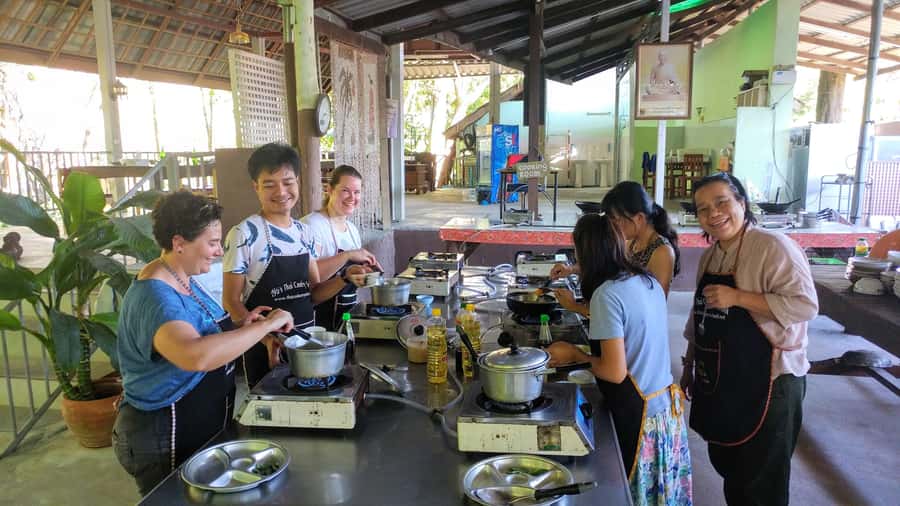
- Pickup from Ao Nang and Ao Nam Mao keeps the evening simple.
- You’ll grind curry paste in a stone mortar, one of the most important Thai cooking steps.
- You choose 4 dishes (from a set list) and learn full-dish techniques, not just shortcuts.
- Small-group cooking (often around 6 to 8) means you get more time at the stove.
- You get English recipes/instructions and a free cookbook-style handout after class.
- Vegetarian versions are possible: all dishes can be adapted to your preferences.
Ao Nang pickup to a no-fuss evening plan
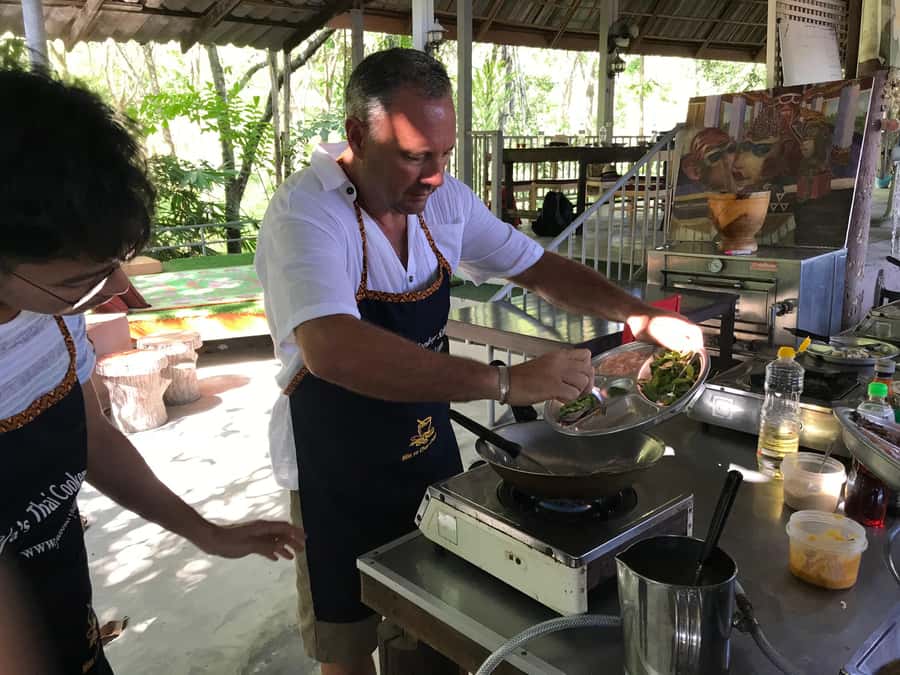
This cooking class is designed around ease. If you’re staying in Ao Nang or Ao Nam Mao, you get a round-trip hotel transfer included, and your exact pickup time is confirmed by email after booking. That matters in Krabi, because a lot of the fun islands and viewpoints are great during the day, but evenings get crowded fast.
Once you’re at Ya’s Thai Cookery School, you’re not sent on a scavenger hunt. The focus is the cooking. The class is about learning the logic behind Thai flavor—how herbs, spices, and fresh ingredients work together—while still ending with a full dinner you can enjoy right there.
You can also read our reviews of more tours and experiences in Krabi.
Starting with fresh ingredients at Ya’s Thai Cookery School
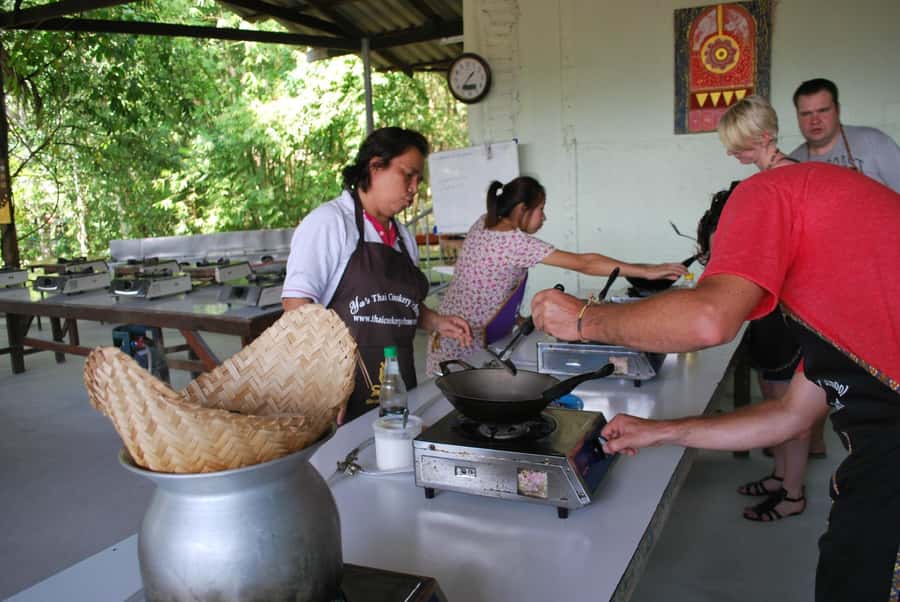
Your class kicks off with fresh ingredient prep. You’ll start by choosing and working with produce, which is where Thai cooking often begins: the raw materials have to be good, and the flavors depend on what’s fresh. You get hands-on guidance on what different ingredients contribute, not just a recipe you can blindly follow.
This is also where you get a feel for the working rhythm of a Thai kitchen. You’ll hear about balancing flavors—sweet, salty, sour, spicy—so your dishes don’t taste like separate parts. They taste like one plate.
If you’ve cooked at home before, you’ll still get value here, because Thai flavor balance often doesn’t come from one magical ingredient. It comes from repeating the same process in the right order.
The curry paste moment in a stone mortar

One step you’ll remember: curry paste preparation using a stone mortar and pestle. That’s a signature part of Thai cooking, and it’s one of the biggest reasons these classes feel more authentic than a quick stir-fry workshop.
Thai curry paste isn’t just heat. It’s layers of herbs and spices ground together until the aroma changes. In the class, you learn about the herbs and spices as you grind them together, and you see how that paste becomes the base for the final curry.
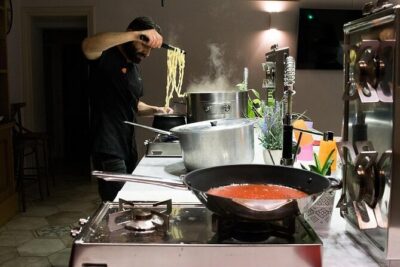
And yes, it’s work. A review mentioned the class is in an open-air kitchen with burners going strong, so even though it’s an evening session, you may still feel plenty of heat at the stove. Dress like you’re cooking, not sightseeing.
Choose 4 dishes, then cook like you mean it
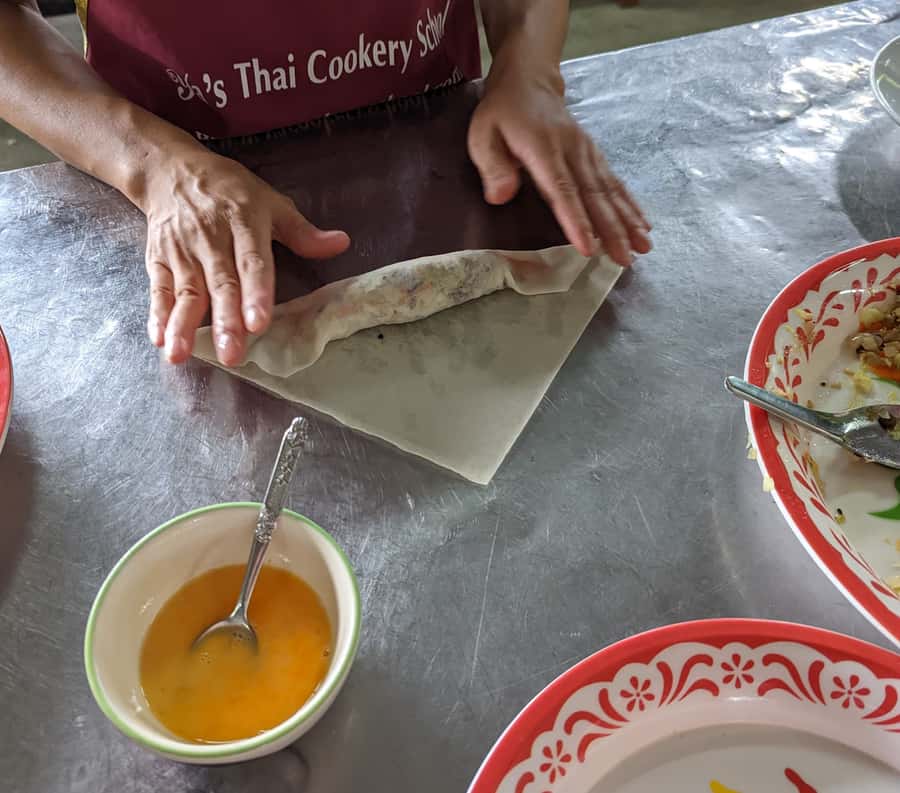
The class is built around choosing four dishes from a set list. That list can include options like fried Thai noodles, green curry, papaya salad, cucumber salad, stir-fried chicken with holy basil, chicken with chili and ginger, chicken in coconut milk, stir-fried morning glory, and sticky rice with mango.
You aren’t just watching. You’re cooking from scratch with traditional tools and techniques, and the class aims to teach complete dishes, not just components. That’s why the recipes you take home are actually usable—you’ll understand the steps that create flavor.
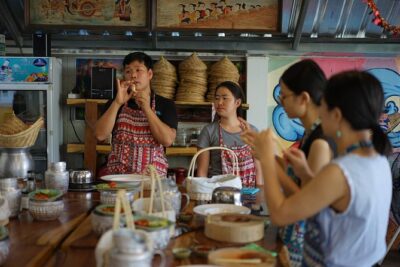
One practical detail: small groups work together. Reviews mention groups often around 6 to 8, and at the table you may not have total freedom over every single item, because the class setup can be structured so you cook two of each dish type while others at your table cook the rest. The upside is you end up tasting a lot, and you’re likely to try more variety than you’d expect for a 3-hour session.
Cooking stations: curries, noodles, spicy salads, and sticky mango rice
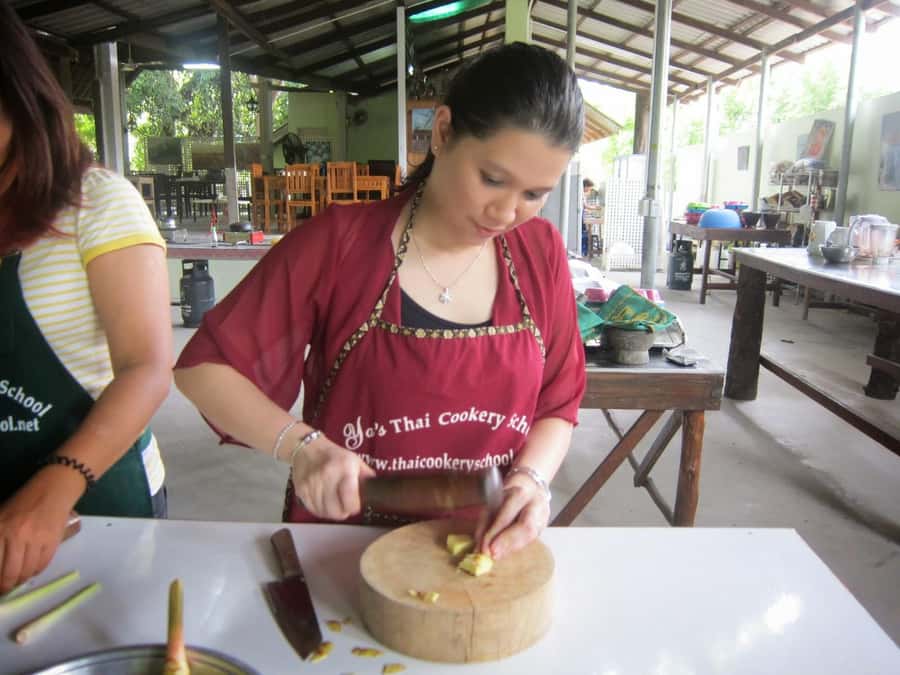
Here’s what the cooking time feels like, in the real-world order you’ll notice during class.

Curries (including green curry and coconut milk chicken)
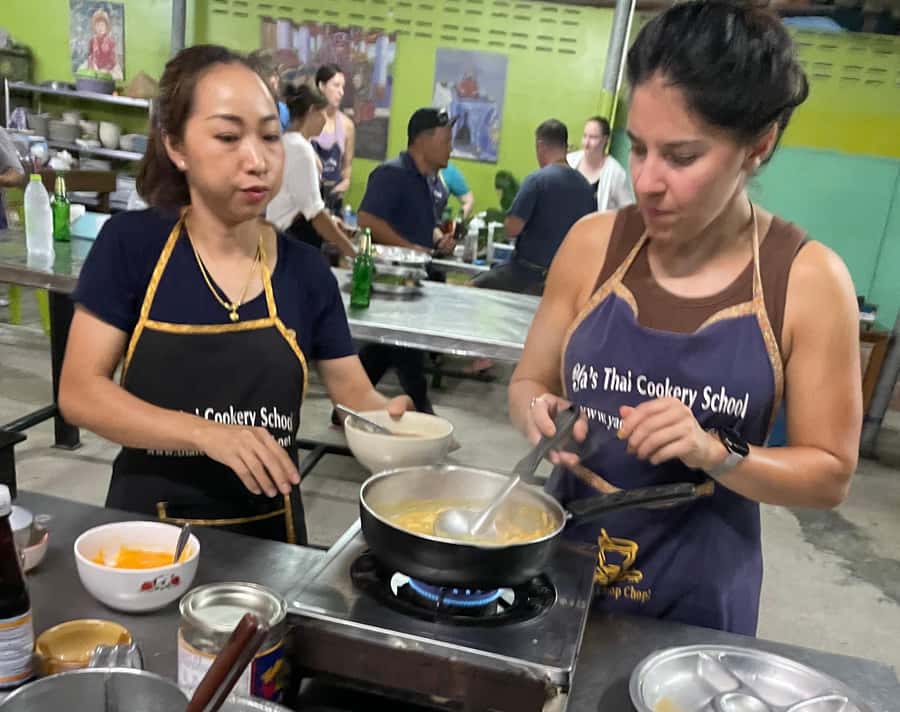
Curries are where the class teaches the most “Thai cooking logic.” You typically start with the curry paste step, then build the curry base and finish the dish with the right balance of flavors. Even if you choose a curry-based meal, you learn why the paste matters, because it’s the flavor engine.
If you’re someone who usually buys curry paste in jars, you’ll likely find the results eye-opening. The class aims to show you how to recreate that concentrated, fragrant base at home.
Noodles (fried Thai noodles)
Thai noodle dishes rely on timing: stir-fry heat, sauce balance, and texture. When you’re cooking noodles in a class setting, you also get practice on how to keep them from going soggy while still letting sauce coat every strand.
If you pick a noodle dish, it’s a good choice for learning because it trains you to work fast without losing control.
Stir-fries (holy basil, morning glory, and more)
Stir-fries are where you learn how Thai kitchens treat “quick cooking.” Holy basil dishes bring a particular peppery aroma and herbal punch, while morning glory is a classic Thai green with a savory bite.
Even if you don’t choose those exact dishes, the techniques you learn carry over to other Thai-style stir-fries you might try later.
Salads (papaya salad, cucumber salad, and spicy Thai flavors)
Thai salads are often about acidity and spice working in balance. If your class includes papaya salad or cucumber salad, expect the class to focus on what makes them pop: the sharpness, the herb notes, and the heat level.
The class also includes fruits as part of spicy Thai salad prep, so you’ll get a look at how Thai kitchens mix sweet and sour without making the dish taste like dessert.
Sticky rice with mango (the sweet send-off)
You finish with sticky rice with mango, a dish that’s simple on paper but tricky in texture if you’re not used to it. In the class, you’re learning the final payoff—how that classic Thai pairing tastes when you follow the correct process rather than guessing.
This part matters because it gives your evening a full range: spice, salt, sour, and then sweet.
The end of class: eat your Thai dinner right away
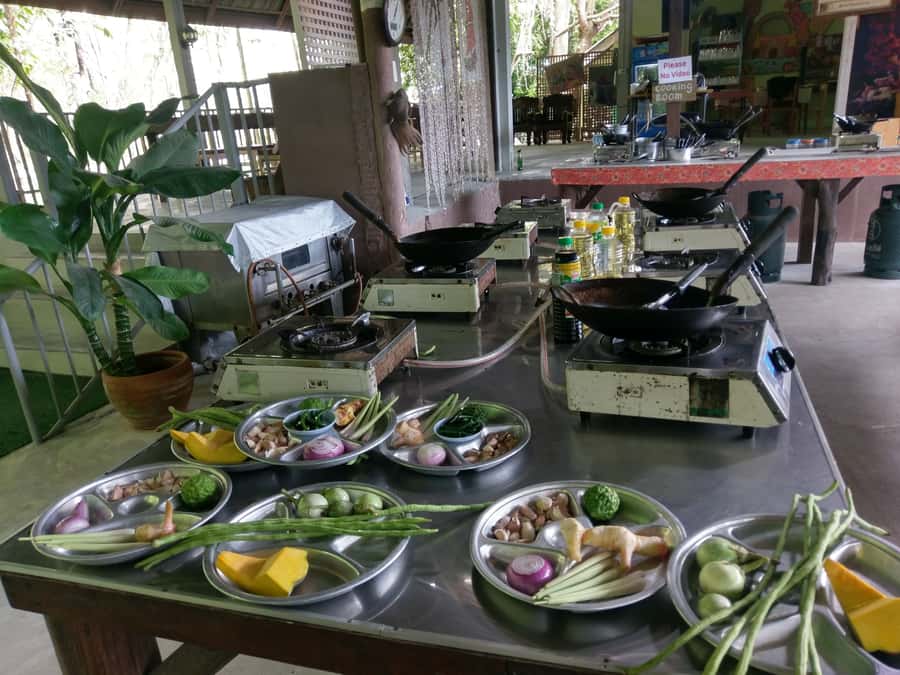
After the cooking, you get to enjoy what you made. This is one of the biggest reasons cooking classes work: you’re not leaving hungry or stuck with food you don’t trust. You’ll sit down with dishes that you helped create, and that changes how you taste.
A review-style tip you should take seriously: go into the class hungry. With multiple dishes and big portions, it’s a full meal, not a snack session.
Also note that you’re adapting for you. The class states all dishes can be adapted to taste or vegetarian preferences, so if you want less heat or you’re avoiding meat, you can ask and adjust. That’s especially important with Thai spice, where “medium” can still feel bold.
Price and value: why $48 feels fair for Krabi
At $48 per person for about 3 hours, the value comes from what’s included, not just the cooking. You get:
- Hotel round-trip transfers from Ao Nang and Ao Nam Mao
- Ingredients and instruction in English
- Food and water
- Recipe instructions and a cookbook-style set of recipes
- Support for spicy Thai salad prep (including fruits)
When you add those together, it’s not “just” a class. It’s a guided dinner experience with transportation. In Krabi, paying for a transfer and then trying to book a cooking workshop separately can easily cost more than this, especially if you want English instructions and recipe handouts.
The icing is that you leave with recipes you can actually use later. If you’ve ever cooked from a vague recipe and wondered why it didn’t taste right, you’ll appreciate the guided technique focus.
Transfers from other Krabi towns: add-on costs you can plan for
If you’re not staying in Ao Nang or Ao Nam Mao, there are add-ons at checkout. Round-trip hotel transfers are available for:
- Klong Muang: 250 THB per person (min 2, max 6 people)
- Tubkaak Beach: 300 THB per person
- Krabi Town: 250 THB per person (min 2, max 6 people)
If you’re traveling solo and your pickup doesn’t reach the minimum, you might want to check what options the provider can group you into. The good news is the cost is clearly listed, so you can budget before you go.
What to bring (and what to leave behind)
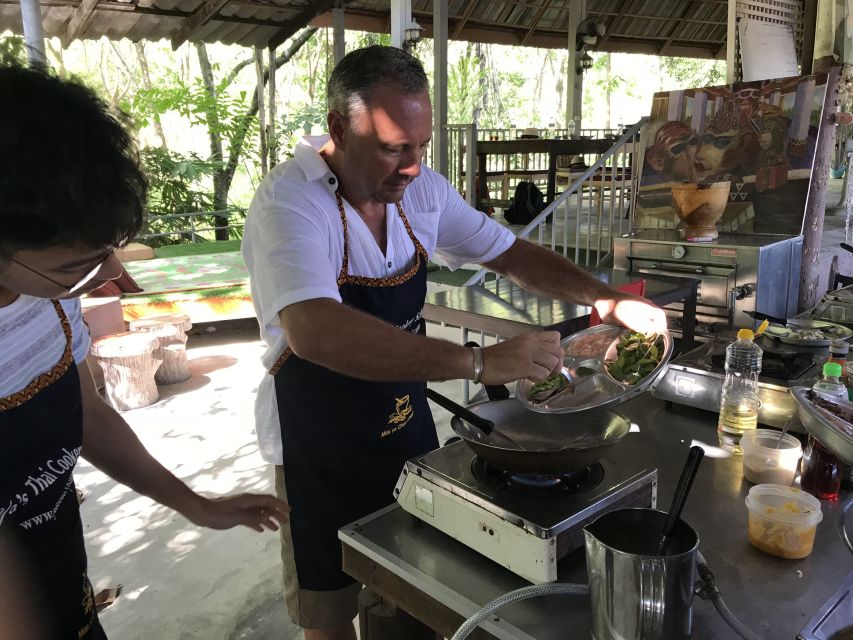
This is a working kitchen. Bring clothes that can get dirty, and wear closed-toe shoes. The class is not framed as a neat, polished “demo” evening. You’ll be chopping and cooking, so dress for that.
Leave luggage or large bags behind. The activity notes that luggage or large bags aren’t allowed, so travel light for a smoother pickup and easier movement at the school.
Also, bring your appetite. With big portions and a full dinner at the end, you’ll want room for sticky mango rice.
Who should book this Thai cooking class in Krabi
This class is a strong fit if you want one of the best “nighttime skills” in Krabi: learning how Thai dishes come together from scratch. It’s also a great choice if you enjoy meeting other people, since cooking is naturally social, especially in small groups.
You’ll likely enjoy it most if you:
- Want practical recipes in English
- Like spicy food, or want to learn how to control spice
- Cook at home and want to improve your Thai technique
- Prefer an evening activity that still feels culturally authentic
It’s not suitable for people with mobility impairments, based on the activity’s note. The cooking setup also includes an active kitchen environment, so consider that before booking if you have accessibility concerns.
Quick tips to make your 3 hours go smoothly
A few small moves will help you get more out of the evening.
First, arrive ready to work. If you’re wearing nice clothes or sandals, you’ll feel stressed when things get hot and hands get busy.
Second, choose your dishes with your spice tolerance in mind. You can adapt dishes, but it helps to know if you want chili-forward flavors or a more mild profile.
Third, ask for vegetarian preferences early. Since the class states that dishes can be adapted, you’ll get the best results if you’re clear at the start rather than mid-way.
Should you book Ya’s Cookery in Ao Nang?
I’d book it if you want a real Thai cooking experience in Krabi that ends with a proper dinner and a recipe handout you can follow later. The curry paste from scratch step and the focus on balancing flavors are the parts that make this more than entertainment.
Skip it if you’re looking for a quiet, low-mess activity, or if you need accessibility accommodations. And if you hate heat, remember that the kitchen setup can still feel hot even in the evening.
If you’re on the fence, here’s my simple rule: if you’d rather learn how to cook Thai food than just taste it once, this class is a very good use of your evening.
FAQ
How long is the Krabi evening Thai cooking class?
The class runs for 3 hours. Starting times vary, so you’ll want to check availability for the specific evening you’re considering.
Is pickup included from Ao Nang and Ao Nam Mao?
Yes. Round-trip hotel transfers are included from hotels in Ao Nang and Ao Nam Mao, and the exact pickup time is confirmed by email after booking.
What if I’m staying in Klong Muang, Tubkaak Beach, or Krabi Town?
Transfers from those areas are available as add-ons during checkout. Klong Muang and Krabi Town are listed at 250 THB per person, and Tubkaak Beach is listed at 300 THB per person, with a minimum of 2 and a maximum of 6 people for those add-on pickups.
How many dishes do I cook?
You choose 4 dishes from the available options. The class focuses on making complete dishes from scratch, not just tasting.
Can I request vegetarian dishes or adjust spice level?
Yes. The activity states that all dishes can be adapted to taste or vegetarian preferences.
Are recipes and instructions provided in English?
Yes. Ingredients, recipes, and instructions are provided in English, and you’ll also receive free cookbook-style recipes.
What dishes are available to choose from?
The menu list includes options such as fried Thai noodles, green curry, papaya salad, cucumber salad, sticky rice with mango, and several chicken, stir-fry, and vegetable choices like holy basil chicken and stir-fried morning glory.
What language will the instructor use?
The instructor team uses Thai and English.
What should I bring and wear?
Wear clothes that can get dirty and bring closed-toe shoes. Luggage or large bags aren’t allowed.
Is the class suitable for people with mobility impairments?
No. The activity notes it is not suitable for people with mobility impairments.