REVIEW · OAXACA DE JUAREZ
Oaxaca: 10 Mexican Salsas Cooking Class with Taco Tasting
Book on GetYourGuide →Operated by Oscar Carrizosa · Bookable on GetYourGuide
Salsa class in Oaxaca can be surprisingly personal. Here you learn to make 10 different Mexican salsas and then eat tacos paired with your own work, led by Chef Oscar Carrizosa in the Casa Crespo setting. I love that the menu isn’t just basic salsa roja and salsa verde; you also tackle iconic styles like Xnipec and Macha plus chile-by-chile know-how. One thing to consider: the class pace can feel rushed if you’re the type who needs lots of patience for extra questions.
This is a hands-on, 2-hour session that focuses on technique and flavor building, especially how to work with different chiles like chile de arbol, chipotle, jalapeño, and even habanero. You’ll also learn the practical logic behind guacamole vs guacachile, and how to use more unusual flavor notes like hibiscus flowers and tamarind.
In terms of group energy, it can vary. I like the fact that your experience can be more interactive when the group is small, but in busier moments the vibe may depend a lot on how smoothly the kitchen flow is going.
In This Review
- Key highlights worth choosing this class for
- Casa Crespo and Chef Oscar: where your salsa skills start
- The real lesson: how to work with different chiles
- The 10 salsas you make: more than just salsa roja
- You start with familiar building blocks, then level up
- You learn the logic behind a familiar avocado sauce
- Iconic regional sauces: Xnipec and Macha
- You taste the darker, tangier side too
- You end with a full set you can compare
- The taco tasting: how your salsas actually get judged
- Quality, tools, and the pace reality check
- Price and value: does $80 make sense for two hours?
- Who should book this class
- Quick tips to get the most out of your ten-salsa lineup
- Should you book the 10 Mexican Salsas with Taco Tasting?
- FAQ
- How long is the salsa cooking class?
- What’s included in the price?
- What chiles and salsas will I learn to make?
- What languages are offered?
- Where do I meet for the class?
- Is this class suitable for people with food allergies?
Key highlights worth choosing this class for
- 10 salsas, not 2 or 3: you go home with a wider salsa toolkit
- Chili differences explained: chile de arbol, chipotle, jalapeño, habanero
- Iconic Oaxaca-area picks: Xnipec and Macha are part of the set
- Flavor beyond the usual: hibiscus flowers and tamarind show up in the sauces
- You eat what you make: tacos paired with all ten salsas, plus drinks
Casa Crespo and Chef Oscar: where your salsa skills start
You meet at Casa Crespo, right by the corner with Jacobo Dalevuelta street, in front of jardin Conzatti. It’s the kind of meeting point that helps you get oriented fast: you’re not hunting for a van or a hidden alley.
The class runs about 2 hours, and it’s taught in English and Spanish. Since the instructor and team know the material well enough to move through a lot of recipes in a short time, you’ll want to show up ready to cook, taste, and ask questions while things are fresh in your mind. If you’re traveling solo, that can actually be a plus: you may get more time to see the steps clearly.
What to bring is simple: comfortable clothes. And if you’re wondering about seating or access, the activity is wheelchair accessible, which matters because cooking classes are often more cramped than you expect.
You can also read our reviews of more tours and experiences in Oaxaca De Juarez.

The real lesson: how to work with different chiles
This class doesn’t treat heat as a single dial. You learn the differences between chili types and how to use them, starting with chile de arbol, chipotle, jalapeño, and habanero (the class explicitly calls it the hottest one in the mix).
Why this matters for you: salsa recipes can be confusing because people swap chiles without understanding what that swap changes. Here, the focus is on learning what each chile is doing in the overall sauce and how to handle it. So you’re not just memorizing a formula—you’re building a way to troubleshoot at home.
If you’re a spice fan, this is where your confidence comes from. If you’re not, the class is still useful because understanding chili differences helps you keep control of flavor and heat levels when you’re scaling recipes up or down.
The 10 salsas you make: more than just salsa roja
The big draw is that you actually make ten salsas during the session. And the list is designed to teach range—classic, iconic, and a couple of flavor experiments that make Mexican cooking feel like a living tradition instead of a single template.
Here’s how the variety helps you:
You start with familiar building blocks, then level up
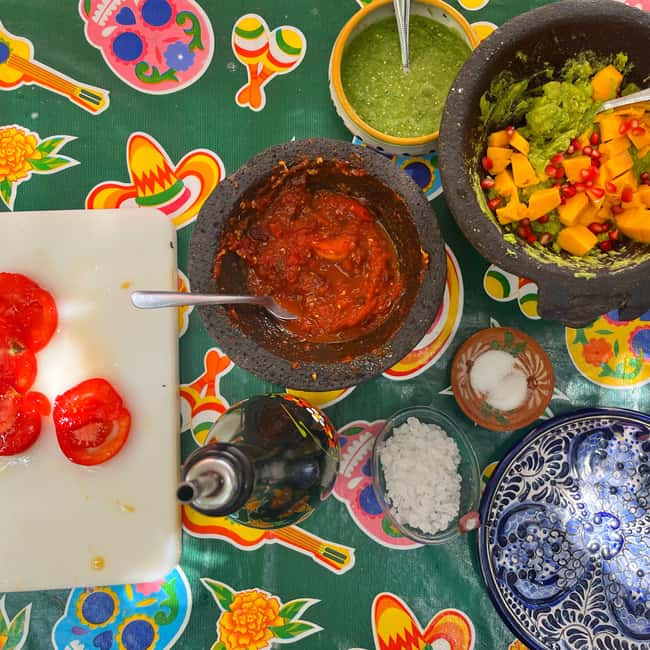
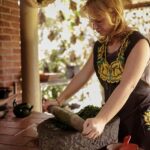
You learn to prepare salsa verde, a sauce that’s common for a reason: it teaches you a dependable foundation. You also get a classic molcajete salsa, which matters because the molcajete style is part of Mexican salsa culture. Even if you’ve had molcajete salsa before, making it yourself helps you understand why texture can be half the flavor.
You learn the logic behind a familiar avocado sauce
A fun and practical part is the comparison between guacamole and guacachile. This is exactly the kind of detail you’ll thank yourself for later, because people often treat them like interchangeable dips. In this class, you learn the difference so you can order with confidence (or make the right one at home when you’re hosting).
Iconic regional sauces: Xnipec and Macha
You also master iconic salsas like Xnipec and Macha. Whether you’re chasing Oaxaca flavors or you just want to understand what makes these sauces recognizable, these recipes push you beyond everyday salsa expectations. They’re also the kind of sauces that usually taste complicated until you understand the step-by-step approach. That’s the value of a focused class: it turns mystery into method.
You taste the darker, tangier side too
The class includes “borracha,” plus salsas seasoned with hibiscus flowers and tamarind. For you, that means you’re not just learning heat and salt—you’re learning how sourness and floral notes can structure a sauce. This is the kind of knowledge that improves your everyday cooking, even if you never make the exact same salsa at home again.
You end with a full set you can compare
Because you create all ten styles yourself, you’re in a better position to notice what changes when you switch chiles, textures, or flavor sources. That’s how you build intuition. It’s also why the tasting at the end works so well: you’re testing your own palate against a full lineup, not just trying one “pretty good” salsa and moving on.
The taco tasting: how your salsas actually get judged
At the end of the class, you enjoy a tasting of tacos paired with these ten salsas, plus drinks. The pairing part is more important than it sounds. Salsa can taste amazing on its own but fall flat on a taco, or the other way around—so matching them to bites is where the differences become real.
This also lets you figure out which salsas you genuinely want to repeat. You might find one sauce becomes your go-to for tacos, while another is best as a spooning sauce for things like eggs, roasted veggies, or grilled meats—if you’re the type who cooks beyond tacos.
One detail that stood out: in at least one recent class, beer and mezcal were included alongside drinks. Even without guessing beyond that, the overall idea is clear: this isn’t just a classroom. It’s a meal that helps you internalize what you learned.
Quality, tools, and the pace reality check
The quality of the ingredients and the tools used in the class gets praised for a reason. Better ingredients make it easier to learn what you’re tasting, and solid tools help you repeat the same results when you try again later.
There’s also a human element. One person noted that the chef seemed stressed and the flow felt rushed, with questions getting answered in a more irritated tone. That doesn’t mean the class is bad—it means you should go in ready to cook, taste, and ask questions efficiently rather than expecting a slow, two-way conversation style.
Here’s how to make that pace work for you:
- Ask your main questions early, before the group shifts gears.
- Pay attention to the steps that affect texture and balance, since those are what you can recreate later.
- Treat this as a skills-building sprint, not a leisurely dinner with a food storyteller.
Price and value: does $80 make sense for two hours?
At $80 per person for a 2-hour class, the value comes from the full package: ten homemade salsas, a taco tasting paired with all ten, and drinks included.
If you compare it to the cost of eating out multiple times, it can actually be a bargain—because you’re paying for an experience that includes food, learning, and something you can reproduce (at least in part) once you’re back home. And because you’re making a wide variety—rather than a couple of sauces—you leave with more practical knowledge per dollar.
Also, the class can run in different group sizes, including situations where someone might be the only participant. That flexibility can make the $80 feel more “worth it,” since you’re more likely to get time with the instructor when the room is small.
Who should book this class
This is a great fit if you:
- want a structured way to learn Mexican salsa basics and signature styles in one sitting
- like cooking and want to bring home skills, not just souvenirs
- enjoy tasting and comparing multiple sauces back-to-back
It’s not a great fit if you have food allergies, since the class isn’t positioned for that kind of restriction. And if you’re very sensitive to fast pacing, go in with the expectation that the instructor’s time is divided across a lot of recipes and group momentum.
Quick tips to get the most out of your ten-salsa lineup
You’ll get the most if you treat this like a mini skill workshop:
- Focus on chili handling and how each chile is used, not just the final taste.
- Take mental notes on which sauces you like most and why (heat, tang, floral notes, texture).
- Stay ready to taste often. The course is built around refining your palate by sampling a range of flavors, including hibiscus and tamarind.
If you’re traveling with friends, this is also a nice shared activity. You’ll naturally compare which salsa surprised you and what taco pairing worked best.
Should you book the 10 Mexican Salsas with Taco Tasting?
If you want one Oaxaca food experience that’s hands-on, structured, and filling, I’d book it. You’re paying for a clear outcome: ten salsas, a taco tasting, and drinks, all taught by Chef Oscar Carrizosa in English or Spanish at Casa Crespo.
Book especially if you’re curious about iconic sauces like Xnipec and Macha, and you want to understand the role of different chiles rather than copying a single recipe. Skip it only if you need allergy-friendly options or you strongly prefer a slow, question-heavy teaching style. For most people, it’s an efficient way to go beyond eating Oaxaca and actually learn how to make it.
FAQ
How long is the salsa cooking class?
The class lasts about 2 hours.
What’s included in the price?
The experience includes a 10 Mexican salsas making class, a tasting of tacos paired with the ten salsas, and drinks.
What chiles and salsas will I learn to make?
You’ll learn about different chiles including chile de arbol, chipotle, jalapeño, and habanero. You’ll also prepare salsas such as salsa verde, a classic molcajete salsa, Xnipec, Macha, guacamole vs guacachile, borracha, and salsas seasoned with hibiscus flowers and tamarind.
What languages are offered?
The instructor teaches in English and Spanish.
Where do I meet for the class?
Meet at Casa Crespo, located at the corner with Jacobo Dalevuelta street, in front of jardin Conzatti.
Is this class suitable for people with food allergies?
No. It’s not suitable for people with food allergies.