REVIEW · AO NANG
Krabi: Ya’s Cookery Late Afternoon Thai Cooking Class
Book on GetYourGuide →Operated by Ya Thai Cookery School · Bookable on GetYourGuide
Cooking Thai food starts with one spicy lesson. This late-afternoon class at Ya Thai Cookery School in Ao Nang is all about hands-on Thai flavor, from curry paste in a stone mortar to plates of stir-fries, noodles, and salads.
I especially like that you leave with real skills, not just a meal. You learn how Thai cooks balance flavors and build complete dishes from scratch, plus you get recipes and instruction in English to take home.
One possible drawback: the pace can feel fast, and if you want extra explanation you may need to ask right away—especially if you’re new to cooking.
In This Review
- Key things that make this class worth your time
- Late-Afternoon Thai Cooking in Krabi: Why 3.5 Hours Feels Just Right
- Getting to Ya Thai Cookery School and Choosing Your 4 Dishes
- Curry Paste in a Stone Mortar: The Skill That Changes Everything
- Curries, Noodles, Salads, and Stir-Fries: What You’ll Cook
- Green Curry and Panang Curry (your curry base lesson)
- Fried Noodle Thai Style (the wok rhythm)
- Papaya Salad (spicy-sour balance in action)
- Holy Basil Stir-Fry (aroma + heat, tuned for daily cooking)
- Morning Glory (simple greens, serious flavor)
- Vegetarian-Friendly Flex and Flavor Control
- Eating What You Cook: The Class Meal (and Sticky Mango Rice)
- English Support, Cookbooks, and Real Take-Home Value
- Price and Value in Krabi: What $48 Gets You
- Who Should Book This Class (and Who Might Want Another Option)
- Quick Tips Before You Go
- Should You Book Ya’s Cookery Late-Afternoon Class?
- FAQ
- How long is Ya’s Cookery Late Afternoon Thai Cooking Class in Krabi?
- Is pickup included?
- What dishes can I choose from?
- Can the class be vegetarian-friendly?
- What should I bring and wear?
- Is the class taught in English?
Key things that make this class worth your time
- Curry paste by hand: herbs and spices ground together in a stone mortar
- You choose 4 dishes, mixing curries, noodles, salads, and stir-fries
- English instruction + free cookbook: recipes and guidance you can follow later
- Adaptable to vegetarian tastes: dishes can be adjusted during class
- You eat a proper class meal: everything you cook, served at the end
- Pickup from Ao Nang and Ao Nam Mao: makes the timing easier in the Krabi chaos
Late-Afternoon Thai Cooking in Krabi: Why 3.5 Hours Feels Just Right
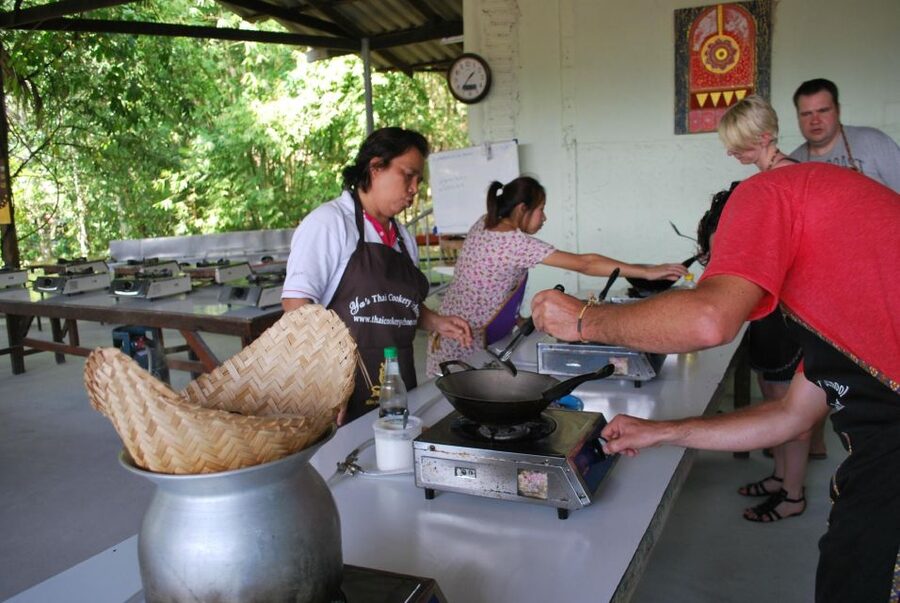
This is the kind of class that fits a Krabi day without stealing your whole evening. At 3.5 hours, you get enough time to learn the core Thai techniques, but you’re not stuck until late night. Late afternoon also means you can pair it with the rest of your travel rhythm—beach time earlier, then cooking when the sun starts to soften.
The big win here is structure. You don’t just watch someone cook. You work through ingredients, techniques, and full dishes, then you sit down and eat the results. That’s how you turn a tourist activity into something you can actually repeat at home.
You can also read our reviews of more tours and experiences in Ao Nang.

Getting to Ya Thai Cookery School and Choosing Your 4 Dishes
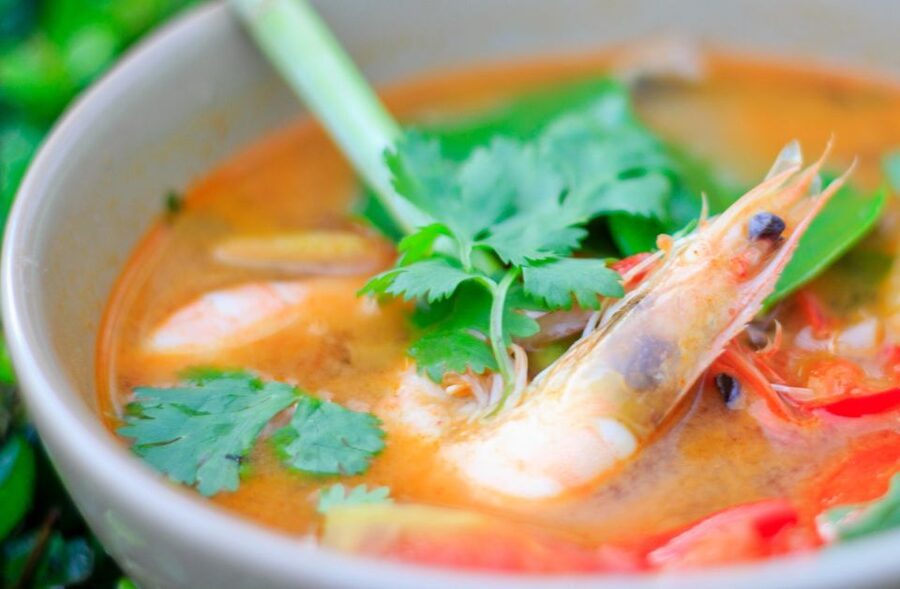
Ya Thai Cookery School runs a pickup service from hotels in Ao Nang and Ao Nam Mao (round-trip). After booking, the exact pick-up time is confirmed by email, which helps you plan your afternoon without guessing. If you’re staying in other areas like Klong Muang, Tubkaak Beach, or Krabi Town, transfers can be added during checkout for set per-person fees.
Once you’re at the school, you’ll start with fresh ingredients. That’s not a throwaway line. In Thai cooking, the quality of herbs, aromatics, and produce is part of the flavor engine. You’ll see how the class builds from “start with good stuff” into “understand why flavors work.”
Then comes the fun part: you choose 4 dishes from the list:
- Curry pastes (including Green Curry and Panang Curry)
- Fried Noodle Thai Style
- Papaya Salad
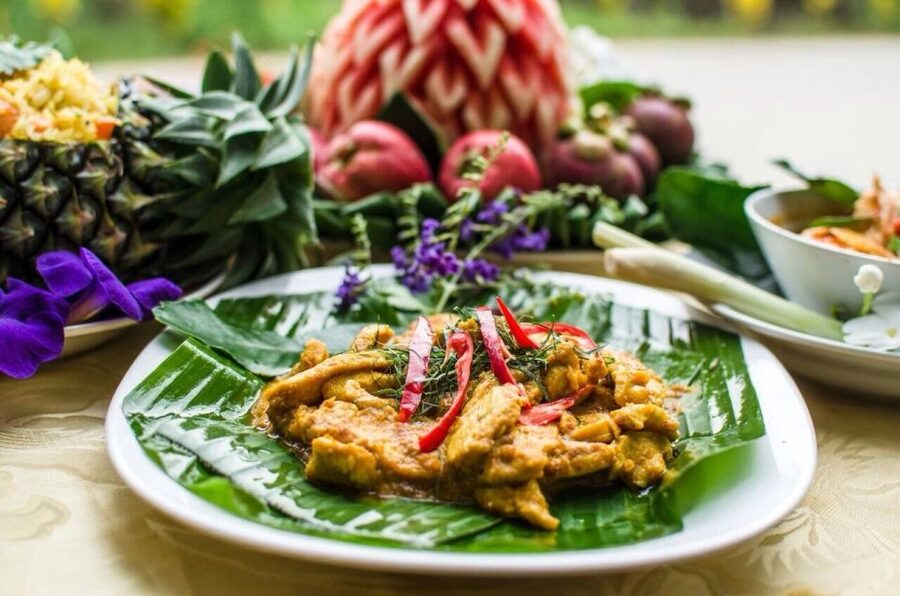
- Chicken in Coconut Milk
- Stir-Fried Chicken with Holy Basil
- Stir-Fried Morning Glory
This choice matters for value. If you’re craving curry, you can center your meal there. If you’d rather focus on salads and spicy freshness, you can do that too. And if you’re traveling with someone who eats differently, the class can be adapted—more on that soon.
Curry Paste in a Stone Mortar: The Skill That Changes Everything
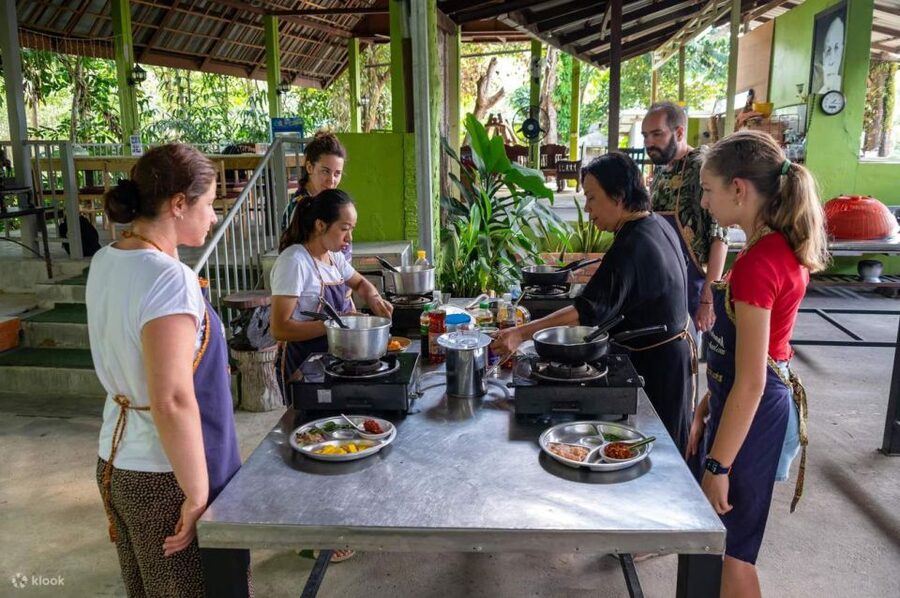
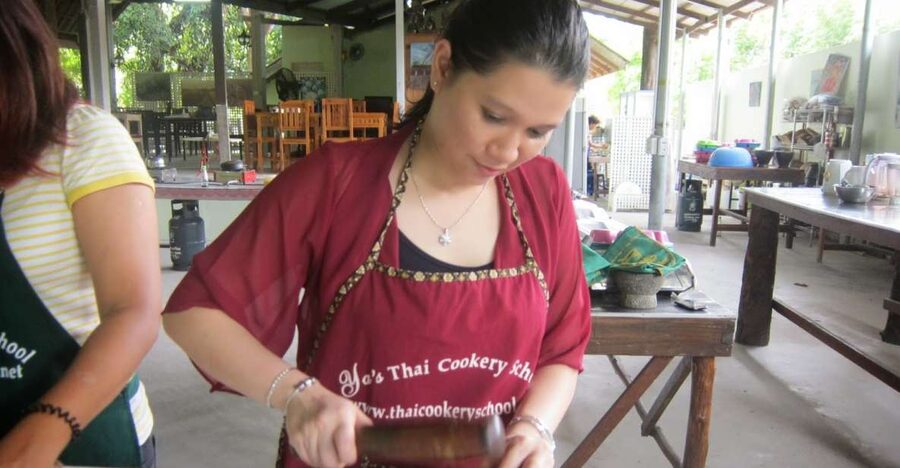
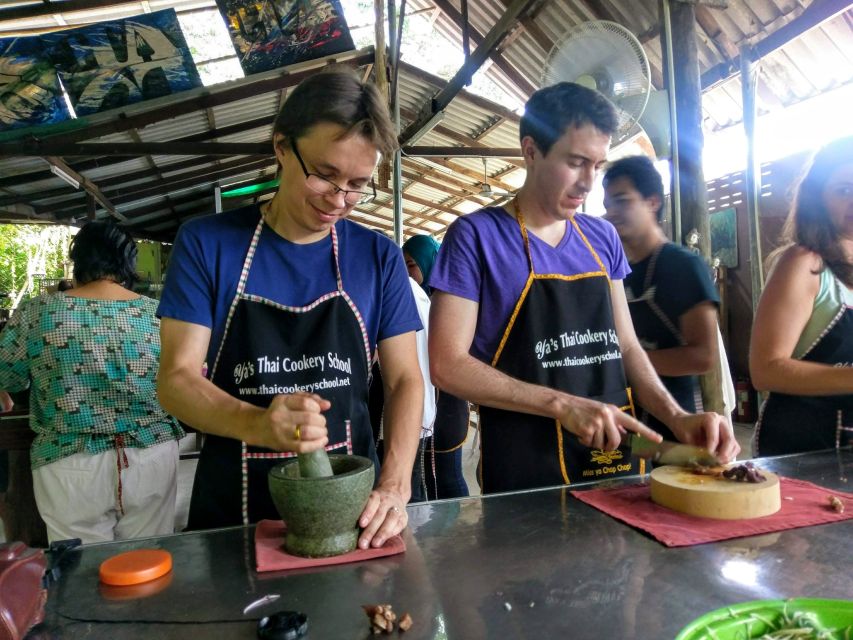
If there’s one moment that defines Thai cooking, it’s curry paste. This class treats it like the heart of the meal. You learn how to balance flavors and how to build curry paste by grinding herbs and spices together in a stone mortar.
Why this is worth your time: most people think curry is about the sauce. Thai cooks know it’s about the paste—what’s crushed, what’s toasted, and how the aromatics release flavor. The grinding process also teaches you texture cues. Paste isn’t just “mixed.” It becomes a flavor base that drives the curry.
You’ll use traditional utensils and techniques, which helps you understand the logic behind the taste. Even if you don’t own a stone mortar at home, you’ll come away knowing what you’re trying to reproduce: aromatic depth, balanced spice, and the right kind of fragrant paste—not just heat.
Curries, Noodles, Salads, and Stir-Fries: What You’ll Cook
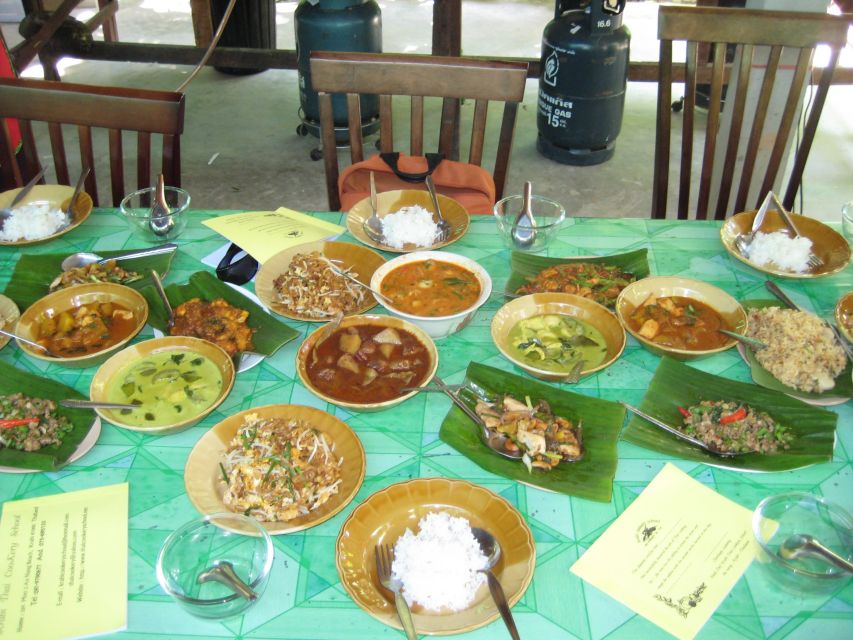
This class is built so you don’t get stuck in one cooking style. You’ll likely cover several core Thai categories—curries, stir-fries, and salads/noodles—which gives you a full picture of how Thai meals are composed.
Green Curry and Panang Curry (your curry base lesson)
If you pick Green Curry or Panang Curry, you’ll learn how curry paste turns into a finished curry. The class focus is on getting flavor balance right—spice, sweetness, and richness moving together rather than fighting. You’ll also get a sense of how coconut milk (if you’re cooking coconut-based dishes) changes the feel of the curry.
Fried Noodle Thai Style (the wok rhythm)
Thai fried noodles are where timing matters. If you choose this, you’ll get hands-on practice in stir-frying techniques: how ingredients go in, how heat affects texture, and how seasoning is handled so the noodles taste like a full dish rather than a generic stir-fry.
Papaya Salad (spicy-sour balance in action)
Papaya salad is a real flavor workout: sour, salty, sweet, and spicy have to land in the right place. This class includes preparing spicy Thai salads, so you’ll see how Thai cooks build that punchy taste without making it chaotic.
Holy Basil Stir-Fry (aroma + heat, tuned for daily cooking)
Stir-Fried Chicken with Holy Basil is one of those dishes that tastes like it came from a busy kitchen—fragrant basil, savory sauce, and a kick of heat. If you want something you can recreate easily, this is a great pick because it teaches a straightforward stir-fry method with big payoff.
Morning Glory (simple greens, serious flavor)
Stir-Fried Morning Glory is proof that “simple” in Thai food usually means “well-seasoned.” You’ll learn how the greens are treated and how the sauce and aromatics pull everything together.
Vegetarian-Friendly Flex and Flavor Control
One of the most practical parts of this class is that all dishes can be adapted to taste or vegetarian preferences. That’s not just a promise for show. It means you can still follow the process and learn the technique even if you’re not cooking the exact same proteins or ingredients.
For you, this is a big deal because Thai cooking is flavor-driven. If you can adjust without losing the flavor logic, you can keep cooking at home without feeling stuck with one “correct” version.
Just keep in mind that adaptation depends on what’s available for the class dishes you choose. If you have strong dietary needs, it’s worth communicating clearly during the class so you can get the version you actually want.
Eating What You Cook: The Class Meal (and Sticky Mango Rice)

At the end, you enjoy the Thai specialties you spent the afternoon preparing. This is one of the reasons I like this style of class. You’re not just making food for photos. You’re making it for tasting, and tasting is where the lessons stick.
Also, there’s a sweet finish. The teacher makes sticky mango rice for everyone, which adds a nice sense of closure to the meal. It’s the kind of dessert that reminds you Thai cooking isn’t only about spice—it’s also about balance and comfort.
And yes, you should expect plenty of food. The portion size is part of the satisfaction factor. When you’re paying for a cooking class, you want more than a snack. Here, the meal is the payoff.
English Support, Cookbooks, and Real Take-Home Value
Most cooking classes give you vague memories. This one gives you tools.
You’ll get ingredients, recipes, and instruction in English, plus free cook book recipes. That matters because the hardest part of cooking at home isn’t the final dish—it’s remembering what you were supposed to do with ingredients, order, and seasoning.
The class also includes food and water, which sounds small, but it helps you avoid extra costs and keeps the experience smooth. You can focus on learning instead of budgeting every hour.
Price and Value in Krabi: What $48 Gets You
$48 per person for a 3.5-hour class with pickup included from Ao Nang and Ao Nam Mao can be excellent value, especially in Krabi where food experiences can get pricey fast.
Here’s why it adds up:
- You’re not only eating; you’re cooking multiple dishes.
- You get curry paste technique, stir-fry skills, and salad/noodle knowledge.
- You receive English recipes/cookbook materials to reuse later.
- Transfers from your area (Ao Nang/Ao Nam Mao) are included, which removes a hidden cost and hassle.
The only time value might feel lower is if you’re looking for a super slow, deeply theoretical class. This is a practical cooking lesson. If you want maximum explanation per minute, you may have to ask questions to slow the pace down for yourself.
Who Should Book This Class (and Who Might Want Another Option)
This is a great fit if you:
- Want a hands-on Thai cooking experience that covers more than one dish style
- Like curry, noodles, salads, or stir-fries and want techniques you can repeat
- Prefer English instruction and want recipes for at-home cooking
- Need options for vegetarian preferences
It may not be the best fit if:
- You have mobility impairments, since it’s listed as not suitable
- You’re someone who needs lots of leisurely explanation and prefers very slow instruction (the pace can run quick)
If you’re traveling with friends, this can be a satisfying group activity because everyone leaves with their own chosen dishes—and you still get the shared “we cooked this together” meal moment.
Quick Tips Before You Go
Bring closed-toe shoes. This is practical for kitchens and messy prep. Also, leave the luggage or large bags behind; the class doesn’t allow them.
Late afternoon is still hot in Krabi, so wear something comfortable and light under your cooking plans. You’ll be working with ingredients and standing while cooking, so good shoes matter more than you’d think.
If you’re vegetarian, have your preferences clear early. The class can adapt, but you’ll get better results when you’re direct about what you want to avoid.
Should You Book Ya’s Cookery Late-Afternoon Class?
If you want a meaningful Krabi activity that turns into something useful at home, I’d book this. The combination of curry paste technique, English recipes, and the chance to cook 4 dishes makes it feel like real learning instead of a one-time performance.
Skip it only if you’re looking for a very slow pace, or if mobility constraints make kitchen movement difficult. Otherwise, this is a strong choice for travelers who want authentic Thai cooking done the hands-on way—then get to eat the results before the night moves on.
FAQ
How long is Ya’s Cookery Late Afternoon Thai Cooking Class in Krabi?
The class lasts 3.5 hours. Starting times can vary, so you’ll want to check availability.
Is pickup included?
Yes. Round-trip pickup is included from hotels in Ao Nang and Ao Nam Mao. If you’re in Klong Muang, Tubkaak Beach, or Krabi Town, transfers are available as add-ons during checkout.
What dishes can I choose from?
You choose 4 dishes from the options listed: curry pastes (including Green Curry and Panang Curry), Fried Noodle Thai Style, Papaya Salad, Chicken in Coconut Milk, Stir-Fried Chicken with Holy Basil, and Stir-Fried Morning Glory.
Can the class be vegetarian-friendly?
Yes. All dishes can be adapted to taste or vegetarian preferences.
What should I bring and wear?
You should wear closed-toe shoes. You should also avoid bringing luggage or large bags, since they are not allowed.
Is the class taught in English?
Yes. The instructor speaks English (and Thai), and recipes and instructions are provided in English.