REVIEW · HUE VIETNAM
Hue: Traditional Vietnamese Cooking Class
Book on GetYourGuide →Operated by Phin Coffee Class Viet Nam · Bookable on GetYourGuide
Six dishes, one quiet garden.
This Hue cooking class is interesting because you cook Hue classics from scratch and brew royal herbal tea while a local chef explains what makes central Vietnamese food taste the way it does. I like that the class is hands-on (not just watching) and the setting feels calm—more home-kitchen than restaurant.
One small drawback: the meeting point is down a narrow alley on Hoàng Quốc Việt Street, so you’ll want a few extra minutes to find the Huế Experience signboard.
In This Review
- Key highlights that make this Hue class worth it
- Hue Traditional Cooking Class: Why this 2.5-hour meal feels like a lesson
- Finding the meeting point on Hoàng Quốc Việt Street (so you don’t waste time)
- The class flow: hands-on cooking, then eating your own Hue feast
- Bun Bo Hue: the spicy broth-and-herb logic that makes Hue famous
- Vegetarian version still feels Hue
- Bánh Bột Lọc: chewy dumplings steamed in banana leaves
- Vegetarian Bánh Bột Lọc chay
- Bánh Xèo and fresh spring rolls: crisp pancake timing + wrapping skills
- Crispy Bánh Xèo (Vietnamese pancake)
- Fresh spring rolls
- Royal herbal tea: a soothing imperial-style finish you brew yourself
- Vegetarian menu: what you gain (and what you won’t miss)
- Price and value: $35 for 5 dishes plus tea that you actually make
- Who should book this Hue cooking class (and who should skip)
- Should you book this Hue Traditional Vietnamese Cooking Class?
- FAQ
- How long is the Hue traditional cooking class?
- How many dishes will I cook during the class?
- Can I choose a vegetarian menu?
- What’s included besides cooking?
- What time and language will the instruction be in?
- Where do I meet the group in Hue?
- Is it wheelchair accessible, and can I cancel or pay later?
Key highlights that make this Hue class worth it
- Cook 6 things yourself: five Hue dishes plus Hue royal herbal tea
- Small group, up to 6 people: more attention and a slower pace for learning
- Veg or non-veg menus with seasonal choices
- Chef-led cultural stories tied to each dish’s technique and flavor logic
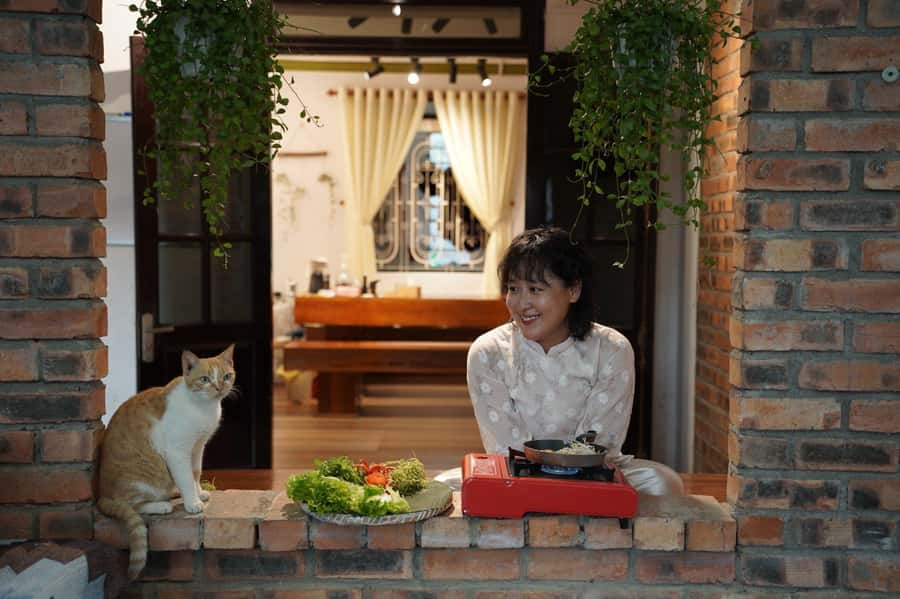
- A cozy kitchen that turns into a garden meal right after cooking
- Take-home support with a printed recipe card
Hue Traditional Cooking Class: Why this 2.5-hour meal feels like a lesson
Hue food has a different personality than other parts of Vietnam. The flavors lean into balance—herbs, aromatics, and texture—so you’re not just memorizing recipes. You’re learning the building blocks behind dishes like Bun Bo Hue and Bánh Bột Lọc (banana-leaf dumplings).
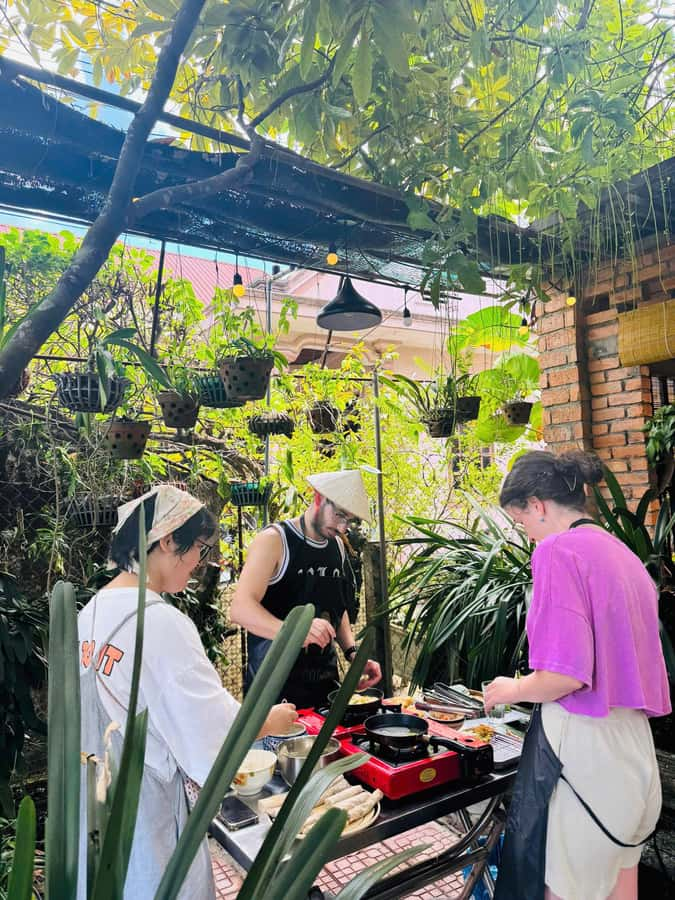
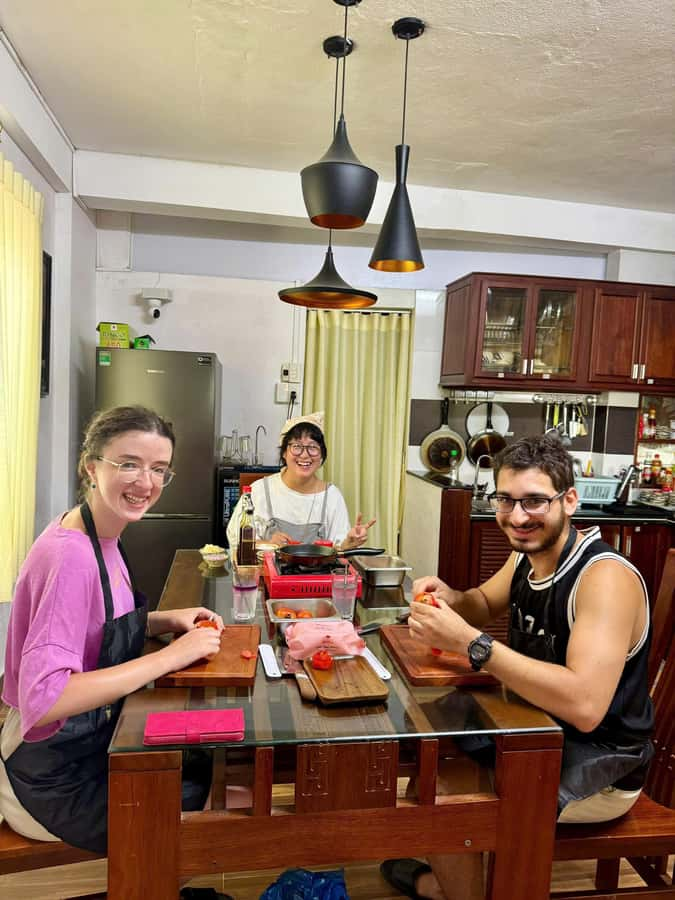
The format helps a lot. You’re not stuck behind a camera angle. You’ll prep and cook alongside the chef, then you sit down and eat what you made, as a full spread. The class also builds a clear bridge between food and culture, with stories and technique notes that make the dishes make sense beyond taste.
And yes, you’ll leave with something practical: a printed recipe card and the confidence to repeat at least a couple of dishes at home—especially if you like cooking more than just collecting photos.
You can also read our reviews of more tours and experiences in Hue Vietnam.
Finding the meeting point on Hoàng Quốc Việt Street (so you don’t waste time)
You meet by walking into a lane that’s easy to miss if you’re in a hurry. Enter alley number 1 on Hoàng Quốc Việt Street, walk about 50 meters, and look for the Huế Experience signboard.
Because it’s tucked in an alley, I’d treat it like a small “find-the-place” game: slow down, check the street signs, and don’t rely on memory if you’ve wandered around Hue earlier. Once you’re there, the vibe shifts quickly—quiet, local, and not crowded.
If you’re coming from the main tourist area, this is still a short grab away, but plan for “one extra stop” to locate the alley entrance.
The class flow: hands-on cooking, then eating your own Hue feast
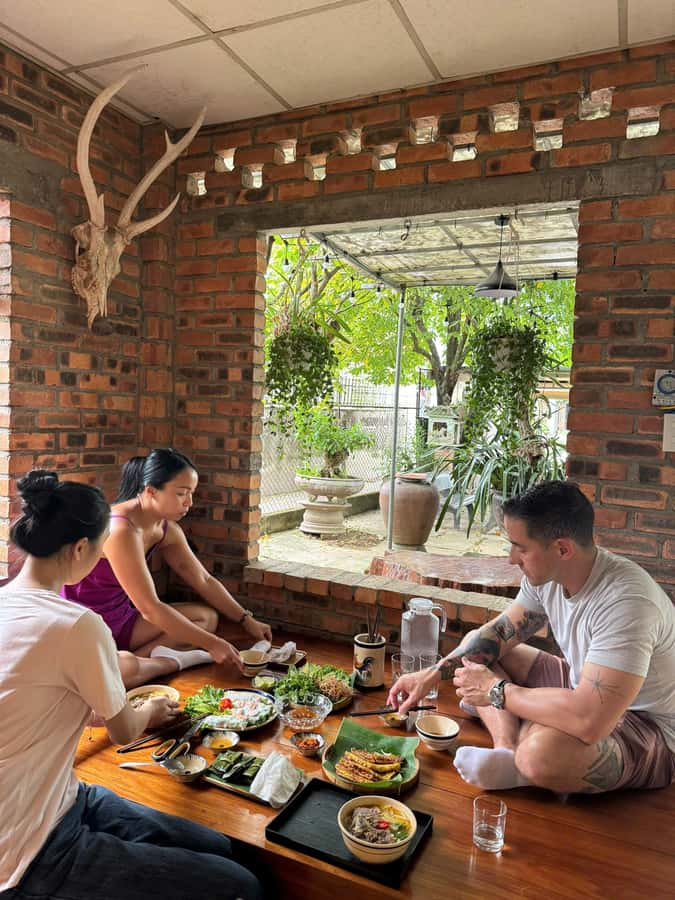
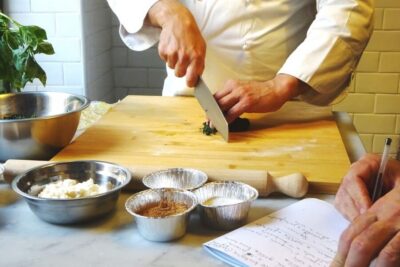
The total session runs 150 minutes, and it’s designed to keep your hands busy the whole time. Ingredients are prepped for you so you can focus on the real skills: how to assemble, season, wrap, steam, and time things so they come out right.
Expect this rhythm:
- You’ll start with chef instruction and guidance on each dish’s technique.
- You’ll cook five dishes plus Hue royal herbal tea from scratch.
- You’ll also get a seasonal fresh fruit plate as part of the meal.
- After cooking, you’ll sit in a cozy garden space to eat everything.
The chef doesn’t just hand you steps. You’ll hear cultural stories and recipe explanations tied directly to each dish—like why Hue people build flavors the way they do. If you care about the why behind the food, this is the part you’ll remember long after you’ve digested the last bite.
Bun Bo Hue: the spicy broth-and-herb logic that makes Hue famous
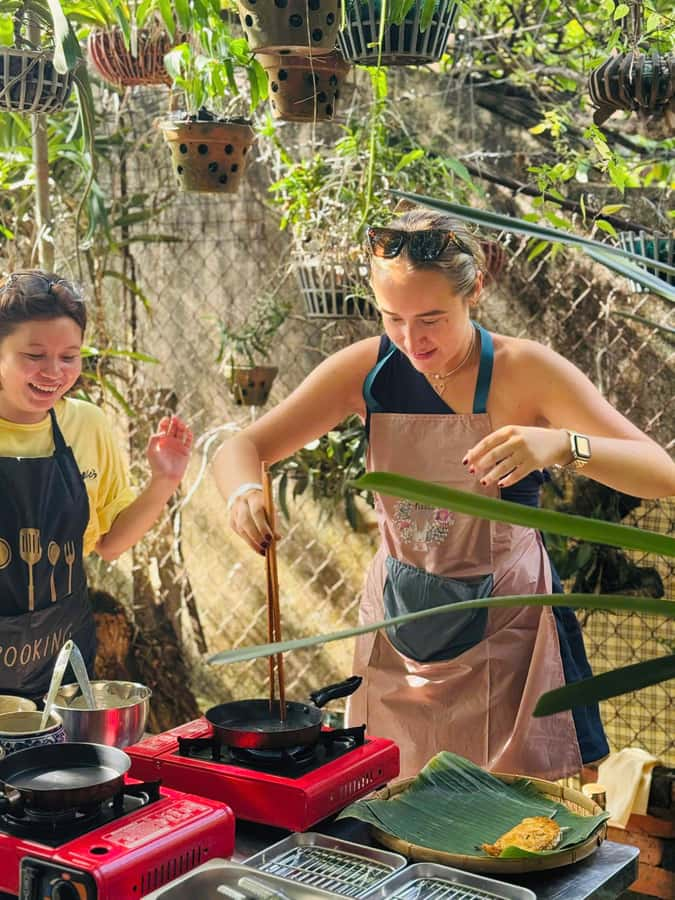
Bun Bo Hue is the star dish for most people, and the class treats it like a proper lesson. In the non-vegetarian menu, you’ll make it with spicy beef noodle soup, fresh herbs, and the kind of aroma that signals Hue instantly.
What I like is that you don’t just make a bowl—you learn how the dish’s balance works. The chef’s explanations help you understand how herbs and seasoning fit together, not just what to add. One review noted the chef explained the differences in how Hue does things compared with other parts of Vietnam, which is exactly the kind of context that makes cooking transferable.
Vegetarian version still feels Hue
If you choose vegetarian, you’ll make Vegetarian Bun Bo Hue with mushroom broth, tofu, and vegan sausage. That matters because it’s not treated like a substitute. It’s treated like an alternative route to the same Hue spirit: savory broth, fresh herbs, and satisfying depth.
Possible consideration: Bun Bo Hue on the non-veg menu is described as spicy, so if spice is a concern for you, tell the chef you want it toned down. The menu options are clear, but your preference is still your preference.
Bánh Bột Lọc: chewy dumplings steamed in banana leaves
Next comes Bánh Bột Lọc, described as chewy tapioca dumplings steamed in banana leaves. In the non-veg menu, the filling includes shrimp and pork, which gives a sweet-salty flavor with a savory base.
This dish is the best kind of “hard-looking, doable” cooking. You’re working with texture—tapioca can go from great to gummy if you treat it casually. The chef guidance helps you learn the pacing and handling, so you don’t end up fighting the dough later.
Vegetarian Bánh Bột Lọc chay
For the vegetarian menu, you’ll make Bánh Bột Lọc chay with wood ear mushrooms and mung beans. It keeps the dumpling vibe and the filling richness, but shifts the flavor toward earthy depth.
What to watch: banana-leaf steaming is simple in concept and a little fussy in practice. You want everything sealed and arranged correctly so the dumplings cook evenly. The class structure (with equipment and guidance) makes this manageable even if you’ve never steamed dumplings before.
Bánh Xèo and fresh spring rolls: crisp pancake timing + wrapping skills
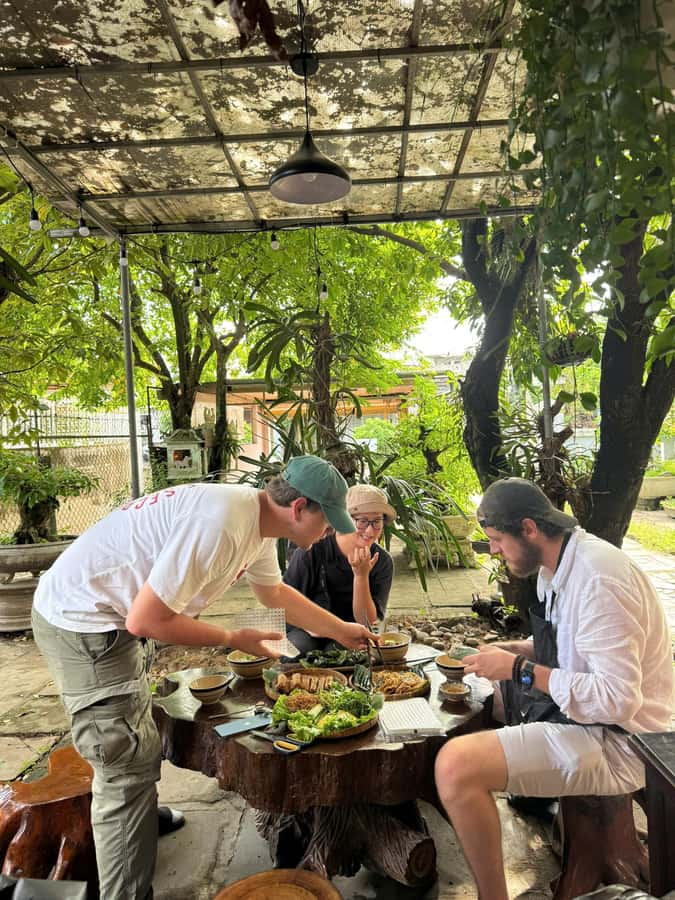
Then you move into two dishes that teach you very different techniques.
Crispy Bánh Xèo (Vietnamese pancake)
Bánh Xèo in the class is the crispy version served with herbs and dipping sauce. In the non-veg menu, it includes shrimp and pork. One big theme from the feedback I’ve seen: people love the results when the pancake is done right, especially the extra-crispy texture.
That crispness is about timing and heat control. You’ll learn the practical steps, but you’ll also get the chef’s tips that explain why the pancake behaves the way it does. It’s the kind of skill you can reuse later when you’re cooking similar pancakes or even making crepe-style batter dishes.
Vegetarian option: Vegetarian Bánh Xèo comes stuffed with mushrooms, bean sprouts, and carrots, plus a vegan dipping sauce. It keeps the pancake’s freshness by leaning on crunchy veg and herb pairing.
Fresh spring rolls
You’ll also make fresh spring rolls. In the non-veg menu, they include pork and shrimp. Vegetarian option swaps to tofu and vegetables.
These are great for two reasons:
1) They teach wrapping without a scary learning curve.
2) You get a dish that balances the heavier textures from dumplings and pancakes.
Practical tip: spring rolls are very sensitive to overfilling. The chef guidance usually keeps you in the sweet spot, so don’t try to “win” by stuffing more than the rice paper can handle.
Royal herbal tea: a soothing imperial-style finish you brew yourself
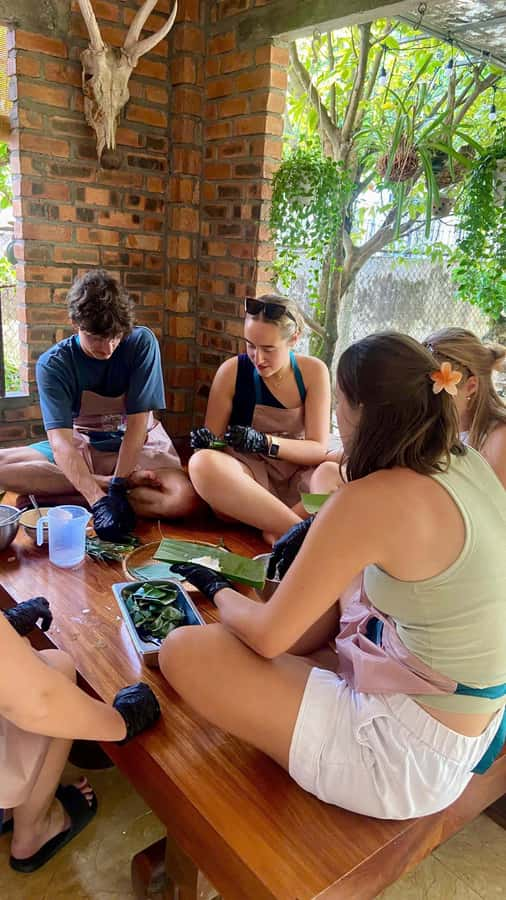
After the food work, you’ll brew Hue royal herbal tea from scratch. The class treats tea like a final course with meaning, not just something hot to wash down the meal.
In the tasting portion, you’ll learn the brewing approach and the purpose behind it—rooted in imperial traditions and meant to feel fragrant and calming. I like that it closes the loop: you spend the morning cooking central Vietnamese flavor, then you end with something that’s about aroma and balance.
Some sessions also include a sweet finish like candied ginger alongside the tea, depending on what’s being served at the time. Either way, you’ll leave with a mental recipe for how to make the tea experience feel intentional.
Vegetarian menu: what you gain (and what you won’t miss)
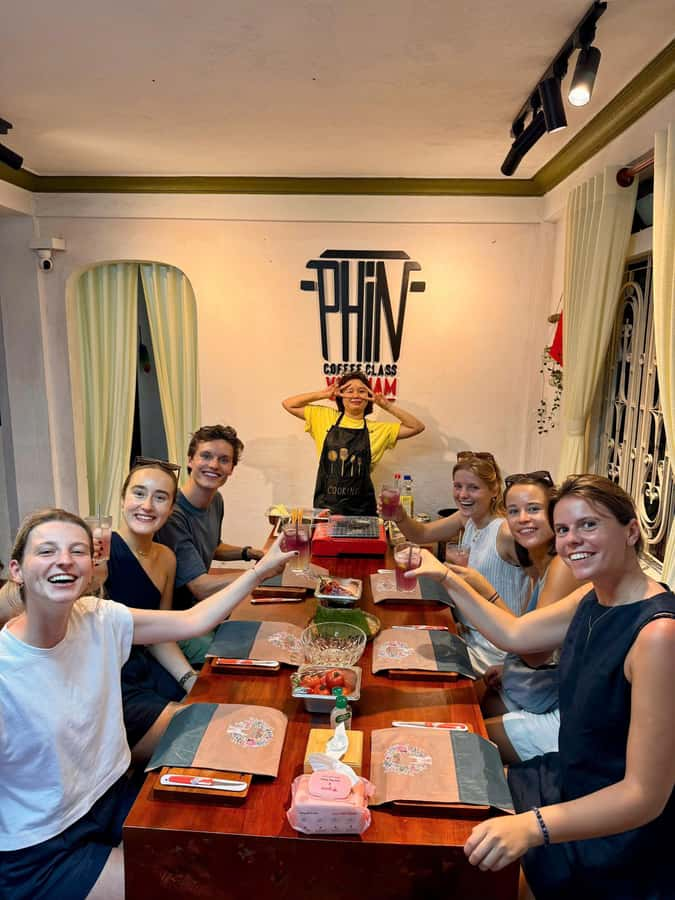
The vegetarian menu here is more than a checkbox. You get a full lineup that stays tied to Hue dishes, including:
- Vegetarian Bun Bo Hue (mushroom broth, tofu, vegan sausage)
- Bánh Bột Lọc chay (wood ear mushrooms and mung beans)
- Fresh spring rolls with tofu and vegetables
- Vegetarian Bánh Xèo (mushrooms, bean sprouts, carrots, vegan dipping sauce)
- Seasonal fresh fruit
- Hue royal herbal tea
That’s the big value: you don’t feel like you’re eating “less authentic.” You’re still cooking the core Hue shapes—broth noodles, dumplings, pancakes, rolls—just with plant-based fillings and sauces designed for the same flavor logic.
Small consideration: the menu is described with seasonal options, so exact produce and accents may vary. That’s not a downside; it’s part of why the fruit course can feel fresh instead of generic.
Price and value: $35 for 5 dishes plus tea that you actually make
At $35 per person, the class is priced for real value, not just atmosphere. You’re getting:
- A five-dish hands-on class plus royal herbal tea
- All fresh ingredients and cooking equipment
- Chef instruction plus cultural stories
- A full meal tasting of what you cooked
- A printed recipe card to take home
- Apron and drinking water during the session
If you compare this to paying for multiple meals plus cooking-focused entertainment elsewhere, the math gets pretty clean. You’re essentially buying a guided cooking session where the meal is included. And because it’s a small group limited to 6 participants, you’re less likely to feel like you’re on a conveyor belt.
The real “value” is the skill transfer. You’re not paying to be fed. You’re paying to learn how dishes come together in Hue, then eat them while the process is still fresh in your mind.
Who should book this Hue cooking class (and who should skip)
This is a strong pick if you:
- Want hands-on cooking in Hue, not just sightseeing
- Prefer a small-group experience with an English-speaking chef
- Like learning cultural context along with technique
- Have food curiosity and don’t mind cooking alongside others
It might be less ideal if you:
- Want a hands-off meal experience where you only watch
- Hate cooking with any mess at all (dumplings and pancakes get fun, and fun can be flour-y)
The good news: the ingredients are prepped and you’ll have equipment and step-by-step guidance. So you’re not being thrown into the deep end.
Should you book this Hue Traditional Vietnamese Cooking Class?
If you want one activity in Hue that feels practical, local, and deeply food-focused, I’d book it. For $35 and 150 minutes, you’ll cook a full plate of Hue favorites—plus royal herbal tea—with a chef who explains the “how” and the “why.”
Make sure you don’t arrive late to the alley meeting point, and consider telling the chef about spice preferences if you’re sensitive. If you match the vibe—hands-on learning, good appetite, and curiosity—you’ll likely leave with both recipes and a new way to think about central Vietnamese cooking.
FAQ
How long is the Hue traditional cooking class?
It runs for 150 minutes.
How many dishes will I cook during the class?
You’ll cook 5 traditional Hue dishes plus Hue royal herbal tea.
Can I choose a vegetarian menu?
Yes. The class offers both non-vegetarian and vegetarian menus, with seasonal options.
What’s included besides cooking?
You’ll get fresh ingredients and cooking equipment, guided instruction by a local chef, cultural stories and recipe explanations, the herbal tea brewing session, and a full meal tasting. You also receive a printed recipe card, an apron, and drinking water.
What time and language will the instruction be in?
The class is taught in English.
Where do I meet the group in Hue?
Enter alley number 1 on Hoàng Quốc Việt Street, walk about 50 meters, and look for the Huế Experience signboard.
Is it wheelchair accessible, and can I cancel or pay later?
It is wheelchair accessible, and the booking options include free cancellation up to 24 hours in advance for a full refund, plus reserve now & pay later.