REVIEW · ANURADHAPURA
Hands-On Cooking Class in Anuradhapura: Cook Like a Local
Book on GetYourGuide →Operated by GK Immersions · Bookable on GetYourGuide
That first smell of spices is the start of it. In Anuradhapura, you cook a traditional Rajarata-style meal in a real clay-house kitchen with old-school tools, from a miris gala stone grinder to a wood-fired stove. It’s a simple idea done properly: you work with your hands, then you sit down and eat what you made.
I especially love the hands-on pacing. You’re not watching from a distance. You grind, scrape coconut, and cook over firewood while an English-speaking instructor keeps things clear. I also really like the menu variety, which mixes everyday staples with local fruit-and-flower curries and a sweet finish.
One possible drawback: it’s a village-style setup with firewood smoke and natural outdoor conditions, so come ready for mosquitoes and a less tidy kitchen than a restaurant.
In This Review
- Key Things to Know Before You Cook Like a Local
- Clay Kitchen Reality Check in Anuradhapura
- The 3-Hour Flow: From Spice to Serving
- The Miris Gala Stone Grinder Step (Where Flavor Starts)
- Coconut to Table: Picking, Scraping, and Using It Well
- Wood-Fired Cooking and Clay Pots: Why It Tastes Different
- Your Rajarata Menu: What You’ll Cook and Eat
- Instructor Support and Group Setup
- Price and Value: Why $40 Makes Sense Here
- Pair It With Anuradhapura Sights
- Who Should Book This Class, and Who Might Not
- Should You Book? My Decision Guide
- FAQ
- How long is the Anuradhapura cooking class?
- What does the class cost?
- Where does the class meet?
- Is the class taught in English?
- What’s included in the meal?
- Is it a private group experience?
- Can I cancel or pay later?
Key Things to Know Before You Cook Like a Local
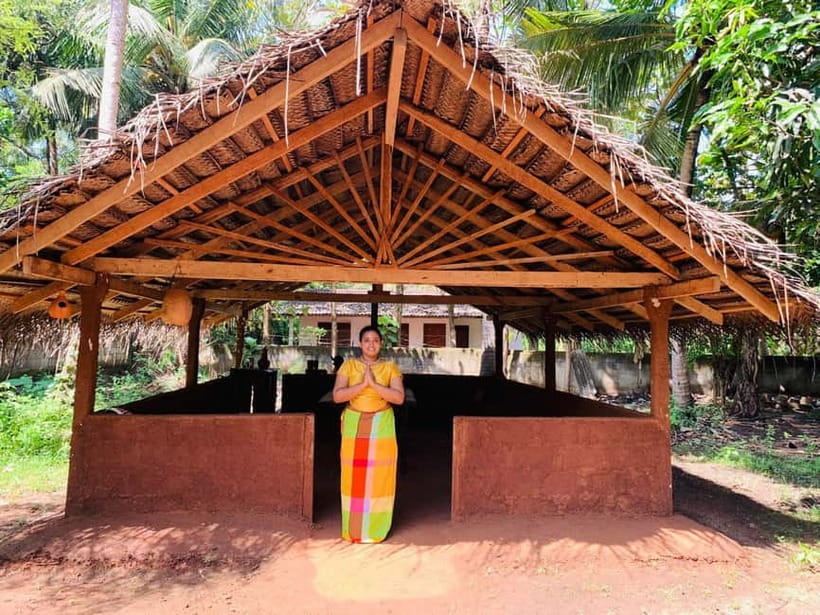
- Clay-house kitchen setting with a coconut-leaf shelter, so the experience feels local, not staged
- Miris gala (stone grinder) for grinding spices the old way, where the aroma is part of the lesson
- Hiramanaya coconut scraping so you learn a real daily-home skill, not just one flashy step
- Wood-fired stove cooking with smoky flavor that changes how the curries taste
- Pick-your-own coconut and use what you harvest, from tree to table
- Rajarata menu built around rice, lake fish curry, ambarella, banana blossom mallum, and coconut sambal
Clay Kitchen Reality Check in Anuradhapura
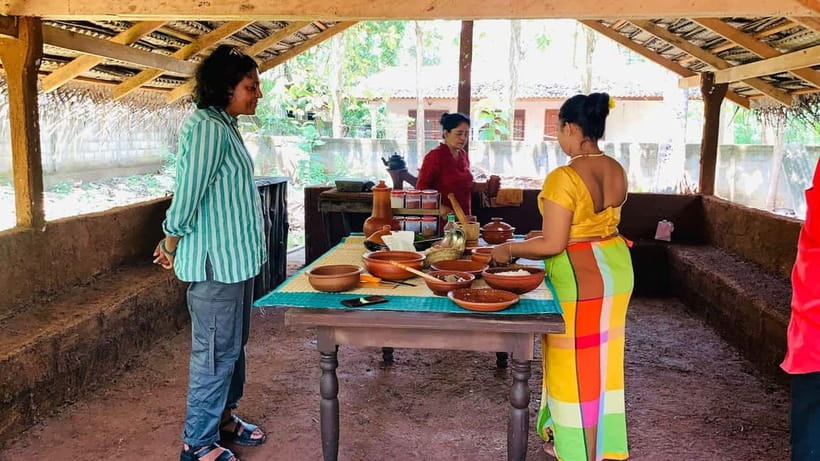
This class happens at a clay house kitchen shaded by a traditional coconut-leaf shelter. That matters more than you’d think. When the cooking space looks and feels like a village home, you naturally slow down and pay attention to what the instructor is showing you. You also spend less time pretending it’s a performance and more time actually cooking.
The vibe is calm and nature-forward. You’re in Sri Lanka’s North Central Province, and the session is designed for a hands-on flow rather than a lecture. It’s also a private group, which helps. In a small group, the instructor can correct your technique and answer questions without rushing.
You’ll be working with traditional tools, including stone and coconut implements. That’s the good part. It also means you should expect a more tactile, slightly messier experience than a modern cooking studio.
The 3-Hour Flow: From Spice to Serving
The class runs for 3 hours. In that time, you’ll go through the cycle of Sri Lankan cooking the way many families do it: prep first, grind and mix, cook in stages, then eat.
Here’s what the structure feels like from start to finish:
- Welcome and drinks
You’ll start with a refreshing local drink. It’s a nice reset before you get busy with tools and smells.
- Coconut and ingredient prep
A highlight is picking your own coconut straight from the tree. Then you’ll move into coconut prep, including scraping coconut with a hiramanaya. It’s one of those steps that looks simple until you try it. When you get the rhythm, it’s satisfying.
- Spice grinding on the miris gala
Next comes the big sensory moment: grinding spices on a miris gala, the traditional stone grinder. This is where the aroma hits hard and fast. You’re not just learning a technique; you’re learning how spice flavor changes when it’s fresh-ground versus pre-ground.
- Cooking over wood fire
You’ll cook on a wood-fired stove using clay pots and fresh ingredients. The smoky flavor shows up in the food, and it also affects the pace. Firewood cooking isn’t instant or perfectly steady. That gives you a real feel for how village cooking works.
- Cook, taste, and finish with sweets
You’ll cook items that go together at the table, then end with a sweet finish.
The whole program is built so you keep moving, but you still have time to understand what you’re doing. It’s not “watch for two hours, then eat.” It’s eat-worthy work the entire way through.
The Miris Gala Stone Grinder Step (Where Flavor Starts)
If you like the idea of cooking with intent, this part will grab you. Grinding spices on the miris gala is one of the most memorable steps because it’s loud, physical, and aromatic.
What you’re really learning here is texture and timing. Stone grinding releases oils from spices differently than powders that sit around in bags. As you grind, you can smell how fragrant spices become when they’re freshly processed. That smell isn’t a gimmick. It’s the first clue that your curries will taste deeper.
Also, this is where you’ll likely understand why Sri Lankan home cooks start with spice work before everything else. When spices are fresh-ground, you can smell them before they even hit the pot. Your cooking feels more precise because the ingredients are alive, not dormant.
One small practical tip: protect yourself from mosquitoes if you’re sensitive. In one review, mosquito repellent was considered useful. This class is in a shaded outdoor village-like setup, so bringing repellent is smart.
Coconut to Table: Picking, Scraping, and Using It Well
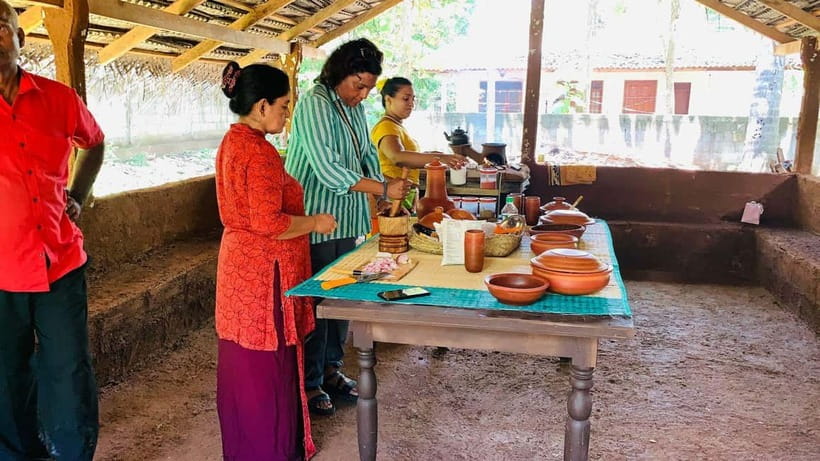
Coconut is a core ingredient in Sri Lankan cooking, and this class treats it that way. You don’t just get coconut in a bowl. You do a full coconut-to-table sequence.
First, you pick your own coconut. That step grounds everything. When you later scrape coconut with the hiramanaya, you understand why the ingredient matters and how much work it takes to get it ready.
Then, coconut becomes part of several dishes:
- Coconut sambal, made with grated coconut, red chili, lime, and onion
- Mallum-style greens, mixed with coconut and spices
- Curries where coconut milk helps create that creamy Sri Lankan mouthfeel
Even if you’re not a “coconut person,” this sequence changes the way you think about it. Coconut is not just taste. It’s technique, texture, and balance. You get that in a way you won’t from a quick demo.
Wood-Fired Cooking and Clay Pots: Why It Tastes Different
Cooking on a traditional wood-fired stove does two things to your food:
- It adds smoky character
- It keeps you aware of heat and timing
Clay pots help too. They cook gently and can hold heat in a way that suits curry-style dishes. The result is food with a different depth than you’ll get from an electric hob.
This is also where the class feels most hands-on. You’ll do more than mix ingredients. You’ll actively cook over firewood, watch the process, and learn how curries respond.
One caution: if you’re extremely smoke-sensitive, know that wood-fire cooking can be noticeable. You might still love it, but you should go in with open expectations. Bring a camera, yes, but also bring a calm attitude about smoke and heat.
Your Rajarata Menu: What You’ll Cook and Eat
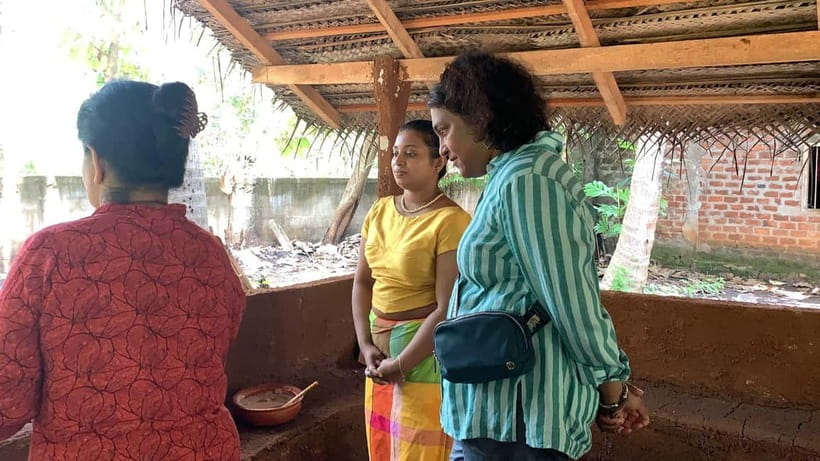
This is the part food lovers watch for, and it holds up. You’ll cook and taste a traditional Sri Lankan menu that mixes everyday basics with Rajarata specialties and local produce.
Here are the dishes included:
- Yellow rice / white rice: the base of almost every meal
Expect fluffy steamed rice as your anchor.
- Ambarella curry: tangy fruit turned curry
Ambarella is a local fruit that works like a vegetable here, giving you sweet-tart bite.
- Banana blossom mallum: a flower on your plate
Banana blossom gets cooked into a dish with earthy flavor and texture.
- Lake fish curry: fish from Rajarata waters
You’ll get a curry-style preparation simmered with spices and creamy coconut milk.
- Kathurumurunga mallum: Sri Lankan greens with coconut and spice
This is a lighter, nutritious-feeling dish with a gentle spice profile.
- Coconut sambal: spicy side dish
Made with freshly grated coconut, red chili, lime, and onion. It’s simple, but it brings punch.
- Pumpkin curry: creamy and comforting
Slightly sweet, gently spiced, and a crowd-pleaser in many Sri Lankan homes.
Sweet finish:
- Fresh curd and treacle
- Ripe papaya
If you’re wondering how these dishes work together, that’s the point. They cover:
- starch (rice),
- tang (ambarella),
- earthy greens and blossoms (mallum dishes),
- protein (fish curry),
- creamy balance (coconut-based curries),
- and a palate reset (curd, treacle, fruit).
One review praised the instructions on which spices and vegetables to use, and that’s exactly what matters most in a hands-on class. You’re not just cooking. You’re learning how the ingredients are chosen and combined.
Instructor Support and Group Setup
The instructor communicates in English, which makes a difference when you’re learning techniques like grinding spices and scraping coconut. Clear teaching keeps you from guessing. It also helps you understand what to do next without slowing the whole group down.
The experience runs as a private group, which is a practical advantage. Smaller groups mean more attention. If you’re traveling with family or friends, you’ll likely appreciate the flexibility and the less chaotic feel.
Wheelchair access is listed as available, so it’s worth noting for travelers who need that. This is still a hands-on village-style kitchen, so you’ll want to treat it as a working environment, not a polished indoor venue.
Price and Value: Why $40 Makes Sense Here
At $40 per person for a 3-hour, hands-on cooking session, this can be good value, mainly because the class includes:
- pick-your-own coconut,
- grinding spices on a stone grinder,
- coconut scraping with a traditional tool,
- wood-fired cooking,
- a full set of cooked dishes plus a sweet finish,
- and welcoming local drink.
Many cooking classes charge for instruction but don’t include real ingredient work. Here, you do the work. You also get to eat what you cooked. That turns the price into a meal experience, not just a class.
Also, the setting adds value. A clay kitchen with coconut-leaf shade and traditional tools is hard to replicate in a typical cooking studio. You’re paying for authenticity you can’t fake.
If you’re deciding between a quick food tour and a full cooking session, this one is heavier on participation. If that sounds fun, you’ll get your money’s worth fast.
Pair It With Anuradhapura Sights
Because this is in Anuradhapura, you can stack your day. Think of the cooking class as the slow, flavorful middle of a sightseeing day.
Morning or afternoon, you can do ancient-site time and then end with a hands-on meal session. Cooking is also a nice way to balance travel stress. You go from walking and heat to a focused task with clear steps, guided by an instructor.
Just keep timing in mind. After firewood cooking and curry cooking, you’ll likely want a relaxed rest afterward.
Who Should Book This Class, and Who Might Not
This class is a strong match if you:
- enjoy hands-on activities more than lectures,
- like food that uses fresh local ingredients,
- want a structured way to learn traditional Sri Lankan techniques,
- and want a meal with multiple dishes, not just one curry.
It may feel less ideal if you dislike:
- wood-smoke cooking environments,
- getting a bit involved with food prep,
- or spicy flavors, since coconut sambal uses red chili.
In practice, most people enjoy it. The hands-on tools and the clear instructions make it easy to participate, even if you’ve never cooked Sri Lankan food before.
Should You Book? My Decision Guide
Book it if you want a real cooking skill experience, not just a meal. The combination of miris gala spice grinding, hiramanaya coconut scraping, and wood-fired clay-pot cooking gives you a Sri Lankan kitchen feel in a short 3-hour window. You also get an actual Rajarata menu that covers rice, curries, greens, fish, tangy fruit, and dessert.
Pass or consider another option if you’re extremely sensitive to smoke or you want a very modern, tidy kitchen. Also, if you only want one or two dishes, this class goes broad with multiple items.
If your goal is to leave Anuradhapura with knowledge you can use and flavors you can remember, this is a solid choice.
FAQ
How long is the Anuradhapura cooking class?
It lasts 3 hours.
What does the class cost?
The price is $40 per person.
Where does the class meet?
All cooking takes place at GK Immersions-Best things to do provider at their clay house kitchen, shaded with a traditional coconut leaf shelter.
Is the class taught in English?
Yes, the instructor uses English.
What’s included in the meal?
You’ll cook and taste rice, lake fish curry, ambarella curry, kathurumurunga mallum, coconut sambal, pumpkin curry, banana blossom mallum, plus a sweet finish of fresh curd & treacle and ripe papaya.
Is it a private group experience?
Yes. It’s listed as a private group.
Can I cancel or pay later?
Free cancellation is available up to 24 hours in advance for a full refund. You can also reserve now & pay later to keep your plans flexible.