REVIEW · GENOA
Cooking Class of Ligurian cuisine between Portofino and the Cinque Terre
Book on Viator →Operated by RIGATONI EXPERIENCES · Bookable on Viator
Cook Liguria where locals still live. In Chiavari’s historic center, this cooking class turns the Ligurian Riviera into something you can taste and make, not just watch. I love the genuine Genoese focaccia and pesto aperitif, and I really love the hands-on pasta with the guitar tool for shaping fresh pasta. The only drawback: it’s a tight 2 hours 30 minutes, so you’ll need to keep moving (and come hungry).
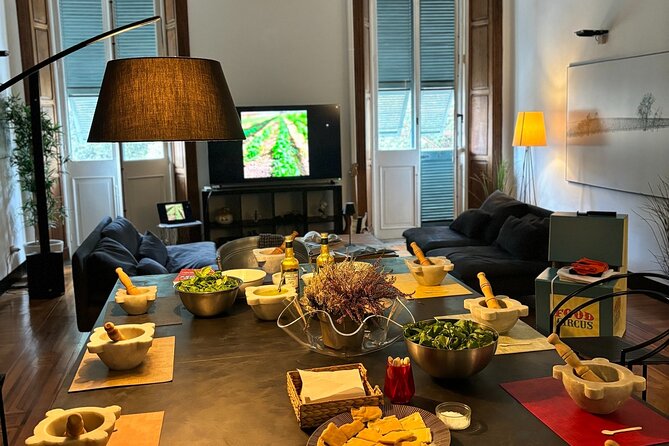
The setting helps a lot. You’re in an ancient apartment of the ’900 era inside a Genoese-style building, with a big living room and a proper kitchen set up for cooking and eating together.
And then there’s the hosting. Fabio Bongiorni guides the whole experience, and the class pace is built around active participation—cook, taste, learn, repeat—ending with coffee and a Genoa digestive.
In This Review
- Key highlights you’ll care about
- Chiavari’s ’900 apartment kitchen: where the experience actually happens
- The Genoese aperitif spread: focaccia, pesto bruschetta, anchovies, olives
- Making fresh pasta in your hands: the guitar shaping tool
- Pesto, wine DOP, coffee, and a Genoa digestive: the meal arc
- Fabio Bongiorni’s guiding style: passion without the heavy lecture
- Price and value: is $120.51 worth it?
- Getting the most out of it: practical tips before you go
- Who should book this Ligurian class (and who might not)?
- Should you book this cooking class in Chiavari?
- FAQ
- Where does the cooking class meet in Chiavari?
- How long is the experience?
- What do you eat and drink during the class?
- How many people are in the group?
- Is the class accessible for most travelers, and are service animals allowed?
- Is cancellation free?
Key highlights you’ll care about
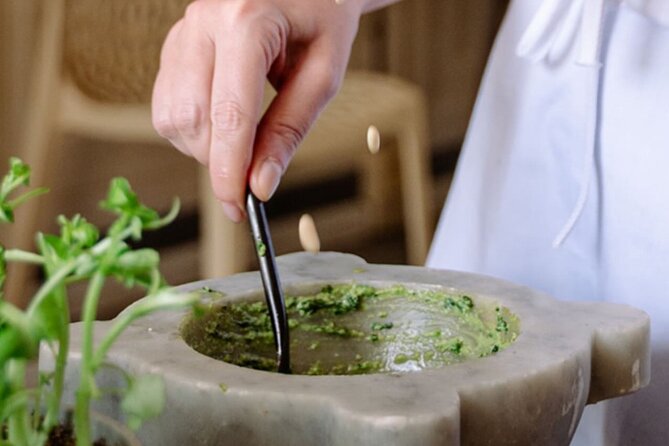
- A real Genoese focaccia aperitif with bruschetta, homemade pesto, salted anchovies, and Riviera olives
- Fresh pasta by hand using an old instrument called the guitar
- Pesto you make yourself, then taste it with your pasta
- White wines DOP from the territory paired with your meal
- Small group size (max 12) for more hands-on time and easier questions
Chiavari’s ’900 apartment kitchen: where the experience actually happens
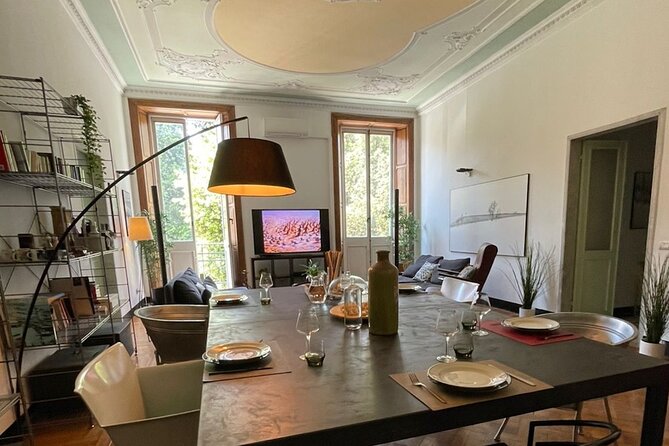
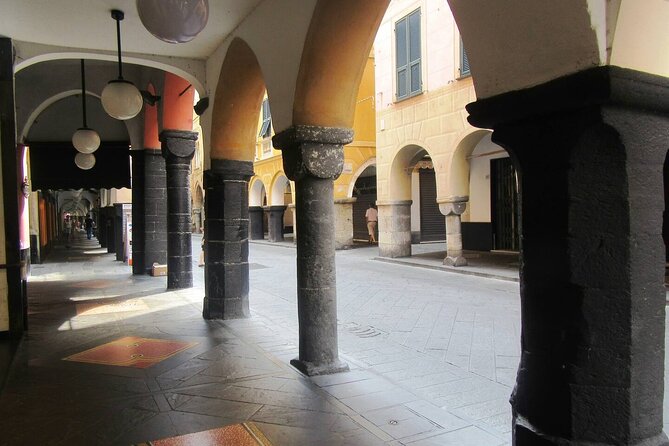
Chiavari is a smart base for experiencing the Ligurian coastline between Portofino and the Cinque Terre. This class fits that vibe perfectly: you’re not rushed through a show. Instead, you land in an old apartment in the historic center, the kind of place where the walls already feel like they’ve seen decades of meals.
The apartment setup matters. You’re in a noble apartment with a large living room and a kitchen designed for cooking classes and food experiences. That means you’re not crowded in a corner or watching from the sidelines. The whole point is action: you’ll be involved in preparing the dishes, not just sampling at the end.
Group size is a quiet advantage too. With a maximum of 12 people, you get a better chance to ask questions and actually handle the food tasks. If you’ve ever been in a class where you wait for the instructor to finish helping the last person, you’ll appreciate this more intimate setup.
One thing to keep in mind: this is a 2 hours 30 minutes experience. The pace is likely intentional—enough time to make fresh pasta and eat well, but not enough time to linger like you would at a long family meal. Plan your day so you’re not sprinting right afterward.
You can also read our reviews of more tours and experiences in Genoa.
The Genoese aperitif spread: focaccia, pesto bruschetta, anchovies, olives
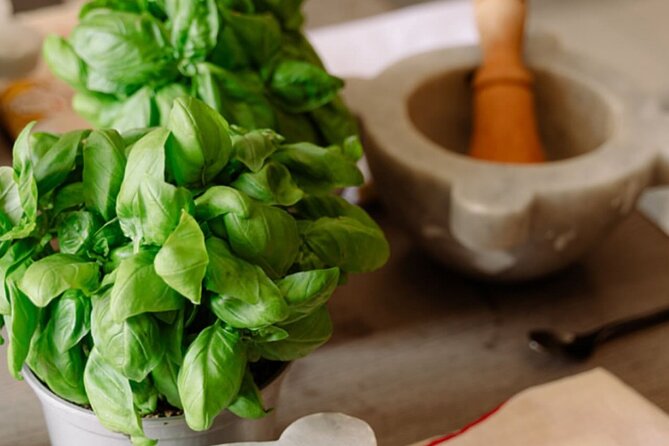
The experience starts with an aperitif meant to give you the Ligurian flavor profile right away. You begin with real Genoese focaccia—warm, classic, and immediately grounding. Then it continues with bruschetta topped with homemade pesto and salted anchovies.
This is a great first move because it puts the big flavor players on the table early:
- Genoese focaccia as the anchor
- Homemade pesto as the green backbone
- Salted anchovies as the salty, briny contrast
- Seasoned olives from the Riviera for a salty-snacky bridge
I like this approach because it prevents the meal from feeling random. You’re tasting before you cook, so when you later work with pesto and pasta, the flavors make more sense. You also learn what Liguria tastes like at the casual, everyday level—where aperitif food can be as important as the main course.
Also, be aware of the menu ingredients. Salted anchovies are part of the aperitif, and there’s a wine pairing later. If fish or alcohol is an issue for you, you’ll want to flag it ahead of time when booking.
Making fresh pasta in your hands: the guitar shaping tool
After the aperitif, you move into the main cooking work: fresh pasta. This isn’t just rolling dough and hoping for the best. The class focuses on cutters made by hand, using an ancient instrument called the guitar.
That detail is more than a gimmick. Tools like this often come from old local methods—ways of shaping pasta that became common because they were practical, repeatable, and part of everyday cooking culture. In a hands-on class, that matters because you’re not only eating a dish. You’re learning the mechanics of how it gets made.
You’ll take part in preparing the pasta, then you’ll taste it paired with pesto you prepare yourself. That chain—aperitif pesto taste, pasta preparation, then pasta pesto tasting—makes the learning stick. It also makes the meal more satisfying, since you’re not just eating a finished product. You’re eating your work.
Timing-wise, this is usually where the class feels most focused. You may find you concentrate hard in this section—less talking, more hands-on attention—because pasta demands a steady rhythm. If you’re someone who likes food classes where you actually do the labor, this part is the core payoff.
Pesto, wine DOP, coffee, and a Genoa digestive: the meal arc
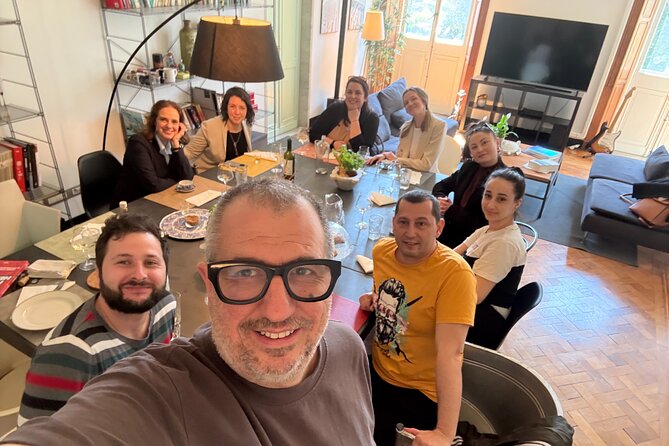
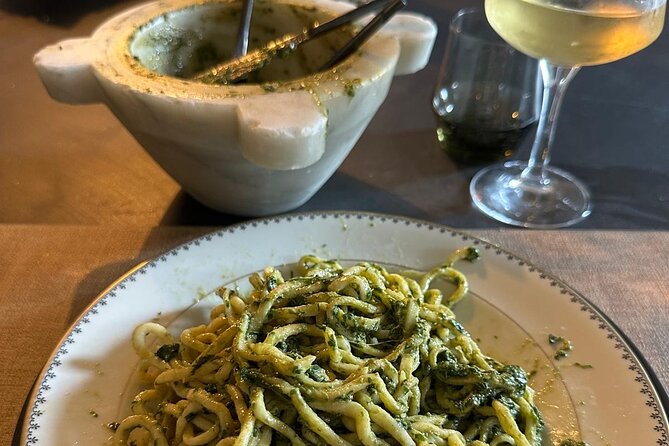
Once the pasta is shaped, the class settles into eating with intention. You’ll taste your pasta with the pesto you prepared. That pairing is the Ligurian Riviera story in miniature: herbs, olive oil, garlic, and the right salty notes, all tied together with fresh pasta.
Then come the drinks. You’ll enjoy a selection of white wines DOP of the territory. DOP means the wine comes from a recognized controlled origin area, which is a sensible way to keep the tasting grounded in place rather than just “whatever is available.” If you’re curious about how regional food and regional wine talk to each other, this part is useful.
After that, the ending follows Italian tradition: Italian coffee and a pleasant digestive of Genoa. It’s the kind of finish that makes the experience feel complete. You don’t just leave with recipes or photos—you leave with a sense of how an Italian meal flows from savory to after-dinner comfort.
One practical note: because it’s a small group and a guided experience, you’ll likely have a gentle structure—cook, taste, drink, finish—without worrying about what happens next. If you’ve had chaotic food tours where everyone funnels in different directions, this feels more controlled and comfortable.
Fabio Bongiorni’s guiding style: passion without the heavy lecture
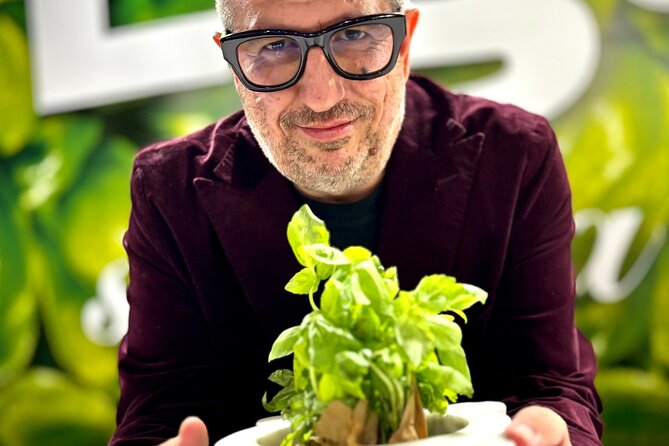
The class isn’t only about recipes. It’s about context, and the guide is a big part of that. Fabio Bongiorni brings a lot of passion for regional food cultures in Italy, especially Liguria. You’ll get interesting details along the way, not just a list of steps.
What I like about a guide like this is patience. Cooking classes can get awkward if the instructor moves too fast or treats the group like an obstacle. Here, the vibe is that you’re there to participate—so you can ask questions, slow down if you need a second, and still keep the class moving.
Fabio’s approach also sounds like it’s built for socializing as much as it is for cooking. Even if you’re traveling solo, a small group and a shared table style meal tends to create easy conversation—especially when people are working the same dough and comparing notes on pesto.
Price and value: is $120.51 worth it?
At $120.51 per person for about 2.5 hours, you’re paying for more than a snack. You’re paying for:
- Ingredient-led cooking (not just tasting)
- Use of a kitchen setup built for instruction
- A regional menu that includes Genoese focaccia, pesto, salted anchovies, fresh pasta, white wines DOP, coffee, and a Genoa digestive
- A guide who explains the food culture while you work
Food tours can be hit-or-miss on value: sometimes you pay a lot for a “watch and taste” format. Here, the experience is active—meaning you get to do the cooking steps. That’s where the cost starts to make sense, especially for travelers who learn best by doing.
The wine and the meal components also support the price. This class doesn’t stop at a small bite. It follows a full aperitif-to-meal arc with pairing drinks and the typical Italian after-meal finish. If you’re the type who usually pays extra for a sit-down dinner plus a separate activity, this can be a smoother way to package your evening.
One thing to keep your expectations realistic: it’s not a multi-course cooking retreat. It’s a well-designed session. You’ll likely leave satisfied, but you won’t leave with hours of extra free time to wander around Chiavari right afterward.
Getting the most out of it: practical tips before you go
This class is simple, but a few choices help you enjoy it more.
Come hungry and pace yourself. You start with aperitif items and then move into pasta and wine. If you already ate a heavy meal, the class can feel rushed rather than fun.
Be ready to work hands-on. The guitar tool and hand-cut pasta require attention and a steady rhythm. Wear comfortable clothing you don’t mind getting a little dough on. Nothing extreme is mentioned, but cooking usually means you’ll want practical sleeves and easy movement.
Think about food fit before booking. Salted anchovies are part of the aperitif, and wine is part of the tasting. If either of those doesn’t work for you, confirm directly so you’re not stuck eating around key parts of the menu.
Bring a relaxed attitude for a small group. With a maximum of 12 people, questions are easier and the vibe is more personal. If you’re shy, you’ll still have structure to follow—steps to do, tastes to share.
Who should book this Ligurian class (and who might not)?
You should book if you want a hands-on food experience in a real historical setting. I’d especially recommend it if:
- You like learning through cooking, not just watching
- You want genuine Ligurian flavor markers like Genoese focaccia and pesto
- You enjoy regional pairing like white wines DOP
- You prefer small groups and a guided flow instead of big crowds
You might think twice if:
- You want a long, slow meal with lots of downtime
- You have concerns about anchovies or alcohol and you don’t want to manage workarounds
- You’re scheduling a tight day with no buffer afterward, since the whole experience runs about 2 hours 30 minutes
Should you book this cooking class in Chiavari?
Yes, if you’re looking for a compact but real Ligurian night. The combination of an old Chiavari apartment setting, a guided menu that hits the classics (focaccia, pesto, anchovies, fresh pasta), and the hands-on pasta shaping with the guitar tool makes this feel like a true food activity rather than a generic tasting.
It’s also one of those experiences that works well even if you’re not a “serious cook.” You’re given steps, a guide to keep you on track, and a result you can taste immediately. For $120.51, it’s best viewed as a cooking lesson plus a full meal with wine—done in a small group where you actually participate.
FAQ
Where does the cooking class meet in Chiavari?
You meet at Corso Genova, 10/1, 16043 Chiavari GE, Italy. The activity ends back at the meeting point.
How long is the experience?
The class lasts about 2 hours 30 minutes.
What do you eat and drink during the class?
You start with a Genoese focaccia aperitif with bruschetta, homemade pesto, salted anchovies, and seasoned olives from the Riviera. You then prepare fresh pasta and taste it with the pesto you make, along with a selection of white wines DOP. The experience finishes with Italian coffee and a Genoa digestive.
How many people are in the group?
The experience has a maximum of 12 travelers.
Is the class accessible for most travelers, and are service animals allowed?
Most travelers can participate, and service animals are allowed.
Is cancellation free?
Yes. You can cancel up to 24 hours in advance for a full refund. If you cancel less than 24 hours before the start time, the amount paid is not refunded.