REVIEW · VILNIUS
Cooking Class in Lithuanian House Surrounded by Nature
Book on Viator →Operated by Guide in Vilnius · Bookable on Viator
Beets, dough, and stories in a real home. This small-group Lithuanian cooking class in the countryside lets you make cold beetroot soup and cepelinai (zeppelins), then sit down for dinner together with a bottle of local wine. It is culture in your hands, not just on a screen.
I especially like how personal it feels, since Agnieska hosts only 4 people per class and keeps the pace relaxed even for first-time cooks. I also love the setting: the home overlooks a pond, and in the evening you may spot nature wandering by while you cook and eat. One thing to plan for is the location—this is about a 30-minute taxi ride from central Vilnius, and transportation is not included.
In This Review
- Why this Lithuanian cooking class feels more like a visit than a tour
- From Vilnius to a countryside kitchen: the setting and the welcome
- Price and value: what you actually get for about $121
- The menu: cold beetroot soup and cepelinai (zeppelins)
- Cold beetroot soup (Lithuanian summer style)
- Cepelinai (zeppelins) with fried onion, bacon, and sour cream
- What happens during the 3.5 hours, from prep to dinner table
- The personal touch: English instruction and a psychologist’s calm pace
- Dinner with a view: pond lights, wildlife moments, and local wine
- Cooking tips for first-timers (so you feel proud, not panicked)
- Who should book this class, and who might want a different type of tour
- Should you book this Lithuanian cooking class near Vilnius?
- FAQ
- What dishes will I cook in this Lithuanian class?
- Where does the cooking class take place?
- How many people are in the group?
- Is dinner and wine included?
- Do I need private transportation from Vilnius?
- Is the class offered in English, and is it okay for kids?
Why this Lithuanian cooking class feels more like a visit than a tour
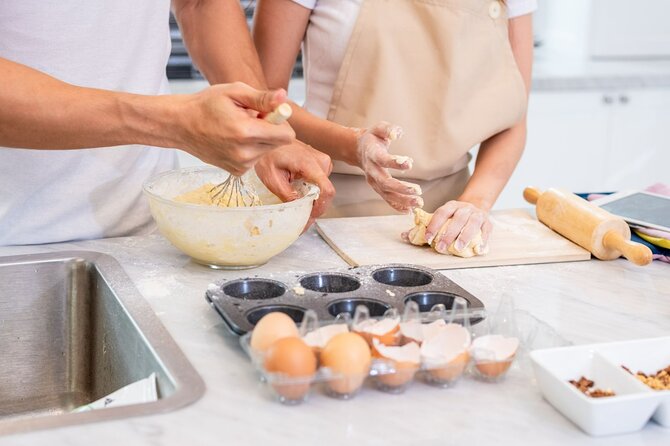
- Small group format (max 4) means real conversation while you cook, not waiting your turn.
- Hands-on menu: cold beetroot soup and cepelinai, served with fried onion, bacon, and sour cream.
- Countryside home setting with pond views, plus a chance to see storks, deer, and water lilies.
- Dinner included with local wine, so you taste what you made right after cooking.
- English-friendly host (Agnieska offers the class in English) and a guide who brings a thoughtful, chat-friendly approach.
From Vilnius to a countryside kitchen: the setting and the welcome
This class starts in a quieter pocket outside Vilnius, in Pikeliškės. The meeting point is Dvaro g. 9 A (15140), and the activity ends back there. You start at 6:00 pm, which is a nice time for an evening meal—long enough to feel like you earned dinner, early enough that you are not stuck late in town.
The big reason this works is the change of scenery. You leave the city and trade it for a home kitchen with views toward a pond. The tone is calm from the moment you arrive. In the accounts I found, guests describe watching nature while they cook and dine, including water lilies and animals wandering by. If you like your food experiences with atmosphere—quiet, warm, and real—this is your kind of evening.
You will also feel the hospitality right away. Agnieska is not only a cook and guide. She is a psychologist by profession, and that tends to show in the way the evening runs: relaxed, talk-friendly, and not judgmental if your technique is shaky at first. And from what people report, her family is part of the warmth too, including meeting Jarek as part of the evening.
One practical note: you will likely need a taxi. The class is around 30 minutes by car from Vilnius city center. The good news is Agnieska helps you order the taxi, so you are not left guessing how to get there.
You can also read our reviews of more tours and experiences in Vilnius.
Price and value: what you actually get for about $121
At $120.93 per person, this is not a cheap “grab-and-go” food stop. But you are paying for a few things that matter:
- A full evening meal you prepare yourself, not just a tasting.
- A bottle of local wine included with dinner.
- Real instruction in a small group (4 people), where you can ask questions and keep up.
- A home setting rather than a restaurant line where you watch and move on.
In other words, you are paying for time. Three and a half hours is long enough to learn, cook, and actually eat the results—not rush through ingredients like a demo.
Also, the group size supports the price. When only four people join, the class feels personal. You do not disappear into a crowd. You are more likely to get help when something is confusing, and you will have time to ask about Lithuanian food, language, and local life while the meal comes together.
The main cost consideration is transportation. Private transport is not included, so budget for the taxi from the city center. If you are already planning a relaxed day in Vilnius, this evening format still usually feels like good value because it replaces a standard dinner with a learning experience.
The menu: cold beetroot soup and cepelinai (zeppelins)
This class has a clear plan, and that makes it satisfying. You cook two signature dishes that together cover the Lithuanian comfort spectrum—fresh and tangy, then hearty and filling.
Cold beetroot soup (Lithuanian summer style)
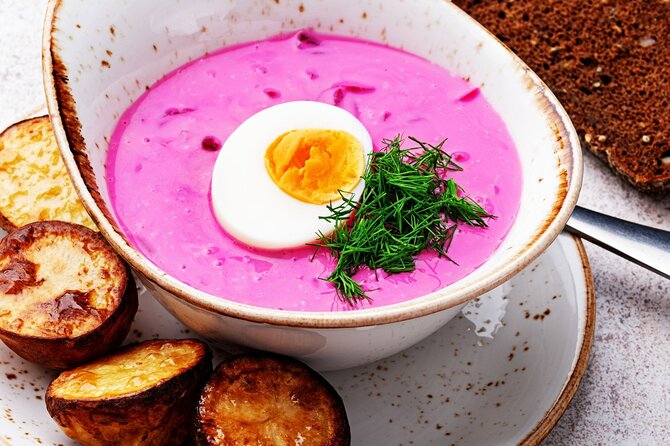
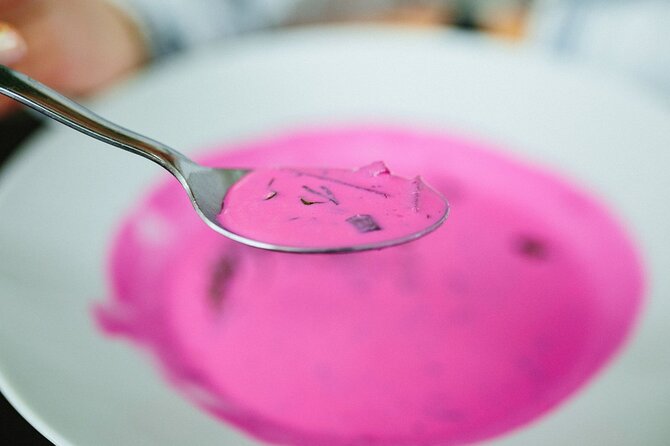
The starter is a traditional cold beetroot soup, described as a favorite summer dish. The idea is simple: beets give the soup its earthy sweetness and deep color, and the cool temperature makes it a hit in warm months. You will learn how to prepare it as part of the cooking flow, then sit down and eat it as the opening course.
Why this dish is worth your time: it is Lithuanian identity you can recognize by taste. Even if you have had beet soup elsewhere, this style is its own thing—cool, bright, and built for comfort.
Cepelinai (zeppelins) with fried onion, bacon, and sour cream
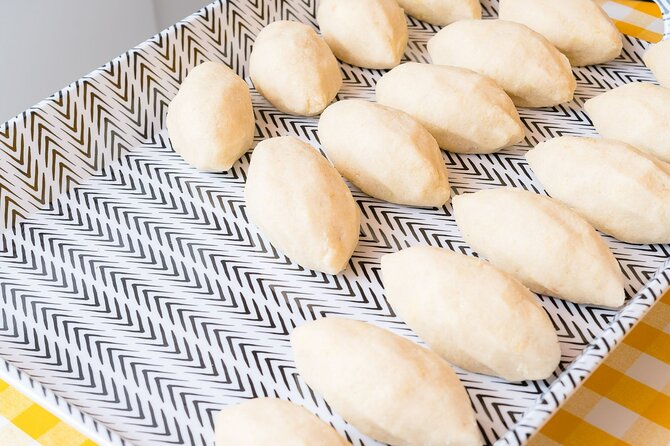
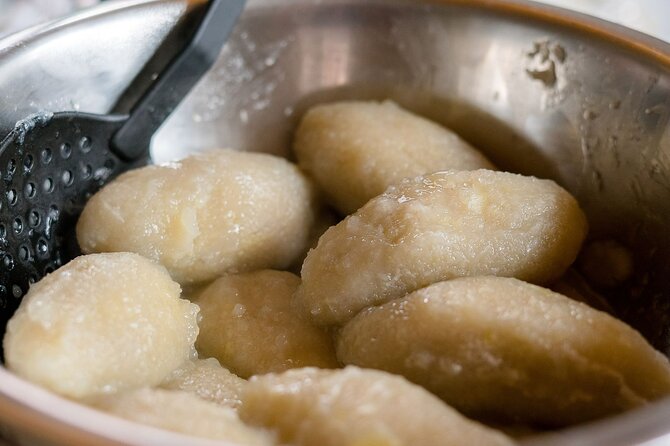
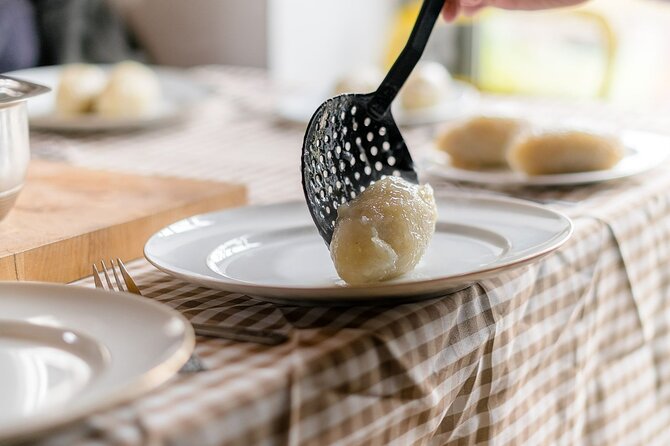
For the main, you make cepelinai, the Lithuanian version of zeppelins. In this class, they are homemade and served with fried onion, bacon, and sour cream.
Cepelinai are the kind of food that makes you slow down. They are substantial, and the toppings do a lot of work: the savory crunch from fried onion and bacon, plus the creamy finish from sour cream. If you want a meal that feels like a full dinner—not a light snack—this is it.
Also, the fact that the cooking class ends with you eating what you made is a big advantage. Food experiences sometimes stop at tasting, or at watching. Here, you build the meal and then enjoy it at the table.
What happens during the 3.5 hours, from prep to dinner table
This is a “sit down and cook” evening. The rhythm is part lesson, part conversation, part family-style dinner.
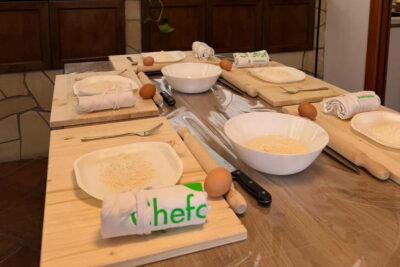
You start around 6:00 pm at the meeting point and then head to the kitchen location in the countryside. Once you arrive, the evening turns practical: you cook together, talk together, and eventually eat together. Because the group is small, you are not stuck waiting in the background while someone else does all the work.
Here is what the time feels like, in plain terms:
- You get guided through making the cold beetroot soup first.
- Then you shift to the main dish—cepelinai—learning how the meal comes together for a traditional serving style.
- At some point, you all stop long enough to eat dinner as a group.
- You drink the included bottle of local wine along with the meal.
One detail I really like: everyone is welcome, including kids. Agnieska’s family has daughters aged 12, 12, and 15, and the class is designed to be friendly. That does not mean it is a kid-only activity—it is still a cooking class for adults—but it suggests the tone is not stiff or overly formal.
And the energy is not just about cooking. In the accounts I reviewed, guests felt they learned about culture, language, and history through normal conversation while they worked. You are not trapped in a lecture. You are eating, cooking, and chatting as the evening unfolds.
The personal touch: English instruction and a psychologist’s calm pace

Even with a simple menu, cooking classes can feel stressful. Not because cooking is hard, but because the instructor is busy, the group is large, and you feel like you are constantly behind.
That is not the vibe here. Agnieska hosts only four people per class, which changes everything. If you need clarification—on ingredients, on what comes next, or on the basics—there is time to ask. And if you are a confident cook, you still get to talk and learn without feeling like you are doing everything alone.
Because Agnieska offers the class in English, the learning stays accessible. You can focus on the food instead of decoding gestures. You will likely get context too, since she is both a culture-minded guide and a psychologist. The conversation tends to be natural, not forced.
A small humorous but true expectation: you might start the evening as a stranger and leave feeling like you know the kitchen family. Several guests describe that exact feeling of arriving alone, then leaving close-knit. Cooking does that. Shared tasks turn polite strangers into people who can laugh together.
Dinner with a view: pond lights, wildlife moments, and local wine
This is one of those experiences where the atmosphere is part of the flavor. While you cook and eat, you have the backdrop of a pond with water lilies. In the experiences shared, guests watched a stork and deer wander by while they dined.
Will you see wildlife every single time? No one can promise nature schedules. But the point is that the setting makes dinner feel special even before the first bite. You are not eating in a loud restaurant room. You are in a home environment where the meal is the main event.
Then there is the bottle of local wine included with dinner. That matters because it turns the class into a full evening. You are not just “done” when you finish cooking. You are invited to relax, taste, and enjoy.
If you like experiences where you can slow down and feel present, this evening does that well. It is a good match for travelers who want something authentic and human, not just a photo stop.
Cooking tips for first-timers (so you feel proud, not panicked)
I am going to be honest: if you are not comfortable with cooking, you might worry you will slow the group down. I would not. In this class format, you are guided step-by-step and you are not expected to already know how to make Lithuanian classics.
Here are a few ways to make it easier on yourself:
- Come hungry. Cepelinai are filling, and the timing is built around dinner.
- Expect a hands-on style. You will be doing the work, not only watching.
- Ask questions early. If something feels confusing, it is easier to fix it before you move to the next step.
- Taste as you go when offered. That helps you understand what the dish should feel like, not just how it is made.
And if you bring kids, the best mindset is simple: treat it as cooking together. It is the kind of class where family energy is part of the plan, and that reduces the pressure.
Who should book this class, and who might want a different type of tour

This class is best for you if:
- You like learning a regional dish you cannot easily recreate from a menu description.
- You want a small group experience with conversation and a real sense of place.
- You enjoy countryside atmosphere more than big-city sightseeing at night.
- You are okay with taxi transport out of central Vilnius.
You might want a different option if:
- You are looking for a bus-and-brochure style tour with lots of external stops.
- You do not want to cook at all. This is hands-on, and the dinner is tied to the cooking.
- You need fully included transportation from the city center.
For families, it is also a solid choice. Kids are welcome, and the fact that Agnieska’s family is involved suggests the evening is not designed to be strictly adult-only.
Should you book this Lithuanian cooking class near Vilnius?
If you are visiting Vilnius and you want one evening that feels warm, personal, and genuinely Lithuanian, I think you should book it. This is not just tasting. You make two iconic dishes—cold beetroot soup and cepelinai—then eat them together with local wine.
You should also book it if you like the idea of a small group in a home kitchen. The setting is part of the payoff, especially with the pond view and the chance of spotting wildlife while you dine.
The only reason to pause is transport. You will need to arrange a taxi from Vilnius and be there by 6:00 pm. If that is not a problem for you, the value comes from the full dinner experience plus hands-on learning in a group of four.
FAQ
What dishes will I cook in this Lithuanian class?
You will learn to prepare Lithuanian cold beetroot soup and make cepelinai (zeppelins), served with fried onion, bacon, and sour cream.
Where does the cooking class take place?
It takes place in Agnieska’s kitchen in her countryside home. The meeting point is Dvaro g. 9 A, 15140 Pikeliškės, Lithuania.
How many people are in the group?
The class hosts 4 people per class for a more personal experience, and private group requests can host up to 6 people.
Is dinner and wine included?
Yes. Dinner is included, and there is also a bottle of local wine included.
Do I need private transportation from Vilnius?
Private transportation is not included. The host can help you order a taxi, since the home is about 30 minutes by car from the city center.
Is the class offered in English, and is it okay for kids?
The class is offered in English. Everyone is welcome, including kids. The host’s family includes daughters aged 12, 12, and 15.